
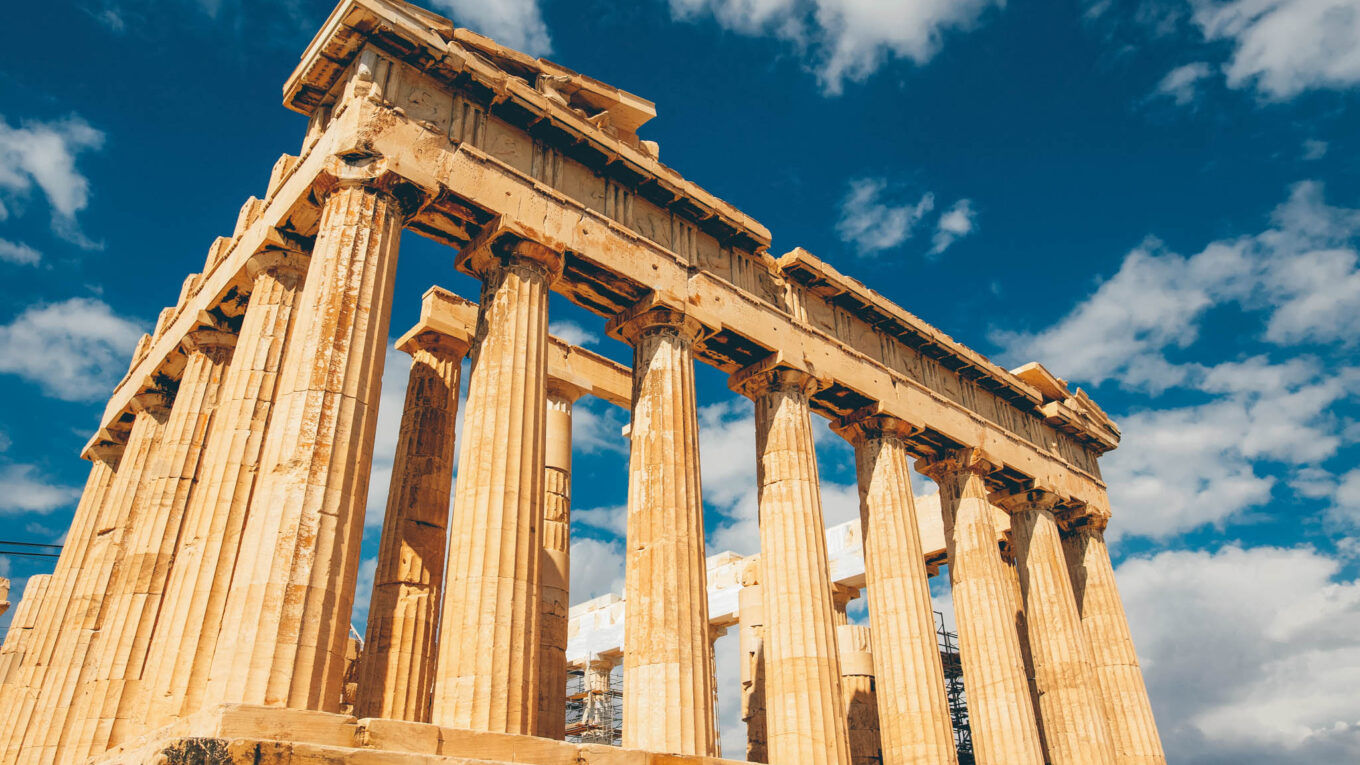
Architecture of Athens, Greece
Athens is a unique city that contains many incredible works of architecture. Athens originated as one of the leading ancient Greek city-states. It was a major center for philosophy, mathematics, literature, and theater. Later on, it was a prominent city in both the Roman and Byzantine Empires. The Ottoman Turks eventually seized all of Greece, and they too left their mark on the city. When the Greeks achieved their independence in 1832, they chose Athens to be their capital city. Since then, Athens has exploded in size and population, and today, it is a bustling and lively metropolis that still maintains close ties with its ancient roots.
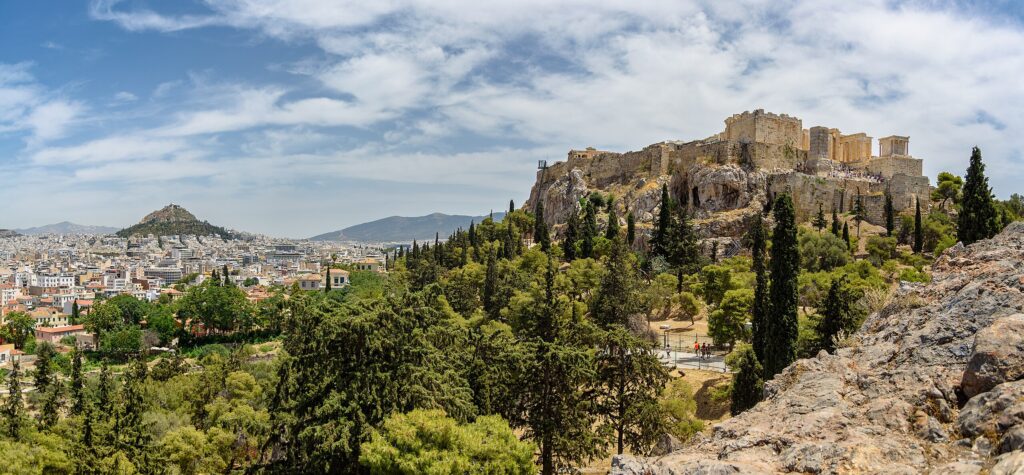
Map of Athens
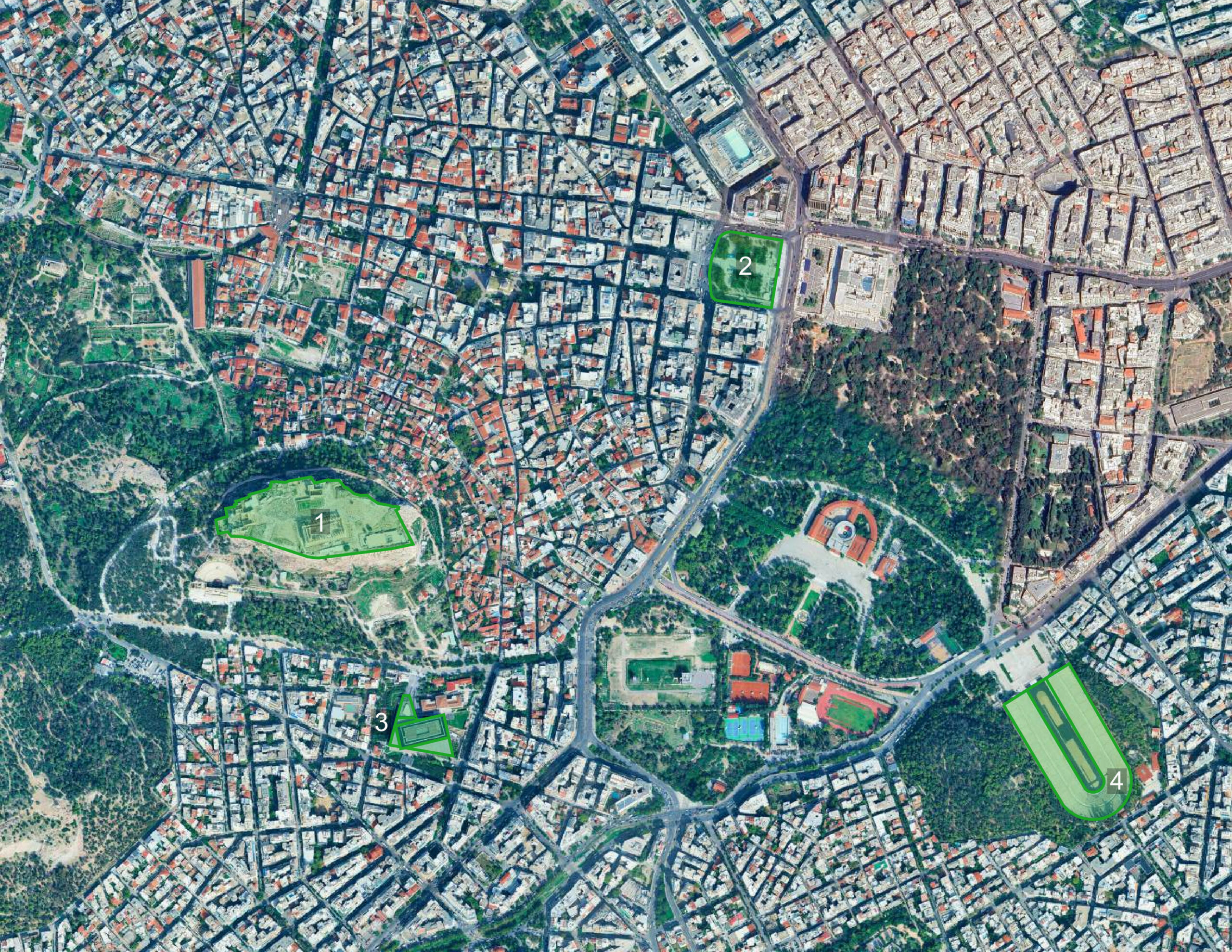
Map of Athens highlighting some of the city’s main attractions.
1. The Acropolis
2. Syntagma Square
3. Acropolis Museum
4. Panathenaic Stadium
Table of Contents
Use these buttons to navigate to different sections of the article
History of Athens
Unifying Elements in Athenian Architecture
Throughout Athens, there are several unifying elements tying the whole city together. These themes are found throughout the city center and are also woven into the more contemporary architecture of Athens.
Layers of History
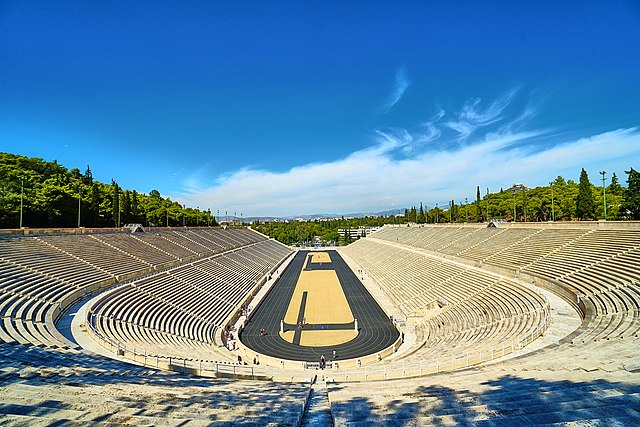
One distinct element found throughout Athens is overlapping layers of history. It’s very common to see Greek, Roman, Byzantine, and Ottoman buildings in close proximity to one another. There are also many instances of buildings being expanded and renovated in different eras. A great example of this is the Panathenaic Stadium, which was built for the 1896 Athens Olympics. The structure sits atop a much older stadium, constructed by the Ancient Greeks in 330 BCE.
The Acropolis
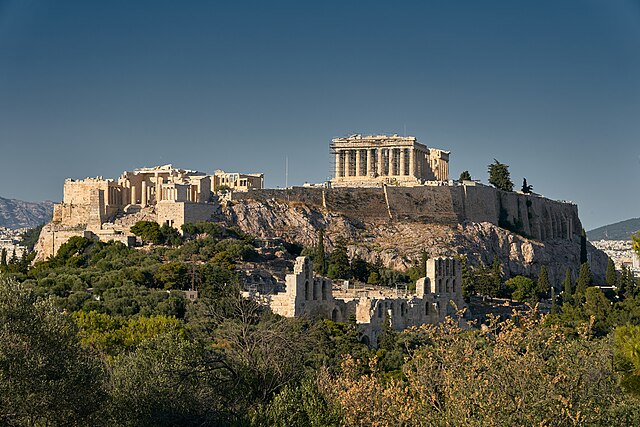
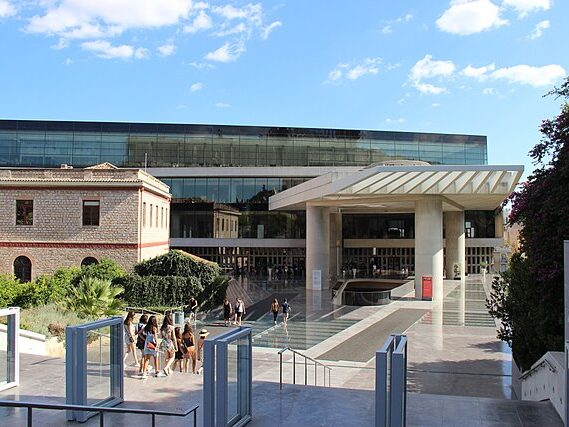
The Acropolis is, of course, the most well-known site in all of Athens. It’s located in the heart of the city, and it sits high above all the buildings in the surrounding area. The Acropolis is the city’s focal point, and many modern structures are specifically designed with windows and terraces facing its slopes. A great example of this is the Acropolis Museum – a modern structure located at the base of the Acropolis Hill. The museum contains many important Athenian Artifacts, and its upper floors offer amazing views of the ancient Acropolis.
Neoclassicism
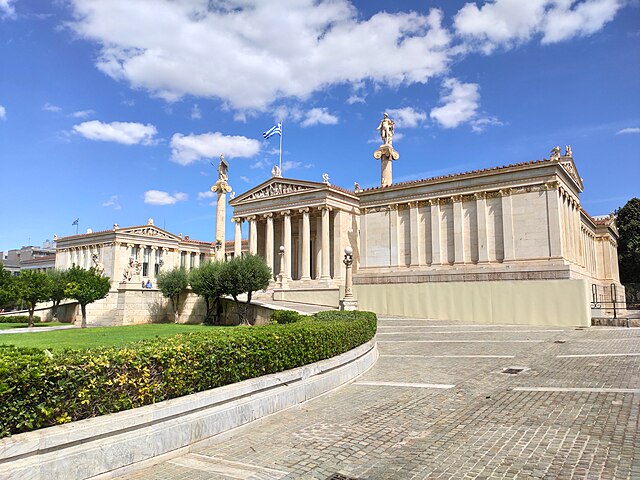
One final element that repeats throughout the city of Athens is the practice of Neoclassicism. Neoclassical Architecture is a building style focused on replicating the Architecture of the Ancient Greeks and Romans. Neoclassicism was very popular during the 19th-century Revival Movement, and it is still practiced by many modern Athenian architects. The image above shows the Academy of Athens, a Neoclassical building dating from the late 1800s.
Ancient Greek Architecture in Athens
Athens was one of the most powerful city-states in the Ancient Greek World. The city was home to many notable Greek scholars and philosophers, and the Athenians were vital during the invasions of the Persian Empire. There are many surviving examples of Ancient Greek Architecture throughout Athens. Many of these structures, such as the Temple of Hephaestus, are well preserved and maintain their original appearance. Athens contains some of the world’s greatest examples of Ancient Greek Architecture, and the Parthenon remains one of the most recognizable structures ever built.
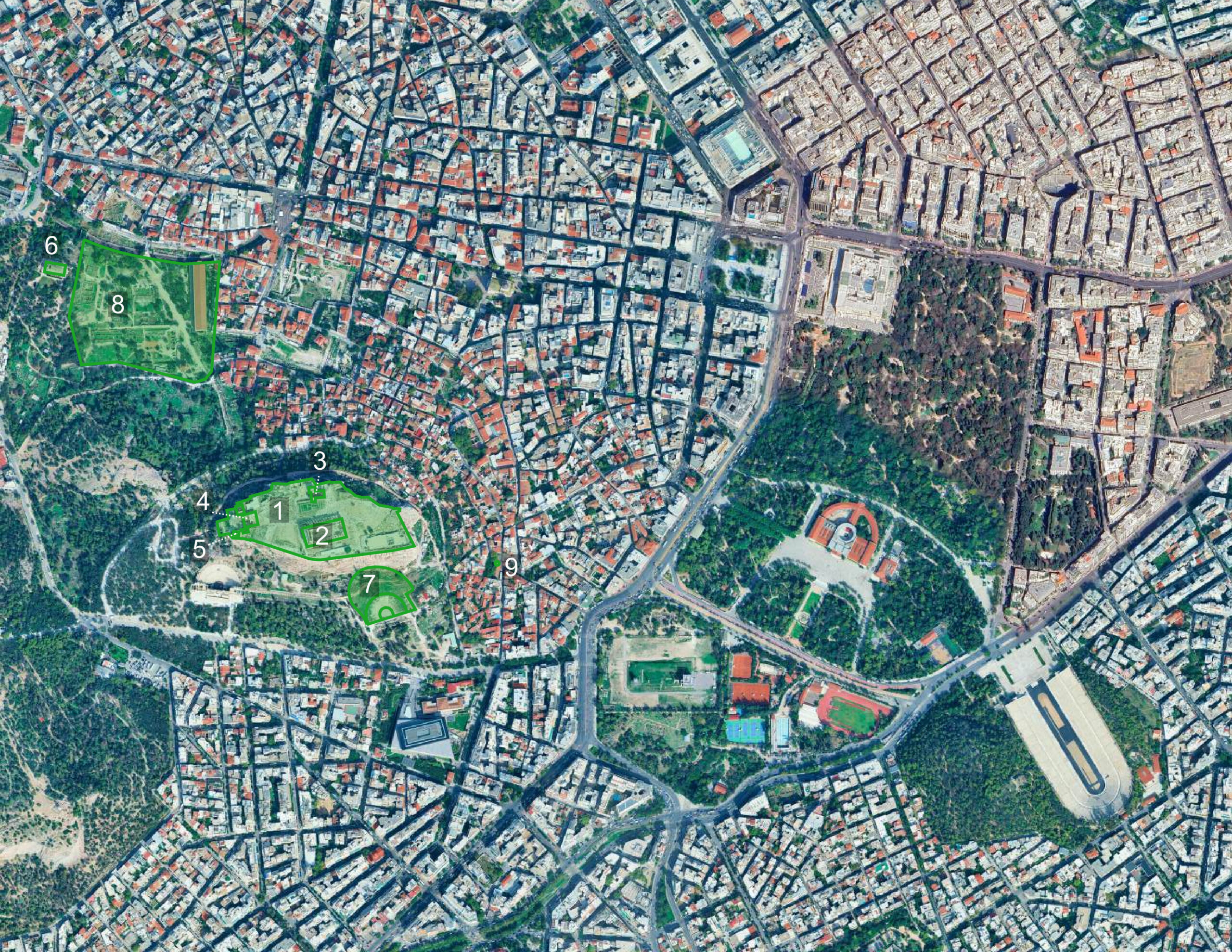
Map of Athens highlighting the most notable works of Ancient Greek Architecture in the city.
1. The Acropolis
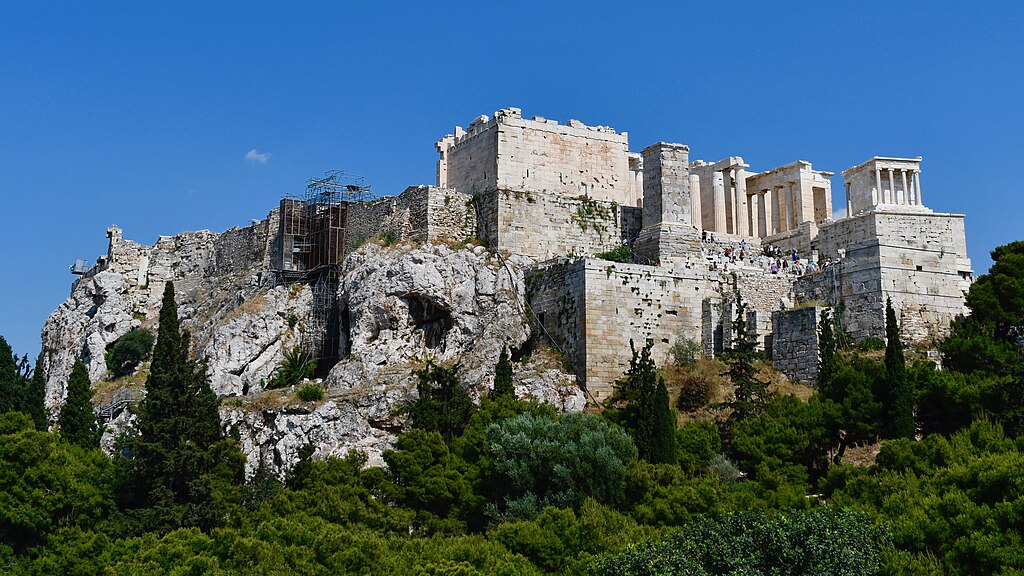
The Acropolis originated as a large fortified hilltop at the center of Athens. Over time, the Acropolis became home to a lengthy ceremonial promenade that connected the upper hilltop with the rest of the city below. The Athenians revered the Acropolis as a sacred place and an area of refuge during attacks. The Acropolis is partly a natural rock formation, and partly a man-made plinth dating from the Ancient Greek Period. The Acropolis was destroyed and rebuilt several times throughout history, most notably after the Second Persian Invasion of Greece in 480 BCE.
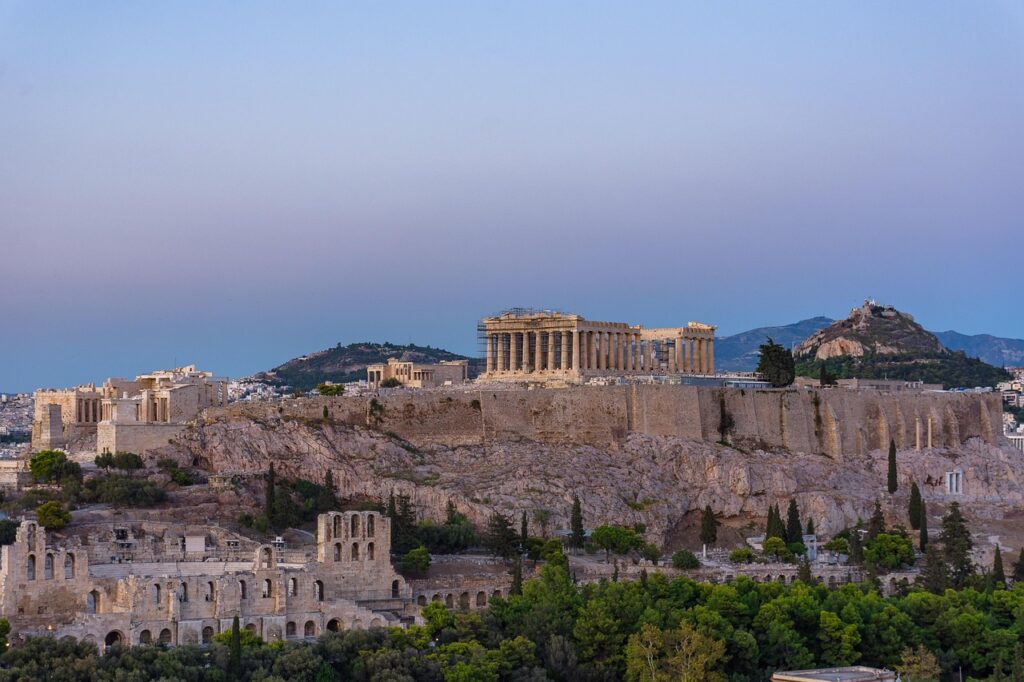
During the Roman Period, the Acropolis became more heavily fortified. Two stone gates were added along the sacred promenade, which helped protect against barbarian raids. This practice continued in the Middle Ages, when several stone watch towers were added to the edges of the site. Today, it’s easy to tell the difference between the older and newer portions of the Acropolis. The ancient parts are made from large and precisely cut marble blocks, while the newer portions are made from an assortment of roughly cut stones.
2. The Parthenon
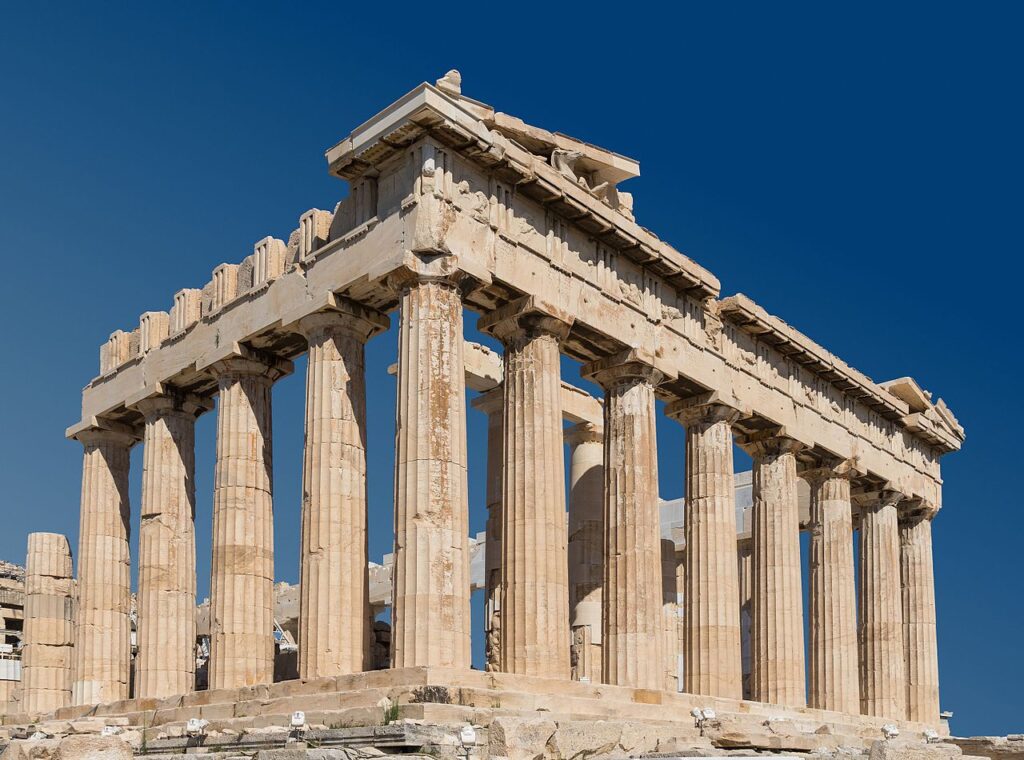
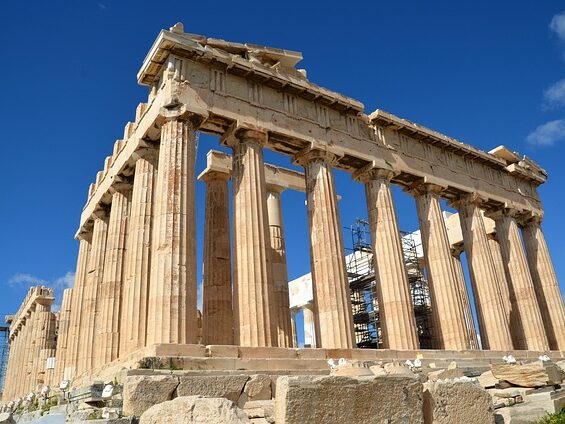
The Parthenon is the world’s most famous Ancient Greek temple. Construction began on the Parthenon in 447 BCE, shortly after Athens was sacked by the Persians. It was commissioned by the Athenian statesman Pericles, and it replaced an older building that was destroyed. The Parthenon is located at the very top of the Acropolis, and it is visible from all across Athens. The building is a Doric Style Temple, the simplest and earliest type of Greek Temple. Doric Temples utilize Doric Columns, which are simpler and less decorative than Ionic and Corinthian Columns.
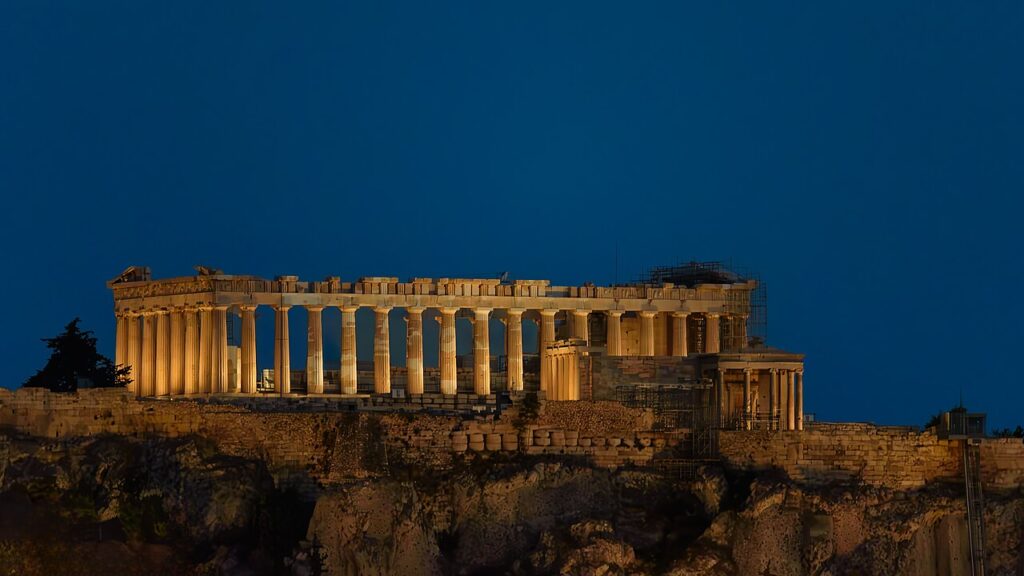
The Parthenon was dedicated to the goddess Athena, the namesake of the city of Athens. The building has seen significant challenges throughout its history. The temple fell into disrepair during the Ottoman Period, and it was heavily damaged during an explosion from the Athenian Siege of 1687. The temple was extensively restored during the early 1900s, but unfortunately, those early restorations left behind severe structural problems. Over the past few decades, experts have extensively analyzed the remaining structure. Today, there is an ongoing project that plans to restore the Parthenon to its appearance before the 1687 explosion.
3. Erechtheion
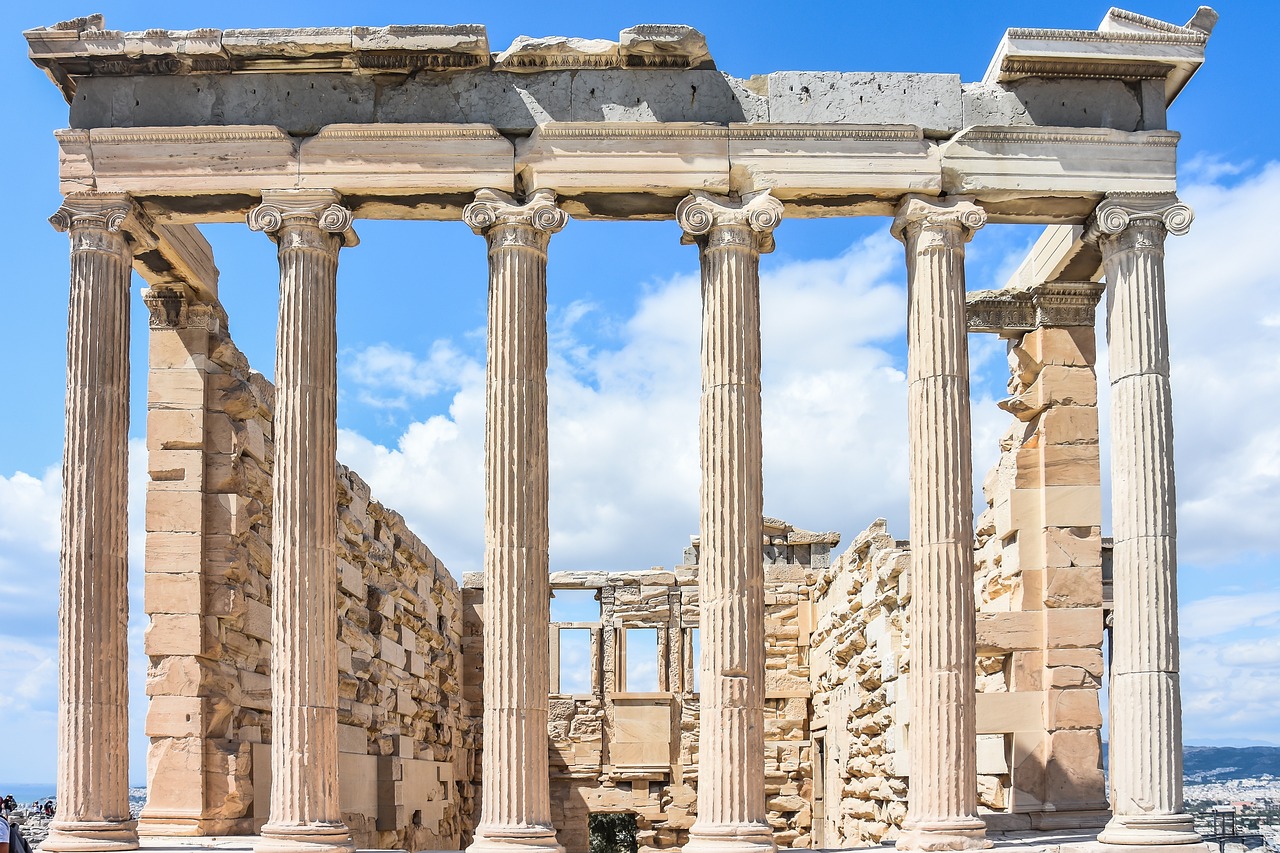
The Erechtheion is another important temple located atop the Acropolis. To the ancient Greeks, the Erechtheion was even more significant than the Parthenon, and it was the termination point of all important ceremonial processions. The Erechtheion is a great example of an Ionic-style temple. Ionic was the second evolution of the Greek temple, known for column capitals decorated with scrolls. The Erechtheion was expanded and altered several times throughout history, and it is uniquely asymmetrical.
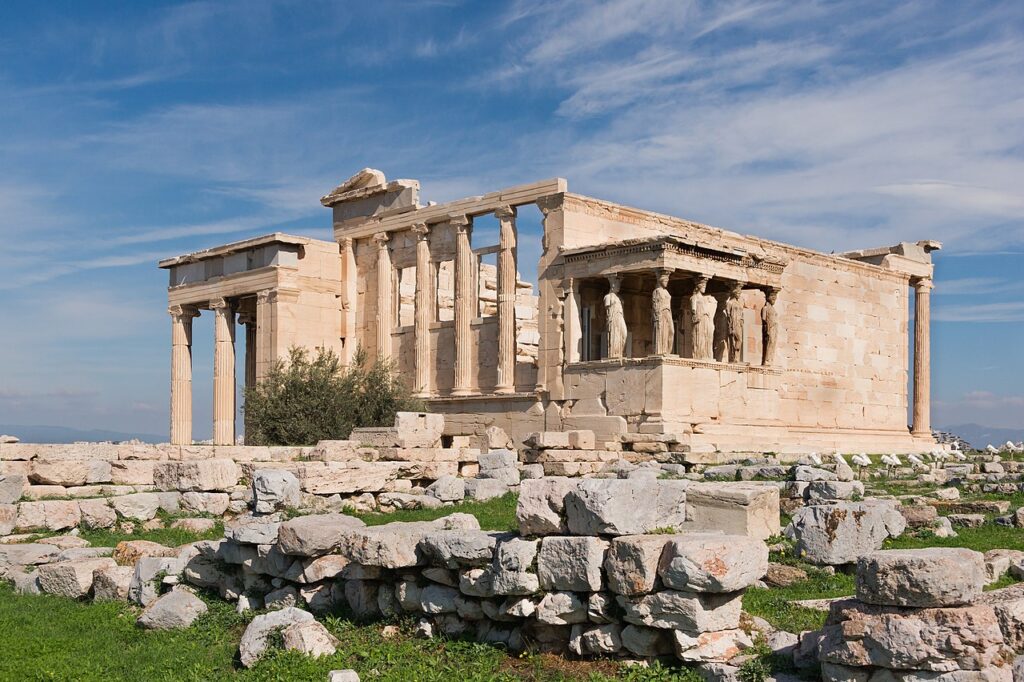
The Erechtheion is also famous for its south porch, which contains columns made from elegant female statues. This was a unique design in the Ancient Greek world, and these statues still impress visitors today. Like many of the historic stone sculptures from the Acropolis, the original statues have been transferred to the nearby Acropolis Museum. The statues that are currently located outside in the elements, are reproductions.
4. Propylaea
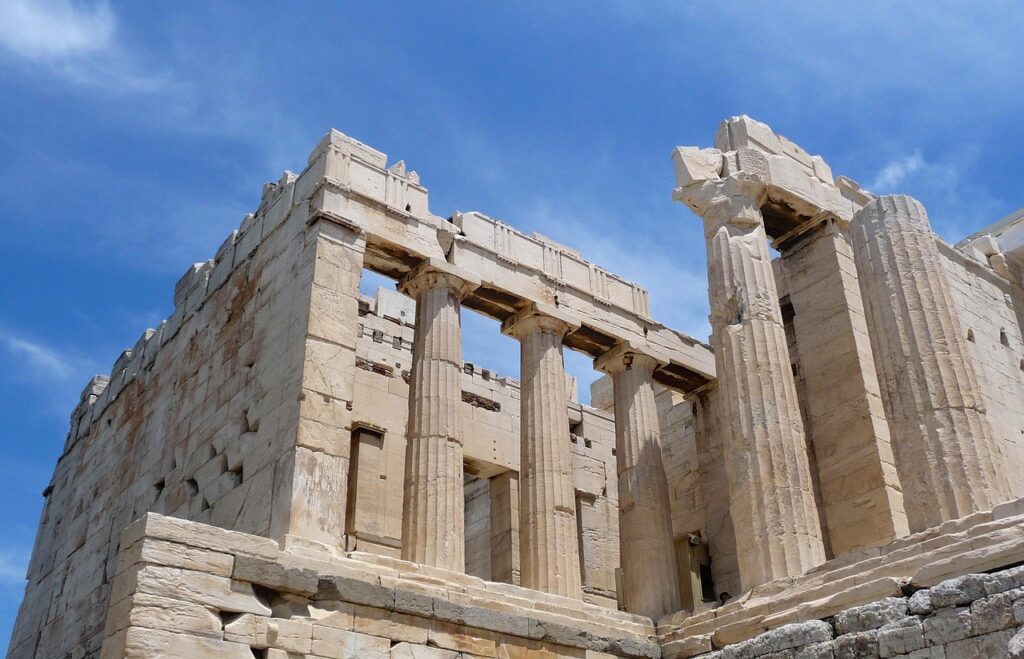
The Propylaea is the main gateway to the Acropolis. It dates to the 5th century BCE, and like the Parthenon, it is designed in the Doric Style. The Propylaea is made from white marble, and during ancient times, it was brightly painted with vibrant colors. These colors have long since faded, but they once decorated all of the monuments on the Acropolis. Ancient Greek paints were made from rare earth minerals, which were imported from all across the Mediterranean.
5. Temple of Athena Nike
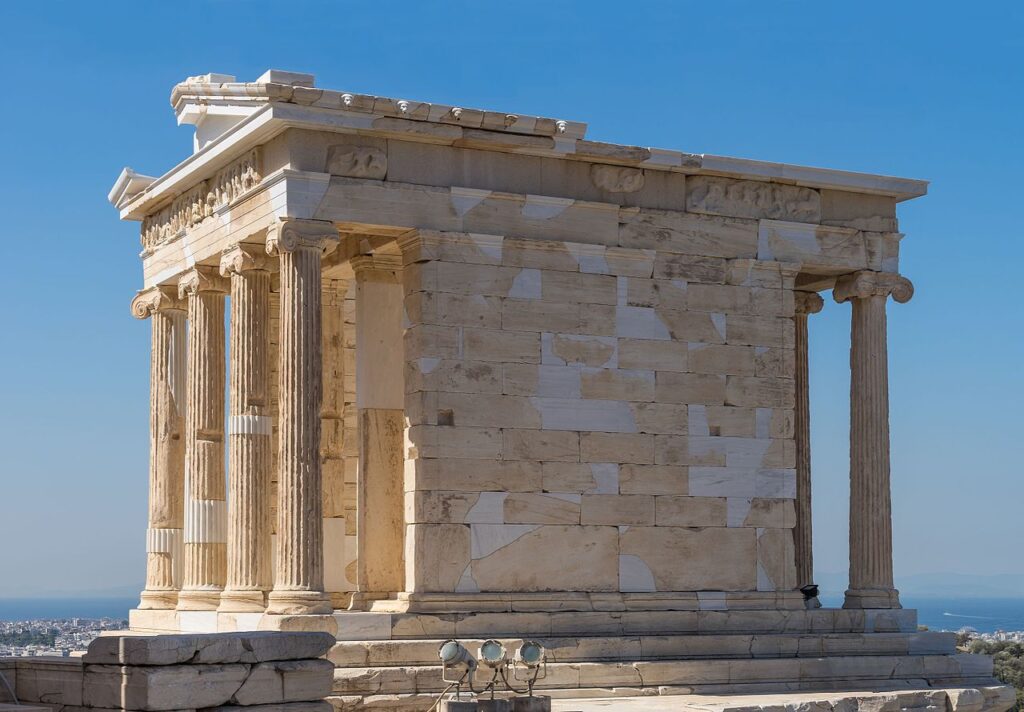
The Temple of Athena Nike is another small temple located at the top of the Acropolis. It was constructed around 420 BCE and was built to commemorate two deities, Athena and Nike. Athena is the patron goddess of Athens, and Nike was a Greek term for Victory – and Victory was often personified as a female Goddess. The Temple of Athena Nike is another example of an Ionic-style temple. It sits at the western edges of the Acropolis, overlooking the main processional entrance.
6. Temple of Hephaestus
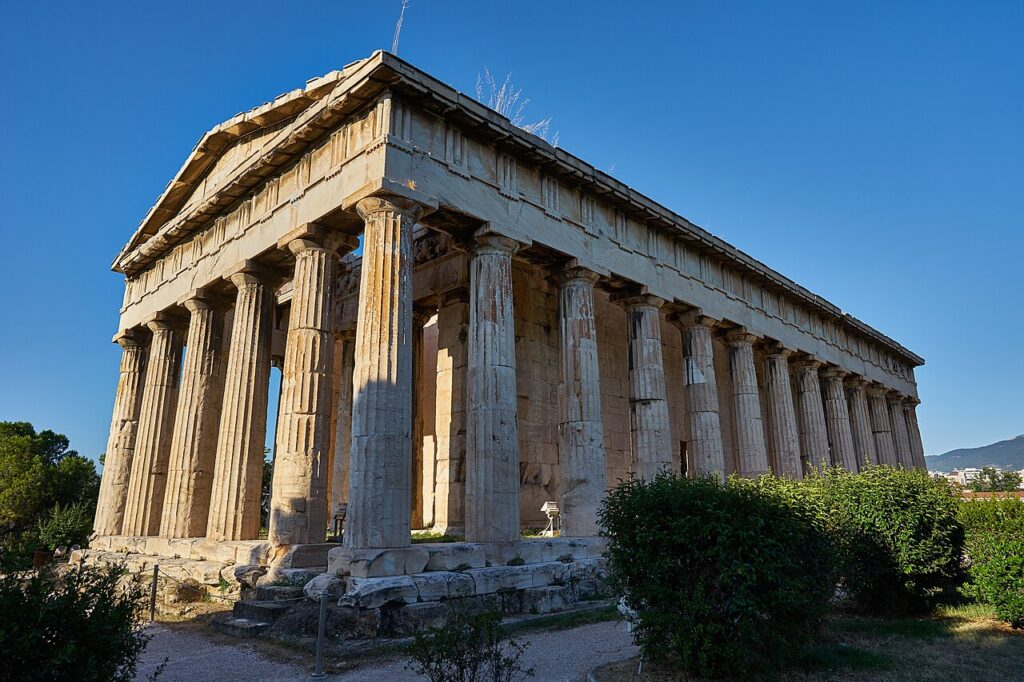
Often abbreviated as the Hephaestion, the Temple of Hephaestus is another incredible work of Ancient Greek Architecture in Athens. The temple is remarkably well-preserved. It still contains all of its original Doric Columns, as well as most of its friezes and pediments. The Temple of Hephaestus was constructed in the 5th century BCE and was dedicated to the Greek God Hephaestus. Hephaestus was the god of craftsmanship, metallurgy, and fire, and was one of the most revered figures in the Ancient Greek world.
7. Theatre of Dionysus
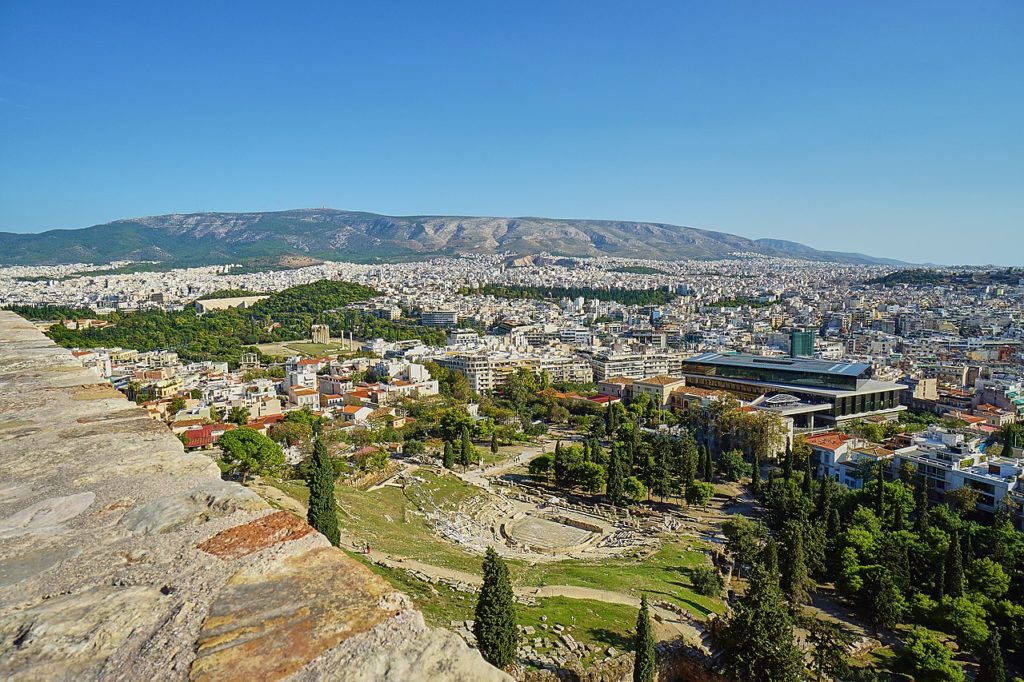
Theater was extremely popular in Ancient Greece. There were two main types of plays, Dramas and Comedies, and most Greek cities were outfitted with massive theater buildings. Athens’ theater was dedicated to Dionysus, the God of wine, festivity, and theater. The rows of seats were constructed into the hillside on the southeastern slope of the Acropolis beginning in the 6th century BCE. Today, the structure lies mostly in ruin, and many of the ancient stones have been taken for other buildings.
8. Agora of Athens
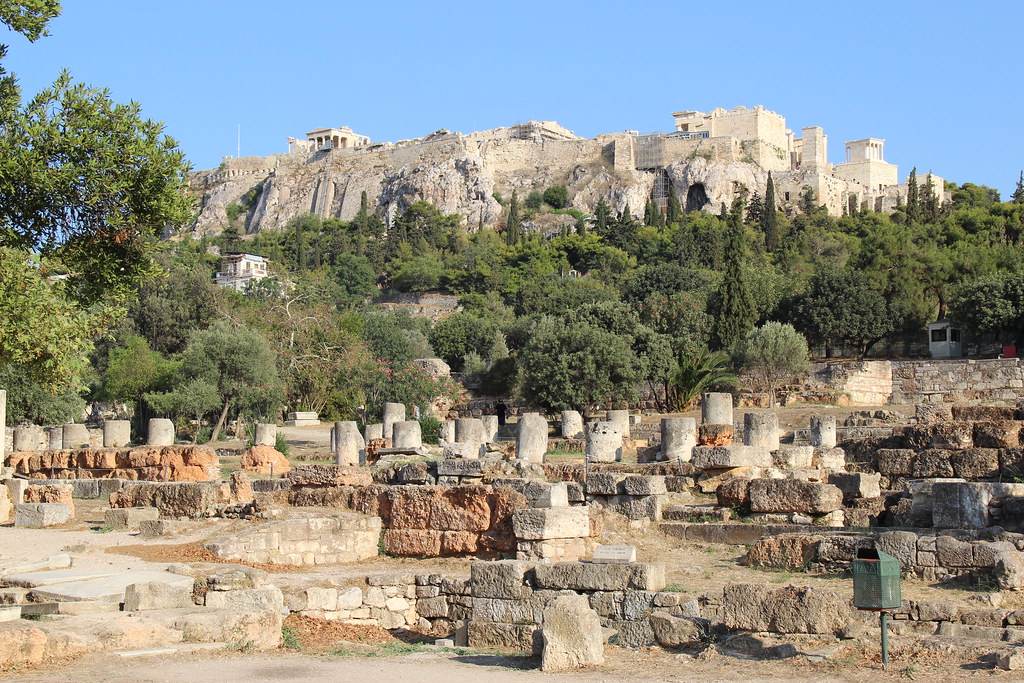
The Agora was a collection of public buildings and open squares that was the cultural, political, and economic center of all Ancient Greek cities. The Agora of Athens is famous as the birthplace of Democracy, and it was once frequented by both Socrates and Plato. Today, the Agora contains a vast assortment of ruins, dating from the Greek, Roman, and Byzantine eras. The Agora is also located alongside other notable buildings like the Stoa of Attalos and the Temple of Hephaestus.
9. Monument of Lysicrates
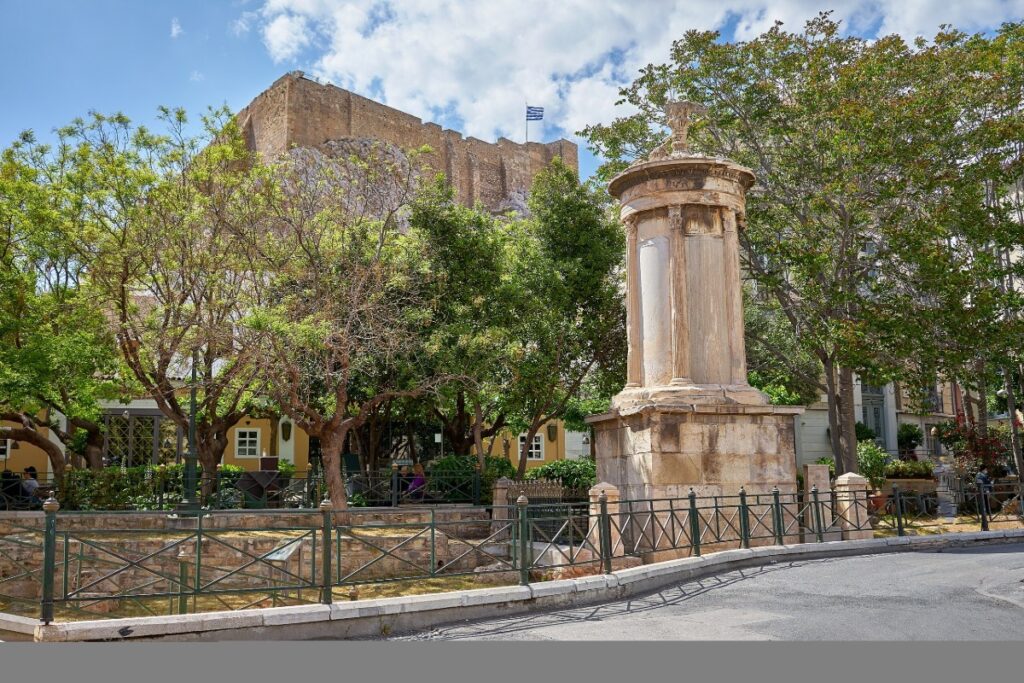
Located just below the Acropolis, the Monument of Lysicrates is a small but well-preserved example of ancient Greek architecture. The monument was constructed around 334 BCE, and its design contains several Corinthian columns.. Corinthian was the third and final adaptation of the Greek Column, and it’s the most elaborate and detailed of the three types. These columns are known for their leafy sculptural elements and were also utilized extensively by the Romans. The Monument of Lysicrates has been replicated numerous times, and similar structures can be found in many parks and cemeteries.
Ancient Roman Architecture in Athens
After a lengthy conflict lasting from 214 to 146 BCE, Greece was taken over by the Roman Republic. The Romans were fond of Greek Culture, and they modeled much of their architecture on earlier Greek buildings. Athens remained an important city in Roman times, and several emperors commissioned large-scale projects within the city. Emperor Hadrian was particularly fond of Athens, and several buildings were constructed during his reign, including temples, a library, and a Triumphal Arch. Athens’ Roman Monuments rival some of its Greek structures in terms of their size, splendor, and importance.
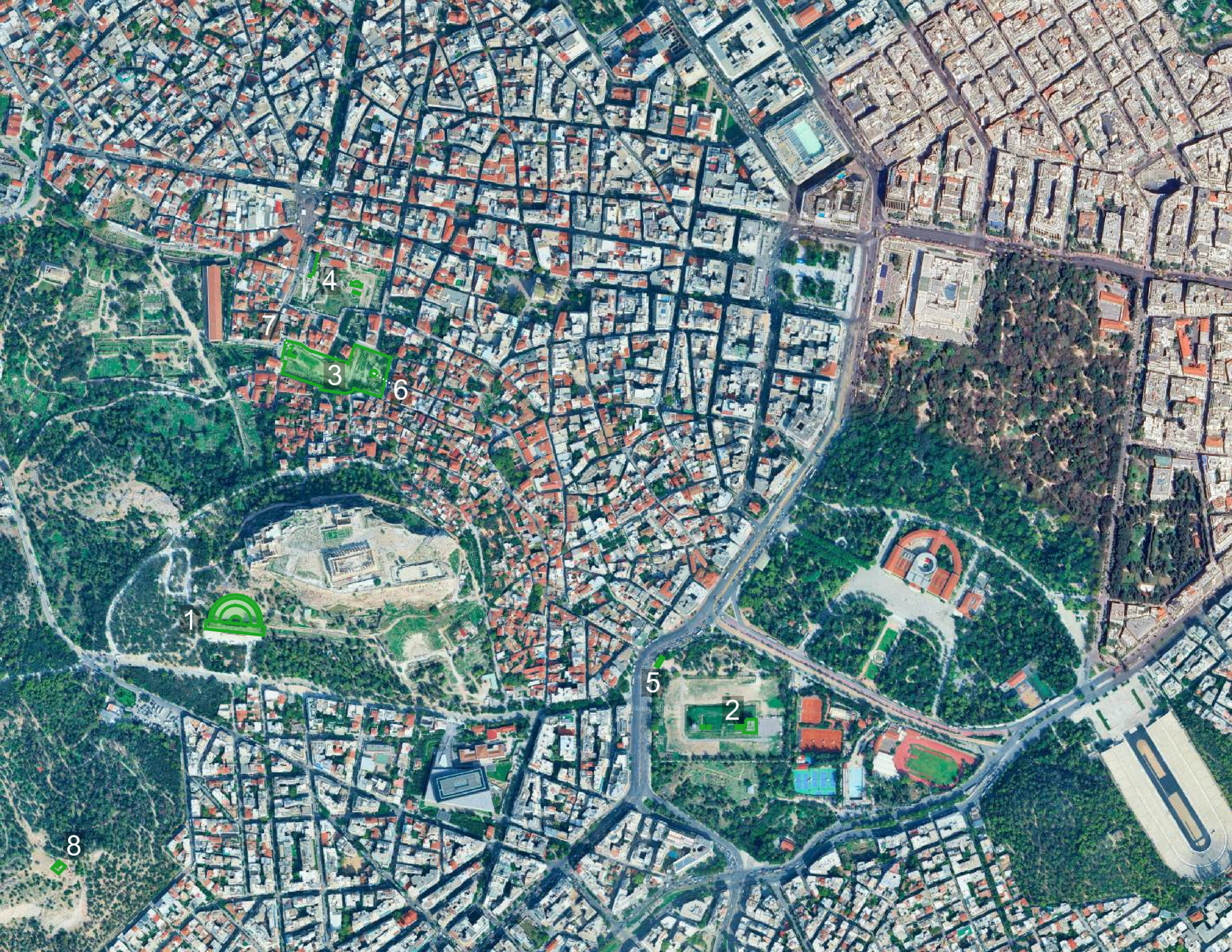
Map of Athens highlighting the most notable works of Ancient Roman Architecture in the city.
1. Odeon of Herodes Atticus
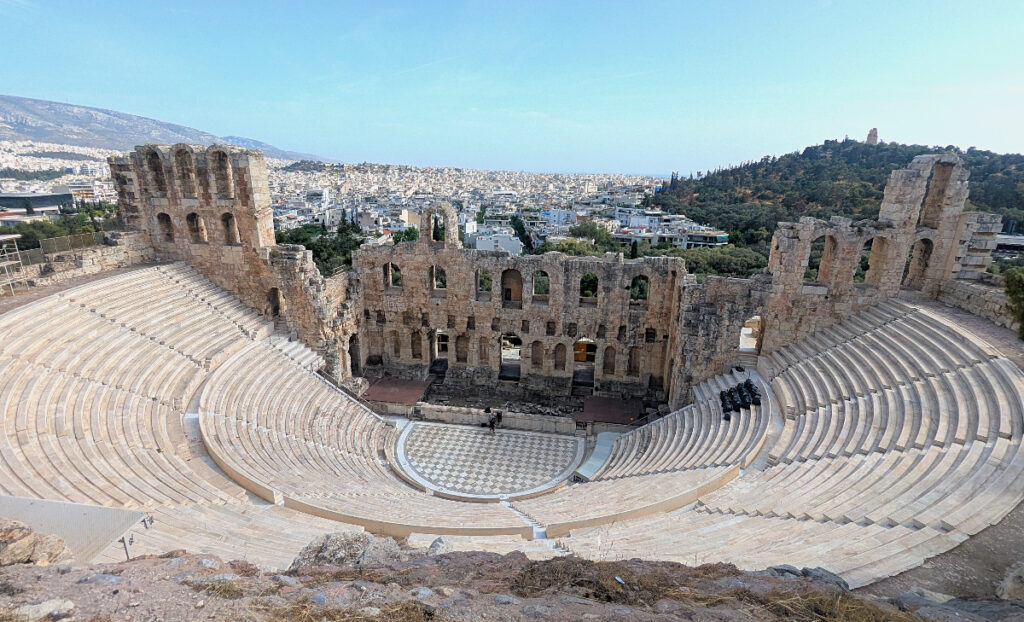
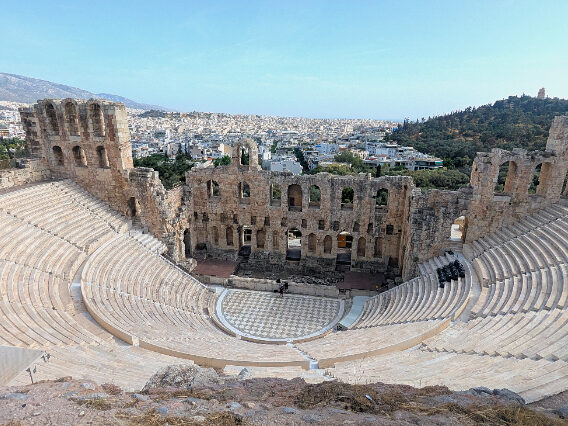
The Odeon of Herodes Atticus is the most impressive work of Roman architecture in Athens. It was constructed in the 2nd century CE and commissioned by a wealthy Athenian statesman known as Herodes Atticus. The structure is a great representation of a typical Roman Theater, and it contains a striking backdrop of rounded arches and niches. This backdrop is known as the Scaenae Frons, and it once housed an assortment of decorations and statues.
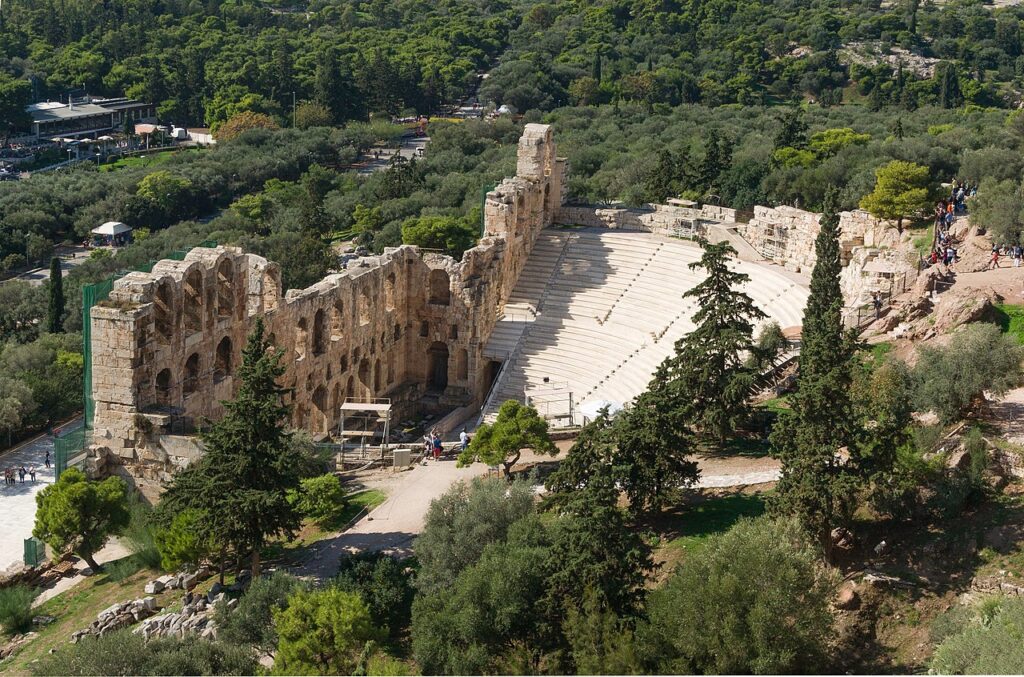
Like the Theater of Dionysus, the Odeon of Herodes Atticus was constructed into the slopes of the Acropolis. Visitors who walk up the Acropolis’s main pathway can look down onto the odeon just before entering the Propylaea. The entire structure is remarkably well preserved, and most of its seats and backdrop remain intact. Today, the Odeon of Herodes Atticus is beloved by the Athenian people, and it is still used for concerts and plays.
2. Temple of Olympian Zeus
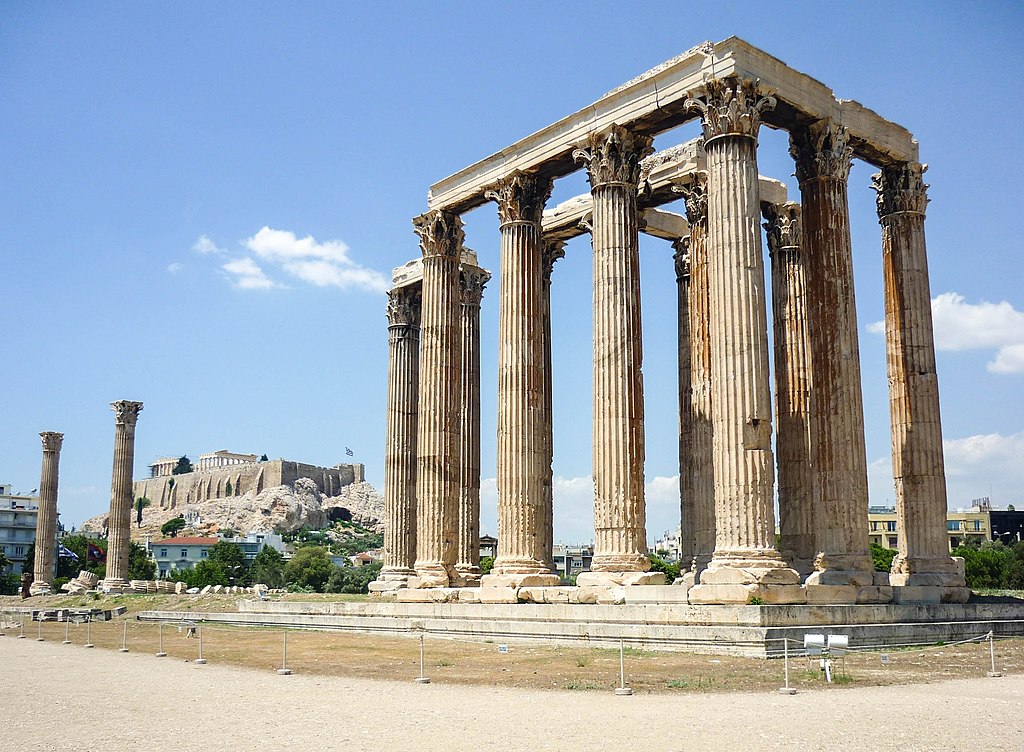
The Temple of Olympian Zeus is another impressive example of Ancient Roman Architecture in Athens. Work on the temple began in the 6th century BCE, but the project stalled over the centuries. During the reign of Emperor Hadrian, a large push was made to complete the building. Work was finally finished in 131 CE, and at that time, the Temple of Olympian Zeus was the largest temple in all of Greece. It was designed in the Corinthian Style, which was the final and most elaborate typology of the Greek Temple. Today, over a dozen of the building’s original Corinthian columns still remain.
3. Roman Forum of Athens
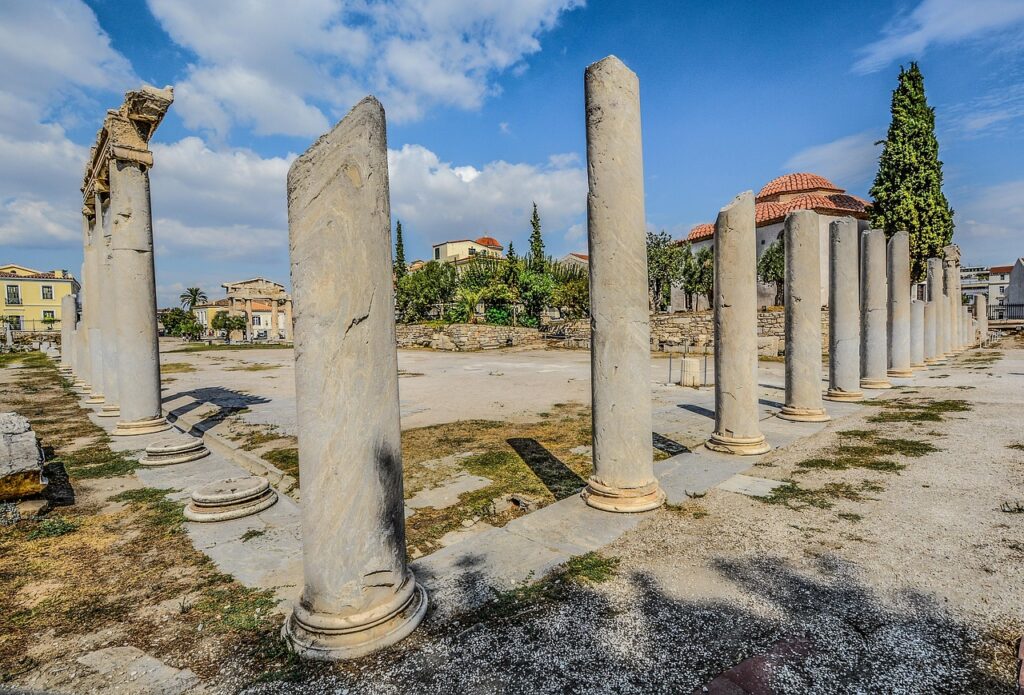
In addition to an Ancient Greek Agora, Athens also contains a large Ancient Roman Forum. The forum is located just north of the Acropolis, on the edges of Athens’ Plaka neighborhood. The area surrounding the forum is very lively and filled with numerous bars and retailers. The Roman Forum of Athens still contains many relics from ancient times. In the image above, you can see the remnants of a large open courtyard, once lined with Ionic columns.
4. Library of Hadrian
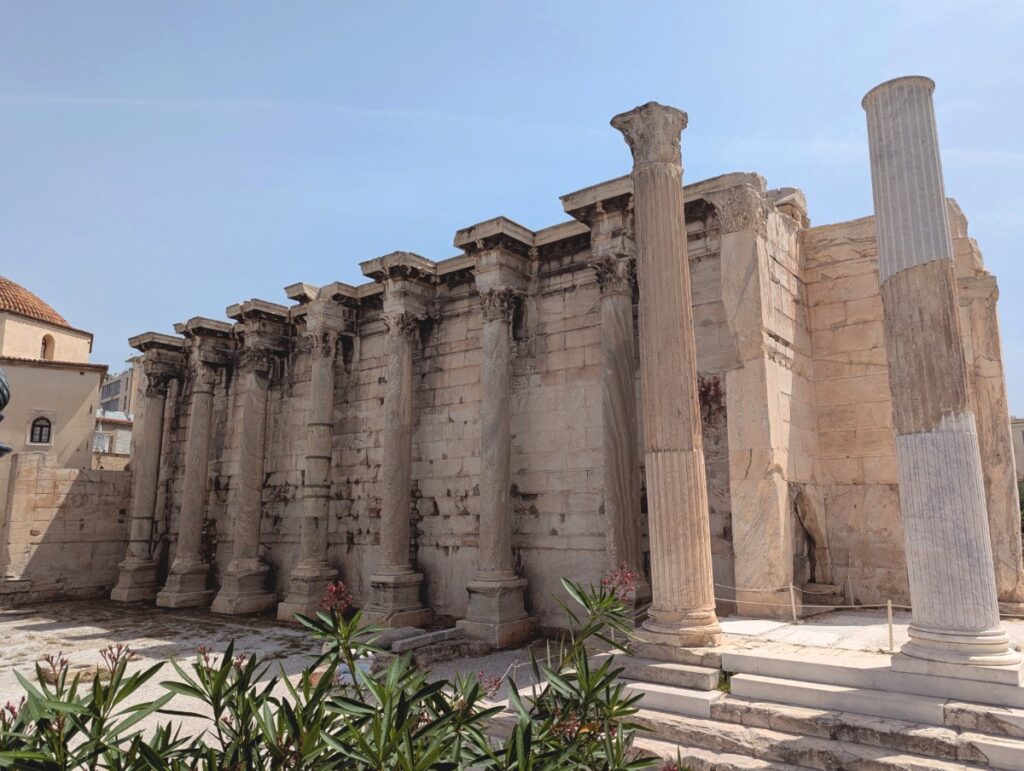
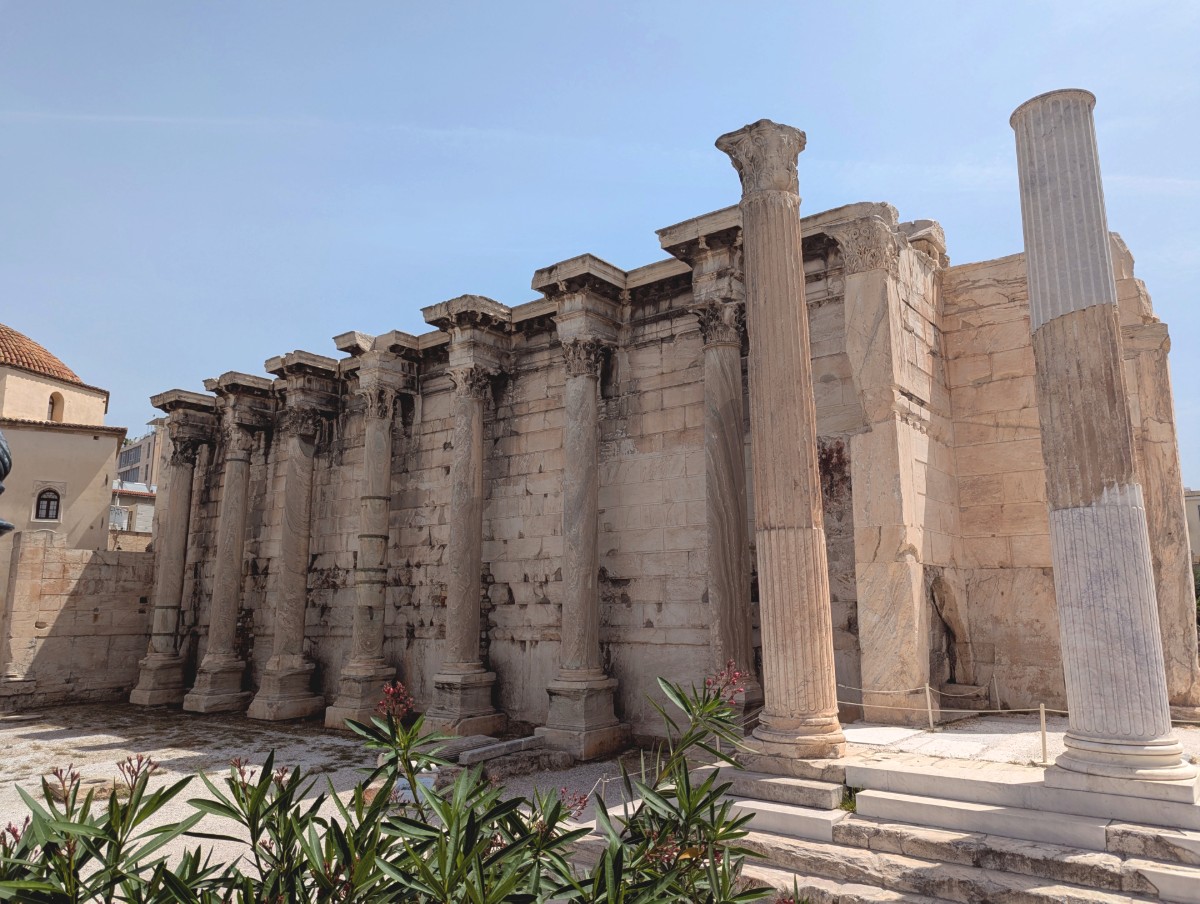
Hadrian was one of Rome’s greatest emperors. He ruled during a high point for the empire, and he was regarded as a phenomenal administrator. Hadrian constructed numerous monuments within Athens. One of his largest projects was a massive library, located not far from the Roman Forum. Although now mostly lost, the image above shows the most impressive remnants of the Library of Hadrian. The building once had a large assortment of reading rooms enclosed by walls and Corinthian columns.
5. Arch of Hadrian
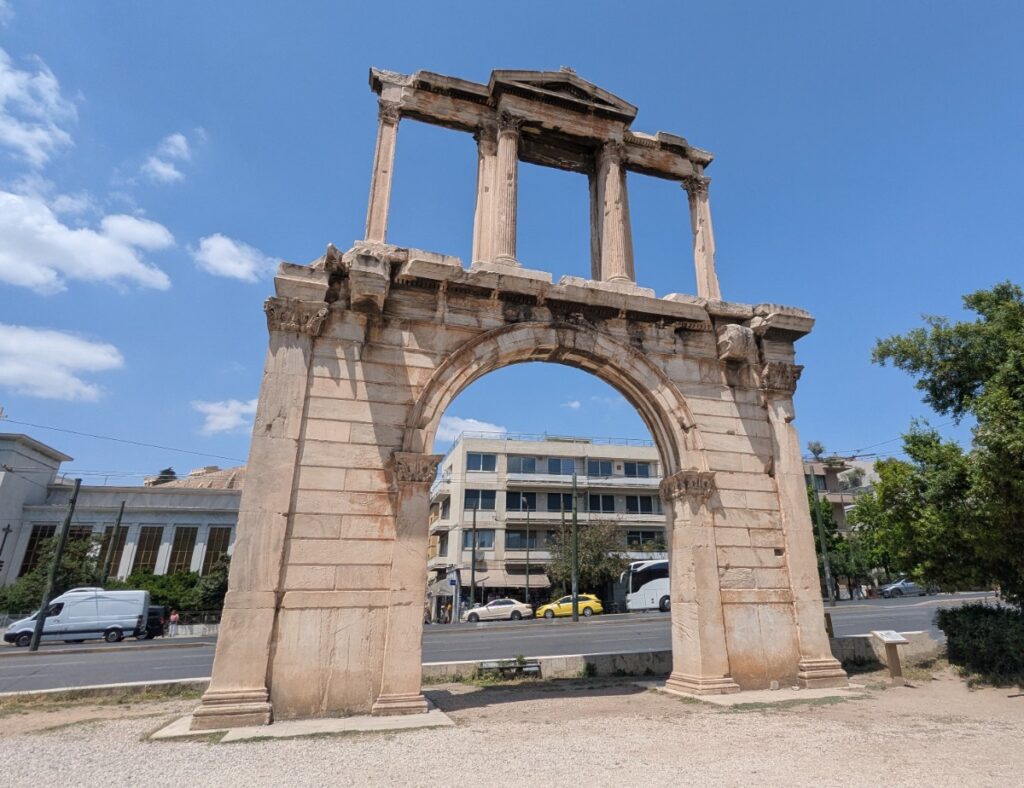
In addition to a new library, Hadrian also commissioned a massive Triumphal Arch within Athens. Triumphal Arches were common throughout the Roman Empire. They were constructed to commemorate important people, places, and events. The Arch of Hadrian was constructed in 132 CE, and it contains Corinthian Columns and other classical details. The arch overlooks one of the busiest roads in modern-day Athens, and it’s located near other Roman sites like the Temple of Olympian Zeus.
6. Tower of the Winds
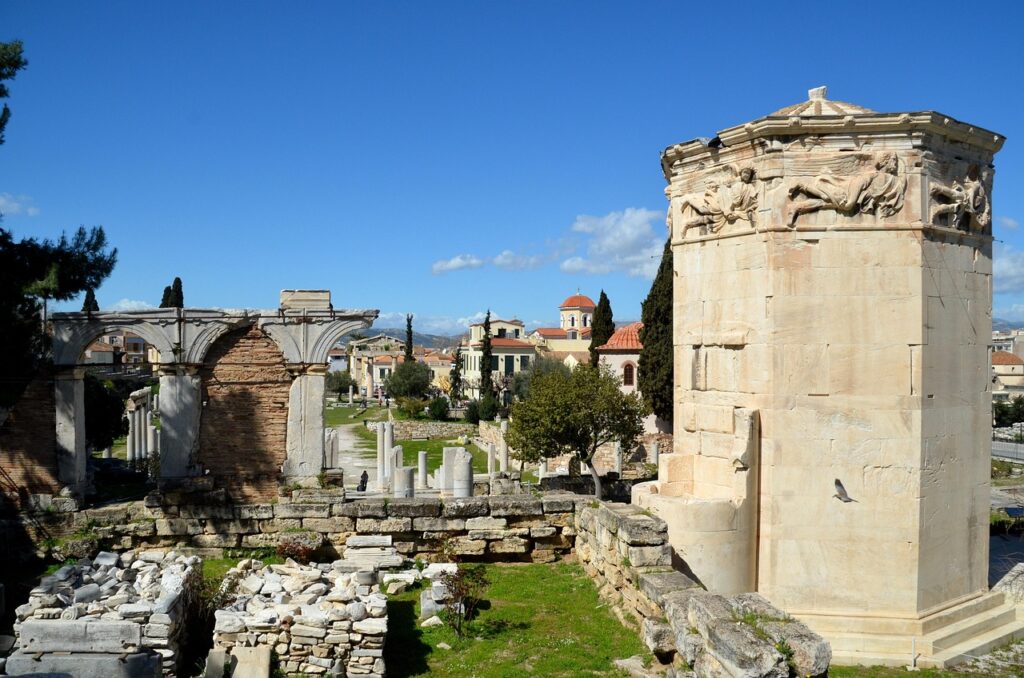
The Tower of the Winds is an ancient structure, located within the Roman Forum of Athens. It was constructed in the 1st century BCE and originally functioned as a type of clock tower that utilized sundials. The design of the tower is not like that of Roman Buildings, and it borrows most of its elements from older Athenian Architecture. The simple octagonal exterior is decorated with eight stone friezes depicting different deities.
7. Gate of Athena Archegetis
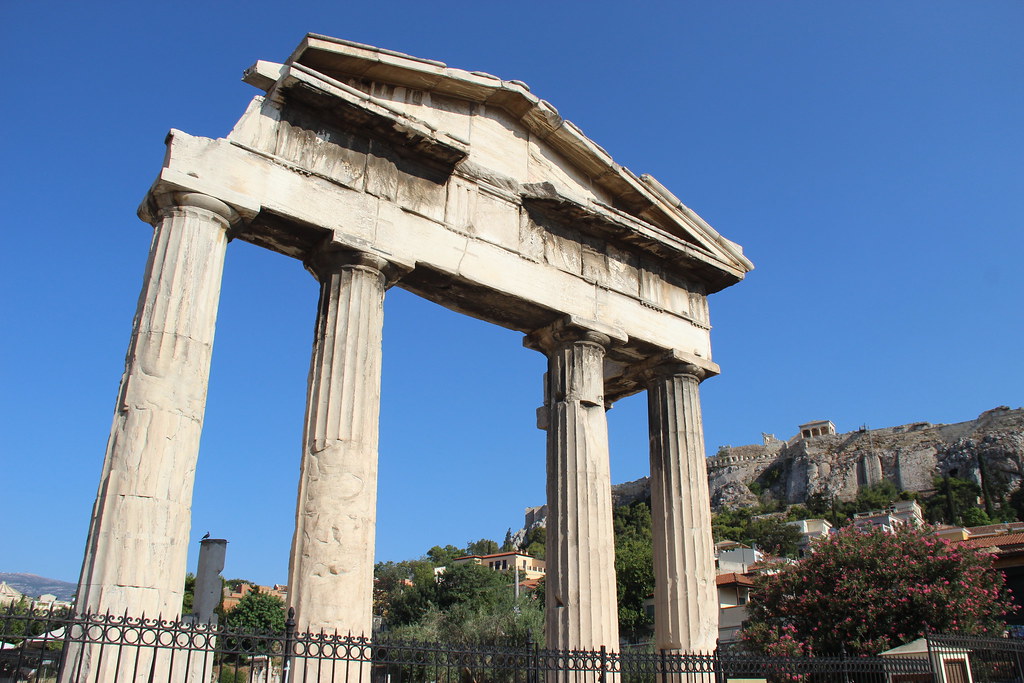
The Gate of Athena Archegetis is another Roman-era structure in Athens. It’s built in the style of a Doric Temple. The Romans were very fond of Ancient Greek Architecture and would replicate it throughout their empire. The Romans constructed a great number of Corinthian-style buildings, but in Greece, it was common for the Romans to use Doric and Ionic elements. The Gate of Athena Archegetis sits at the edges of the Roman Forum, in the heart of modern-day Athens..
8. Philopappos Monument
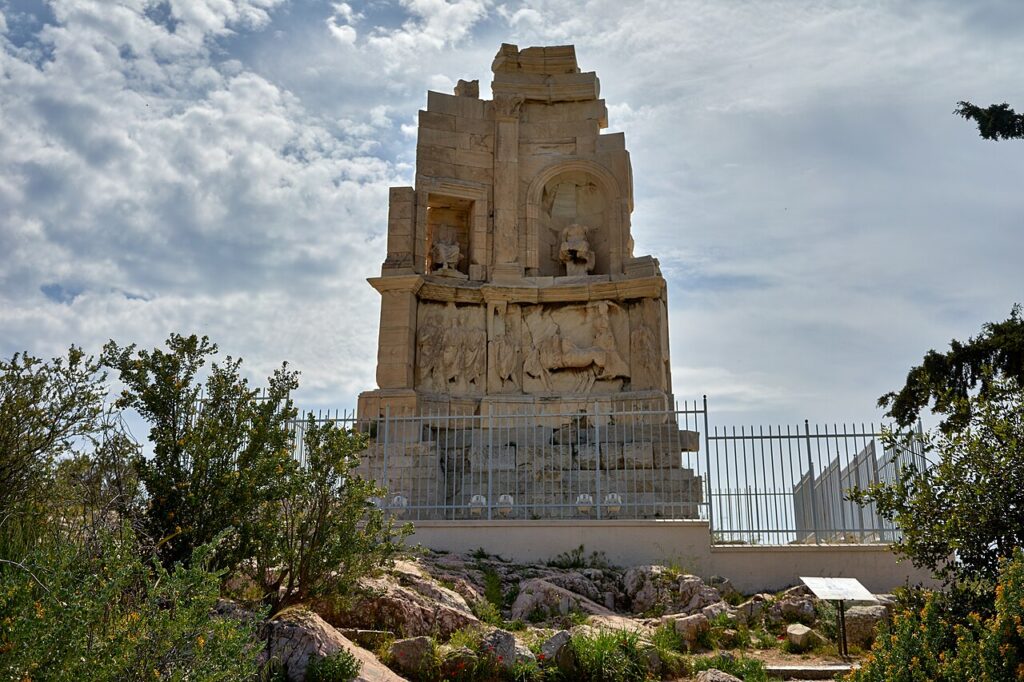
The Philopappos Monument is an ancient Roman Mausoleum located on the top of Mouseion Hill in central Athens. The structure was commissioned by the family of Philopappos, a wealthy Greek man who came from a royal bloodline. The structure once housed a collection of marble friezes and statues, many of which are now lost. Today, anyone willing to climb the hill and visit the Philopappos Monument is rewarded with commanding views of the Acropolis and the entire city of Athens.
Like Architecture of Cities? Sign up for our mailing list to get updates on our latest articles and other information related to Architectural History.
Byzantine & Ottoman Architecture in Athens
During the later stages of the Roman Empire, the vast Roman territory was split into an eastern half and a western half. The Western Roman Empire eventually fell in 476 CE, but the Eastern Roman Empire lived on for centuries. Many historians refer to the later Eastern Roman Empire as the Byzantine Empire. The Byzantines would control Athens for nearly 1,000 years, and in that time, they constructed several churches throughout the city. Slowly, the Athenian population transitioned from Paganism to Christianity.
Eventually, in 1453, the Ottoman Turks would besiege Constantinople and take control of what was left of the Byzantine Empire. Athens then entered six centuries of Ottoman Rule. The Ottomans suppressed Greek culture and traditions, but they never managed to destroy the spirit of the Greeks. There are sporadic examples of Ottoman Architecture throughout Athens, including a few mosques and palaces.
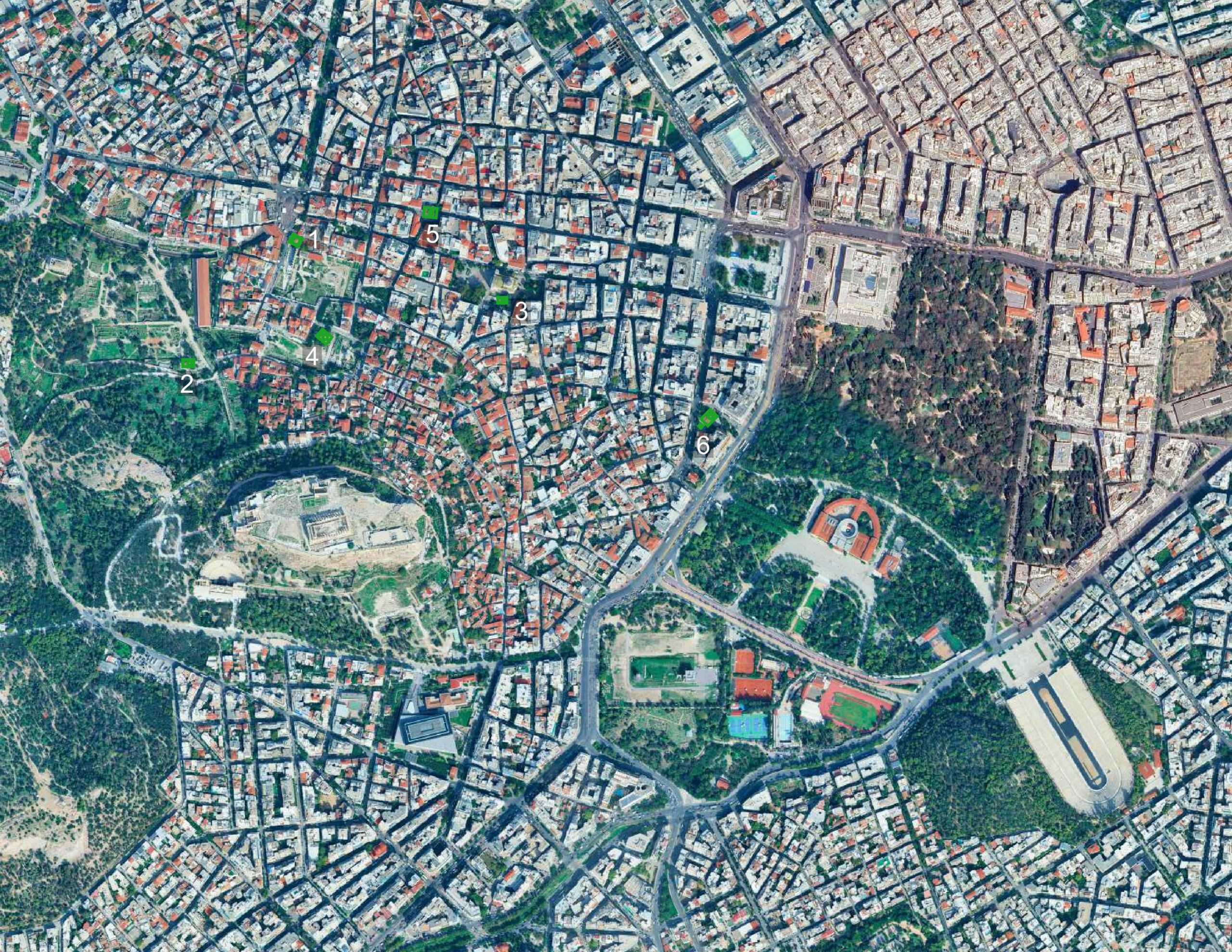
Map of Athens highlighting the most notable works of Byzantine & Ottoman Architecture in the city.
1. Tzistarakis Mosque
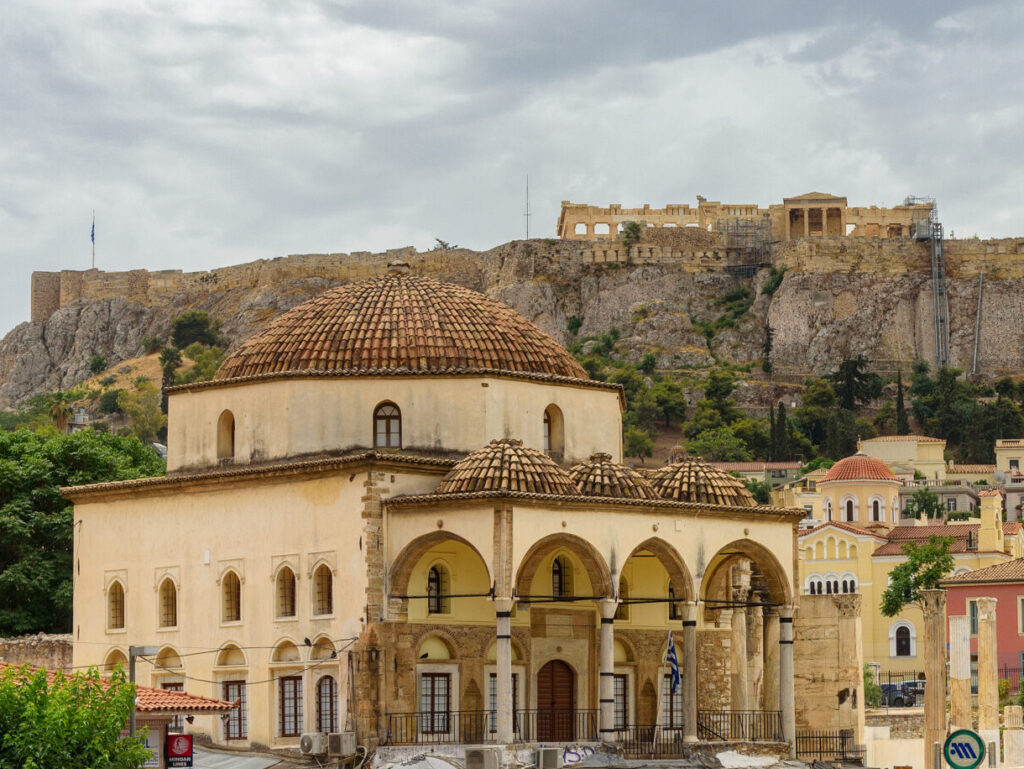
Tzistarakis Mosque is the most prominent example of Ottoman Architecture in modern-day Athens. The mosque was constructed in 1759, and it features all of the typical characteristics of the Ottoman Style. The building’s most striking feature is its large central Dome – a key feature in many Ottoman & Byzantine buildings. Tzistarakis Mosque is located in Ministraki Square just north of the Plaka neighborhood. Since the Greek War of Independence, the mosque has been used as both an assembly hall and a museum.
2. Church of the Holy Apostles
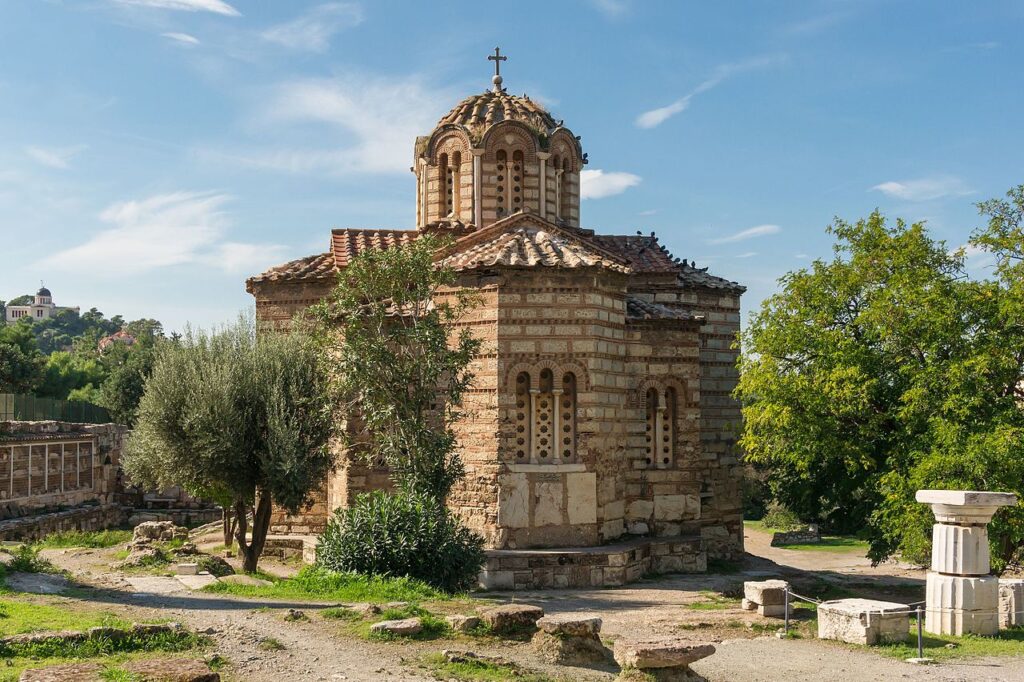
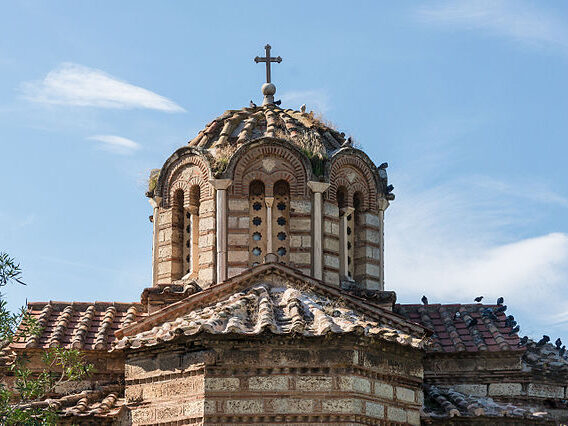
The Church of the Holy Apostles is one of several works of Byzantine Architecture in Athens. The church is located not far from the Stoa of Attalos, a modern reproduction of an ancient Greek building. The Church of the Holy Apostles was built in the 10th century, at a time when the Byzantine Empire controlled most of modern-day Croatia, Bulgaria, Greece, and Turkey. At this point in history, the Byzantine Empire was going through a Golden Age, when the Macedonian Dynasty was in power in Constantinople.
3. “Little Metropolis”
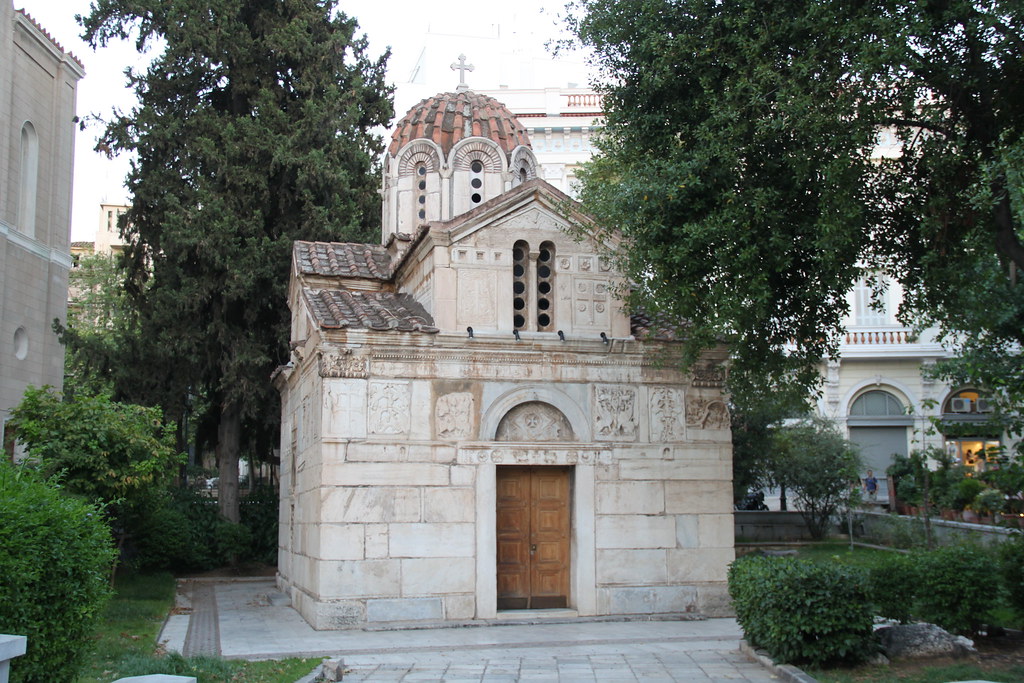
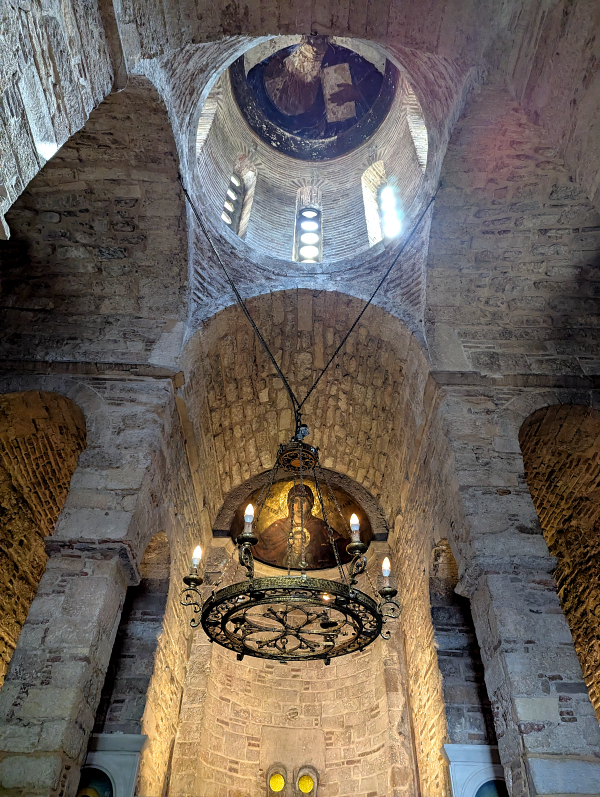
The Little Metropolis Church is a small but significant work of Byzantine Architecture in Athens. It sits on the spot of an older Pagan Temple, and it was built in phases, beginning in the 9th century CE. The church was designed in the typical Byzantine Style. It has a central dome covering a dark, somber central space. This form was adapted from earlier Ancient Roman Mausoleums. Like many buildings throughout Athens, parts of the Little Metropolis Church are made from stones pillaged from older works of Ancient Greek Architecture.
4. Fethiye Mosque Museum
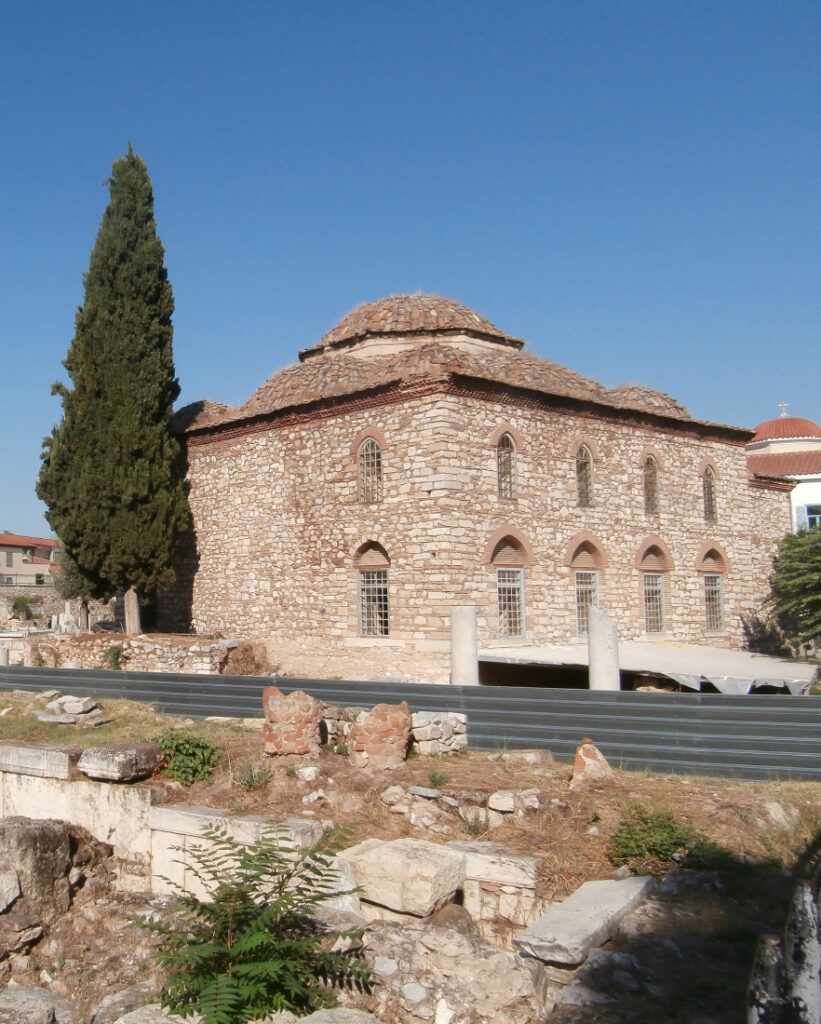
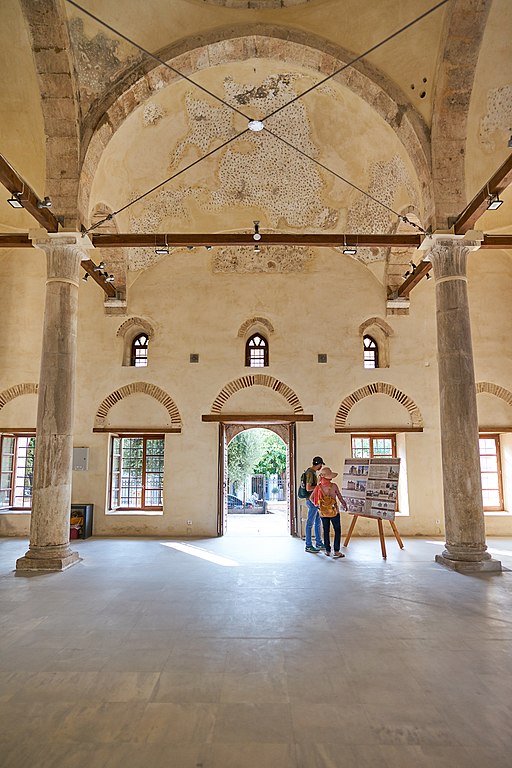
The Fethiye Mosque Museum is another former Ottoman Mosque that has since been turned into a museum. The mosque dates to the Classical Ottoman Period, and it has several domes and pointed arches. The mosque also once contained a minaret, but that was torn down after the Greek War of Independence. The Fethiye Mosque Museum is located in central Athens, not far from the Roman Forum and the Library of Hadrian.
5. Church of Panagia Kapnikarea
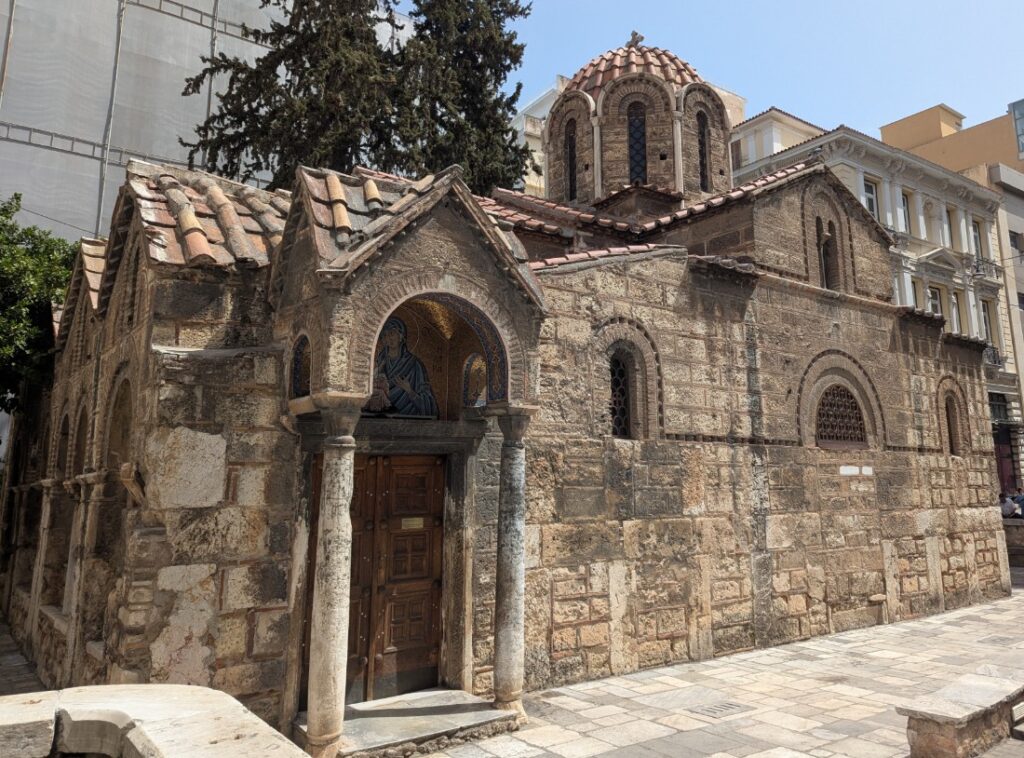
The Church of Panagia Kapnikarea is another Byzantine Church in Athens. It was constructed in several phases, beginning in the 11th century. The design contains many typical Byzantine elements, including domes, round arches, and intricate mosaics. The Church of Panagia Kapnikarea is located in a crowded part of modern-day Athens, nestled between much larger contemporary buildings. It’s also located on a busy street that connects Monastiraki Square and Syntagma Square.
6. Church of the Holy Trinity
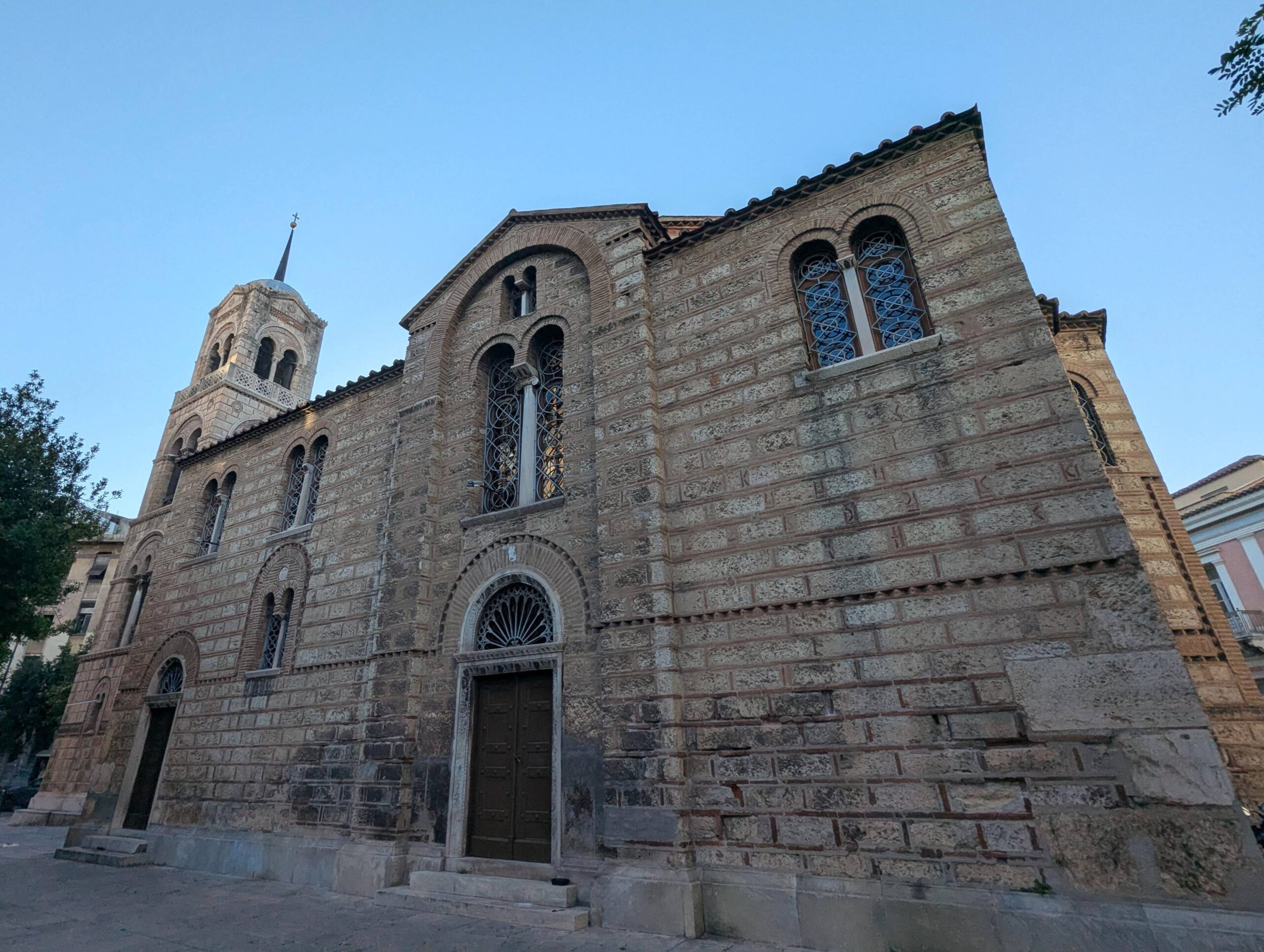
The Church of the Holy Trinity is another work of Byzantine Architecture in Athens. The church dates from the 11th century, and is one of the few Byzantine churches constructed with a detached bell tower. It contains many typical elements from the Byzantine Style, including round arches, a central dome, and several Byzantine Mosaics. The Church of the Holy Trinity was damaged during the Greek War of Independence, but it was subsequently rebuilt.
Neoclassical & Revival Architecture in Athens
The Greeks fought a large-scale war against the Ottomans during the early 19th century. This conflict eventually became known as the Greek War of Independence, which led to the establishment of the Kingdom of Greece in 1832. The Greeks chose to make Athens their capital, and the city quickly grew into a sprawling metropolis. During the 19th century, a series of city blocks were constructed radiating outward from Athens’ historic core. These blocks are now home to a vast array of Neoclassical and Revivalist Architecture, and they contain some of Athens’ most prominent buildings, like the Metropolitan Cathedral.
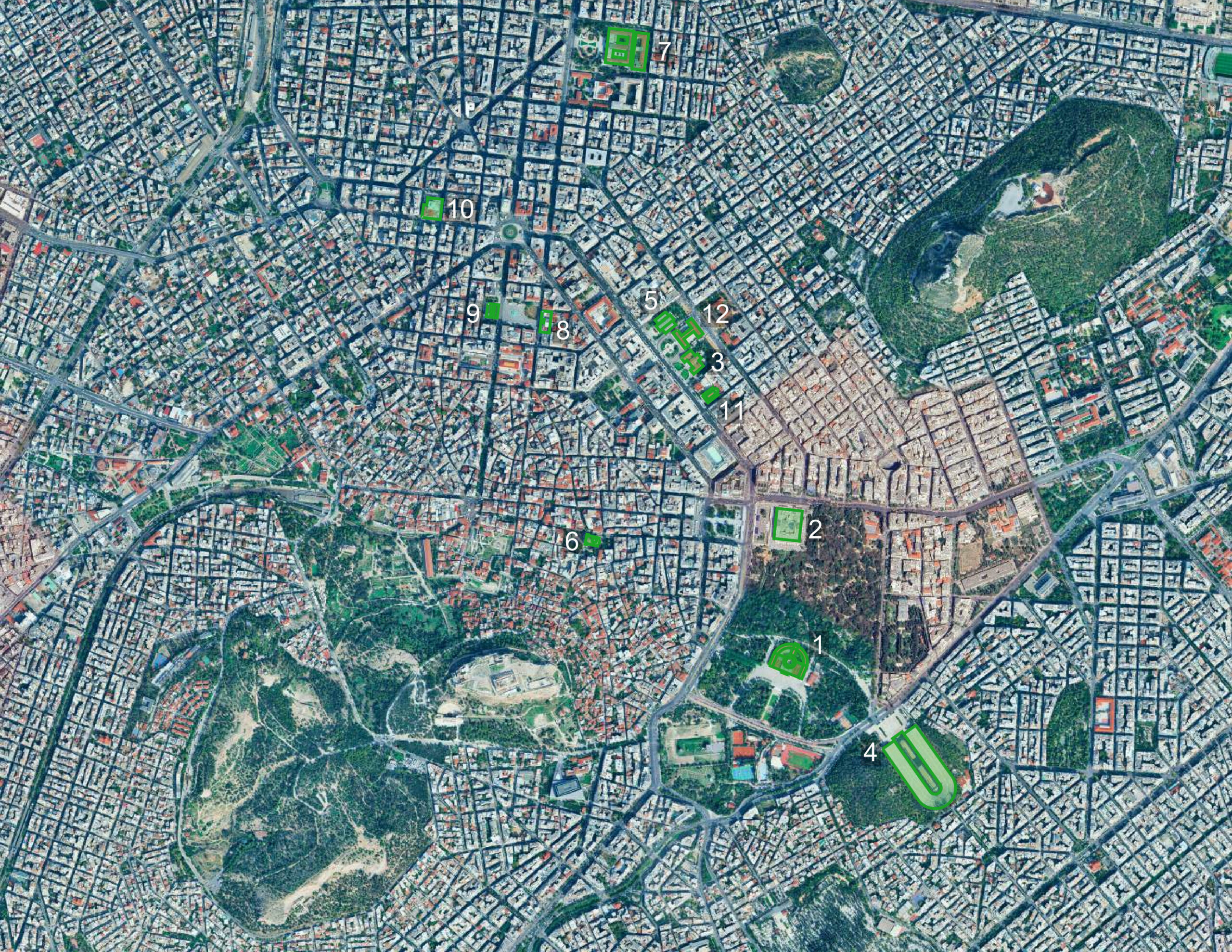
Map of Athens highlighting important works of Neoclassical & Revival architecture within the city.
1. The Zappeion
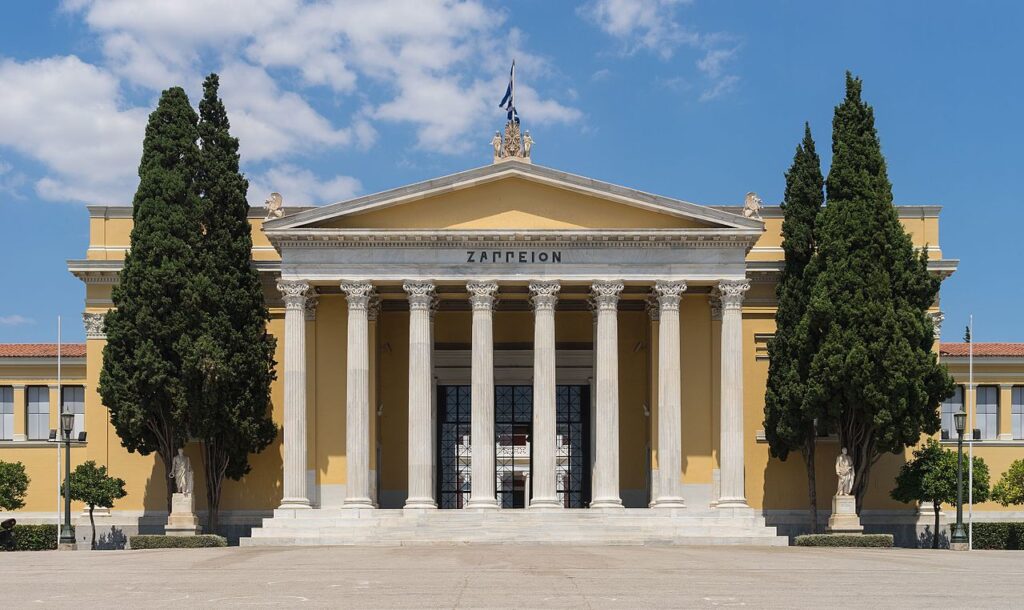
The Zappeion is one of the greatest examples of Neoclassical Architecture in Athens. The building was completed in 1888 and was designed as an exhibition hall and arena. The Zappeion was utilized during the Summer Olympic Games of 1896 when it hosted several events, including Fencing. The exterior of the building utilizes many key Neoclassical design elements, like a temple-front facade, Corinthian columns, and Akritereas.
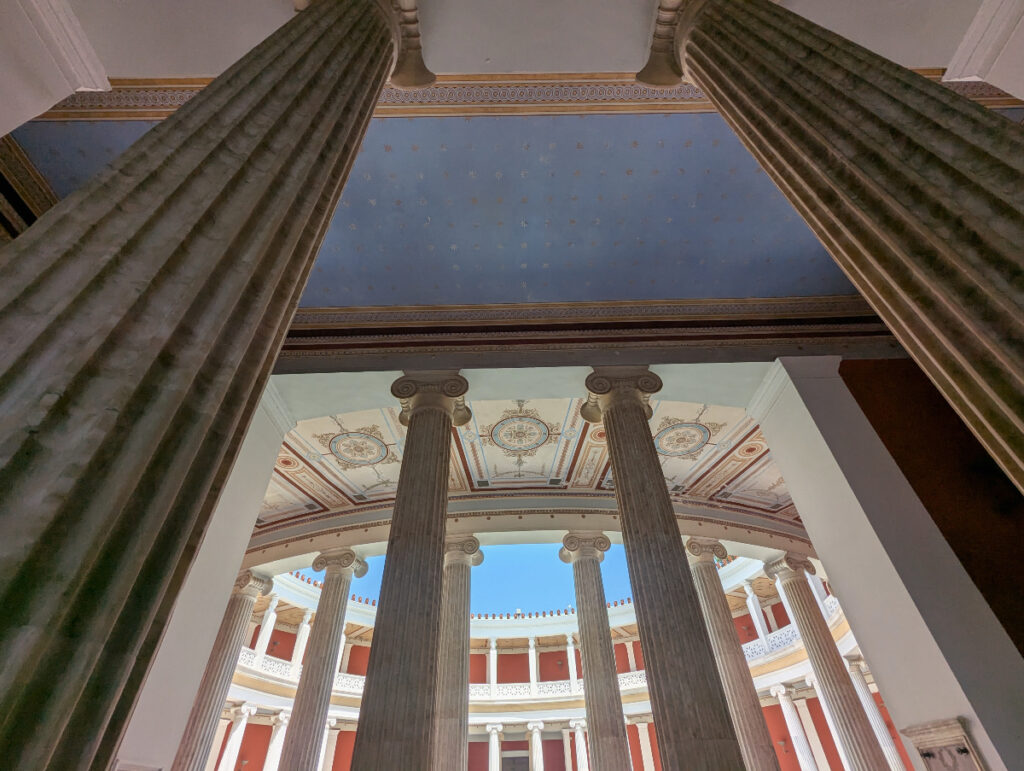
This image shows the Zappeion’s inner courtyard. The space is circular, symmetrical, and lined with an assortment of Ionic Columns. Features like this were typical during the Neoclassical Period, when most architects focused on bold, simplified forms. The Neoclassical Movement emerged in the wake of the Baroque Age, when complexity and intricacy were much more important. Today, the Zappeion Hall is used for exhibitions and it’s located right next to other sites like the Panathenaic Stadium and the Athens National Garden.
2. Old Royal Palace
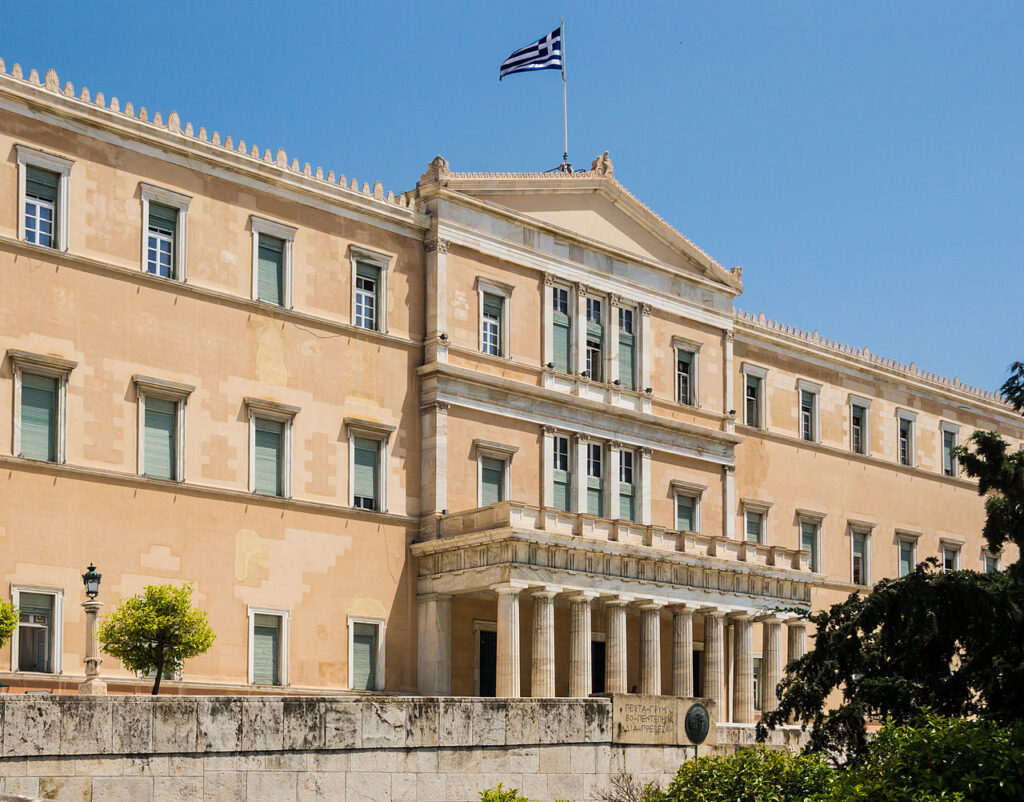
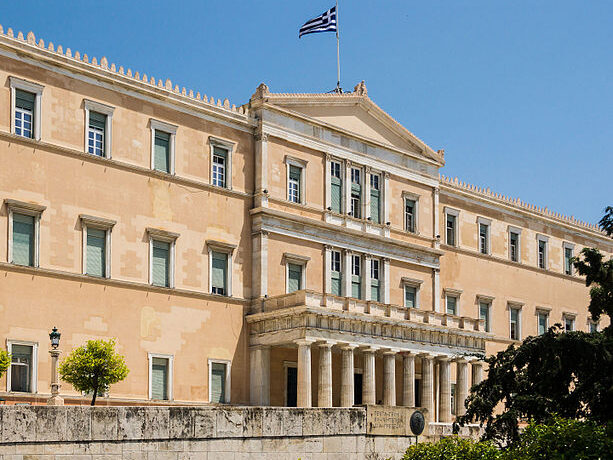
When Greece first became independent in 1832, its government was structured as an Absolute Monarchy. The first Greek king commissioned a large palace in central Athens, now known as the Old Royal Palace. The building was completed in 1843 and designed in the Neoclassical Style, which was chosen to resonate with Greek culture and history. The building only remained a palace for a short time, until it was converted into the Hellenic Parliament Building after the signing of the Greek Constitution, or Syntagma.
3. Academy of Athens
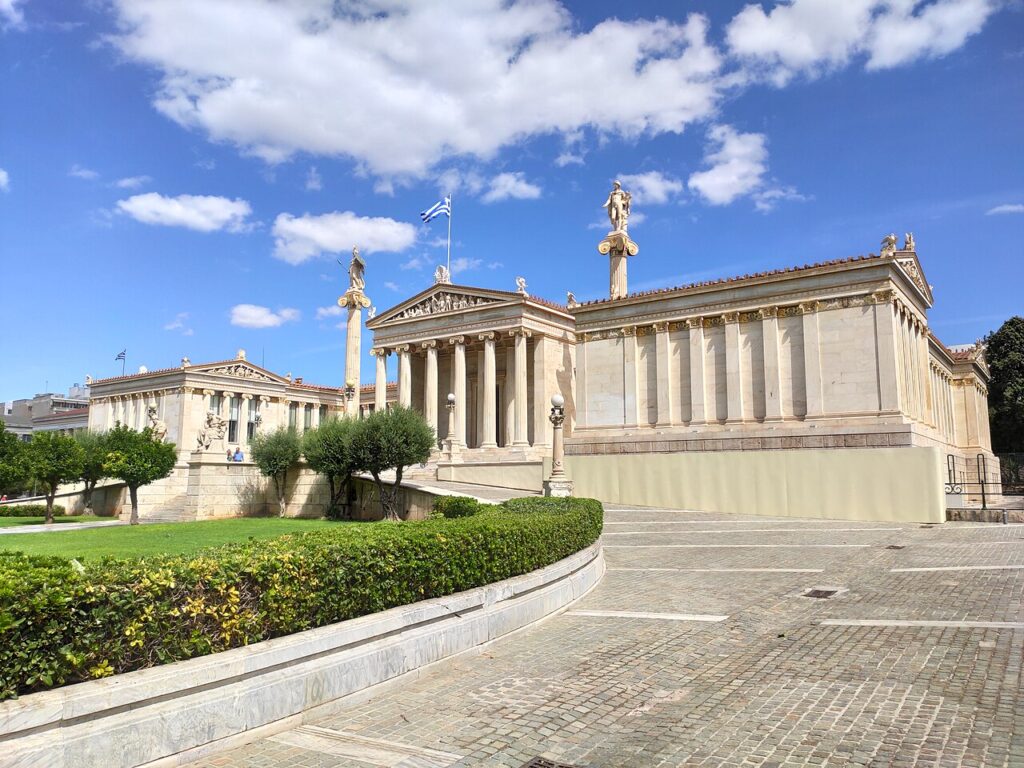
The Academy of Athens is a modern institution that is one of the leading educational research organizations in Greece. The institution is housed in a Neoclassical building, located in central Athens. The building has a symmetrical temple-front facade with Classical details like pediments and Ionic Columns. The main entrance of the institution is also flanked by two Triumphal Columns topped by statues of different Greek deities. Columns like these were constructed in both ancient and modern times, and can be found in other cities like Venice, Istanbul, Rome, and Lisbon.
4. Panathenaic Stadium
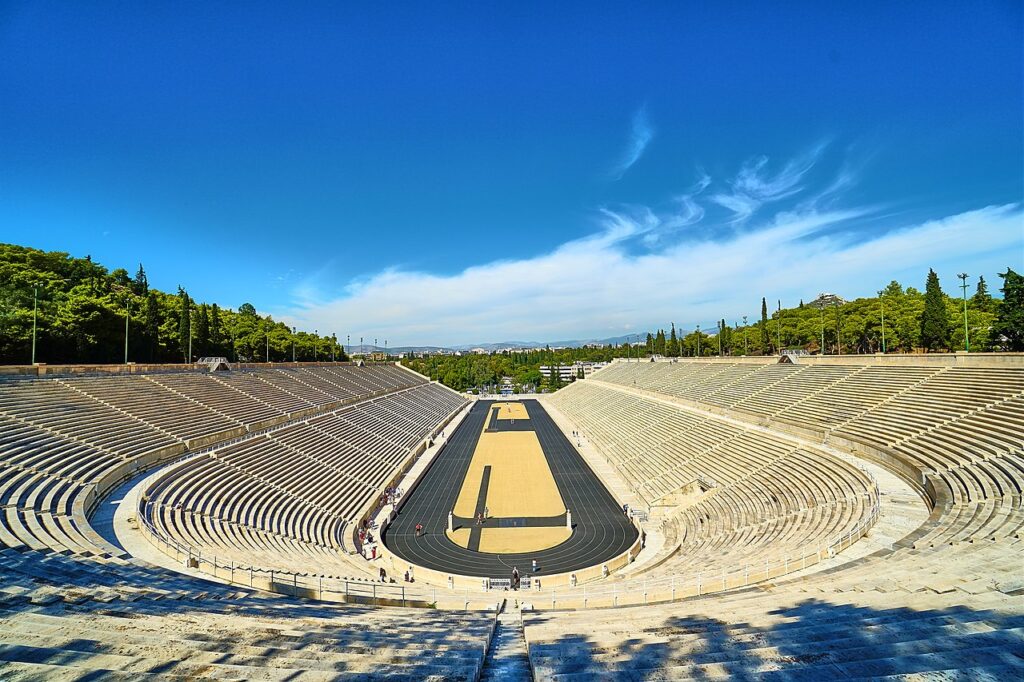
The ancient Greeks invented the Olympics, a series of athletic events where different city-states competed against one another. During the late 19th century, the Olympic Games were revitalized, and countries from all over the globe competed. Athens hosted the first-ever Summer Olympic Games in 1896, and the Panathenaic Stadium was constructed as the focal point of the entire event. Today, the stadium is open to the public, and visitors can run the track and get a feel of what it’s like to be an Olympian.
5. Vallianeio Building
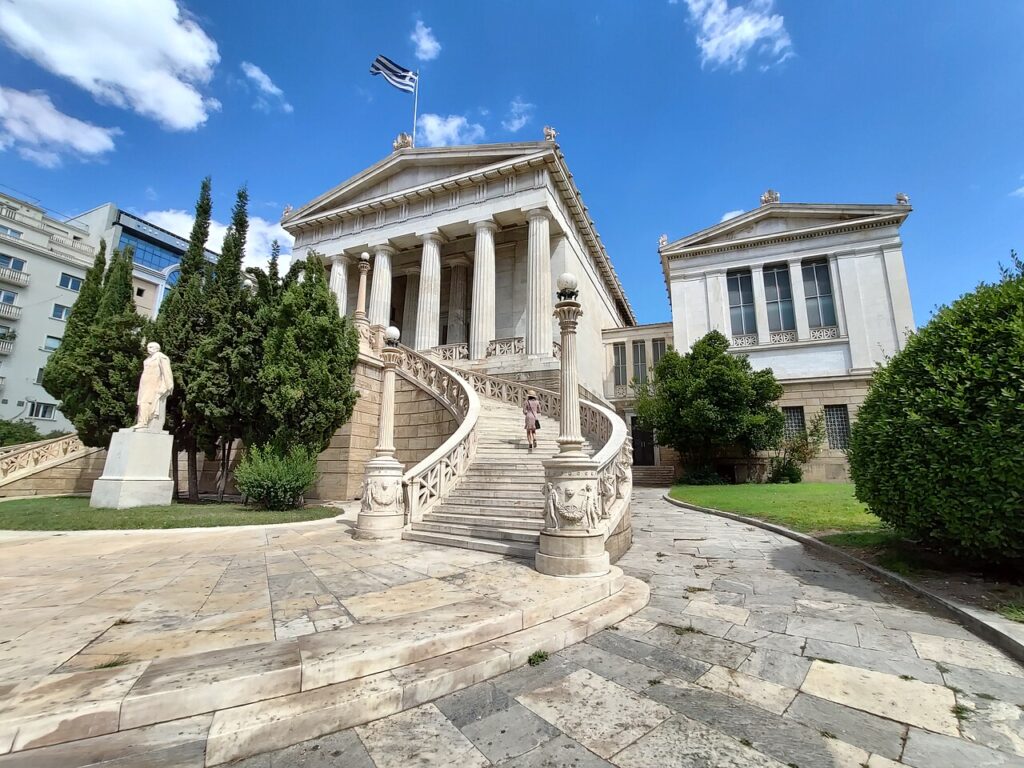
Located on Panepistimiou Street in central Athens, the Vallianeio Building once housed the National Library of Greece. It was built in the 19th century, when Neoclassical Architecture was constructed throughout Athens. The Vallianeio Building contains many elements from Ancient Greek Architecture, like Doric Columns, pediments, akroteria, and triglyphs. Replicating ancient structures was a key theme in Neoclassicism, and these same components can be found throughout the Architecture of Athens.
6. Metropolitan Cathedral of Athens
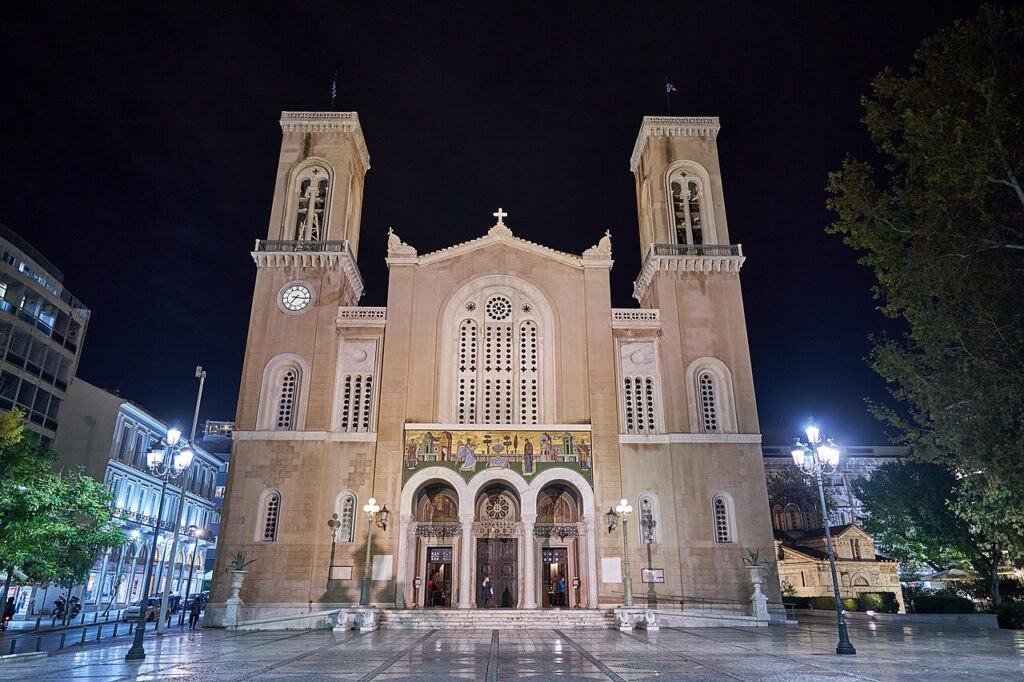
The Metropolitan Cathedral is not the oldest church in Athens, but many locals regard it as the most important church in the entire city. Construction began on the building shortly after Greece achieved its independence, and lasted until 1862. The building was designed in the Byzantine Revival Style, and it’s known for its impressive mosaics. The Metropolitan Cathedral of Athens is home to some of the most important religious artifacts in all of Greece.
7. National Archeological Museum
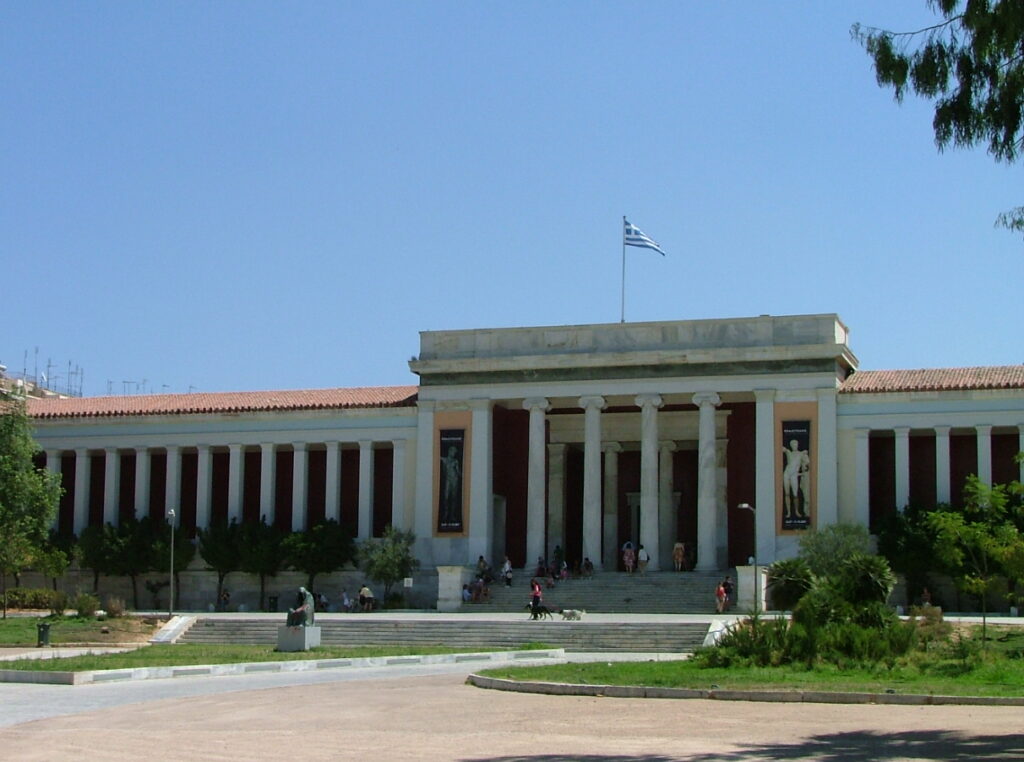
The National Archeological Museum is one of the largest and most highly regarded museums in all of Greece. It was designed in the Neoclassical Style, borrowing many characteristics from other Ancient Greek and Roman structures. The museum houses a vast assortment of artifacts from all over mainland Greece and its islands. The exhibits tell the story of Ancient Greek history from the Archaic Period, through the Classical and Hellenistic ages.
8. National Bank of Greece Building
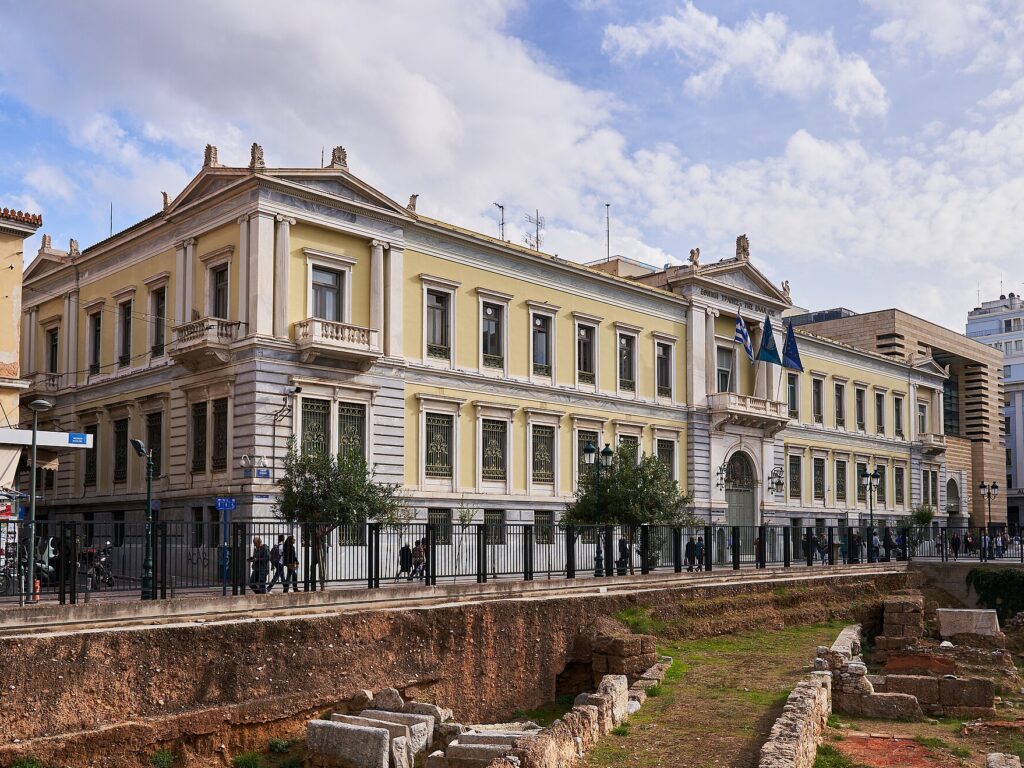
The National Bank of Greece Building is another impressive Neoclassical structure in Athens. It was built in the 19th century, and its design is completely symmetrical, with many classical details like Pediments, akriteria, and Ionic Columns. The building overlooks Kotzia Square, one of the largest public plazas in Athens. In the image above, you can see the partially excavated remains of several ancient buildings and a roadway, found in the square.
9. Athens City Hall
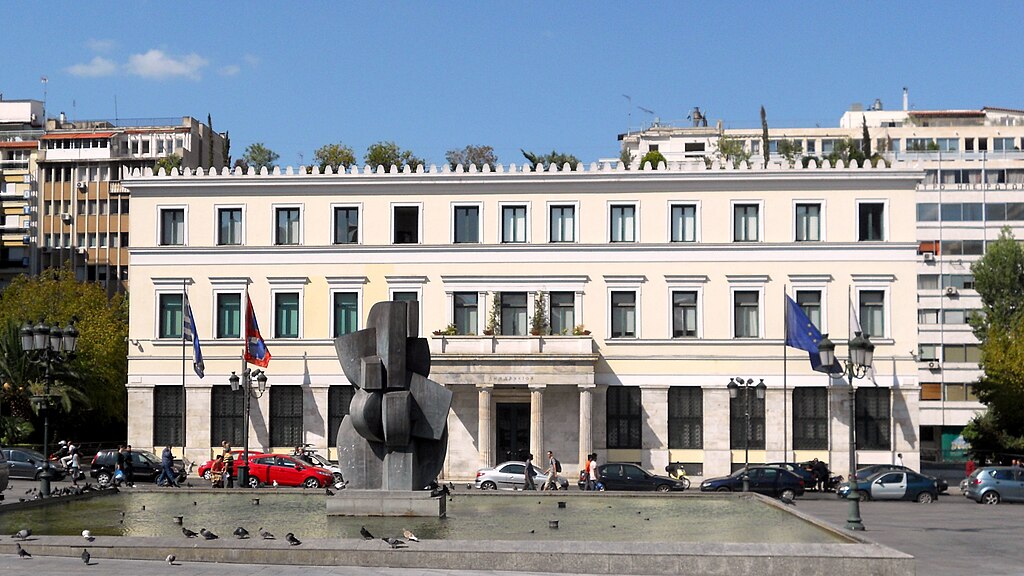
Athens City Hall also overlooks Kotzia Square, and it’s one of several works of Neoclassical Architecture in the area. The building was constructed in the 1870s during the peak of the Revival Movement that swept across Europe and North America. Athens City Hall still serves its original function, and it’s one of the many 19th-century buildings that give Athens its distinct Neoclassical charm.
10. National Theatre of Greece
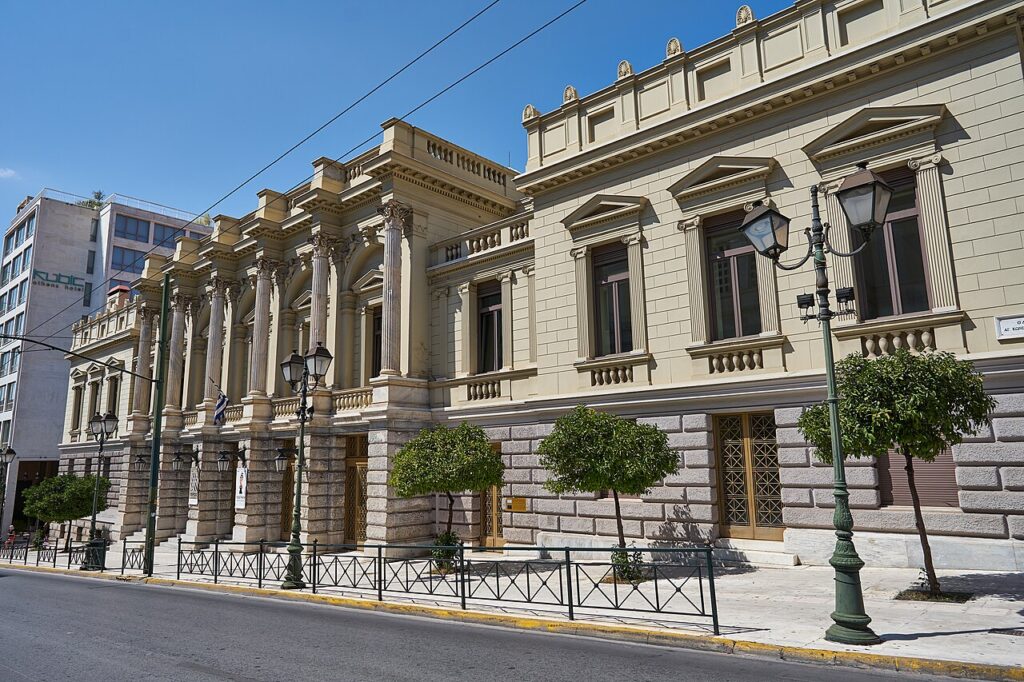
Just like in ancient times, theater was an important aspect of 19th-century Greek life. Many ancient plays were revived at this point in time, and there was a rebirth of the Greek language. The National Theatre of Greece was constructed in the 1890s and was designed using an eclectic blend of Neoclassical and Renaissance Revival Architecture. These two styles were popular in the Revival era, and the National Theatre of Greece contains many Renaissance influences, like symmetry, balance, proportion, and repetition.
11. Cathedral Basilica of St. Dionysius the Areopagite
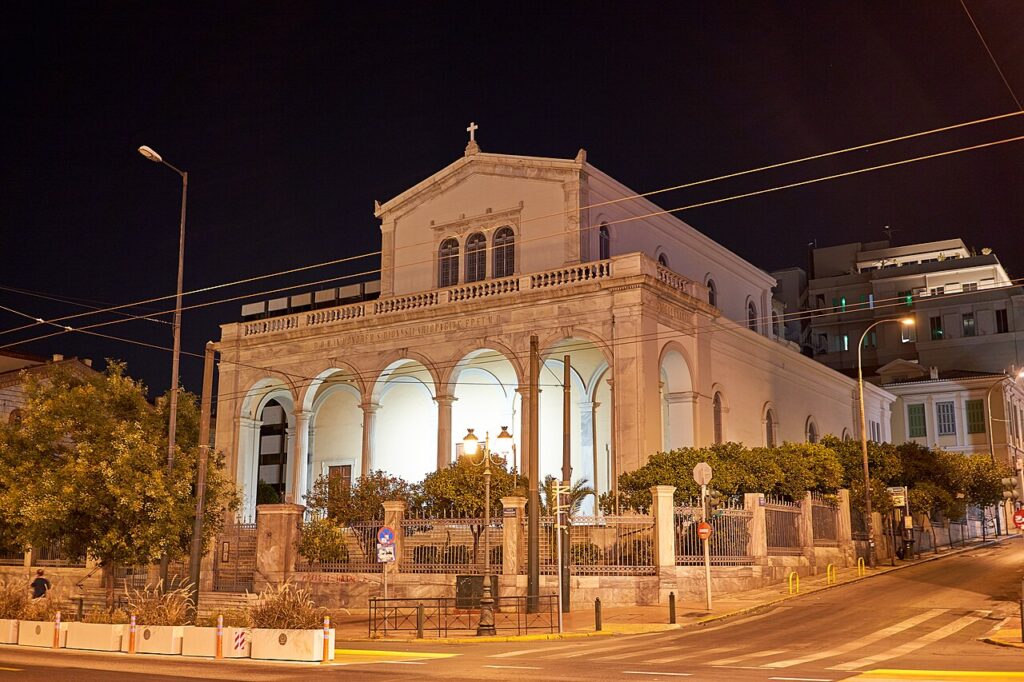
The Cathedral Basilica of St. Dionysius the Areopagite is a Roman Catholic Basilica located in Athens. The church was designed in the Renaissance Revival Style, resembling many of the Papal Basilicas found in Rome. It was built in the mid-19th century, in a location right in between Syntagma Square and the Academy of Athens. Most of Greece practices Eastern Orthodox Christianity, but Athens also has a sizable Catholic population.
12. University of Athens Building
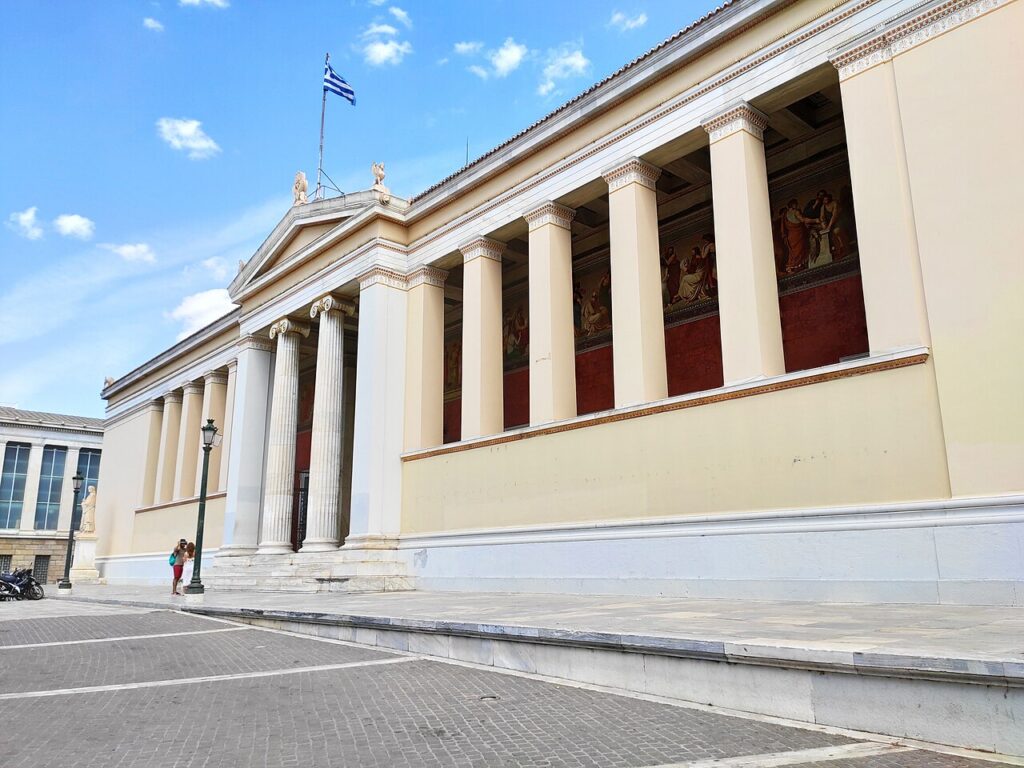
The University of Athens Building is another typical example of Neoclassical Architecture in Athens. It was designed by a Danish Architect from Copenhagen, who practiced Neoclassicism and Historicism. The National University of Athens Building was constructed in the mid-19th century, and it holds classrooms and offices for the school. The building’s austere and simple design is typical of the Neoclassical Style, and its soft yellow color is found in many different buildings throughout Athens.
Modern Architecture in Athens
Throughout the 20th century, Athens expanded far beyond its original historic core. The city has transformed into a bustling metropolis, all connected by a network of buses, trains, and motorways. Athens is filled with a great number of Innovative and contemporary structures, and many of its new buildings still incorporate elements from older traditional Greek Architecture. Thankfully, strict zoning regulations have minimized skyscrapers, and there are still amazing views of the Acropolis found throughout the city.
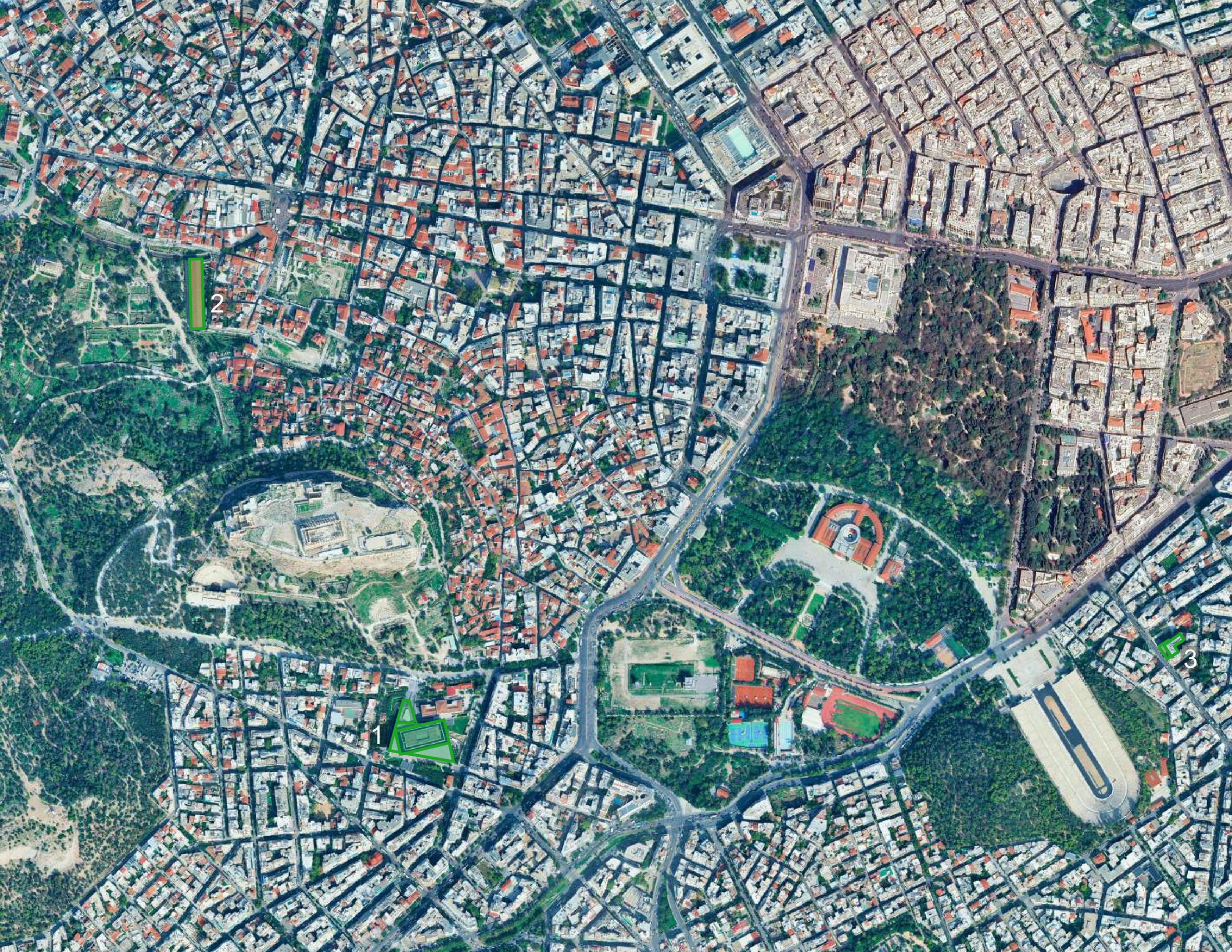
Map of Athens highlighting important works of modern architecture within the city.
1. Acropolis Museum
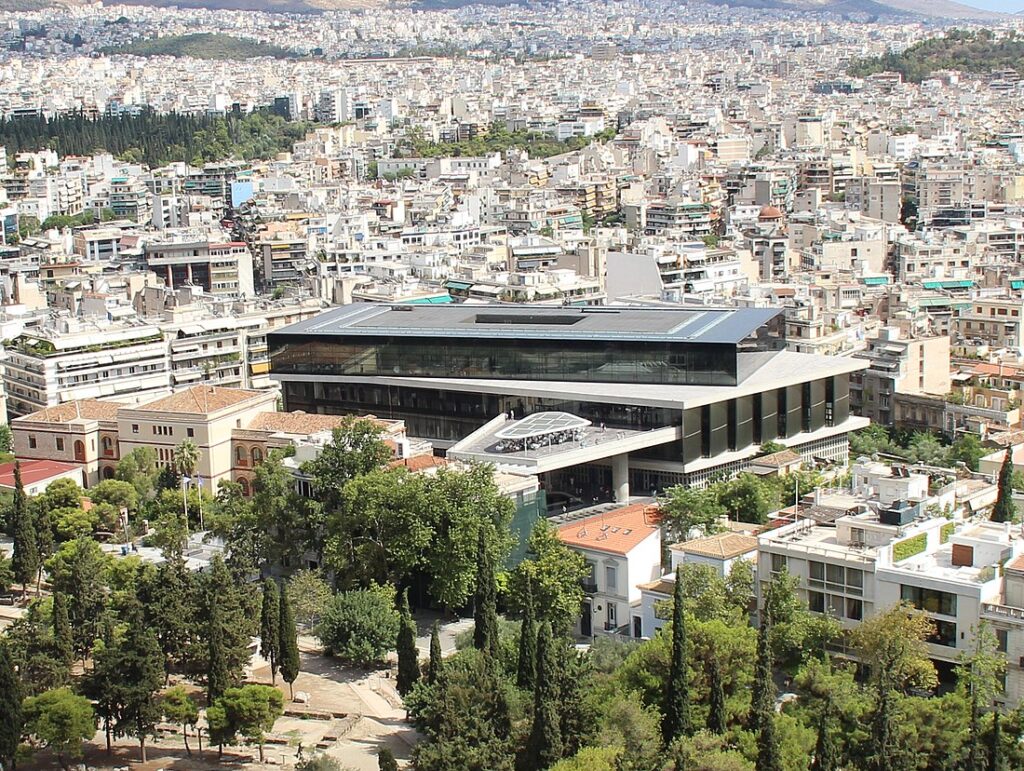
The Acropolis Museum is one of the most renowned works of contemporary architecture in all of Greece. The museum opened in 2009 and was specifically designed to house artifacts from the Acropolis. A visit to the museum is very interesting because it’s meant to replicate the experience of entering the Acropolis. You begin on the lowest level of the building, where your tickets are scanned. From there, you walk up a long, gradual ramp lined with important artifacts. At the top of the ramp, you are greeted by the main galleries, which are filled with the original statues and carvings of the ancient sites of the Acropolis.
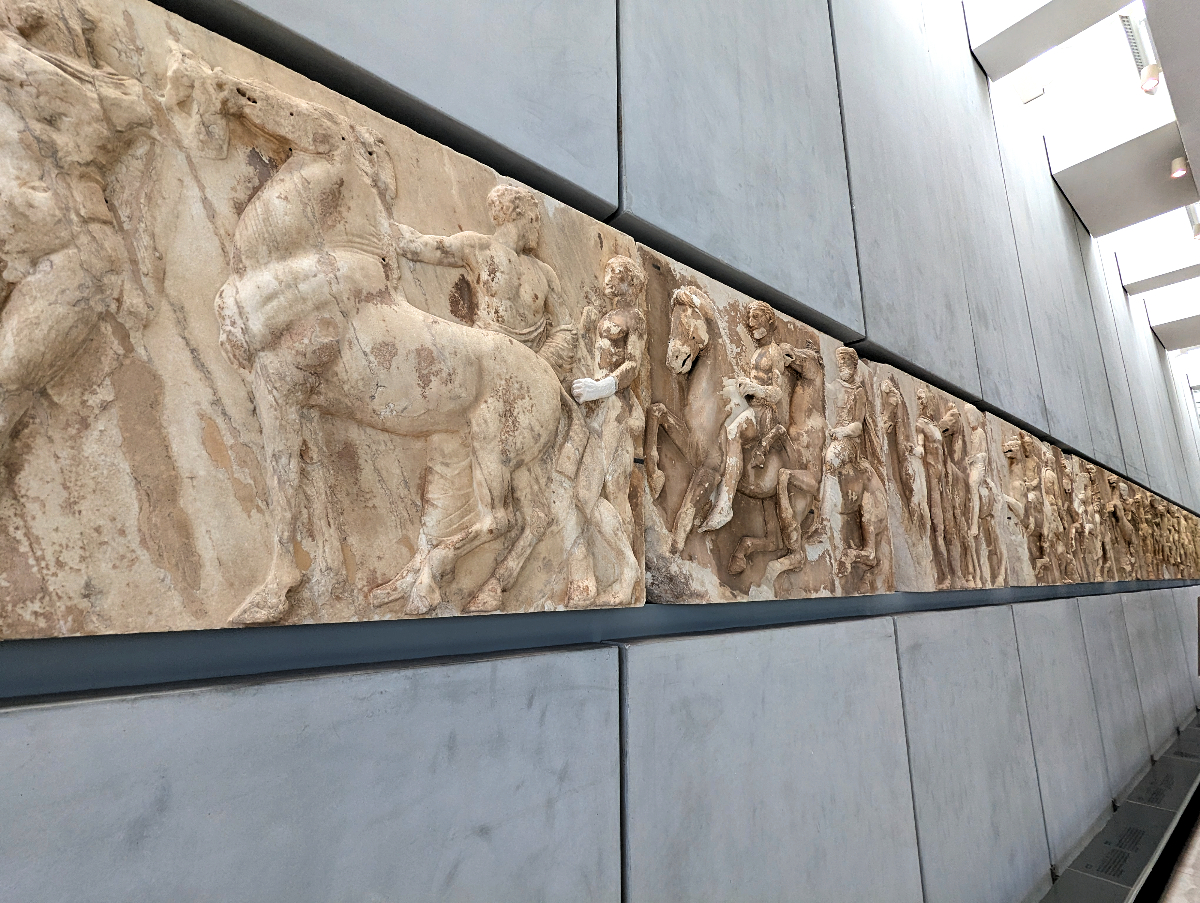
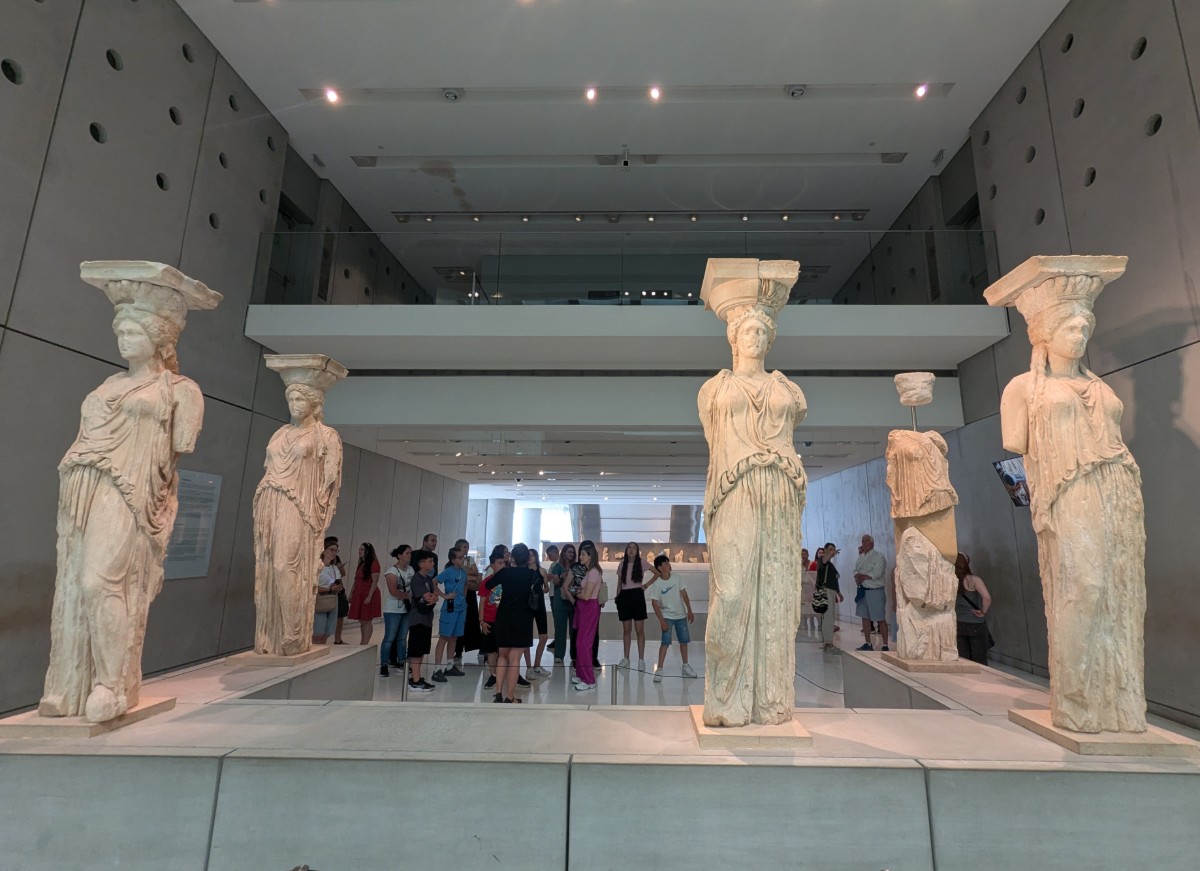
The Acropolis Museum is a great place to visit either before or after a visit to the actual Acropolis. It houses many of the original friezes from the Parthenon, in addition to the original female statues from the Erechtheion. As you travel up the various floors, you learn about Ancient Greece and the efforts to preserve its monuments. The museum also features a large outdoor terrace with a cafe offering magnificent views of the Acropolis and the rest of Athens.
2. Stoa of Attalos
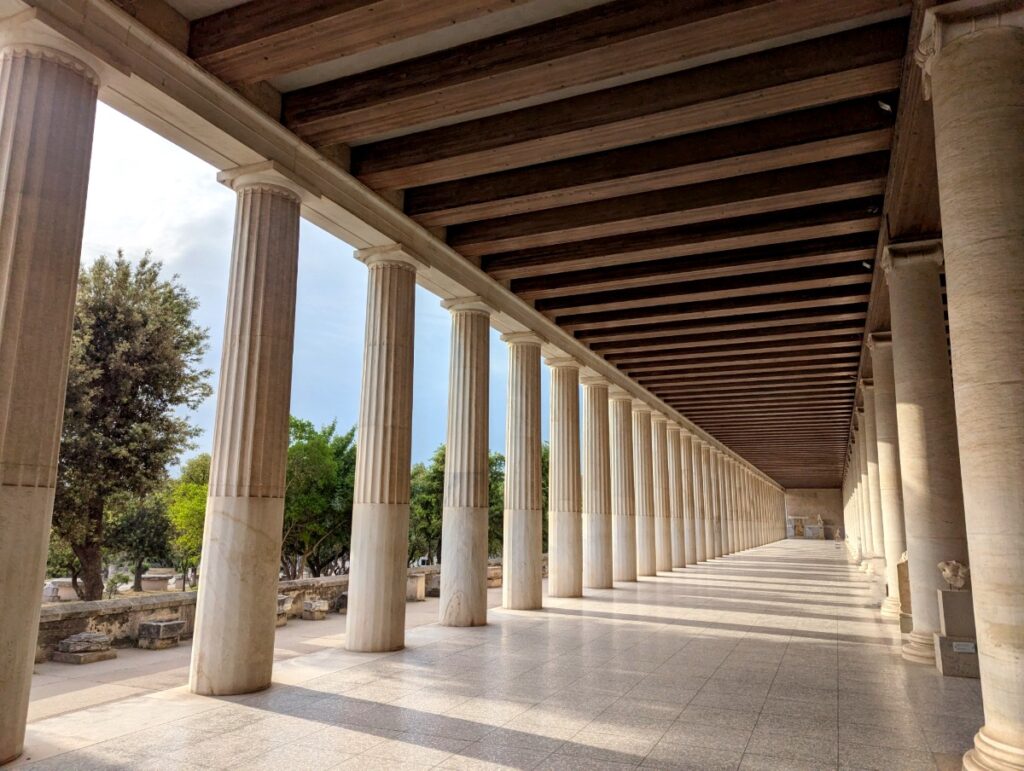
Stoas were Ancient Greek buildings composed of long covered walkways lined with columns. They were built throughout Ancient Greece and were typically found in Agoras. Many people used the covered halls of stoas as gathering spaces, where they would conduct trade and debate about politics. The Stoa of Attalos is a modern-day replica of an ancient Stoa originally from the 2nd century BCE. The modern building was completed in 1956 and was built using some of the original stones found at the site.
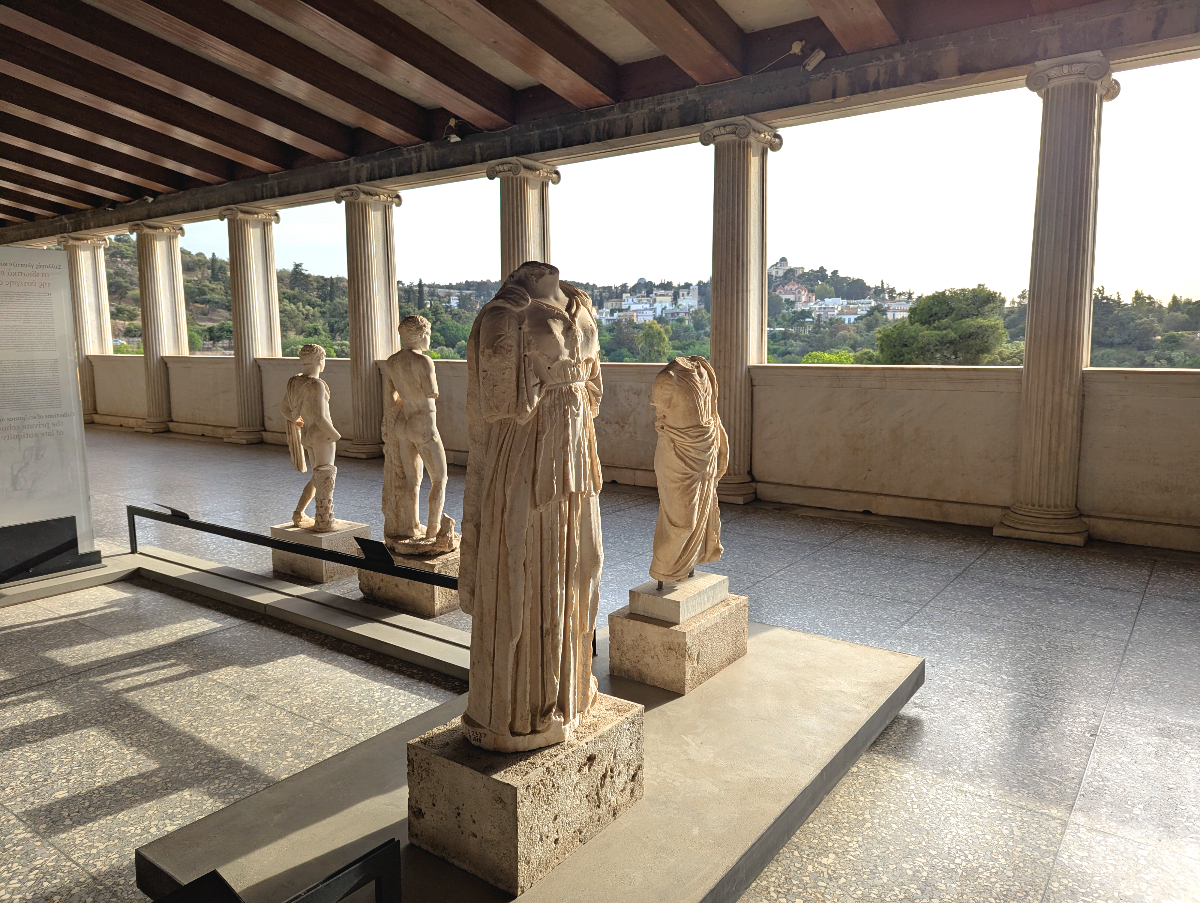
The Modern-day Stoa of Attalos contains an assortment of statues and other relics from the nearby Agora of Athens. It also has a few exhibits on the history of the building on the 2nd floor. The Stoa is made in the typical Greek Style, and has two levels of colonnaded walkways, outfitted with Doric and Ionic Columns. The Stoa of Attalos is one of the most interesting works of Architecture in Athens, because it gives you a great sense of how all the city’s ancient monuments once looked.
3. Goulandris Museum of Contemporary Art
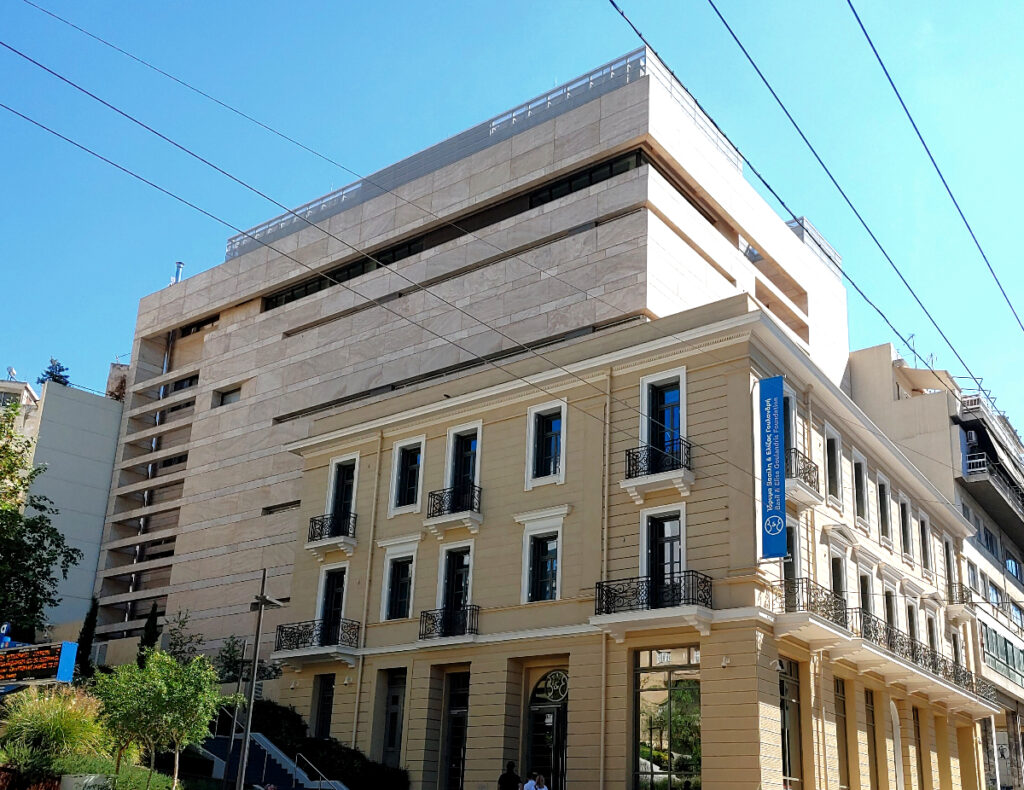
The Goulandris Museum of Contemporary Art is an art institution housed in a work of modern architecture in Athens. The building itself originated as a 19th-century Neoclassical Mansion. The mansion was dramatically expanded thanks to a modern-day addition, based on designs by the renowned architect I.M. Pei. The new portion of the building was completed in 2019 and has a sleek, modern design. The Goulandris Museum of Contemporary Art has extensive galleries which include famous works by Claude Monet and El Greco.
Neighborhoods of Athens
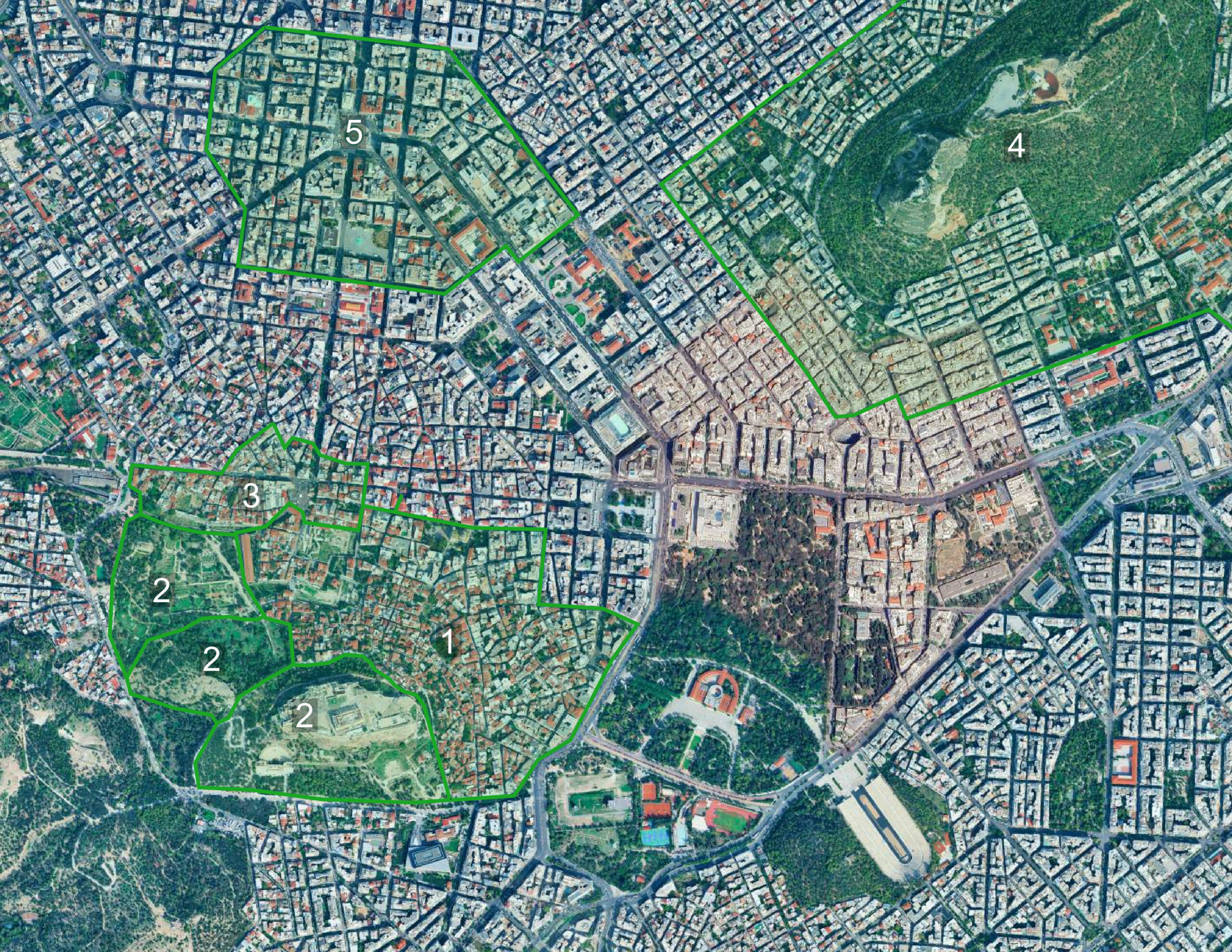
Map of Athens showing the extent of various neighborhoods within the city.
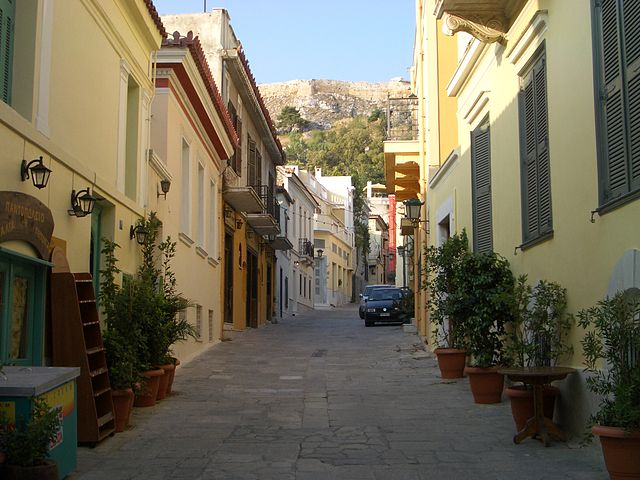
1. Plaka
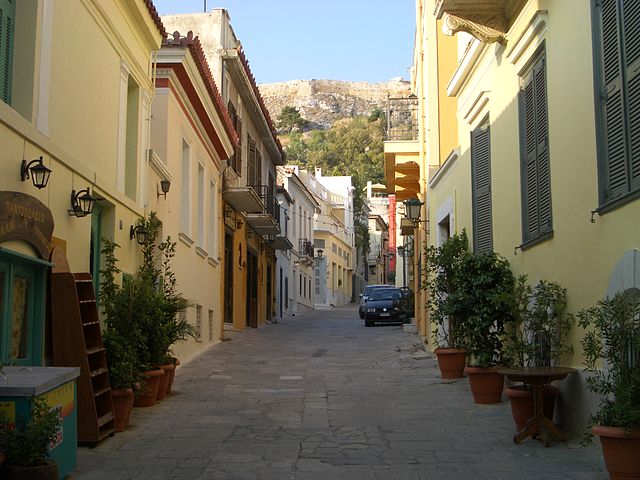
Plaka is the oldest neighborhood in Athens. It is the busiest and most touristy part of the city. Plaka contains many bars and restaurants, in addition to souvenir shops and other retailers. Plaka sits on the northern slopes of the Acropolis and has many steep streets and historic buildings.
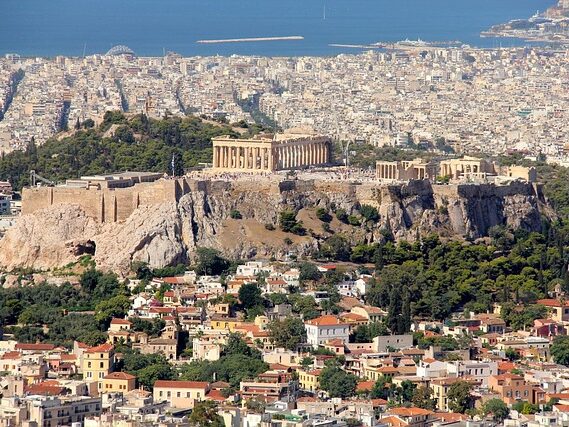
2. Acropolis & Agora of Athens
The Acropolis, the Agora, and the surrounding area contain a large assortment of Ancient monuments. These areas are not typically free to access, and you will need to pay for different tickets to get into different places. This area contains many sites like the Parthenon, the Temple of Hephaestus, and the Stoa of Attalos.
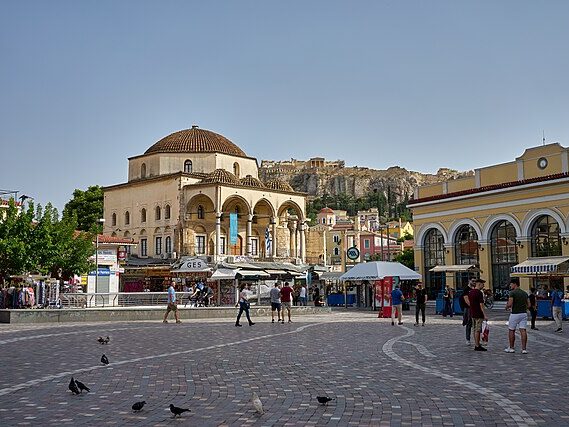
3. Monastiraki
Monastiraki is a neighborhood surrounding Monastiraki Square. It has a very Turkish feel, and many of the streets and buildings in the area date to the Ottoman period. Monastiraki Square and the Tzistarakis Mosque are the neighborhood’s most prominent sites.
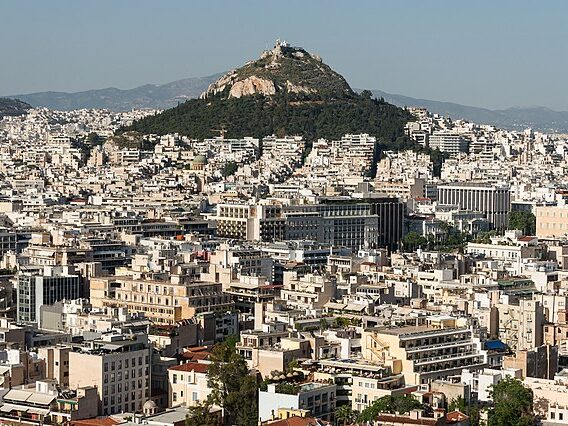
4. Lycabettus
Lycabettus is the neighborhood surrounding Lycabettus Hill in Central Athens. Lycabettus is quieter and more residential than other parts of the city. There are several important sites nearby, like Syntagma Square and the Academy of Athens.
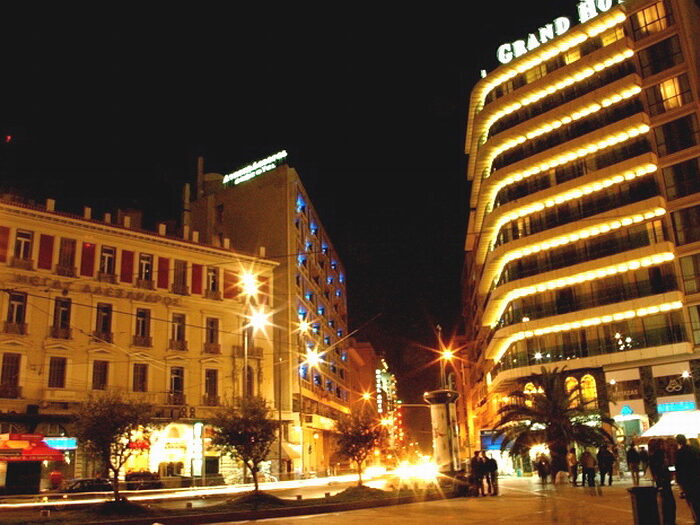
5. Omonoia
Omonoia is the neighborhood surrounding Omonoia Square. It’s located on the northern edge of central Athens. The area was mostly built out during the 19th century and contains many Neoclassical buildings. Nearby is Kotzia Square and Athens City Hall.
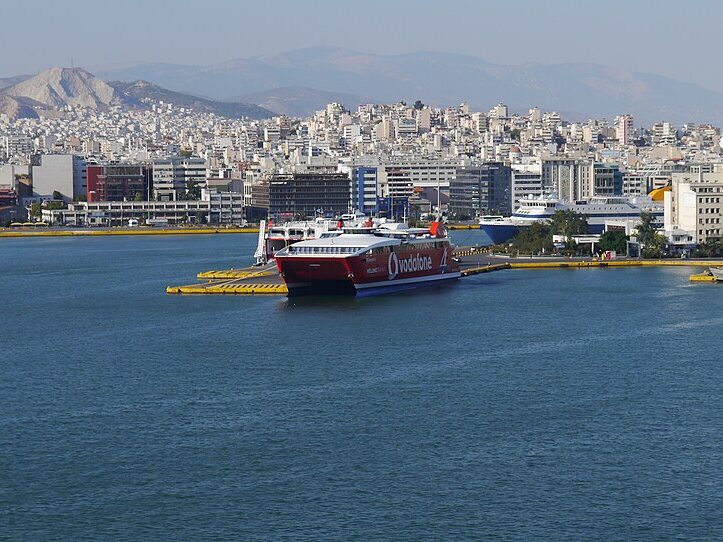
6. Piraeus
Although not part of Athens, Piraeus is an important part of the greater Athenian Metropolitan Area. Piraeus is the main port for Athens, a role which it has served since ancient times. Piraeus is well connected to the rest of the city by Taxi, Bus, and Public Transit.
Architecture of Athens: In Review
Athens is truly one of the most unique cities on earth. It has been controlled by many factions, beginning with the Ancient Greeks and continuing with the Romans, the Byzantines, and the Ottomans. During the 19th century, Athens was reborn as the capital of an independent Greek Nation, marking a turning point in the city’s history. Today, Athens is one of the most visited cities on earth, and it is filled with countless works of architecture from every phase in its long, complex history.

- About the Author
- Rob Carney, the founder and lead writer for Architecture of Cities has been studying the history of architecture for over 15 years.
- He is an avid traveler and photographer, and he is passionate about buildings and building history.
- Rob has a B.S. and a Master’s degree in Architecture and has worked as an architect and engineer in the Boston area for 10 years.
Like Architecture of Cities? Sign up for our mailing list to get updates on our latest articles and other information related to Architectural History.
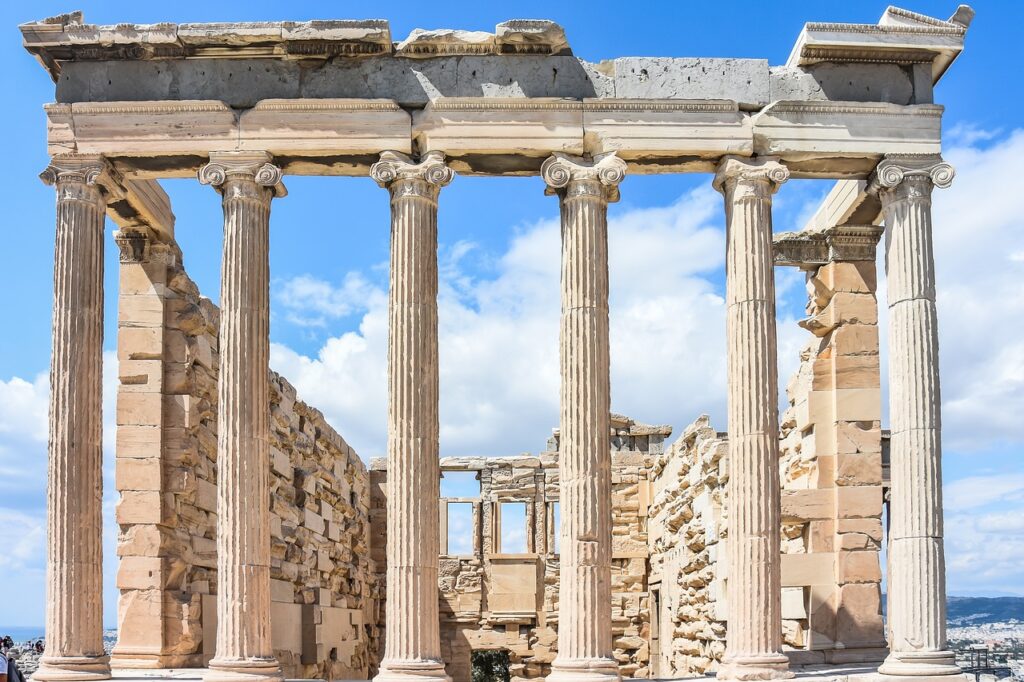
Additional view of the Erechtheion, on the Acropolis.