
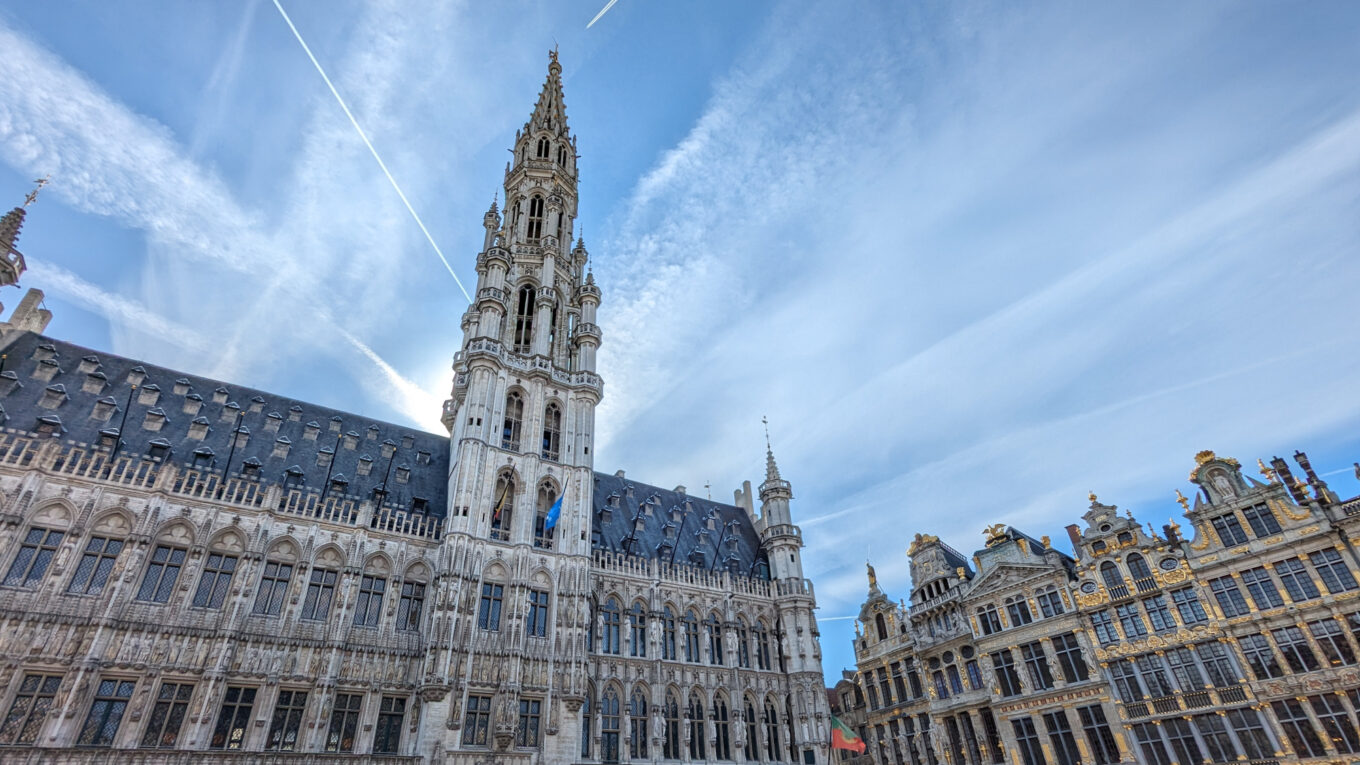
Architecture of Brussels, Belgium
Brussels is a dynamic city that is both the capital of Belgium and a de facto capital of the European Union. Brussels saw its population boom during the Middle Ages, thanks to trade with nearby cities like Bruges, Ghent, and Antwerp. In the 19th century, Brussels became even more important as the capital of the independent Kingdom of Belgium. The Belgian Kings then used the riches from their Colonial Empire to fill the city with magnificent works of architecture. Today, Brussels is a bustling metropolis with an interesting blend of both modern and historic buildings.
Map of Brussels
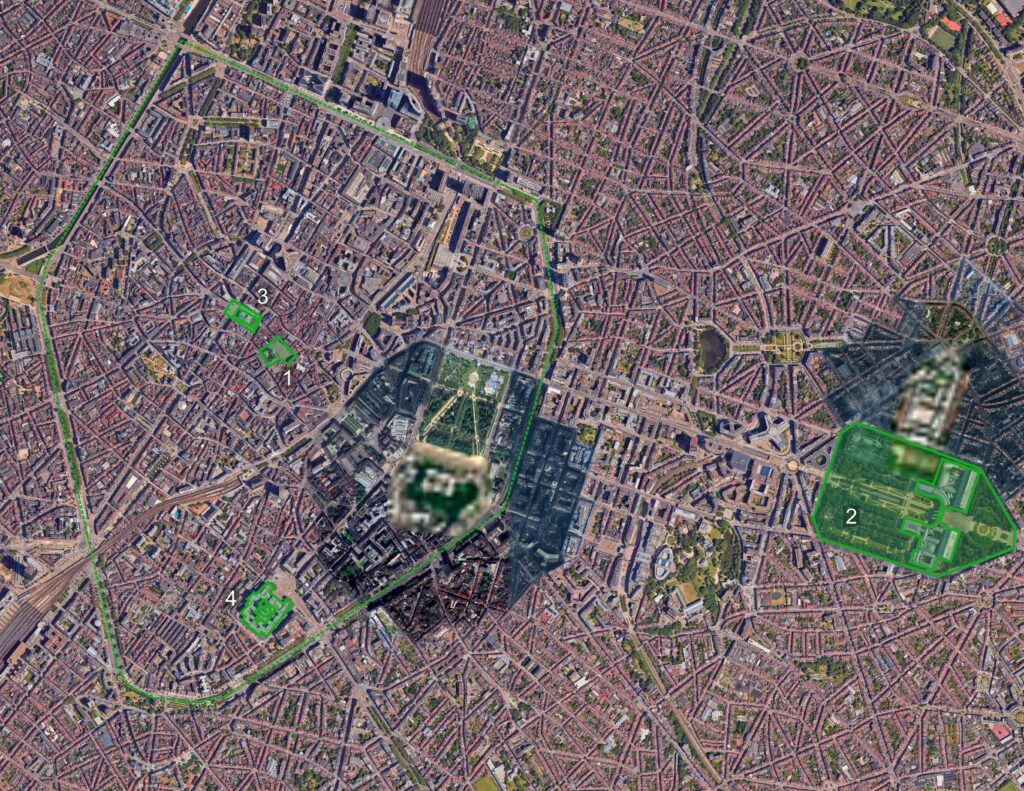
Map of Brussels highlighting some of the city’s main attractions.
The outlines of the fortifications of Brussels are shown with a dashed line.
1. The Grand Place
2. Parc du Cinquantenaire
3. Brussels Stock Exchange Building
4. Palace of Justice
Table of Contents
Use these buttons to navigate to different sections of the article
History of Brussels
979 – 1476
Brussels & the Holy Roman Empire
After Brussels became part of the Holy Roman Empire, the city received upgraded fortifications and a permanent chapel. Brussels became a prominent commercial center during the early Middle Ages, thanks largely to its textile industry. During the 12th century, the city became part of the Duchy of Brabant, a powerful state within the Holy Roman Empire. Shortly after this, work began on Brussels’s Medieval Walls and its first Gothic Church.
1830 – 1913
The Kingdom of Belgium
1830 was a pivotal year for Brussels. This marked the start of the Belgian Revolution, which led to the creation of the independent Kingdom of Belgium. The First Belgian Kings were Leopold I and Leopold II. They both commissioned numerous works of grand architecture within Brussels to make the city rival other European capitals.
This construction frenzy continued from the late 19th century through the early 20th century. During this period, Brussels hosted a series of three different World’s Fairs, which occurred in 1880, 1897, and 1910. These events would totally reshape Brussels and would fill the city with countless works of Revivalist and Beaux Arts architecture.
1945 – Today
Modern Brussels
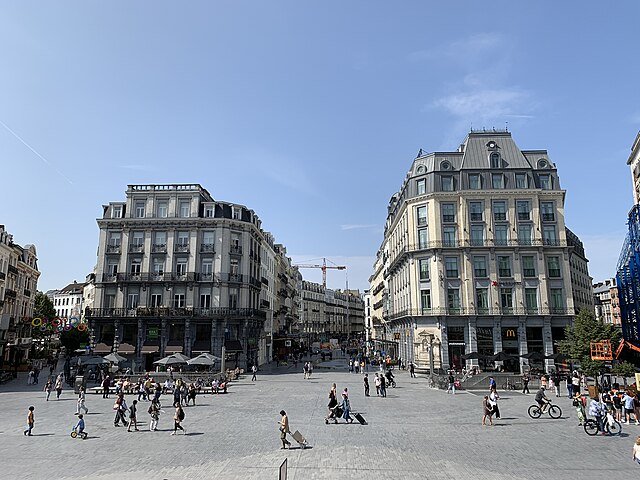
Today, modern Brussels has expanded far beyond its original Medieval core. The city is now a sprawling metropolis, filled with both contemporary and historic architecture. Brussels is the capital of Belgium and home to the Parliament of the European Union. Brussels is a center for trade, economics, education, and culture. It’s a vibrant and culturally significant city, and it’s home to over 1.2 million people.
Gothic Architecture in Brussels
Brussels was a leading city within the Duchy of Brabant and the Holy Roman Empire. The city emerged as a vital trading center during the Early Middle Ages when it was home to many craftsmen and guilds. Brussels also became famous for its high-quality draperies and textiles. All of this wealth led to the creation of several notable works of Gothic Architecture within the city, including Brussels’ town hall and main cathedral.
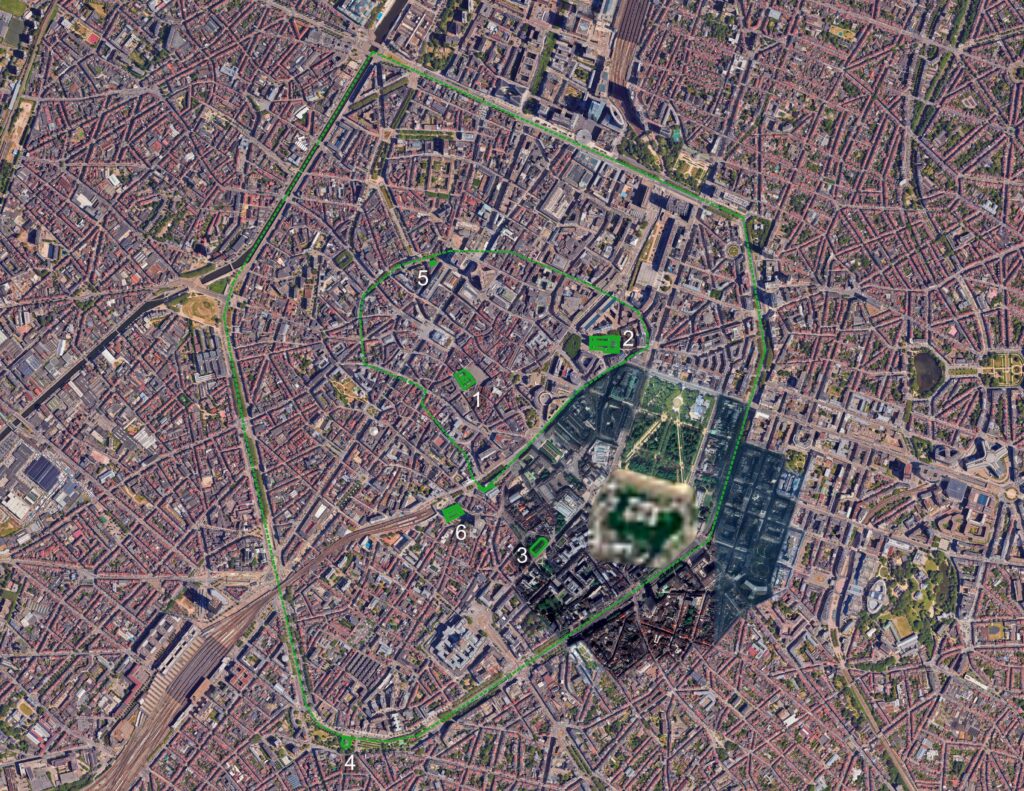
Map of Brussels highlighting the most notable works of Gothic Architecture within the city.
The outlines of the fortifications of Brussels are shown with a dashed line.
1. Brussels Town Hall
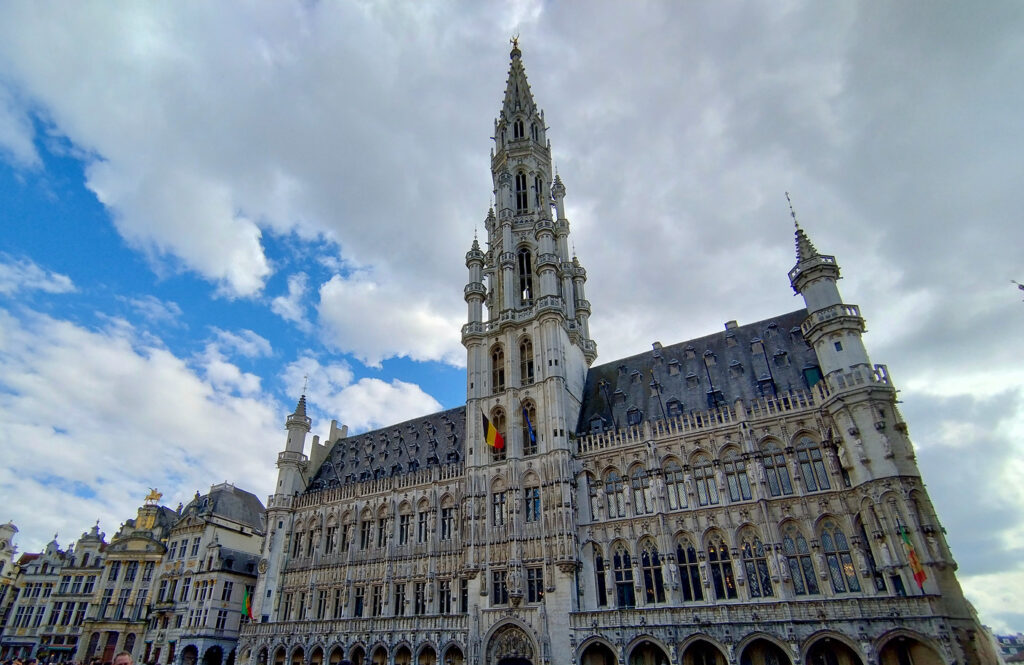
The Town Hall of Brussels is one of the world’s greatest examples of Gothic Architecture. The building was constructed from 1401-1455, and it overlooks a large square known as the Grand Place. The building’s most striking feature is its spire, which stands more than 315 feet (96 m) tall. This spire marks the center of Brussels and can be seen throughout most of the city.
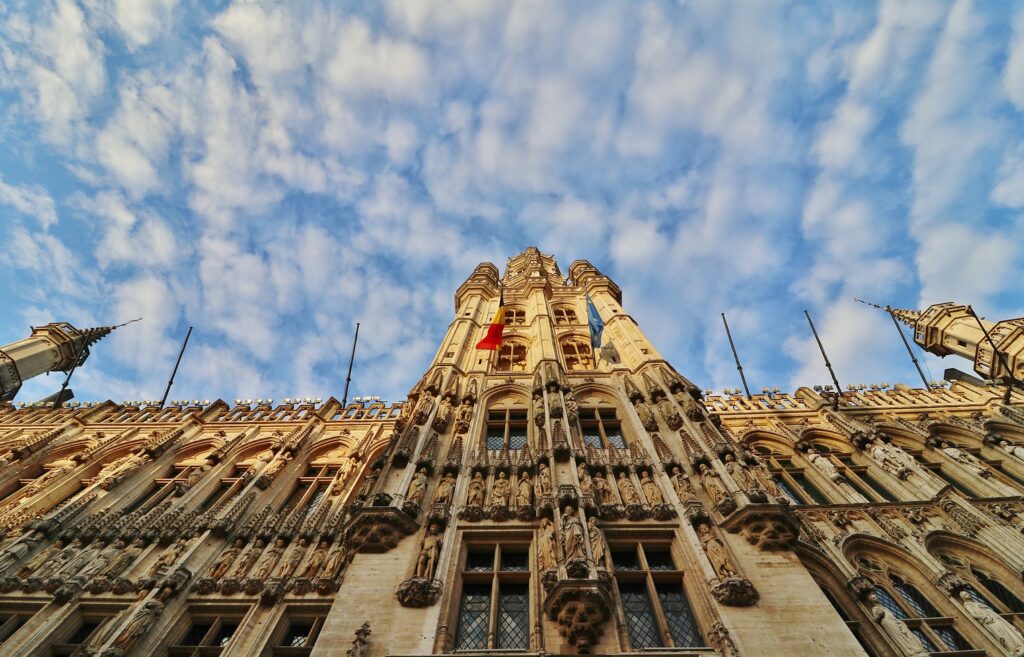
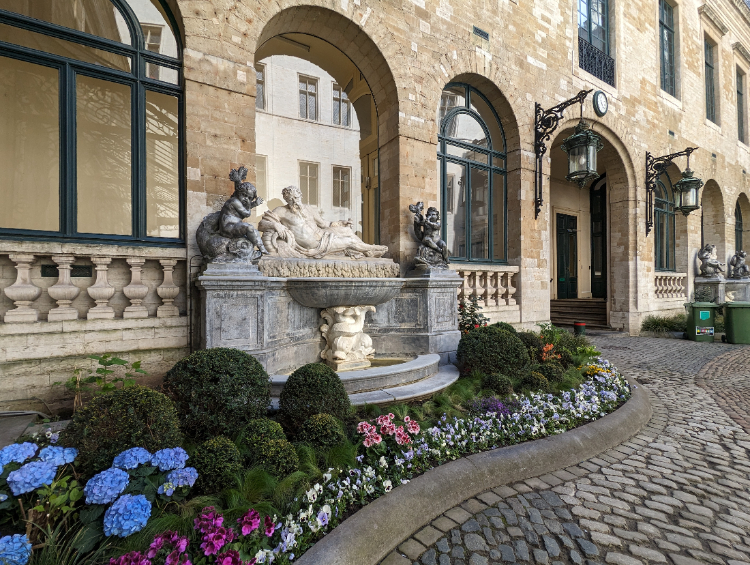
The Town Hall of Brussels contains all of the typical elements found in Gothic Architecture. The facades are decorated with lots of pointed arches, stained glass, and Gothic tracery. The design of the building also has a strong vertical emphasis, with numerous spires and pinnacles. The town hall was severely damaged during the 1695 Bombardment of Brussels. But, since then, it has been meticulously restored to its original Gothic appearance.
2. Cathedral of St. Michael & St. Gudula
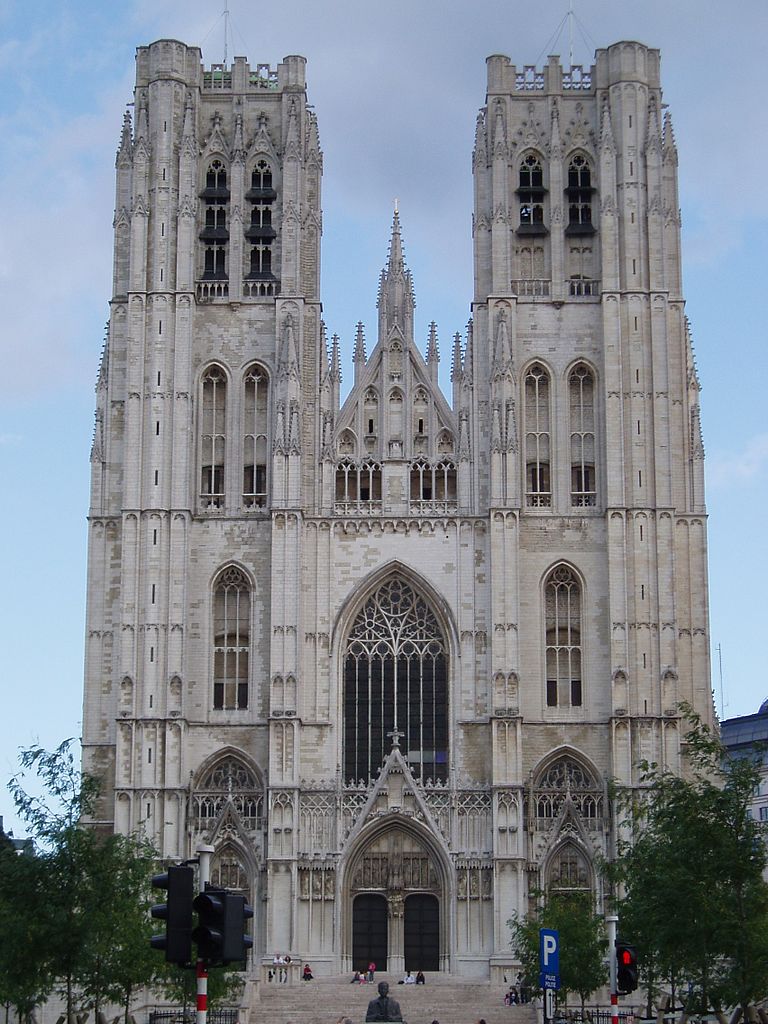
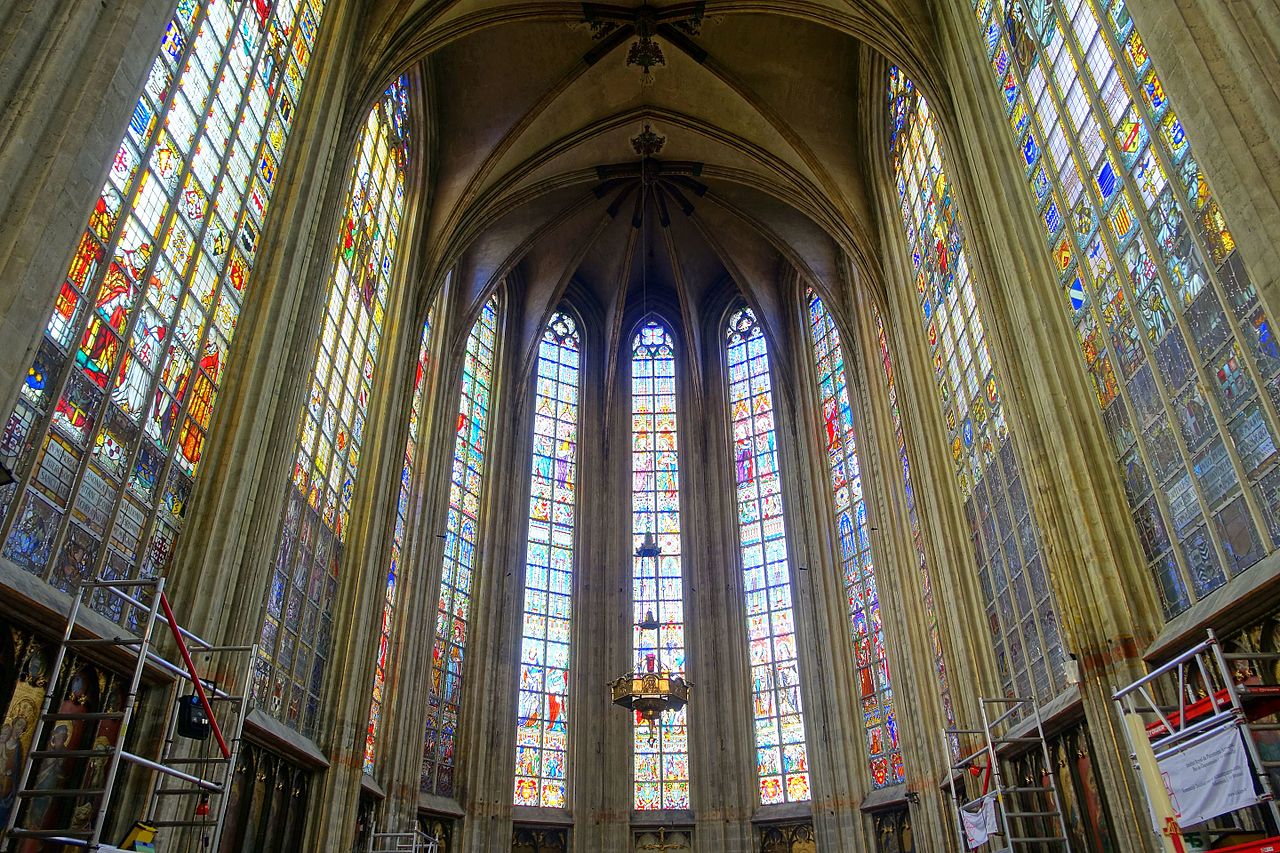
The Cathedral of Saint Michael and Gudula is one of the oldest churches in all of Brussels. Construction on the church began during the Romanesque Age in the 11th century. However, work lasted for several centuries, and most of the design was completed in the Gothic Style. The cathedral has a very imposing front facade containing many Gothic elements, like towers and pointed arches.
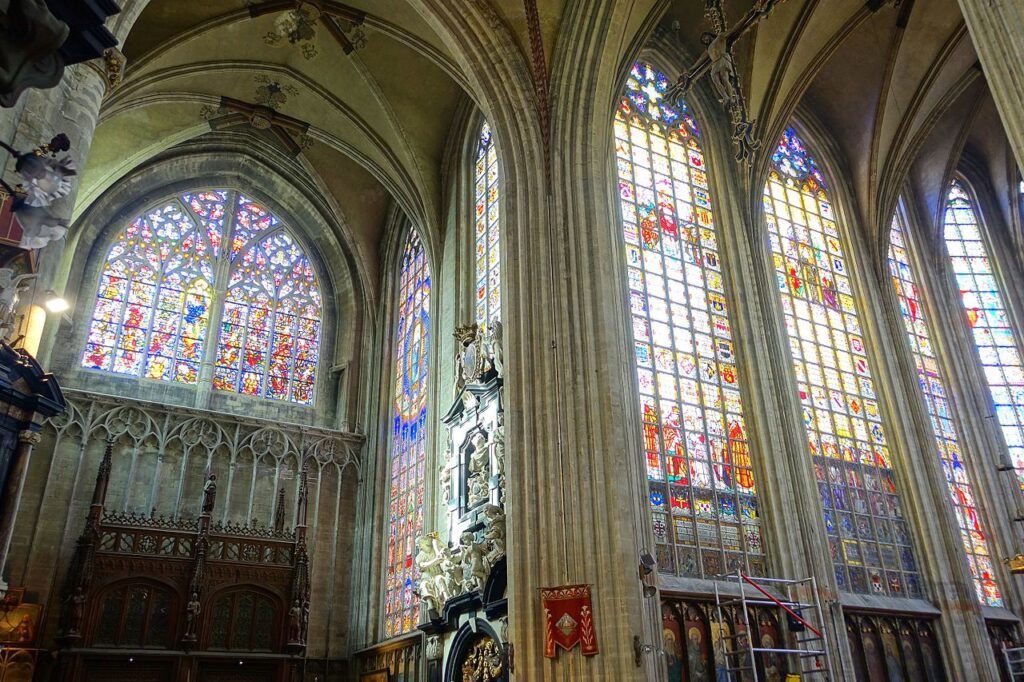
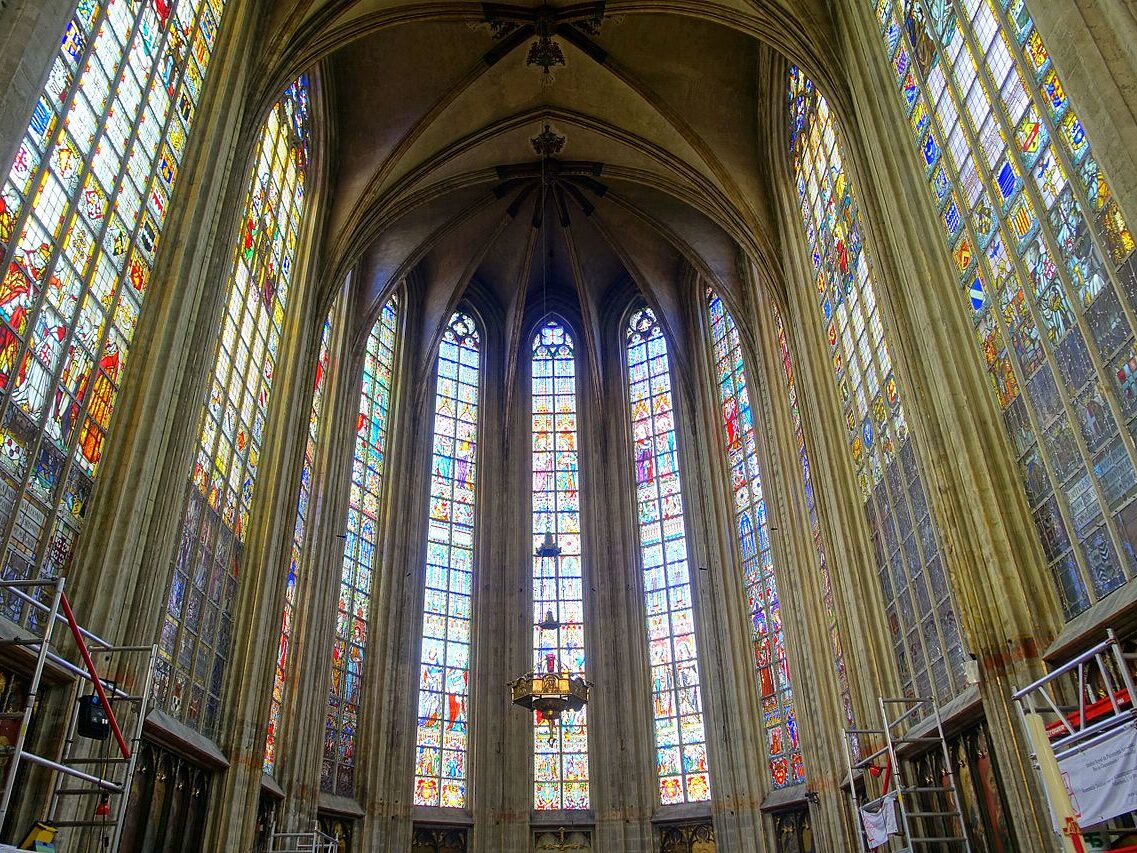
The Cathedral of Saint Michael and Gudula also contains some of the most impressive stained glass windows in all of Belgium. The images mostly depict scenes from the bible, and they were created to illustrate important religious themes to the local population. The stained glass in these windows shows the incredible skill of the local craftsmen in Brussels and highlights the city’s immense wealth.
3. Church of Sablon
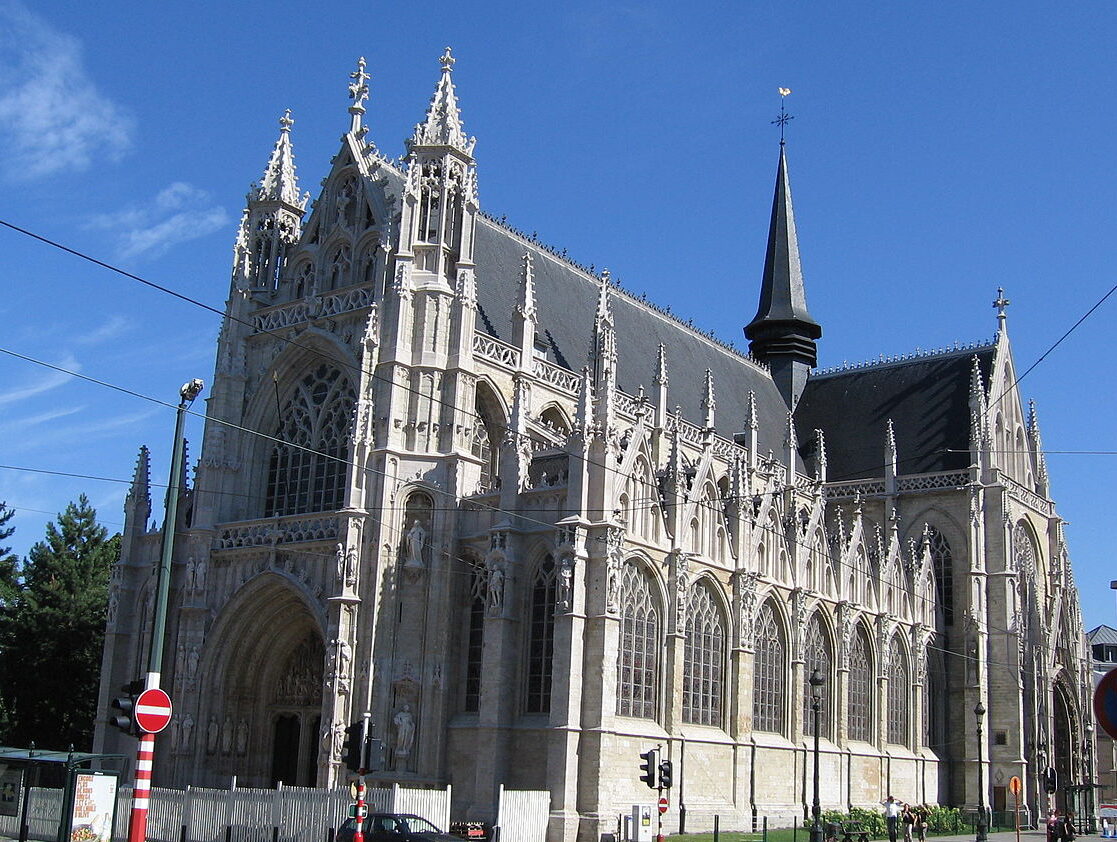
The Church of Sablon is an important work of Gothic Architecture in Brussels. The church gets its name thanks to its location in Brussels’ Sablon neighborhood. The building was originally constructed during the 1400s, in the later stages of the Gothic Age. It’s exterior is completely Gothic, but its interior has several additions added during the Baroque Period. These include a grand organ and a wooden pulpit that was installed in 1697.
4. Halle Gate
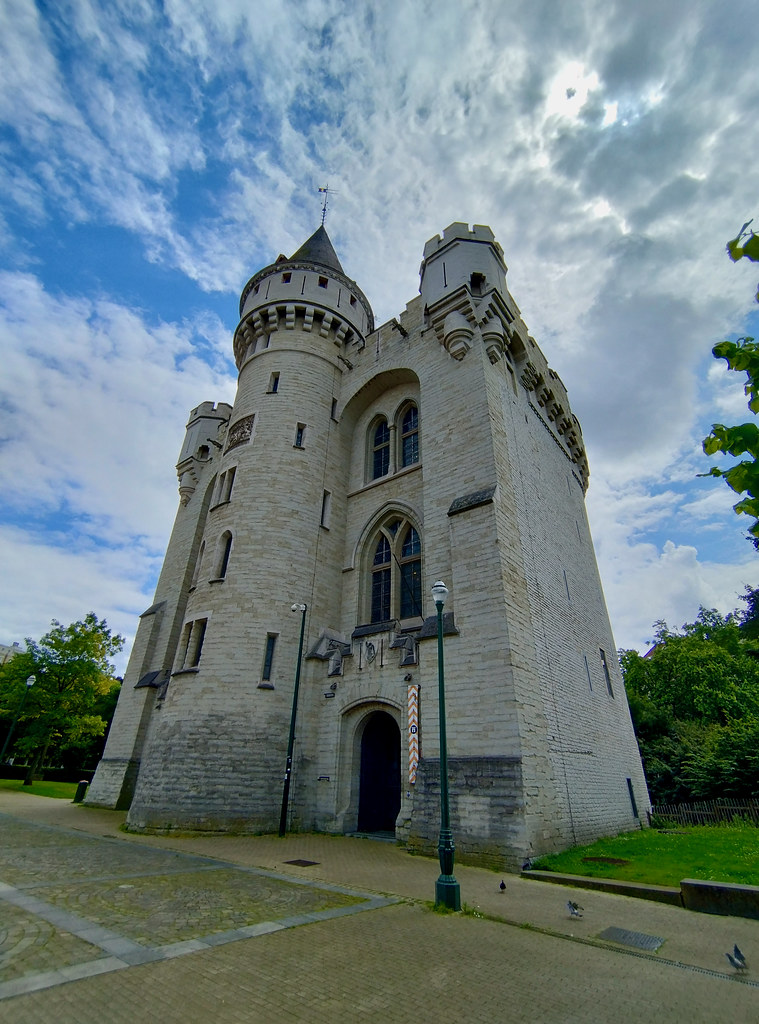
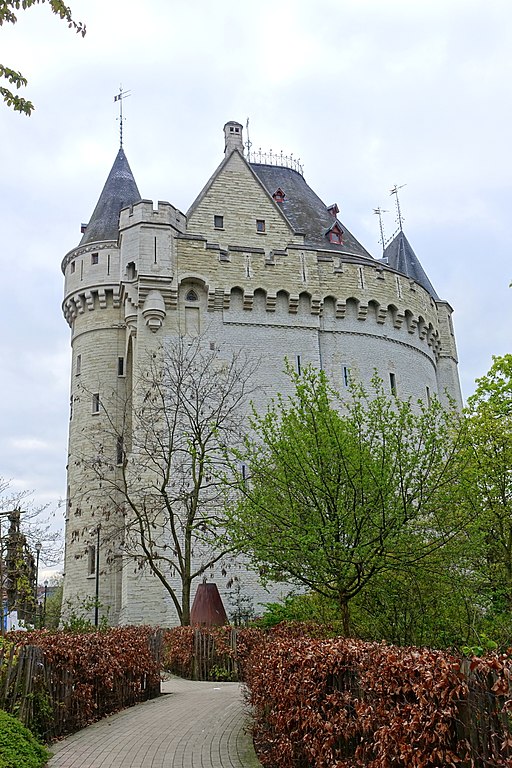
Brussels was once surrounded by some of the most formidable defensive walls in Medieval Europe. The walls were constructed in several different phases beginning in the 13th century. They spanned a total length of 5 miles (8 km), and they contained numerous characteristics from both Romanesque & Gothic Architecture. The Walls of Brussels were torn down in the 19th century, but several important vestiges still remain. The most iconic of these is the Halle Gate, a large fortified gatehouse located on the southern edge of the city center.
5. Remains of Brussels’ Medieval Walls
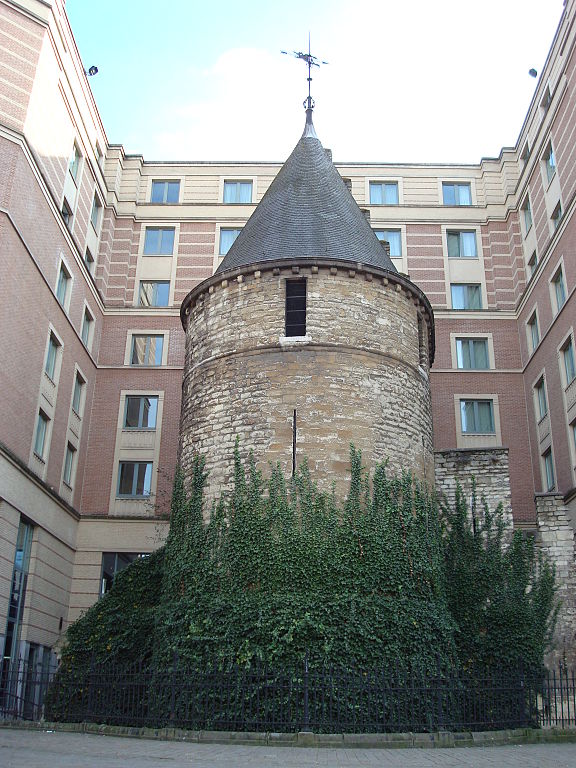
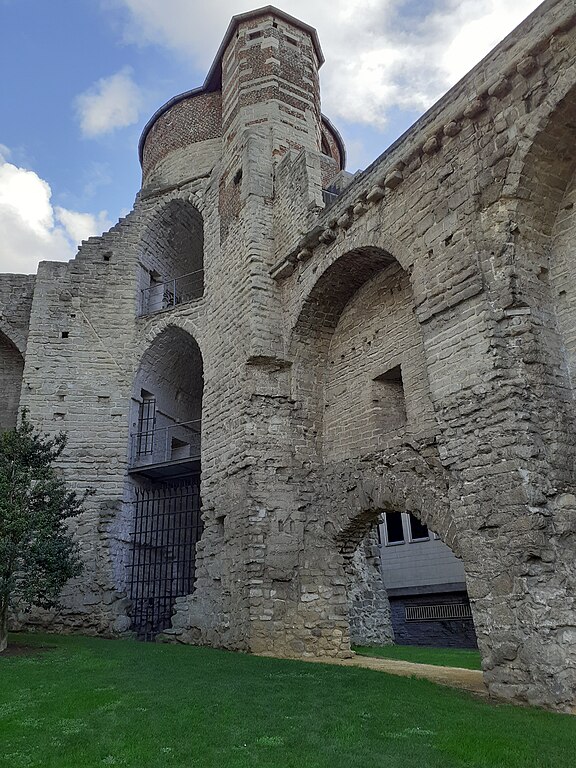
In addition to the Halle Gate, there are a few other remnants of the old city walls scattered throughout Brussels. The left image above depicts the Black Tower, an ivy-covered guard tower dating to the earliest phase of the city’s medieval walls. The right image above shows the Angels’ tower. This is another portion of the original city wall, located along the modern-day Boulevard de l’Empereur.
6. Church of Our Lady of the Chapel
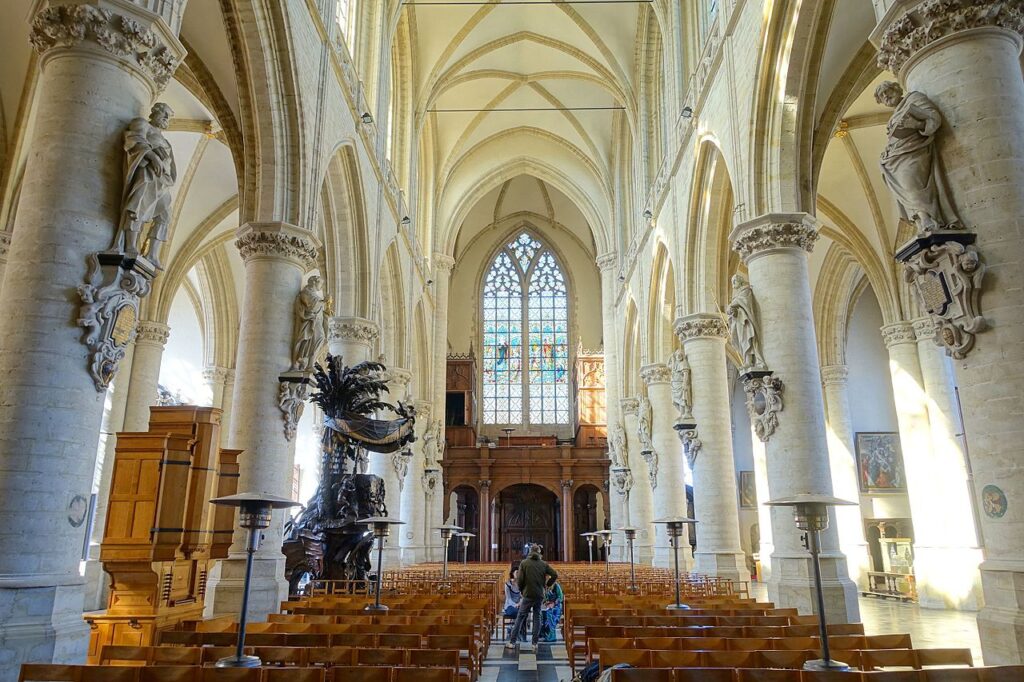
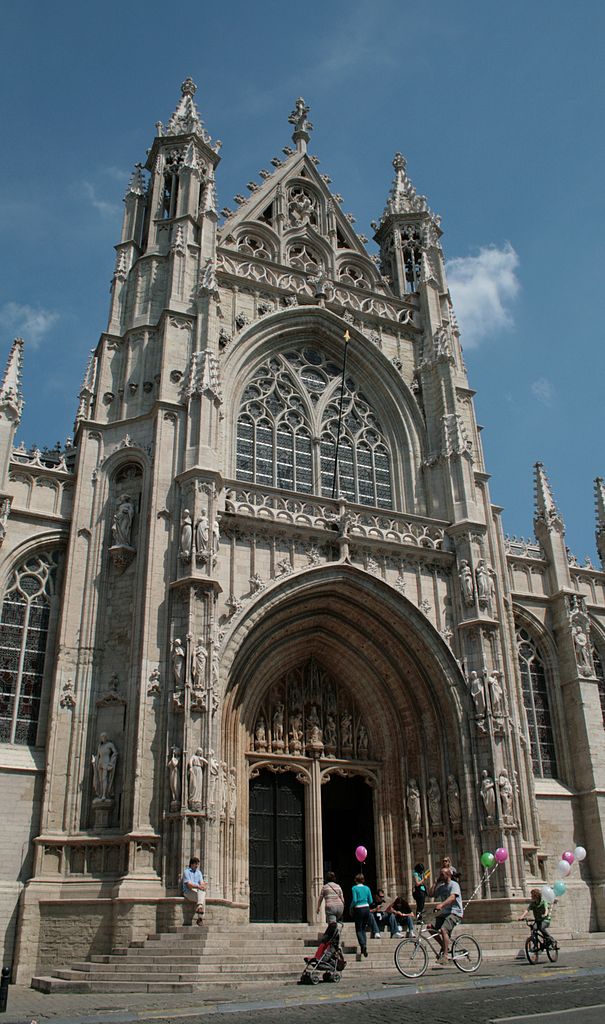
The Church of Our Lady of the Chapel is one of the oldest buildings in Brussels. It originated as a small Romanesque Chapel, and it was greatly expanded during the Gothic Age. The church was also embellished with several Baroque elements, including a large bell tower added in the 1700s. Today, the church’s eclectic form aligns with the unique history of Brussels itself.
Renaissance & Baroque Architecture in Brussels
In the late 15th century, the title of Duke of Brabant was transferred to a member of the Habsburg Monarchy. This event marked the beginning of several centuries of Habsburg influence in Brussels. The city continued to grow wealthy thanks to access to the vast Habsburg trade network. Local guilds became very powerful, and many of them constructed large warehouses facing the Grand Place. Today, Brussels is home to countless works of Renaissance & Baroque Architecture from this period.
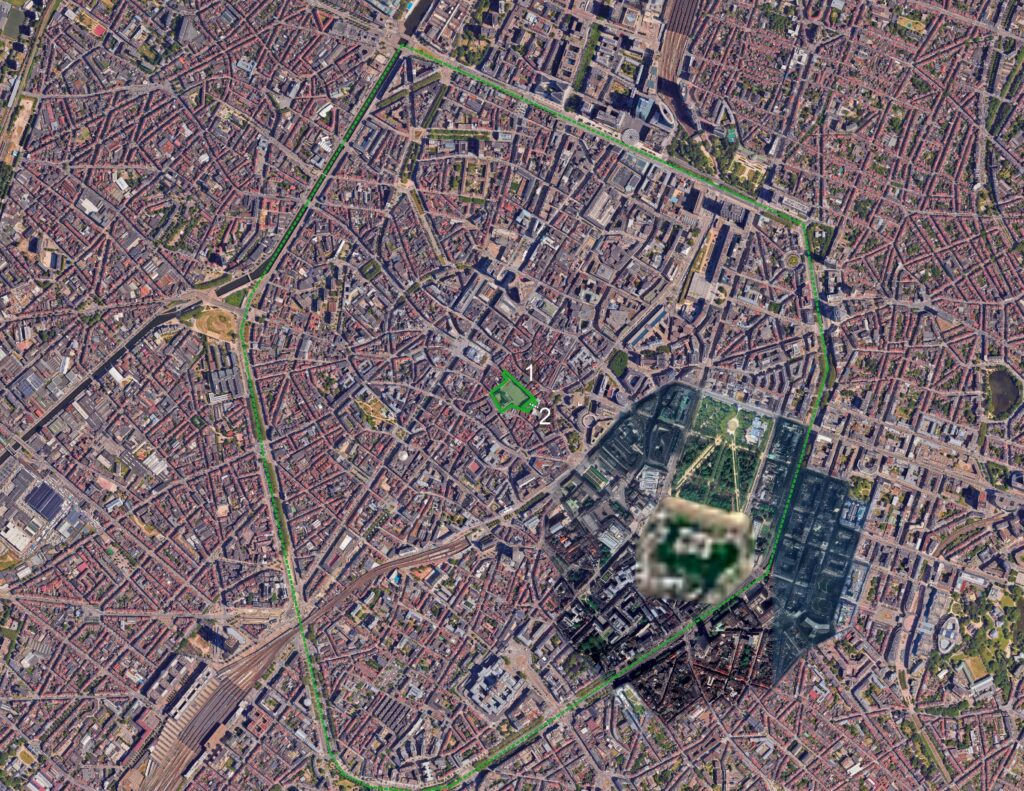
Map of Brussels highlighting the most notable works of Renaissance and Baroque Architecture within the city.
The outlines of the fortifications of Brussels are shown with a dashed line.
1. Guild Halls of the Grand Place
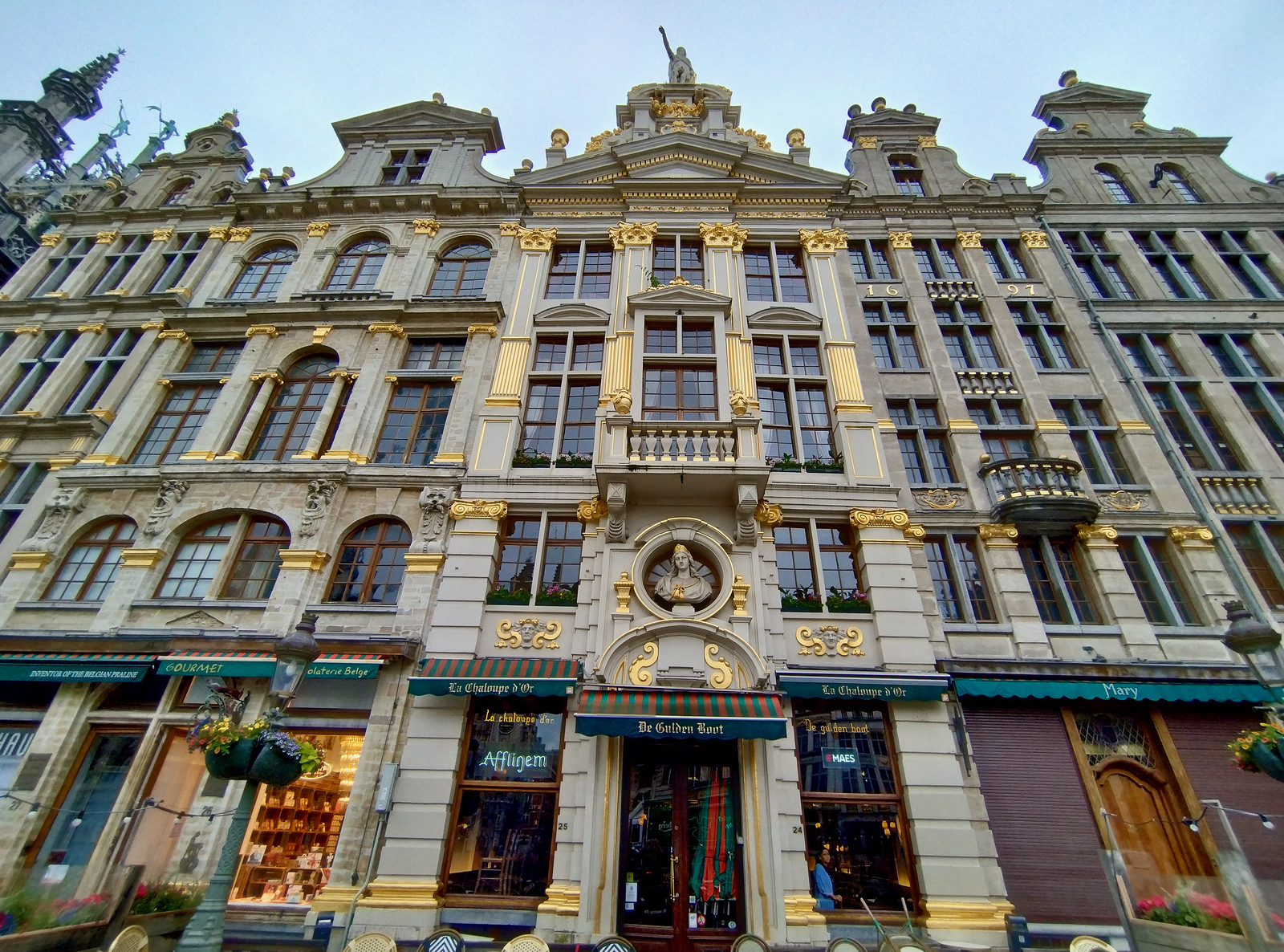
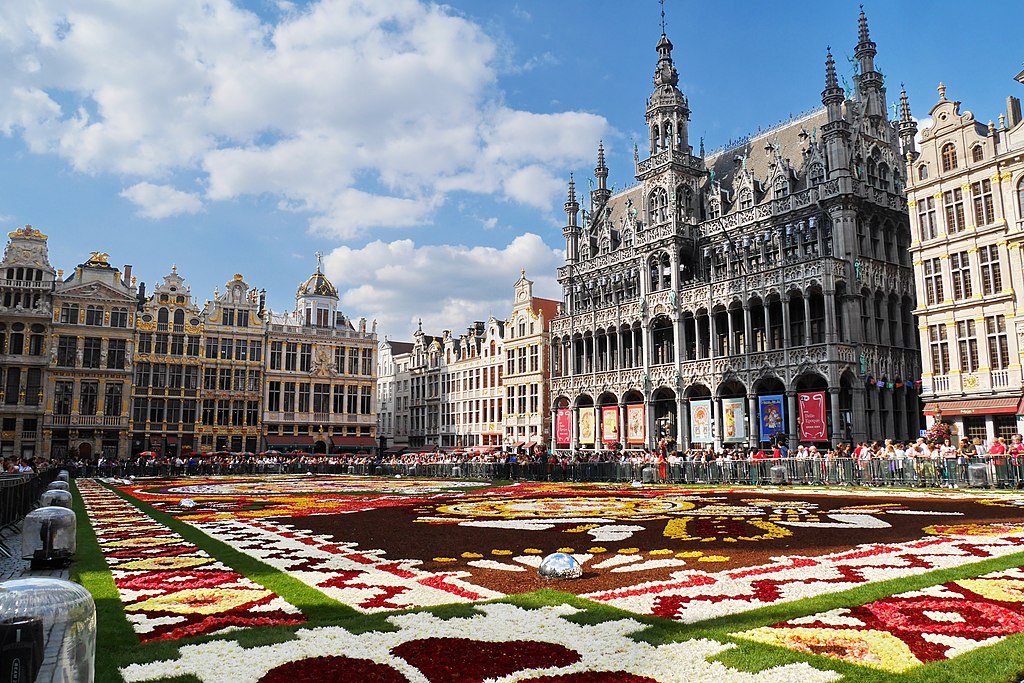
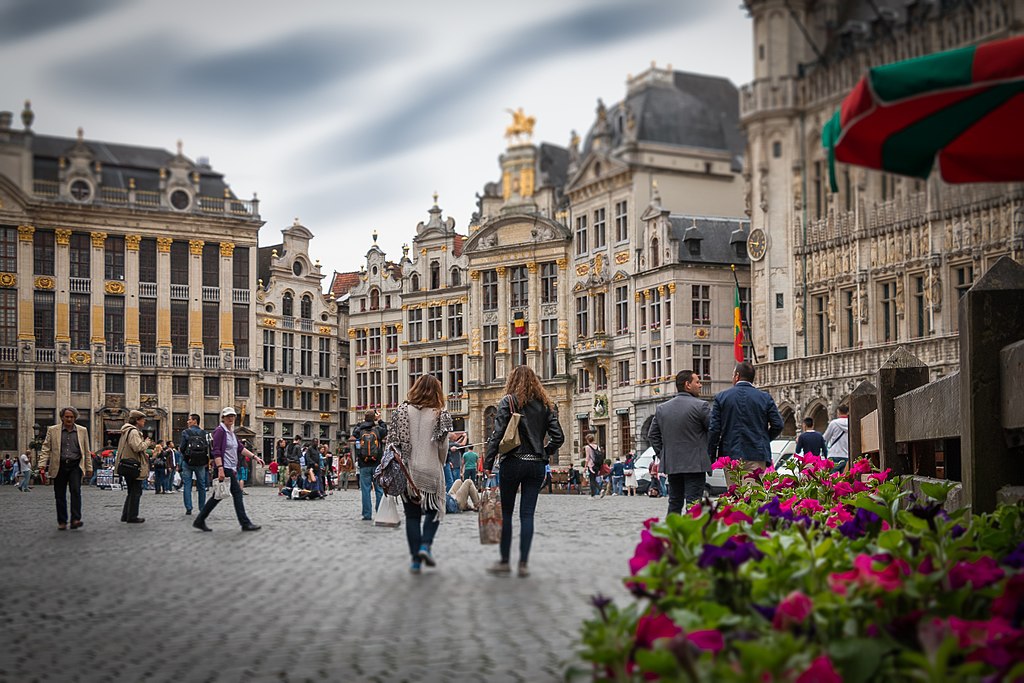
Dating to the foundation of the city itself, the Grand Place is one of the largest open spaces within Central Brussels. During the Middle Ages, it was the city’s political, cultural, and economic center. Over time, the Grand Place became lined with dozens of impressive warehouses constructed by the various guilds based in Brussels. These guilds were all competing for business, and so they created grandiose facades to show off their wealth and successes.
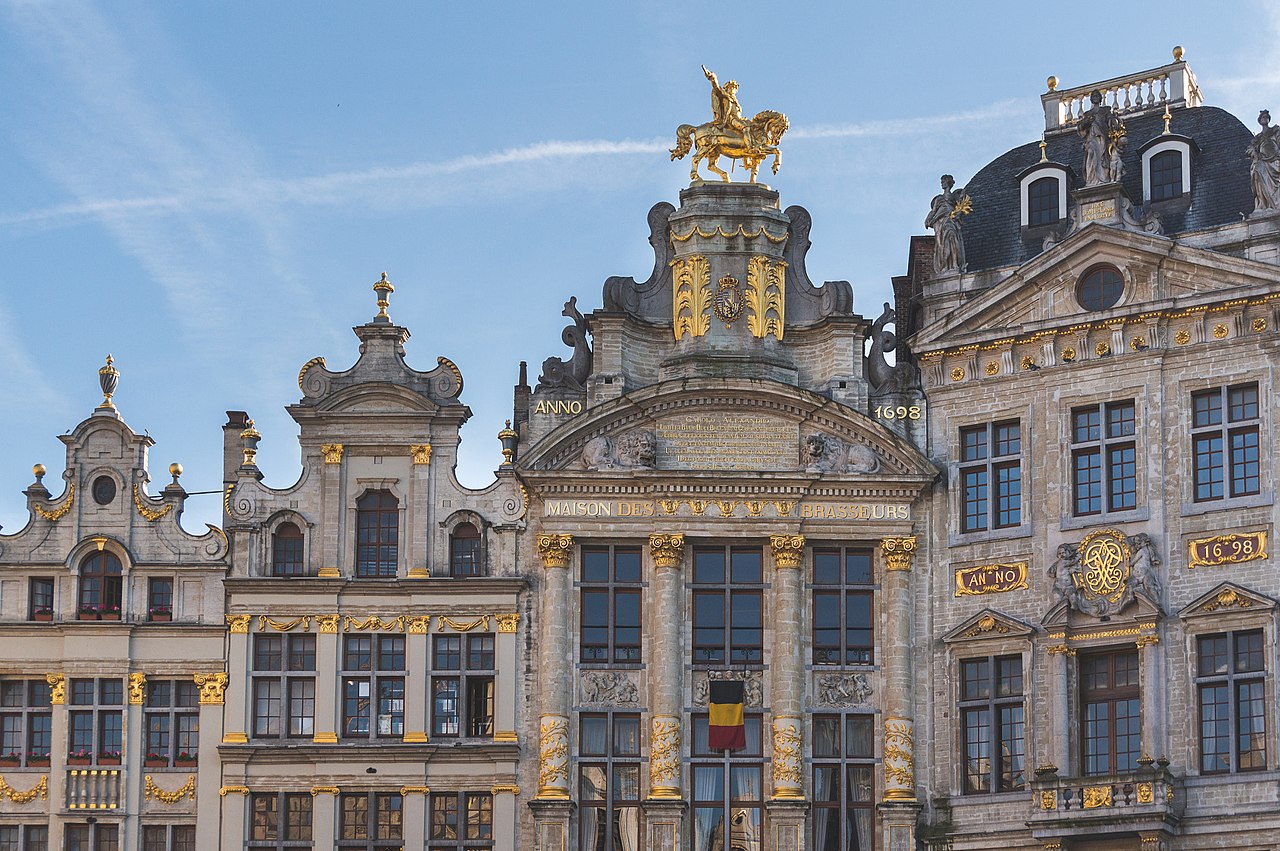
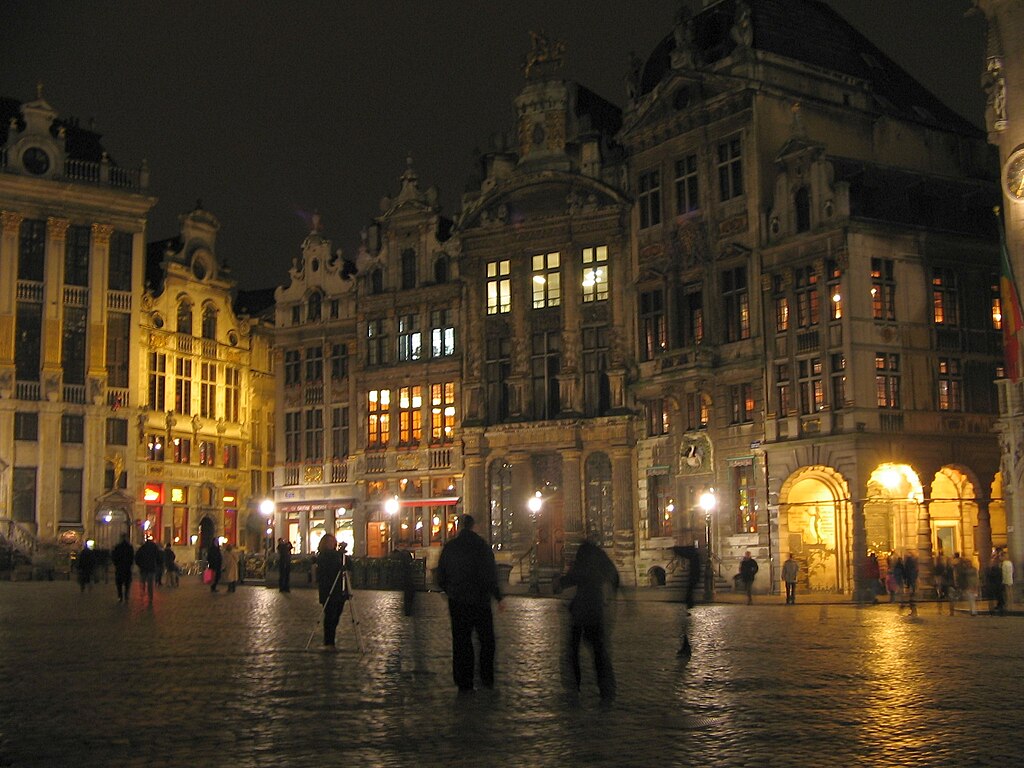
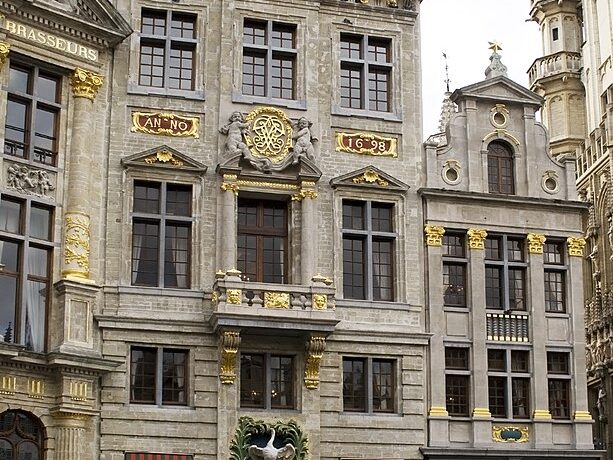
Although varied in style, most of the guild halls were designed using Renaissance & Baroque characteristics. In the left image above, you can see several facades utilizing baroque design elements like gold trim, intricate details, and lively statues. The facades of these guild halls often include features that pertain to the guilds housed within. For instance, you can find sheep on the facade of the wool guild, and traces of barrels on the exterior of the coopers’ guild.
2. La Maison des Ducs de Brabant
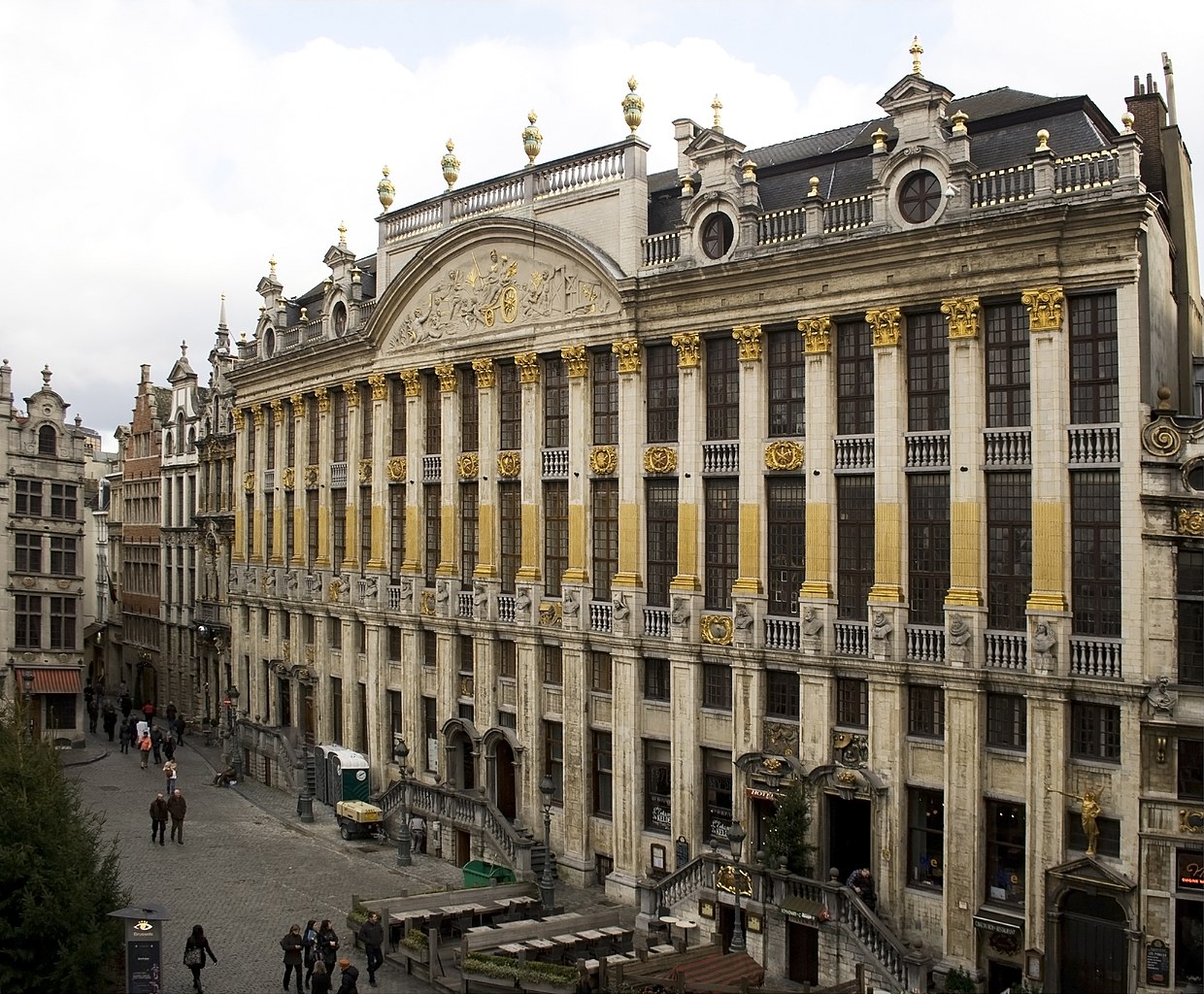
La Maison des Ducs de Brabant is a large work of Baroque Architecture overlooking the Grand Place in Central Brussels. The building is actually composed of seven different townhouses, all behind one large unified facade. The facade takes up a massive section of the Grand Place, and its gilded columns and vibrant details were designed to rival the other guild halls within the square. Le Maison des Ducs de Brabant was completed in 1698, and it replaced an older group of buildings that was destroyed in the 1695 Bombardment of Brussels
Like Architecture of Cities? Sign up for our mailing list to get updates on our latest articles and other information related to Architectural History.
NeoClassical & Revival Architecture in Brussels
Brussels was completely transformed in the 19th century. It all started with the 1830 Belgian Revolution, which established Brussels as the capital of the independent Kingdom of Belgium. After that, the city’s population skyrocketed, and Brussels expanded drastically outside its former historic center. City officials ordered the destruction of the defensive walls, and large boulevards were constructed in their place. The new kings of Belgium would commission works of Neoclassical & Revivalist Architecture in an effort to turn Brussels into a modern European capital city.
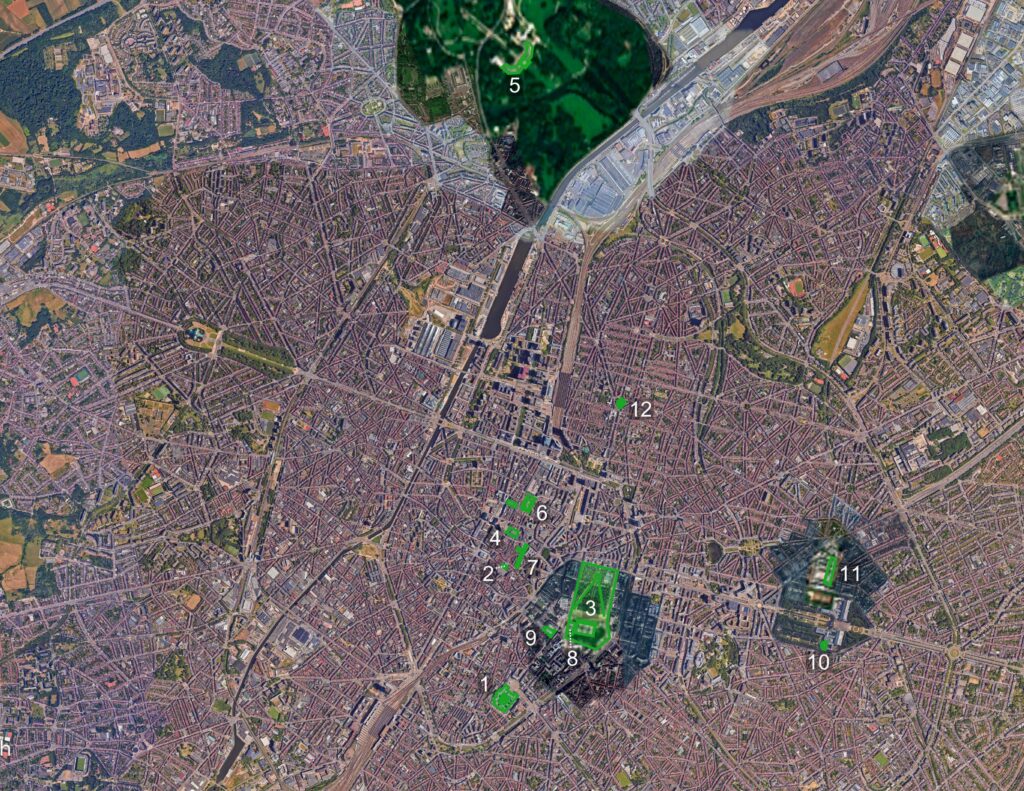
Map of Brussels highlighting the most notable works of Neoclassical & Revival Architecture within the city.
1. Palais de Justice
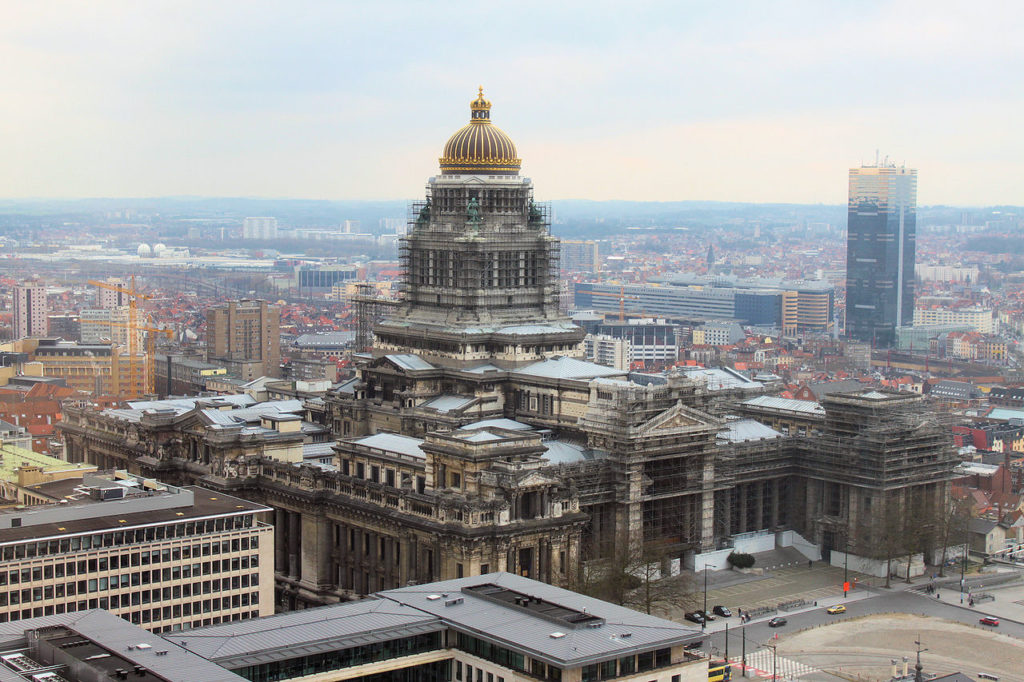
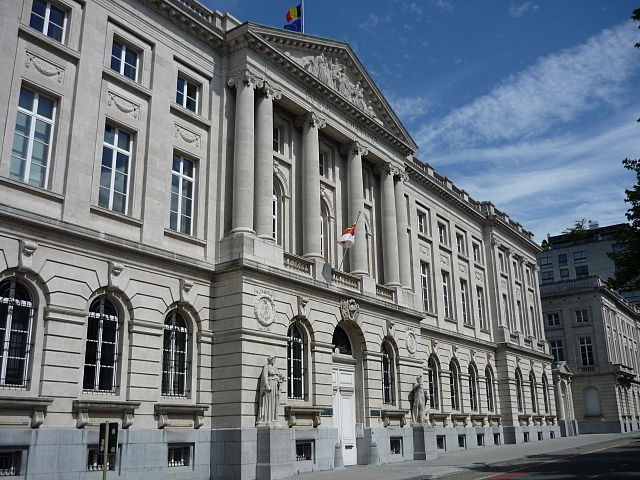
The Palais de Justice is one of many incredible works of Neoclassical Architecture in Brussels. Construction began on the building in 1866 and lasted until 1883. The Palais de Justice is a massive courthouse that houses many different judicial functions, including the High Court and the Supreme Court of Belgium. The building was badly damaged in WWII, leaving behind severe structural issues. Restoration works have been underway since the 1980s. In the image above, you can see the scaffolding that is necessary for these repairs.
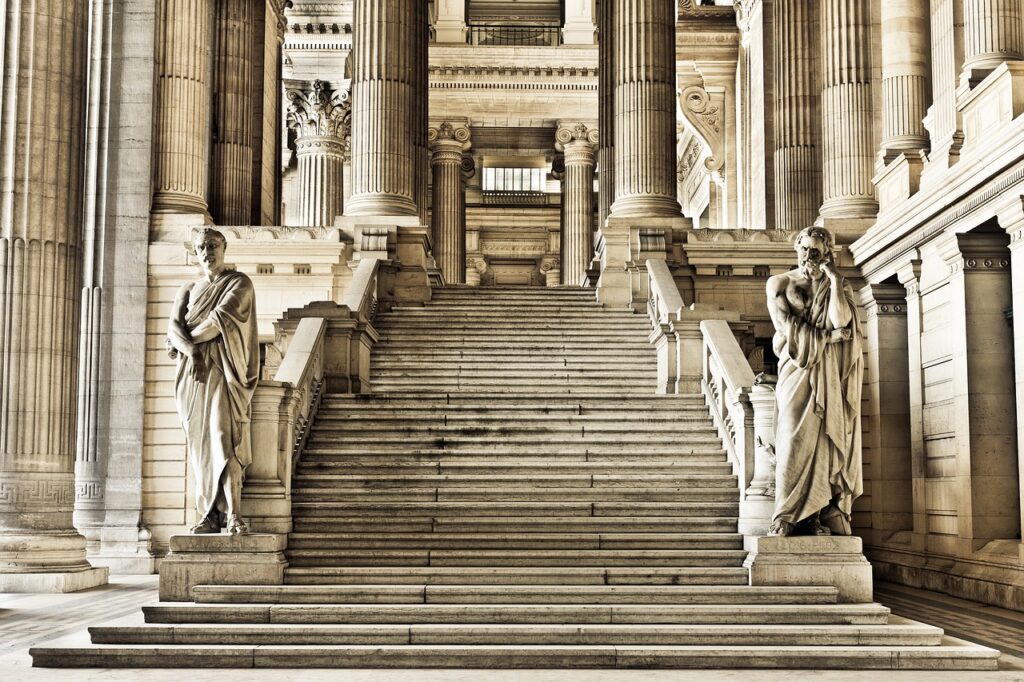
The Palais de Justice was primarily designed in the Neoclassical Style. Its facade contains pediments, friezes, and ballustrades, and the building’s interior blends Doric, Ionic, and Corinthian columns. The Palais de Justice was also designed with an eclectic blend of other architectural styles. The building has elements from Baroque Revival Architecture, such as its massive gilded dome.
2. Brussels City Museum
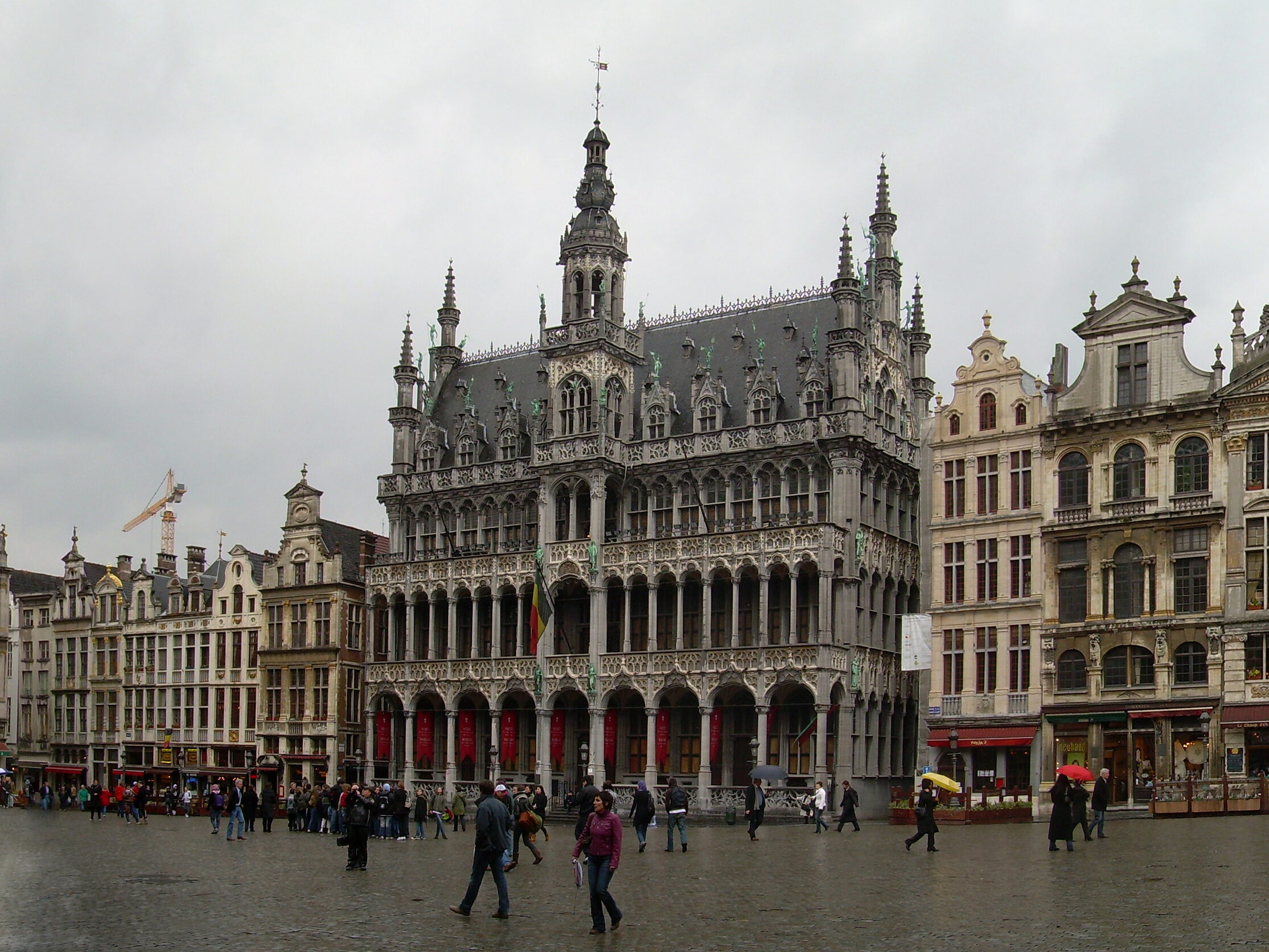
The City Museum is Brussels’ greatest example of Gothic Revival Architecture. The building overlooks the Grand Place, and it was constructed in the late 19th century. The Gothic Revival design was specifically chosen to blend with the Town Hall located right across the square. Both buildings contain similar elements from Gothic Architecture, including spires, pointed arches, and Gothic Tracery

The City Museum houses a collection of exhibits about the history of Brussels. It contains important relics and artifacts, in addition to paintings and sculptures by local artists. Although not as large as some of the city’s other museums, it’s a great way to learn about Brussels and how it has changed. Together with the rest of the monuments in the Grand Place, the Brussels City Museum was designated a UNESCO World Heritage Site in 1998.
3. Royal Palace of Brussels
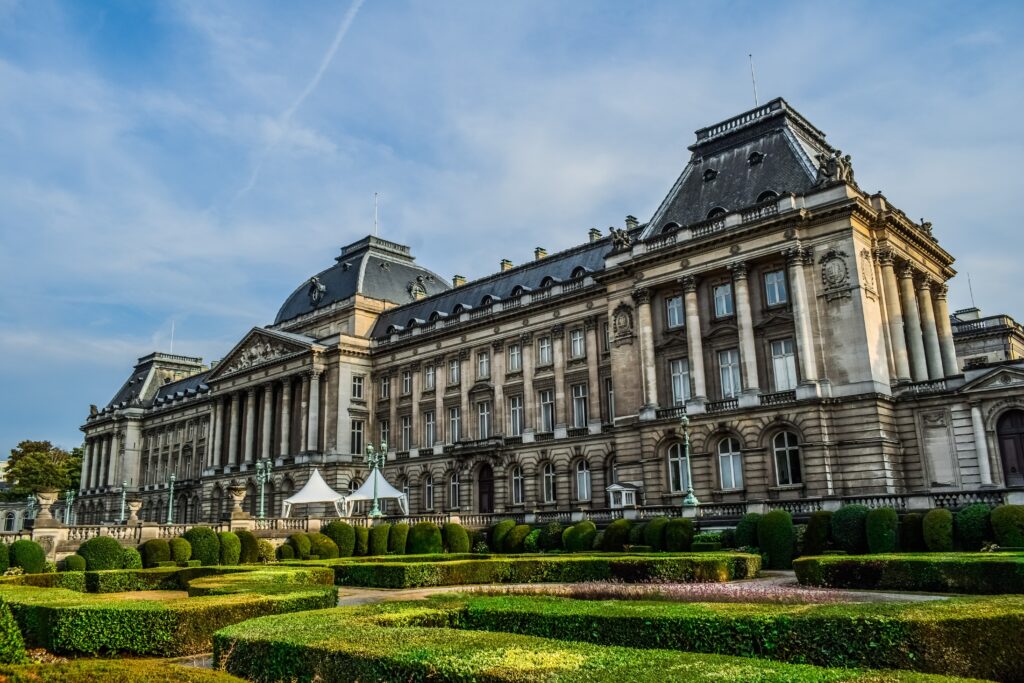
The Royal Palace is one of the greatest examples of Neoclassical Architecture in Brussels. It was constructed in several phases, and the building contains elements from other styles such as Baroque & Beaux Arts. The palace was built as the primary residence of the Kings of Belgium and served as their inner city residence, while the Palace of Laeken served as more of a summer home. The Royal Palace of Brussels was also built alongside a large garden, which is now known as the Parc de Bruxelles.
4. La Monnaie
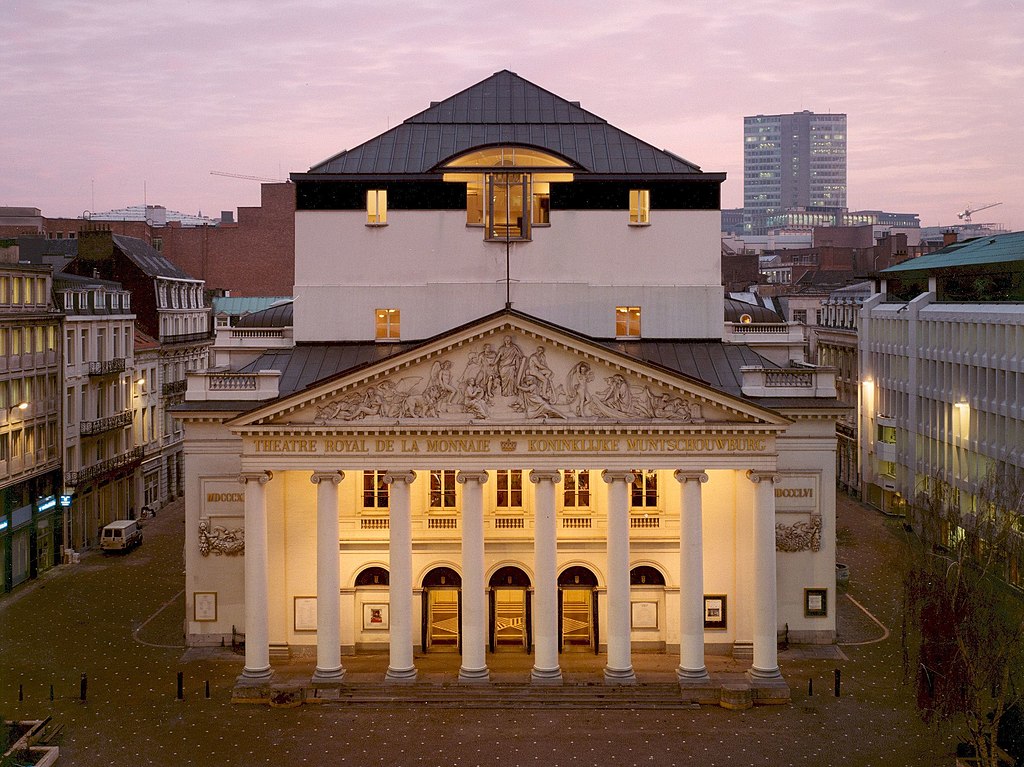
La Monnaie is a large opera house in central Brussels. It was built in the late 19th century and designed in the Neoclassical Style. Opera was a popular art form at this point in history, and La Monnaie was constructed to rival other renowned opera houses, such as those in Vienna and Paris. The building has several key elements from Neoclassical Architecture, including Ionic Columns, a large pediment, and a whitewashed color scheme.
5. Royal Palace of Laeken
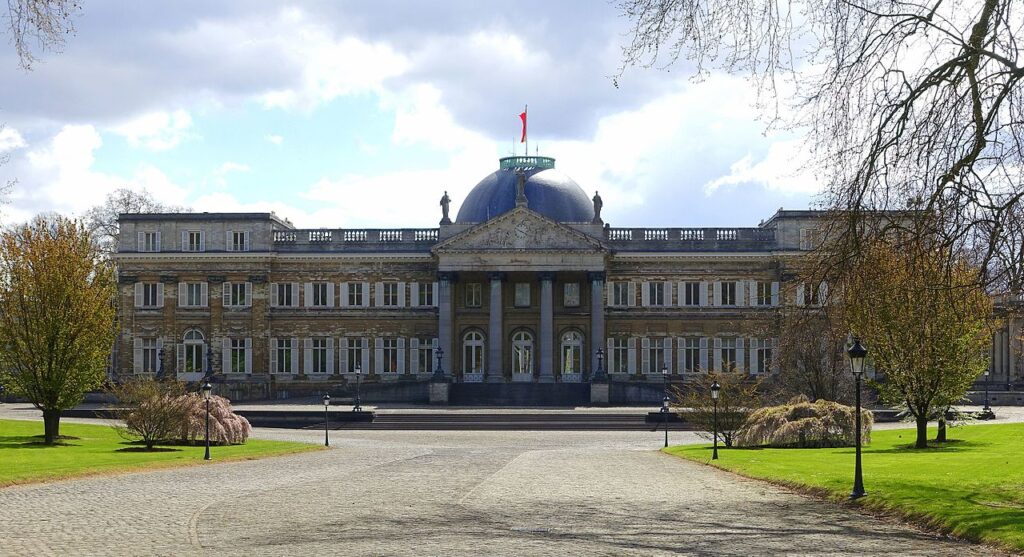
The Royal Palace of Laeken is a large palace located just outside the city center of Brussels. The original building was commissioned by a Habsburg-appointed governor back in the late 1700s. It was designed in the Neoclassical Style, which was gaining popularity at that point in history. After the Belgian Revolution in 1830, the palace was repurposed as the official Royal Residence for the King & Queen of the Belgians, a role which it still serves today.
6. Place des Martyrs
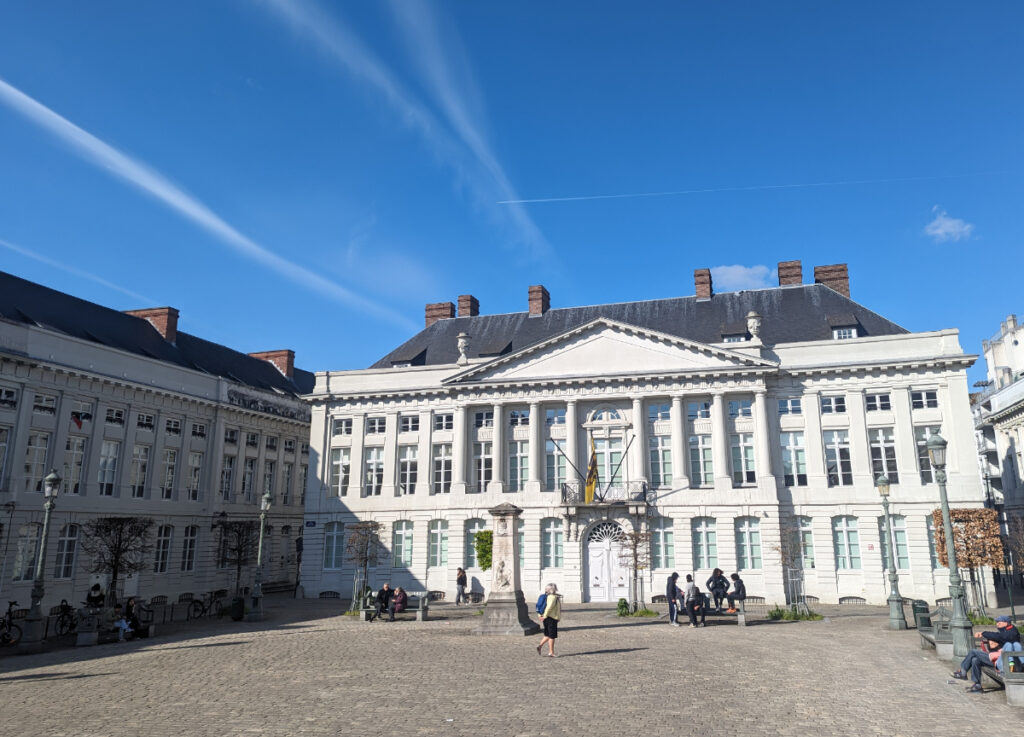
The Place des Martyrs is a square in central Brussels that dates back to the late 18th century. The square is lined with a series of Neoclassical facades that all utilize similar dimensions and proportions. During the Belgian Revolution of 1830, there was heavy fighting within the square, and many brave locals lost their lives. Today, the site has been renamed the Place des Martyrs, and it contains a large tomb & war memorial.
7. Les Galeries Royales Saint-Hubert & Passage du Nord
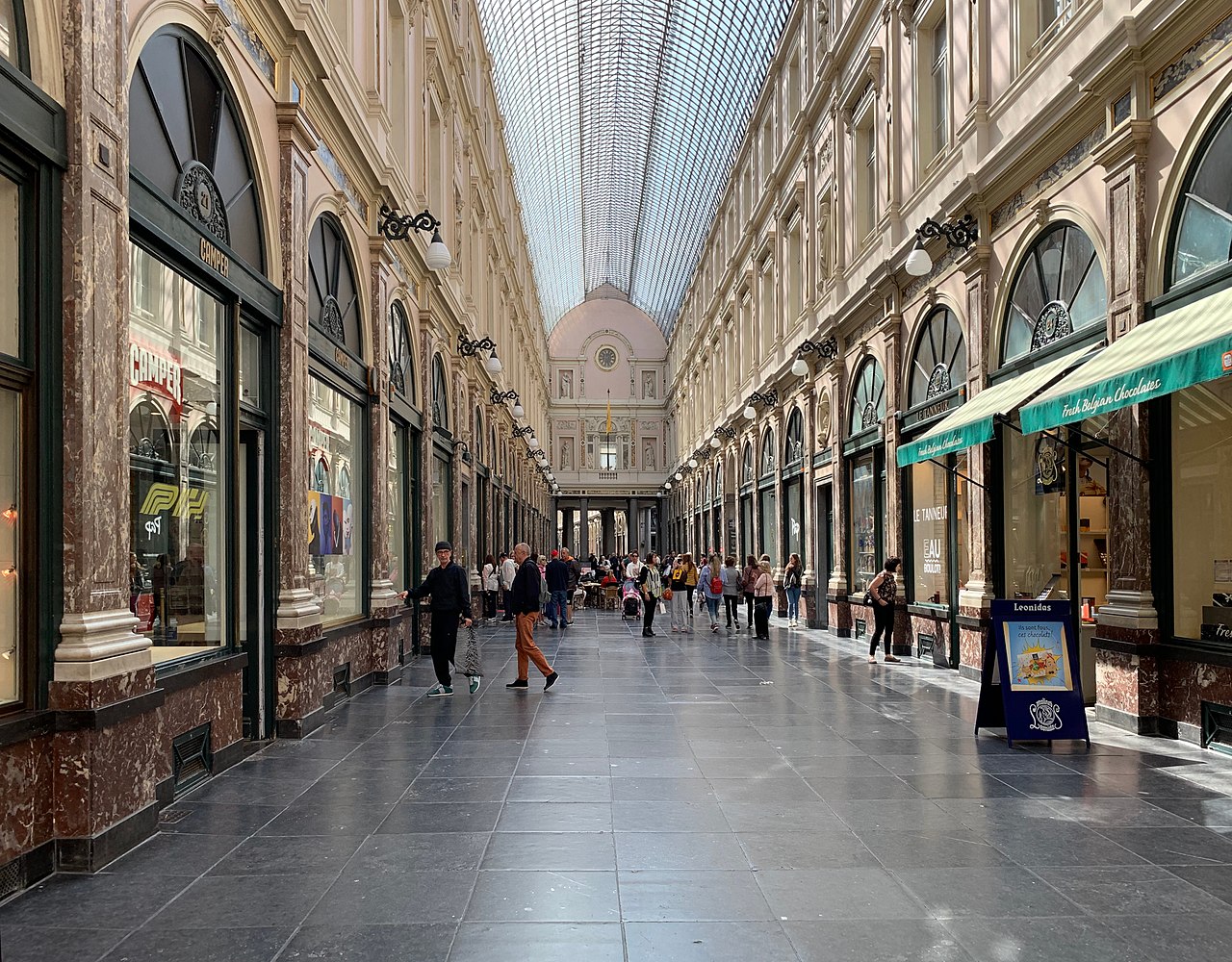
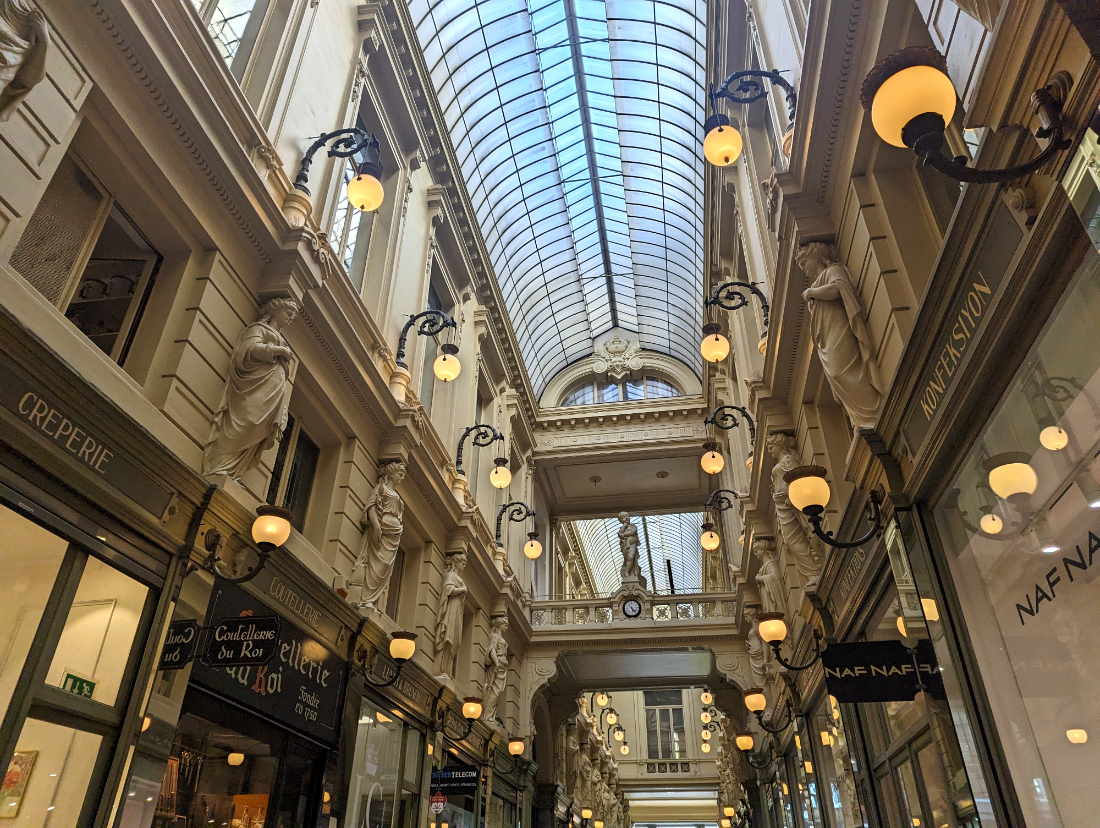
Brussels contains several different glazed arcades dating from the 19th century. The largest cluster of these is the Gallerias Royales Saint-Hubert, which you can see in the left image above. This gallery is designed in the Renaissance Revival Style, and it spans a total length of 700 feet (213 m). The right image above shows the Passage du Nord, which was completed in 1882. This gallery was designed in an Eclectic Style that combines Renaissance & Baroque details.
8. Church of St. James
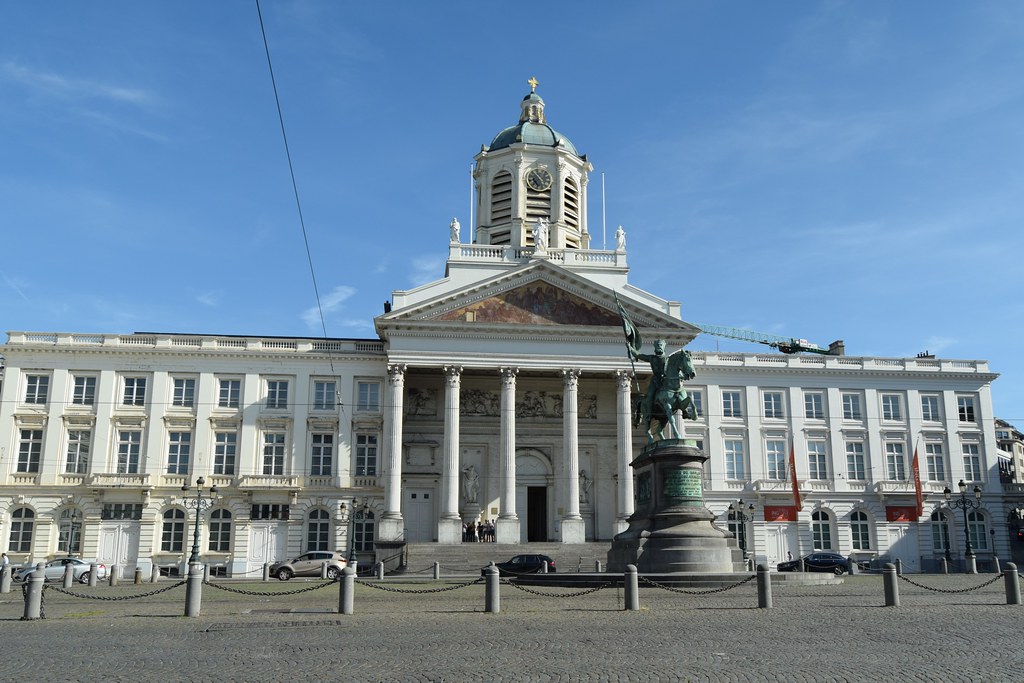
The Church of St. James is another great example of Neoclassical Architecture in Brussels. The church was built in the late 18th century, and it overlooks a prominent square within Brussels known as Place Royale. The church illustrates many of the key characteristics of the Neoclassical Style. It has an austere appearance, with a bold and simplified form. The church is also mostly white, in great contrast to the colorful Baroque and Rococo architecture that preceded Neoclassicism.
9. Royal Museum of Fine Arts of Belgium
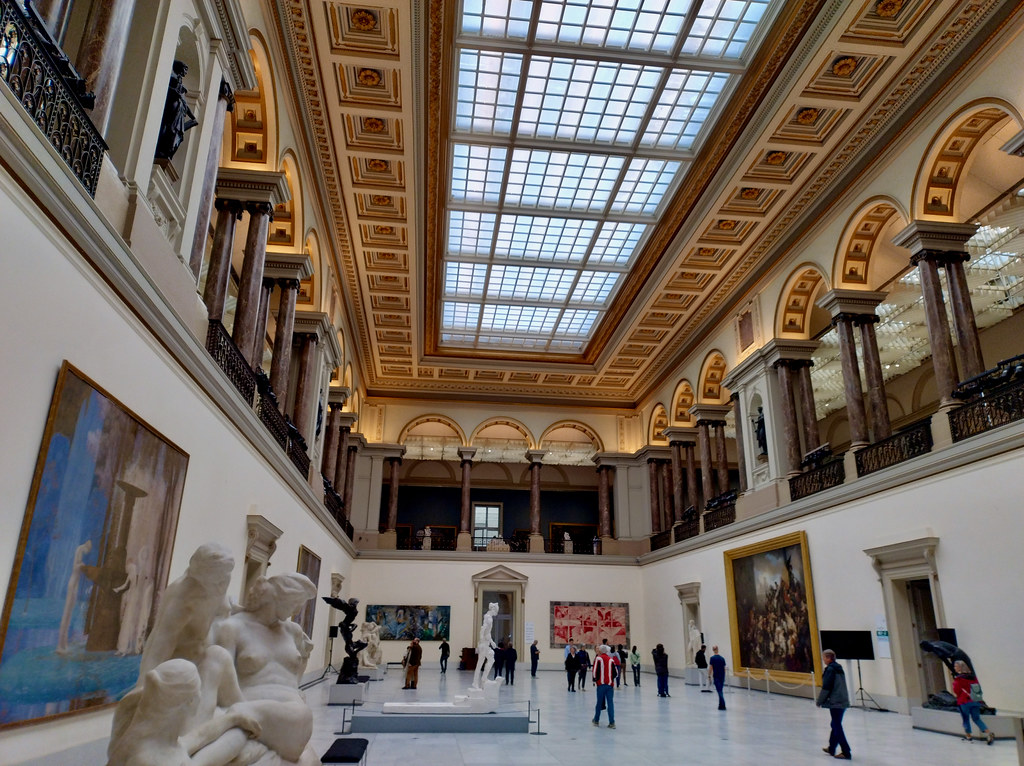
The Royal Museum of Fine Arts is a renowned art institution located just down the road from the Church of St. James. The museum was designed in the Renaissance Revival Style, and it contains all of the typical details found in Renaissance Architecture, such as symmetry, repetition, and the use of classical details. The RMFA has a focus on paintings and sculptures from the late medieval period up until the 20th century. Some of the collection’s highlights include works by Anthony Van Dyck and Peter Paul Rubens.
10. Royal Museum of Art & History
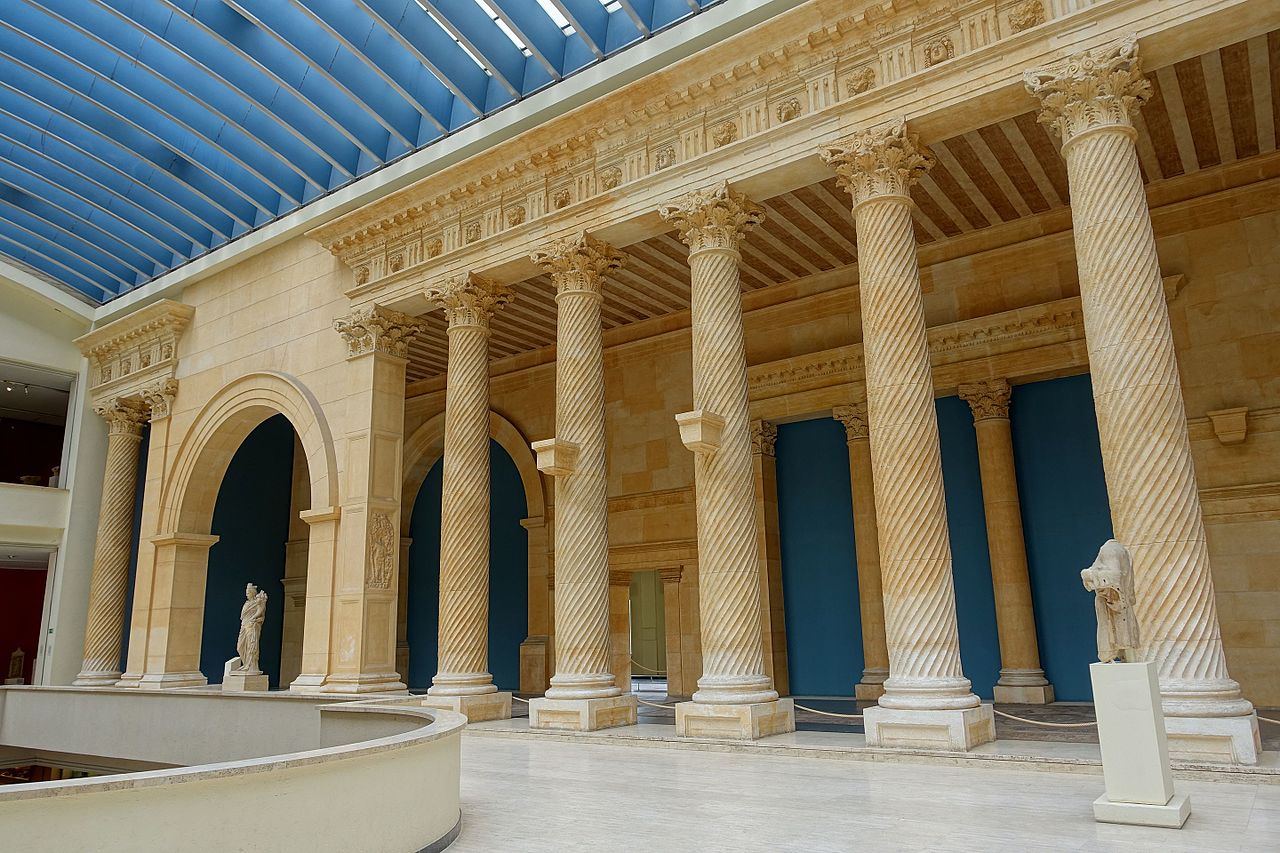
The Royal Museum of Art and History is a large Neoclassical building that was constructed alongside the Parc du Cinquantenaire. The museum contains a wide assortment of art and artifacts. There are Ancient Egyptian statues, Roman Mosaics, and plenty of paintings and sculptures from the early medieval period. A highlight of the museum is a fully reconstructed facade from an ancient Roman Basilica, which you can see in the image above.
11. Royal Military Academy
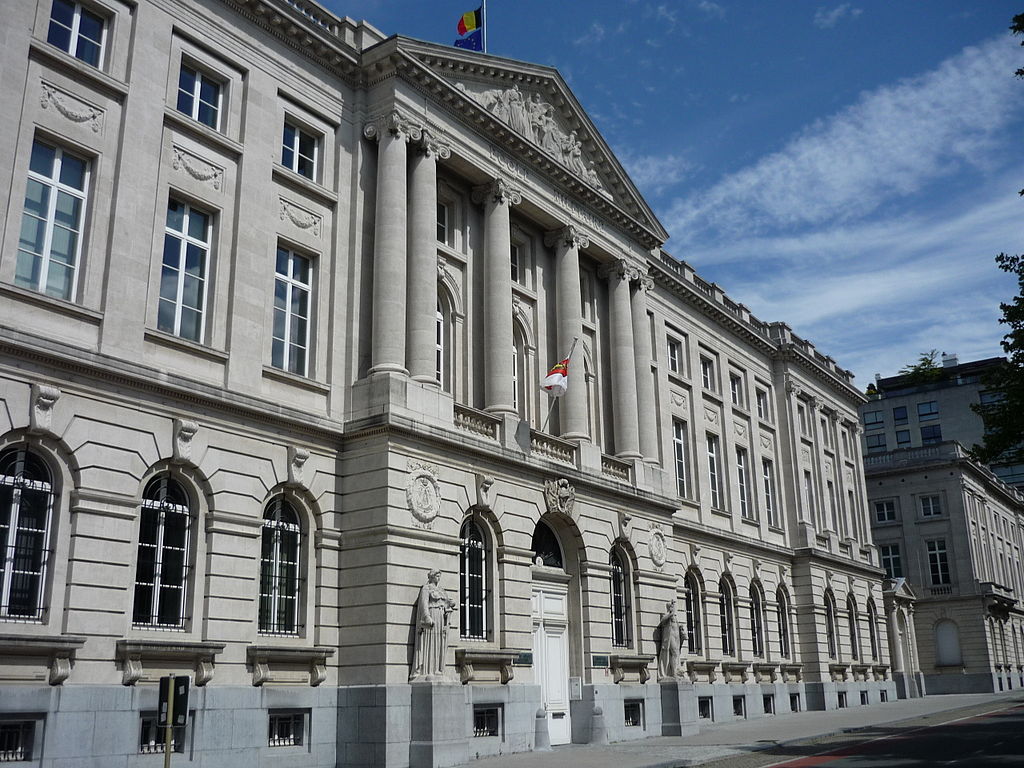
The Royal Military Academy is another impressive work of Neoclassical Architecture in Brussels. It serves as a military university for the armed forces of Belgium. The academy itself has existed since the mid-19th century, and it’s one of the most reputable educational institutions in all of Belgium. The building contains many of the typical elements from neoclassicism, including Ionic Columns, pediments, friezes, and classical sculptures.
12. St. Mary’s Royal Church
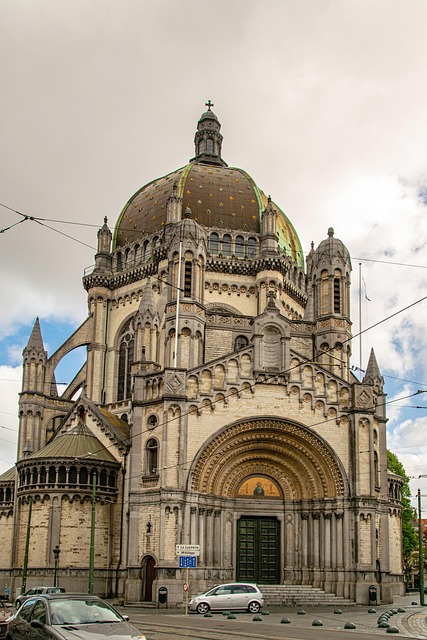
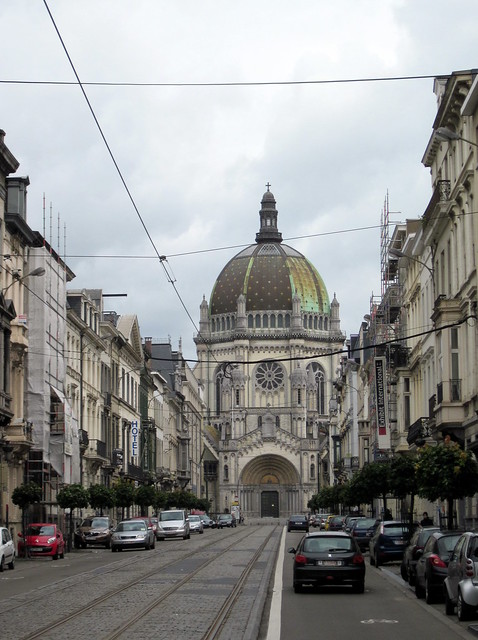
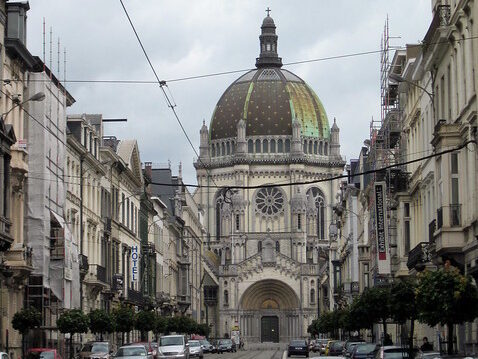
St. Mary’s Royal Church is a religious building located in the Schaerbeek neighborhood of Brussels. The building is primarily Romanesque Revival, but it also contains some elements from Gothic Revival. The original Romanesque Period took place when building techniques were very limiting. But, during the Revival Period of the 19th century, newer construction technologies and materials were available. NeoRomanesque structures, therefore, could have more daring and impressive elements, such as large windows and domes.
Beaux Arts, Art Deco & Art Nouveau Architecture in Brussels
Brussels experienced a huge building boom from the late 19th century through the early 20th century. This was largely thanks to three different World’s Fairs that occurred in the city. The first was the Brussels Cinquantenaire of 1880, after which came the Brussels International Expositions of 1897 and 1910. All of these events led to the creation of incredible works of architecture. Most of these structures were designed in the more decorative and artful styles that followed the Revival Movement, including Beaux Arts, Art Deco, and Art Nouveau.
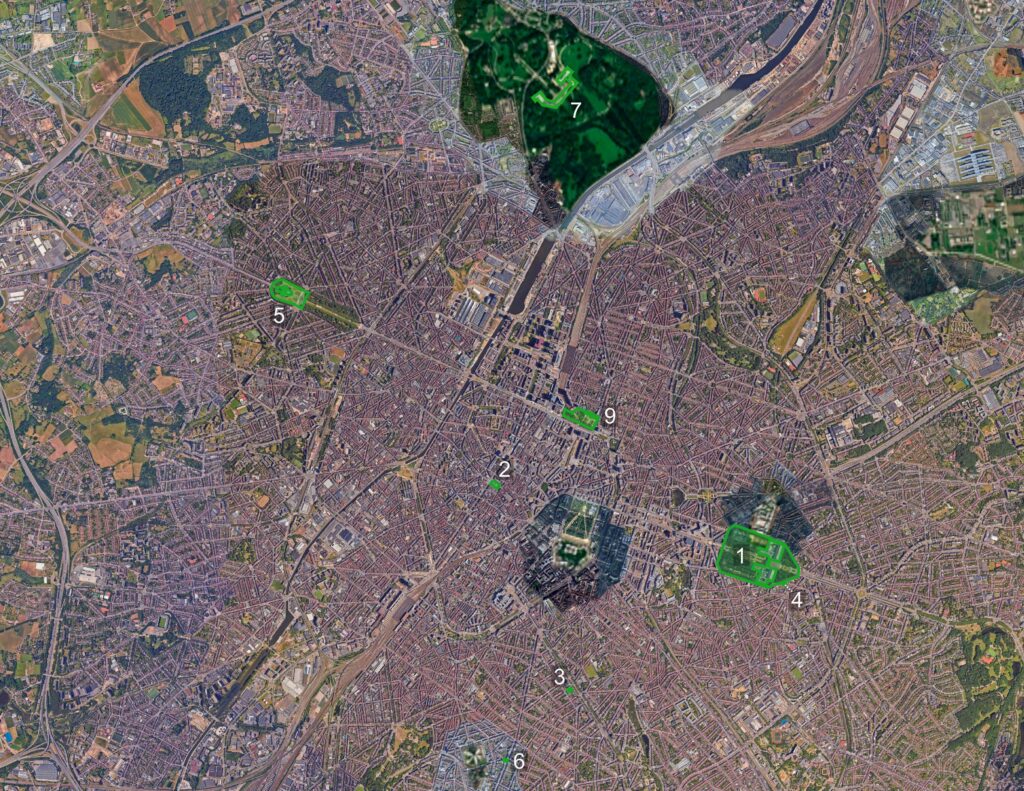
Map of Brussels highlighting important works of Beaux Arts, Art Deco, and Art Nouveau architecture within the city.
Note: #8 on the list is not depicted.
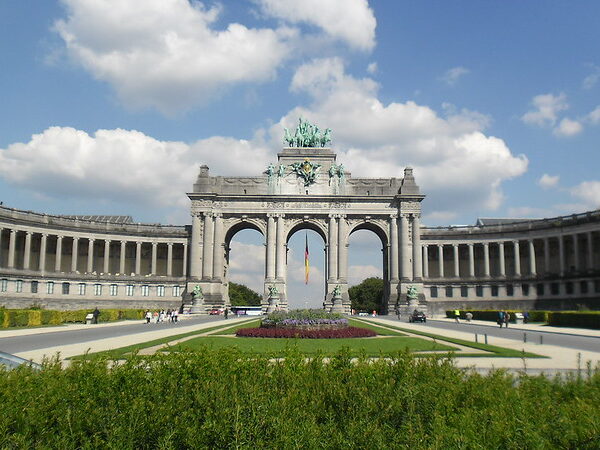
1. Parc du Cinquantenaire
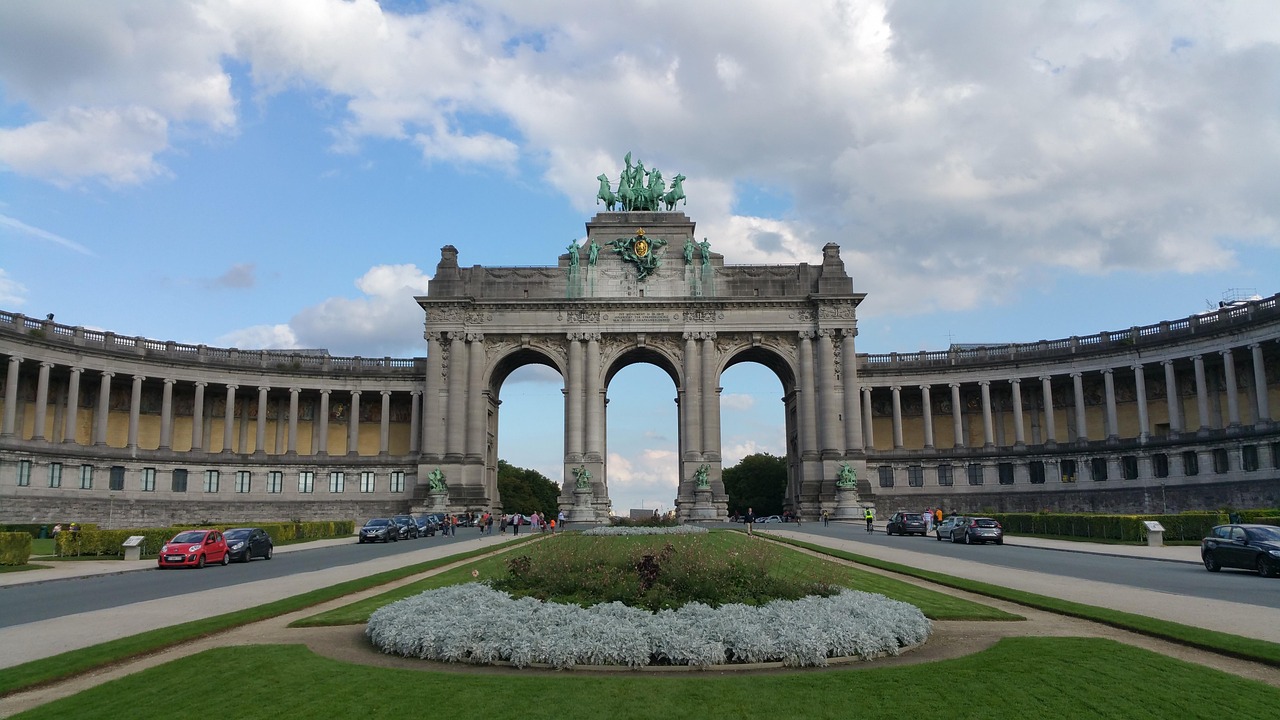
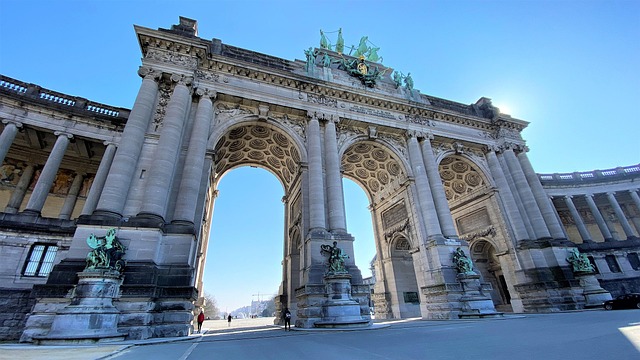
Parc du Cinquantenaire is a large complex of buildings that was designed as the centerpiece for the Cinquantenaire Celebration of 1880. This event was similar to a world’s fair, and it marked the 50th anniversary of Belgian Independence. King Leopold II commissioned dozens of impressive monuments leading up to the exhibition throughout Brussels and other cities in Belgium. The image above shows a massive Triumphal Arch that was designed to be the focal point of the entire celebration.
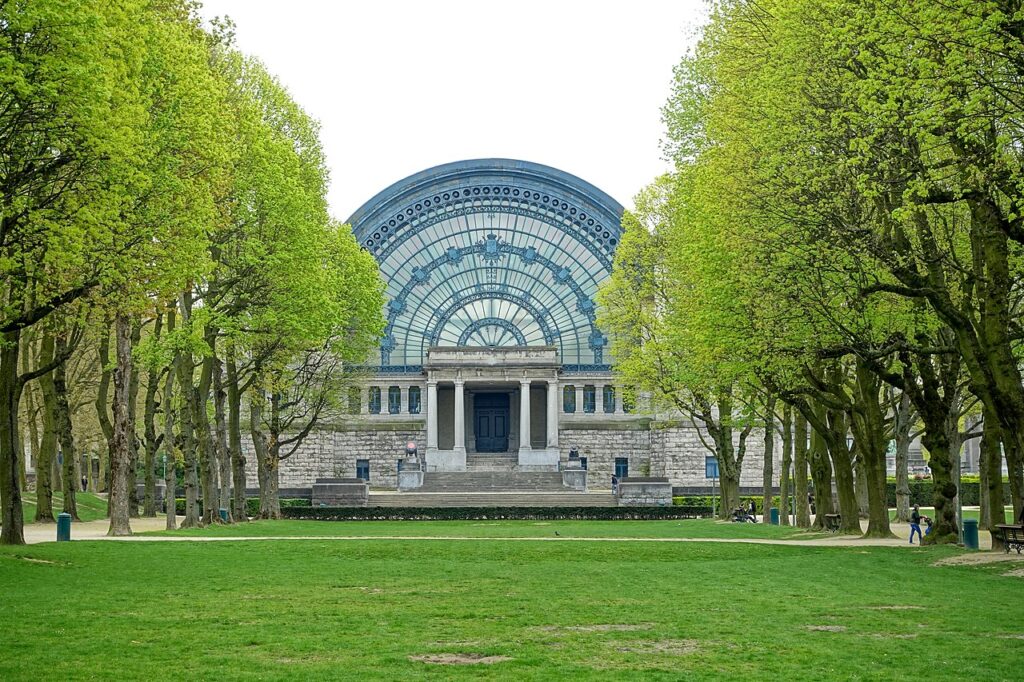
The Parc du Cinquantenaire was altered a few times throughout history. It was also reused in subsequent events, such as the Brussels International Exposition of 1897. The majority of the complex was designed in the Beaux Arts style. The pavilions contain many classical details, in addition to more modern features like glass canopies. Today, the Cinquantenaire Park is one of the most visited sites in all of Brussels. It contains many modern institutions like the Royal Military Museum and Autoworld – a museum dedicated to automobiles.
2. Brussels Stock Exchange Building
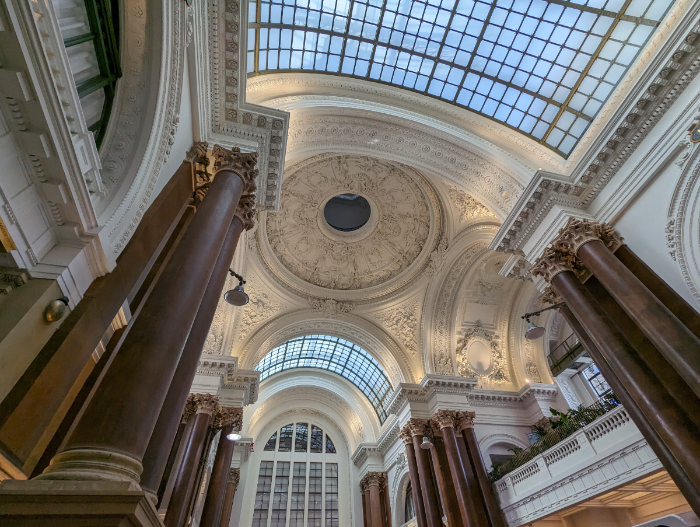
The Brussels Stock Exchange Building is an incredible work of Beaux Arts Architecture within Brussels. The stock exchange itself was created in 1801. Thanks to the rapid industrialization of Brussels in the 19th century, the exchange grew and eventually needed a new home. Work began on the project in 1871, and the new Stock Exchange Building opened in 1873. The image above shows some of the incredible skylights located within the main atrium, which are typical of the Beaux Arts Style.
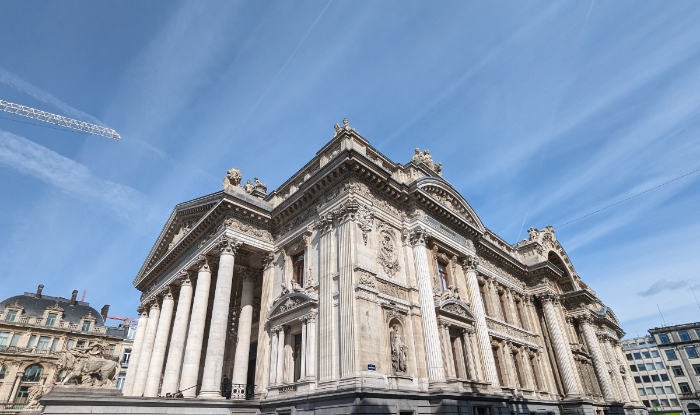
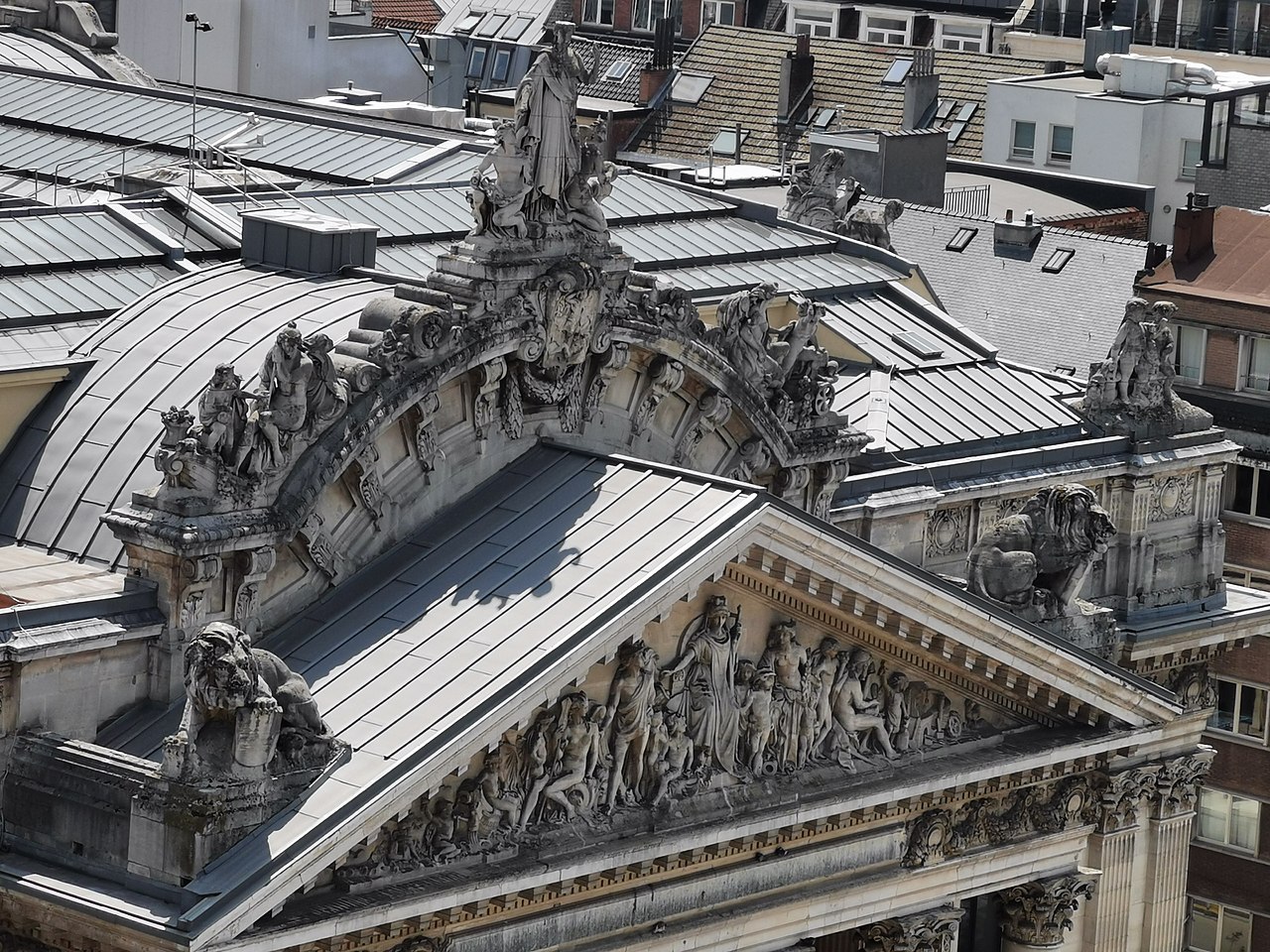
The exterior of the Brussels Stock Exchange Building embodies many other Beaux Arts characteristics. It has lots of Classical components, like pediments and Corinthian Columns, which are then mixed with extravagant and lively sculptures. The Brussels Stock Exchange would eventually merge with other exchanges in Amsterdam and Paris. Since 2015, this new entity no longer occupies the original building, and it’s now used as an event space.
3. Tassel House
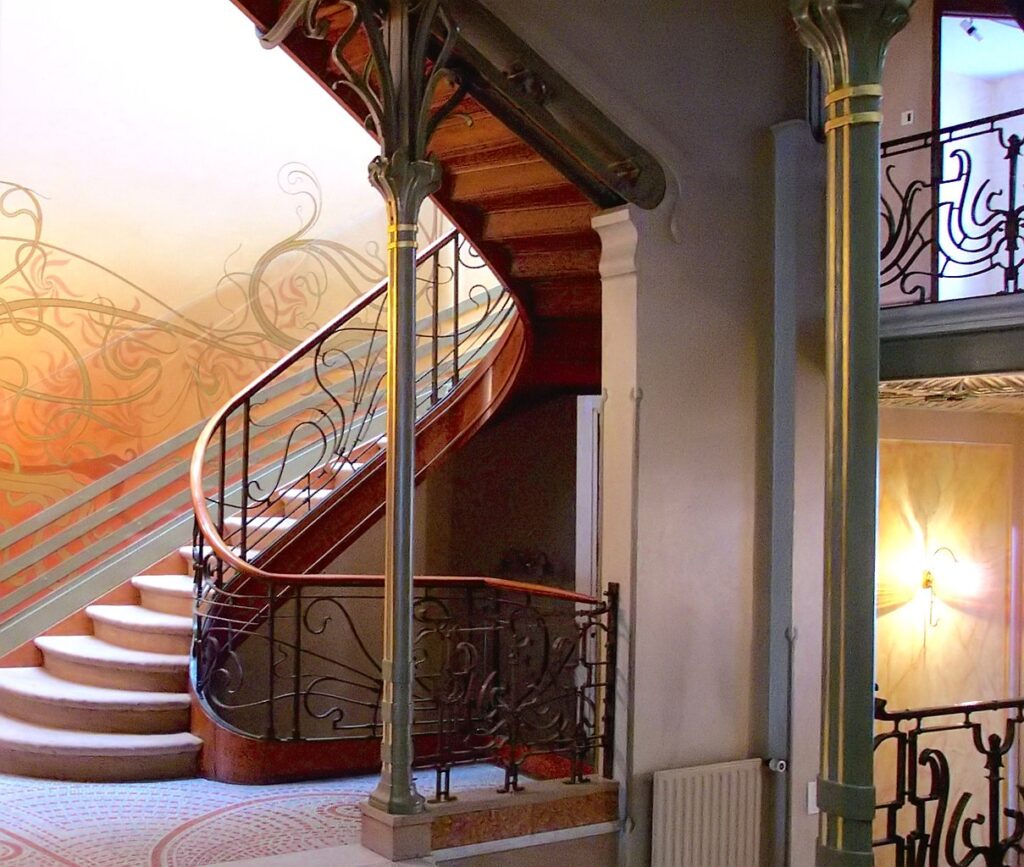
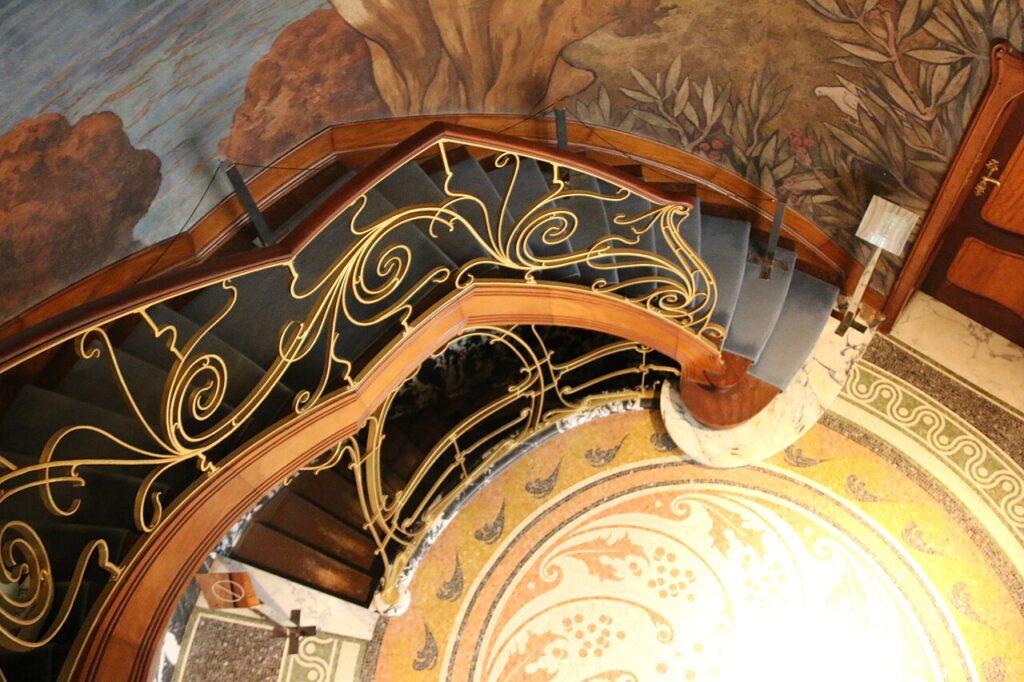
The Tassel House is regarded by many as the world’s first example of Art Nouveau Architecture. It was designed by Victor Horta in 1893 and was one of his earliest townhouses in Brussels. Horta used a variety of interconnected forms throughout the design of Hôtel Tassel. The image above shows the home’s main staircase, which is a fluid combination of wrought iron banisters and columns. The entire edifice contains fluid and organic curves, making it seem as if the house is made from natural vegetation. Today, several of Victor Horta’s designs in Brussels are protected as part of a UNESCO World Heritage Site.
4. Cauchie House
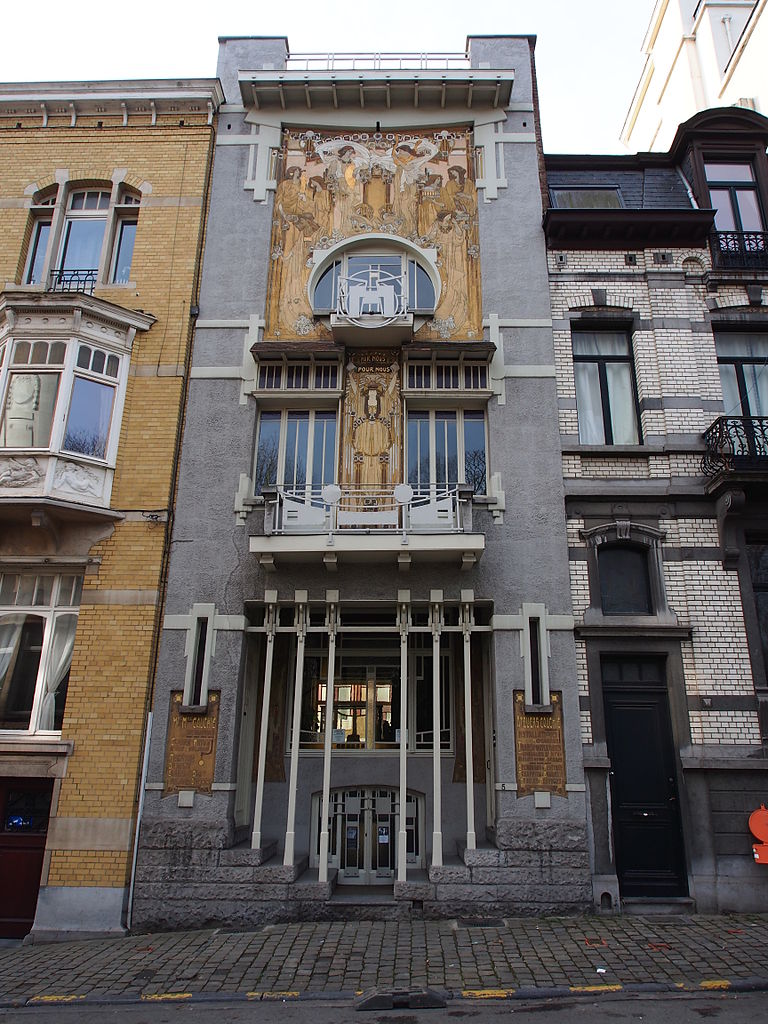
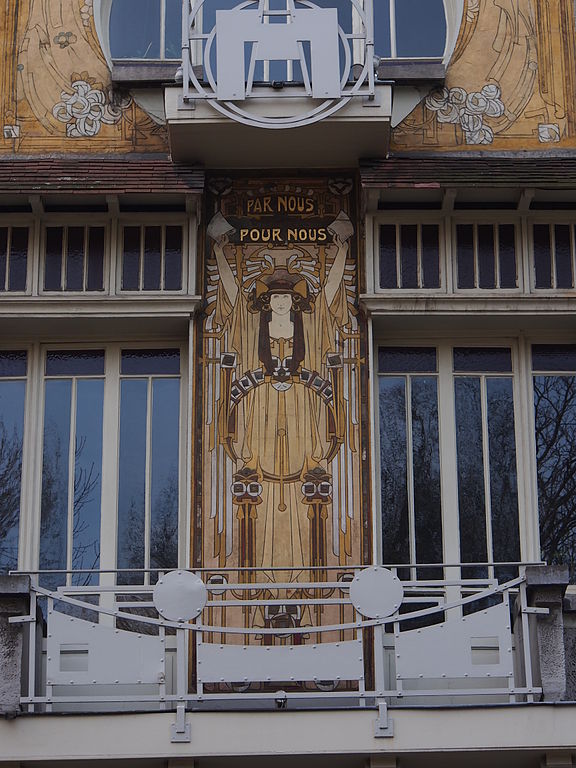
The Cauchie House is another prominent example of Art Nouveau Architecture in Brussels. The house was completed in 1905, and it’s located close to the city’s famed Parc du Cinquantenaire. The facade of Cauchie House contains artwork that is typical of the Art Nouveau Style. The house’s design also has many influences from Art Deco Architecture, which was popular at the same time as Art Nouveau.
5. Basilica of the Sacred Heart
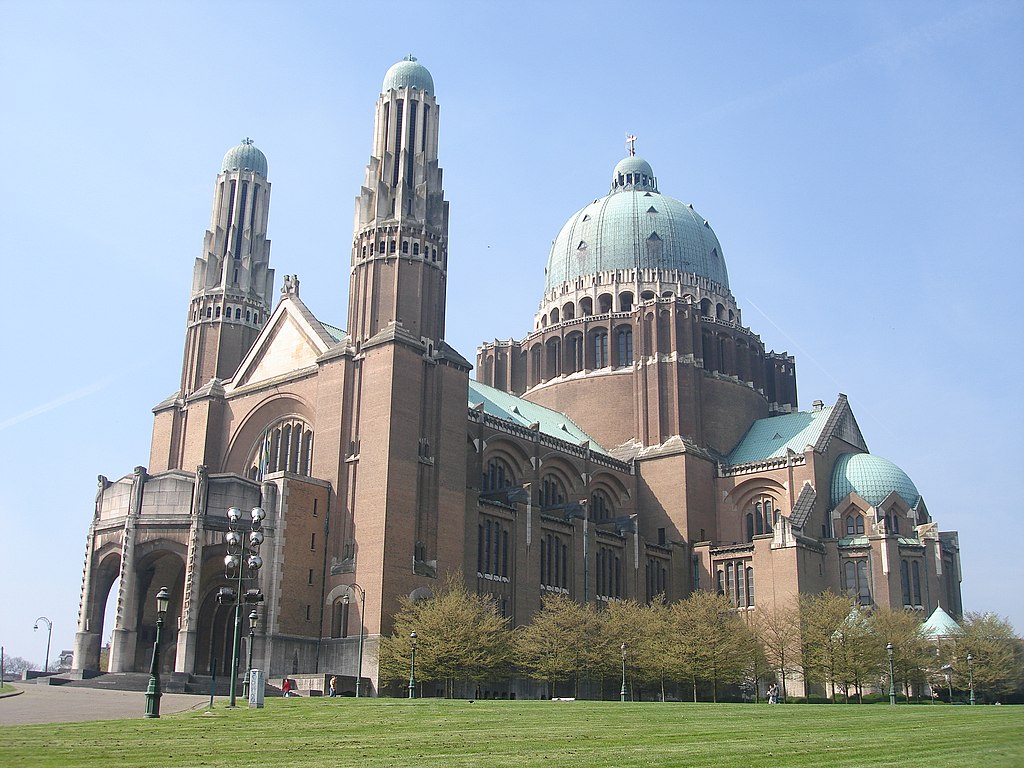
The Basilica of the Sacred Heart is a massive church located on the outer edges of Brussels. Construction began on the building in 1905, and it wasn’t completed until the 1970s. It’s one of the largest churches in all of Belgium, and it has an eclectic design with influences from the Art Deco Style. The church has a strong vertical emphasis, along with many geometric sculptures and forms.
6. Hotel Hannon
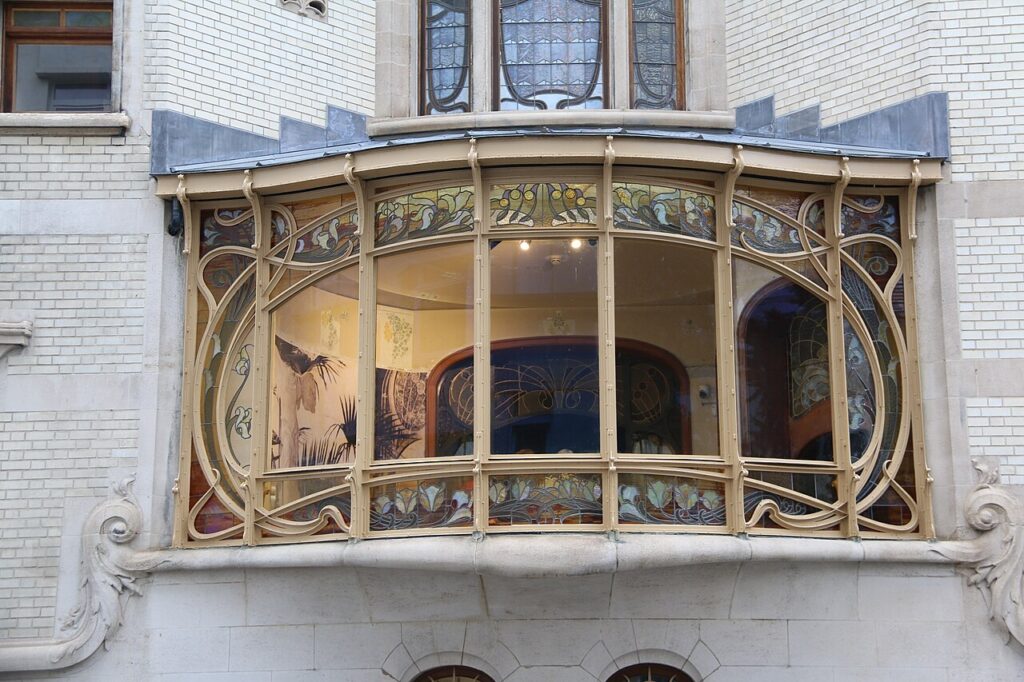
left & right photos by FrDr from Wikimedia Commons
Brussels is sometimes regarded as the birthplace of Art Nouveau Architecture. The city saw a flurry of Art Nouveau construction from the 1890s through the early 20th century. One of the greatest examples of this is Hôtel Hannon, which was completed in 1904. Hôtel Hannon features all of the major elements in the Art Nouveau Style, including fanciful sculptural elements, Art Nouveau imagery, and the use of wrought iron and stained glass.
7. Royal Palace of Laeken
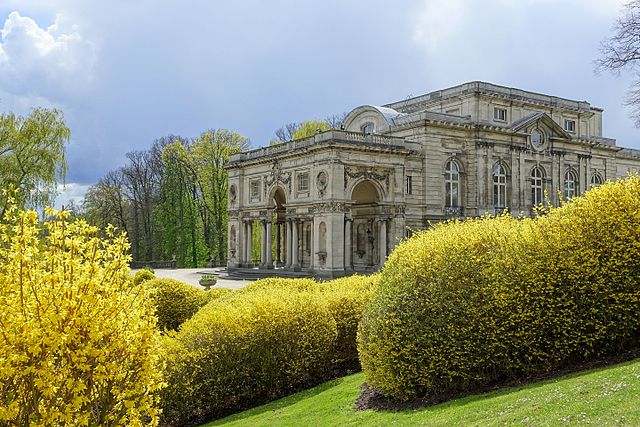
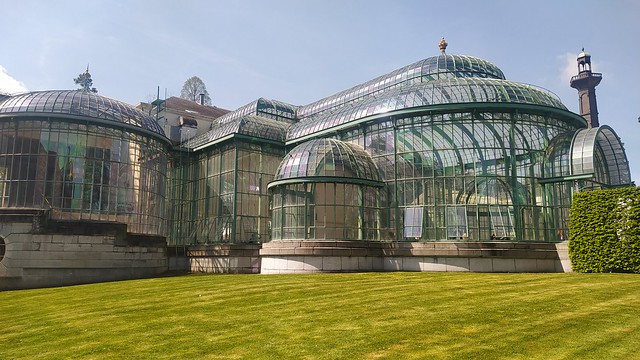
The Royal Palace of Laeken is an official residence of Belgium’s Royal Family. It’s located in Laeken, an area just outside central Brussels. The palace is composed of an assortment of buildings designed in various architectural styles, including Neoclassical and Renaissance Revival. The images above show additions that were added to the palace by King Leopold II. Both of these additions were designed with Beaux Arts Influences, particularly the Greenhouse, which was completed in 1905.
8. Art Nouveau Residences of Brussels
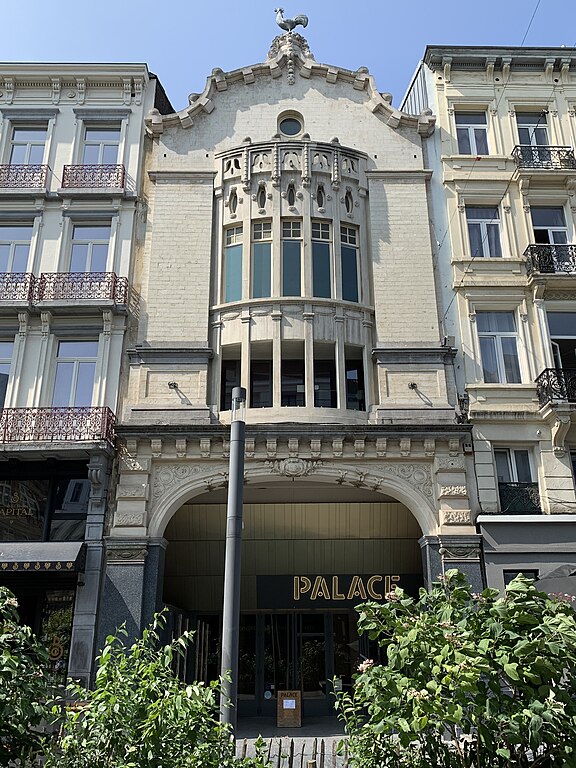
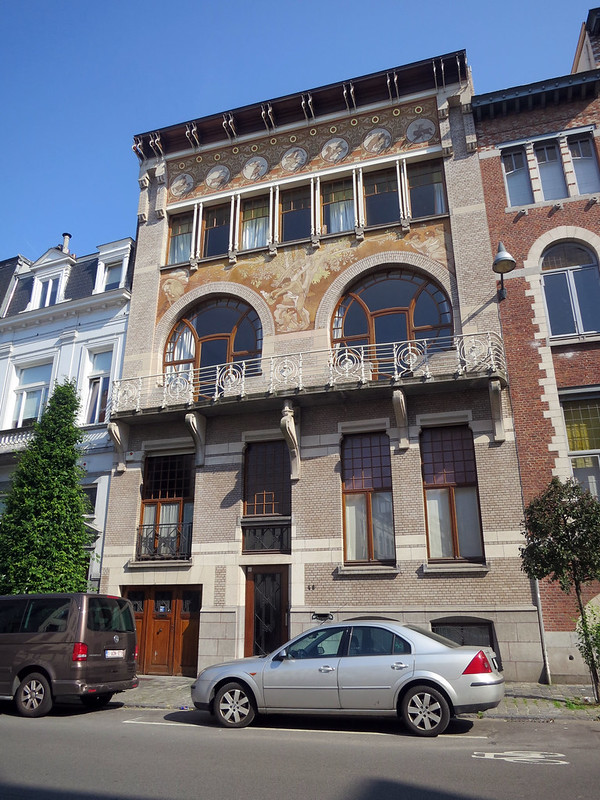
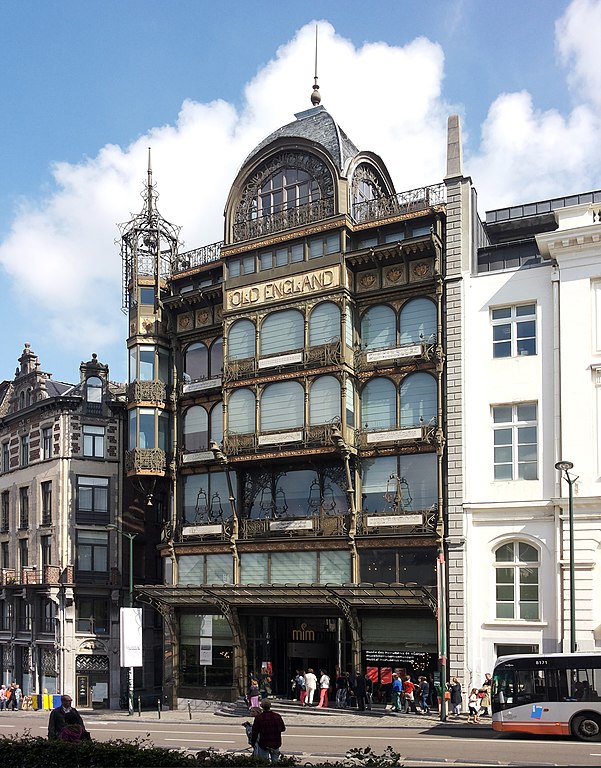
Brussels also contains about a dozen lesser-known examples of Art Nouveau Architecture, including many townhouses that are eclectically blended with other styles. The left image above shows the Pathé Palace, an early Art Nouveau building with a slight Art Deco influence. The center image shows Hôtel Albert Ciamberlani – a building designed by an associate of Victor Horta. The right image above shows the “Old England” building, which currently houses the Brussels Musical Instrument Museum.
9. Brussels Botanical Garden
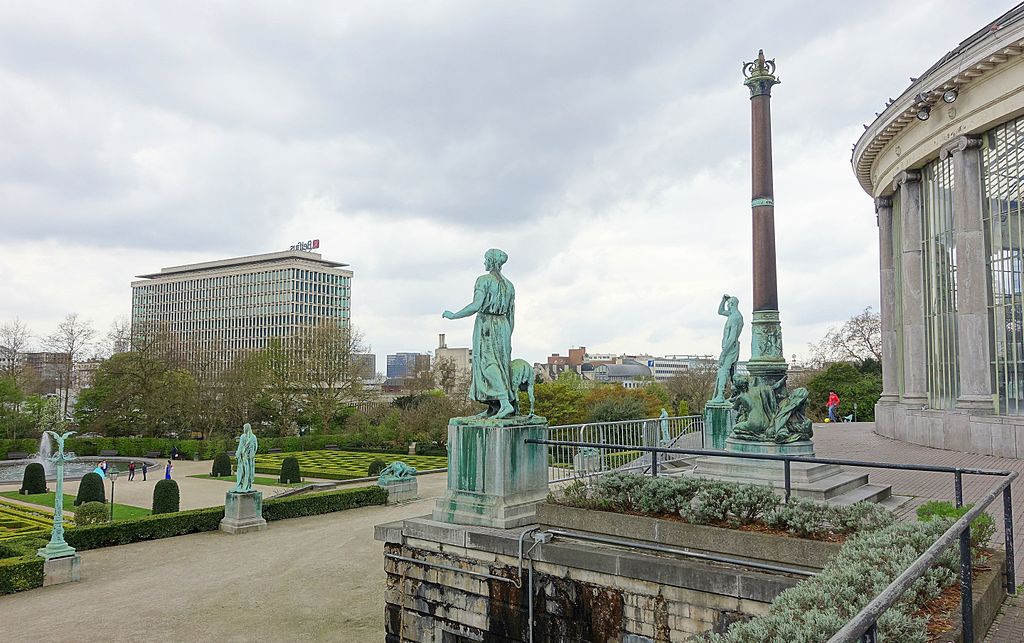
The Brussels Botanical Garden is another impressive work of Beaux Arts Architecture within the city. The garden was completed in 1826 and altered at a few points throughout history. The main building of the Botanical Gardens, known as Le Botanique, was constructed utilizing an iron skeletal structure infilled with glass. This concept was relatively new to the world of construction during the 19th century, and examples of this can be found throughout Brussels.
Modern Architecture in Brussels
Unfortunately, Brussels saw intense fighting in both WWI and WWII, and the city changed drastically as a result. The city has a large assortment of modern buildings located amongst its historic architecture. Brussels would also host a modern-day World’s Fair in 1958, which would leave the city with several unique contemporary structures. Today, Brussels is a sprawling metropolis that’s home to many financial institutions in addition to the Parliament of the European Union.
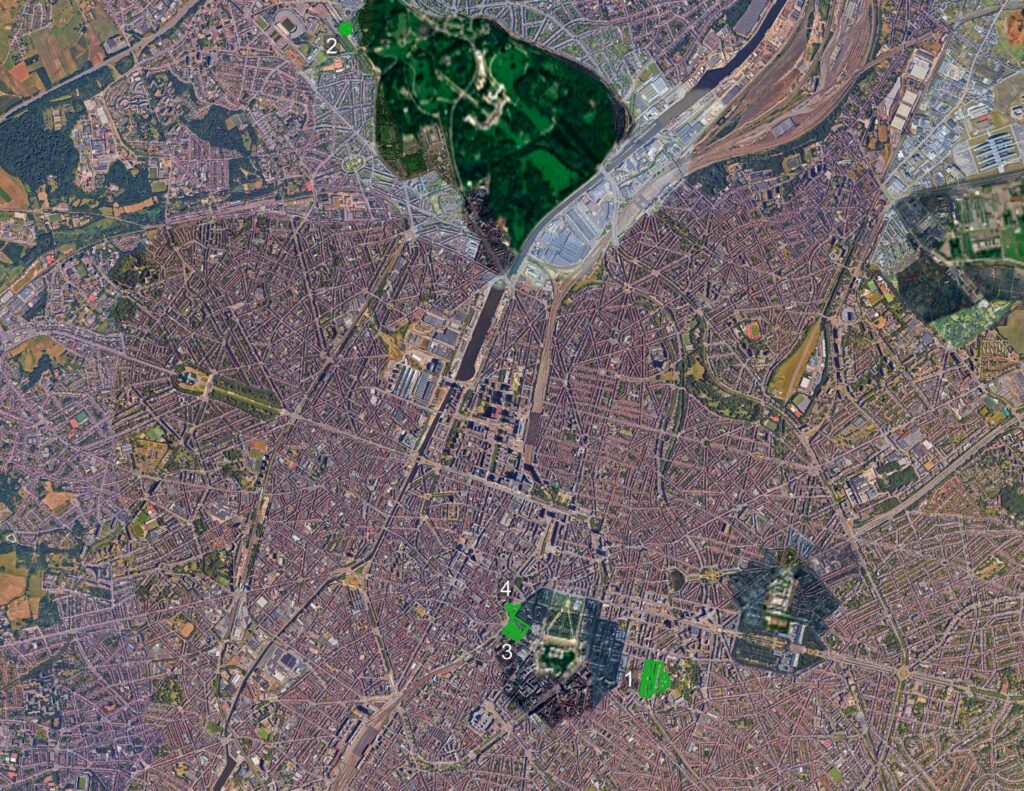
Map of Brussels highlighting various works of Modern Architecture within the city.
1. EU Parliament Building
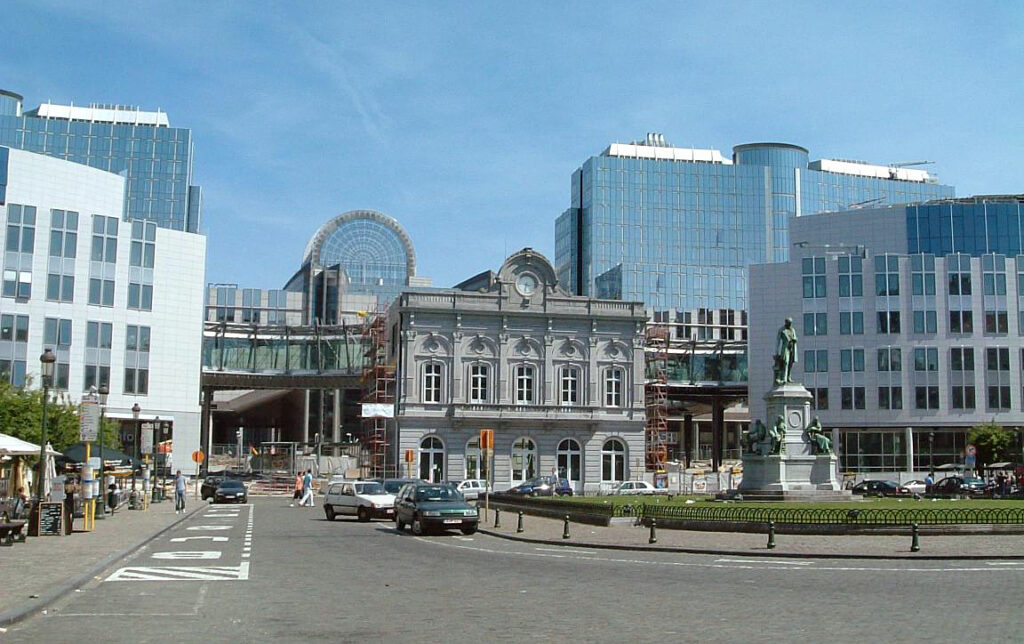
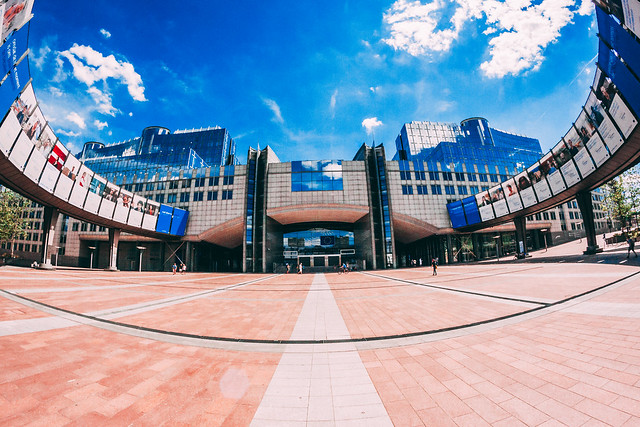
The EU Parliament Building is a modern structure that was constructed over several decades, beginning in 1989. The building holds the main EU Parliament Chambers in addition to several other government institutions. It overlooks Luxembourg Square and is located to the east of Brussels’ historic center. In the right image above, you can see a large circular courtyard at the heart of the Parliament Building. This circular form represents the unity and cooperation needed from all of the EU members.
2. Atomium
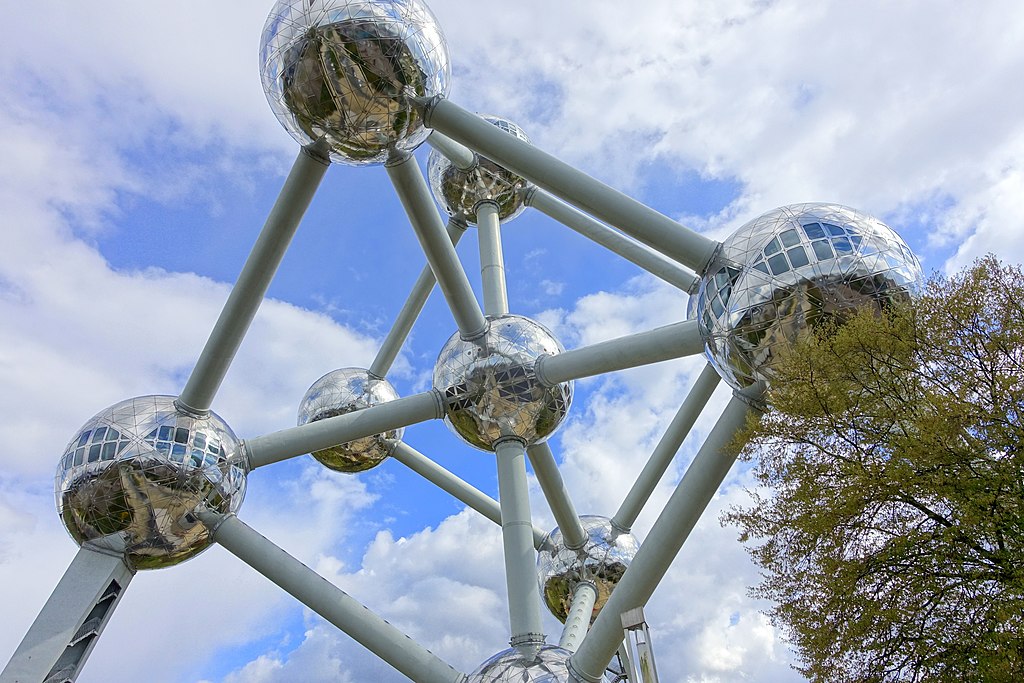
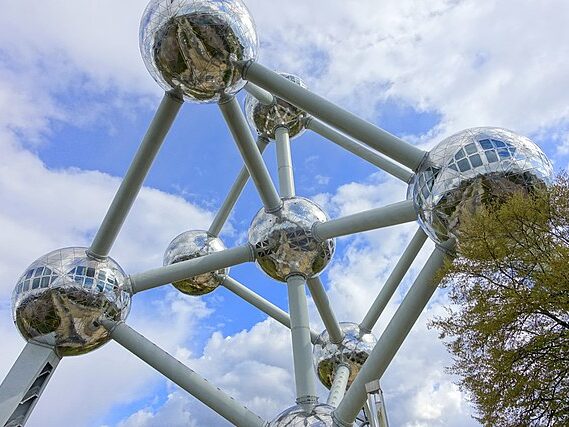
The Atomium is an extremely unique building and a great example of modern architecture in Brussels. It was completed as the centerpiece for the 1958 Brussels World Fair. The dawn of the Nuclear Age had left Europe with a fascination with science and technology. And so, to generate intrigue, the Atomium was designed to replicate the structure of an Atom. The Atomium contains a series of exhibits in several spherical rooms, which are connected by staircases, escalators, and an elevator.
3. Mont des Arts
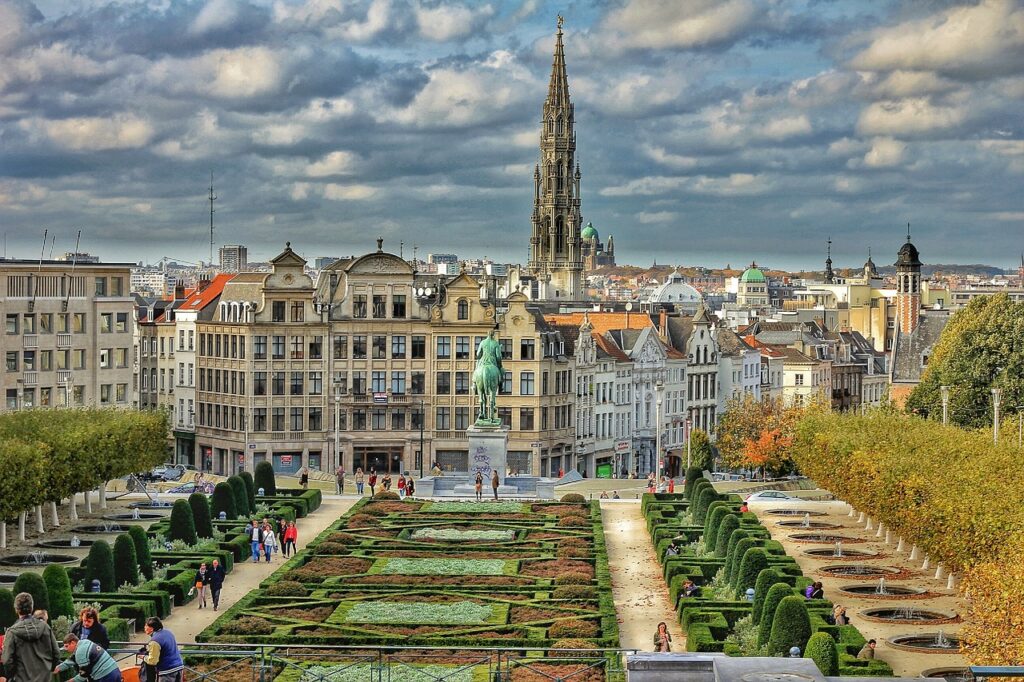
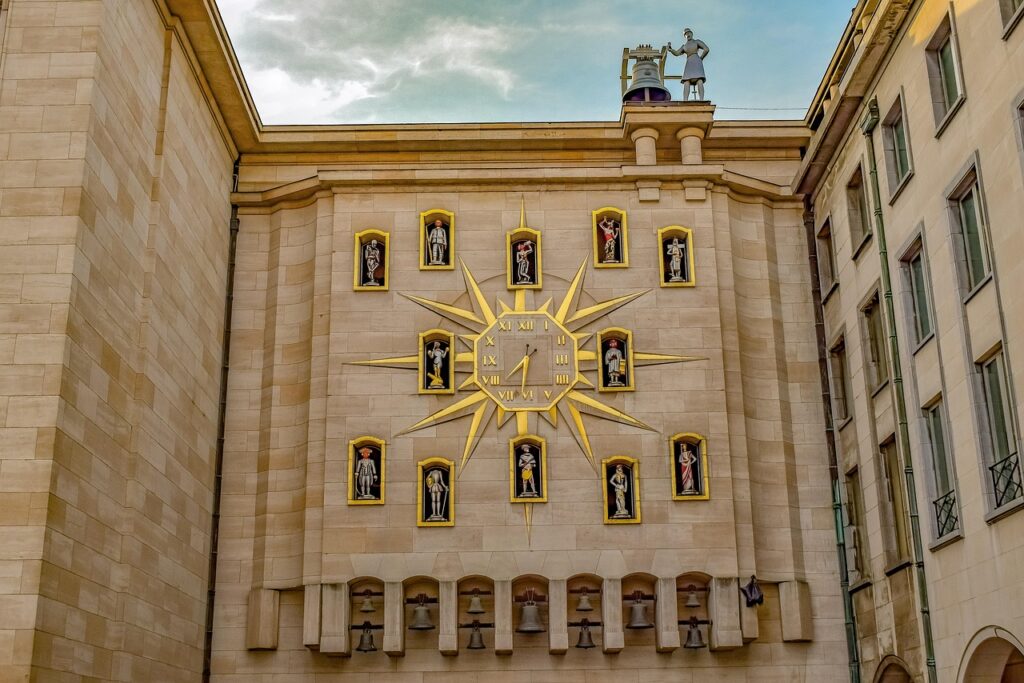
Located on a hillside in central Brussels, the Mont des Arts is a large square adjacent to several public buildings. The square was developed during the 1950s and 60s, and it contains a blend of both modern and traditional design elements. The left image above shows the main garden within the Mont des Arts, which has a great view of the tower of Brussels’ Town Hall. The Mont des Arts also has several contemporary buildings that house the Belgian Royal Library and Belgian National Archives.
4. Brussels Central
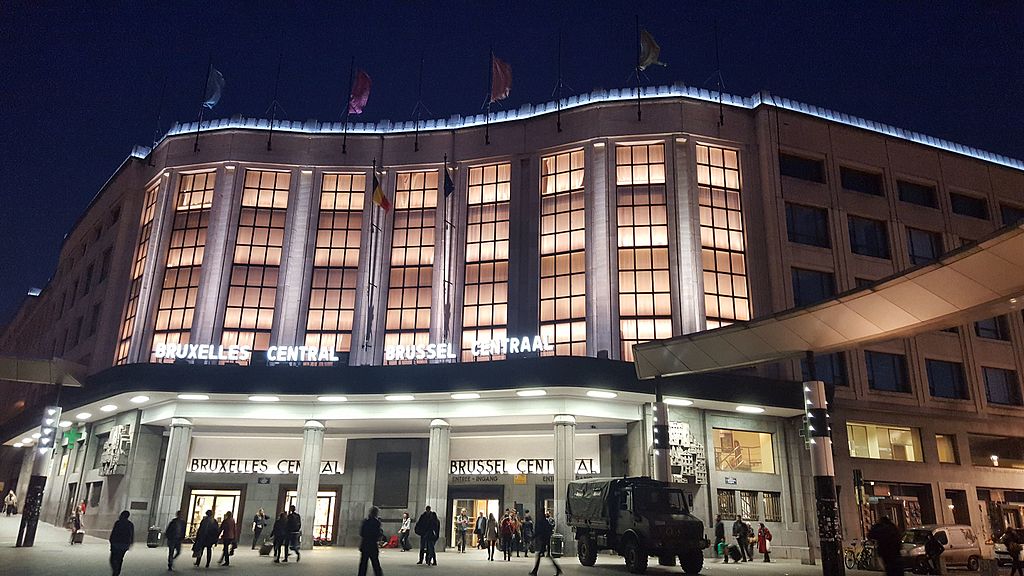
Brussels Central Station is a major transportation hub, and it has train lines that connect with nearby cities, including Paris, Amsterdam, and Antwerp. The station was completed in 1952, but it has been renovated several times, most recently in 2010. The station is designed in the Modernist Style, with a few hints of Art Deco, particularly in the artwork of the station’s interior
Neighborhoods of Brussels
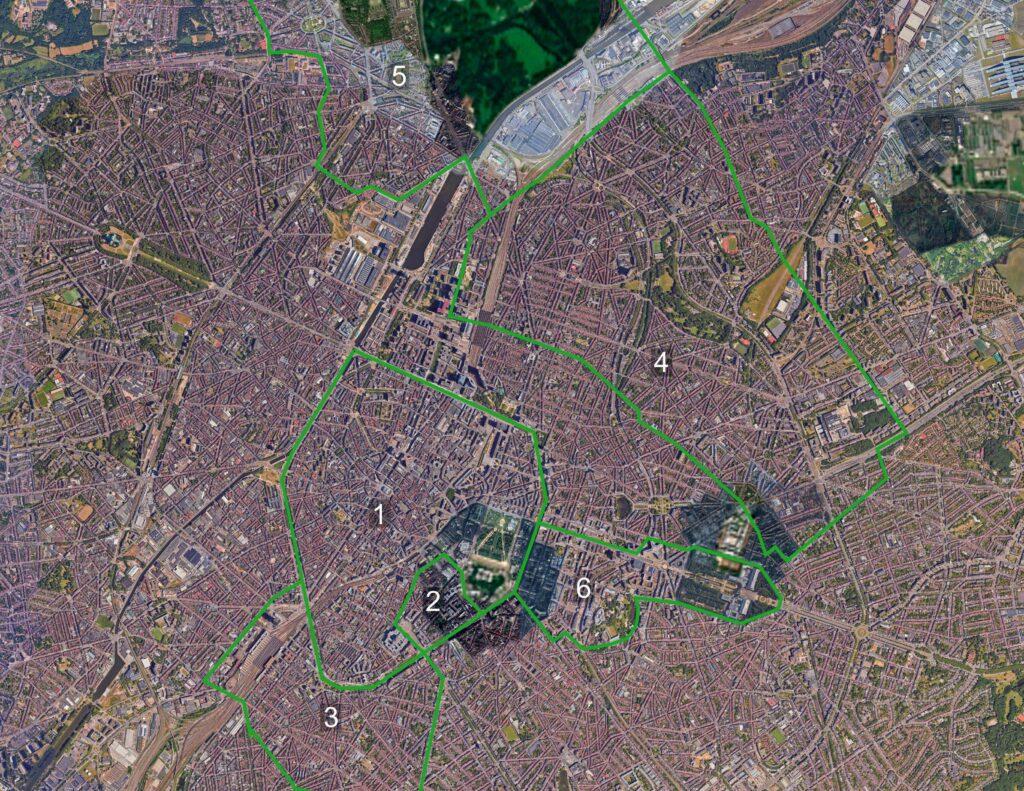
Map of Brussels showing the extent of various neighborhoods within the city
.
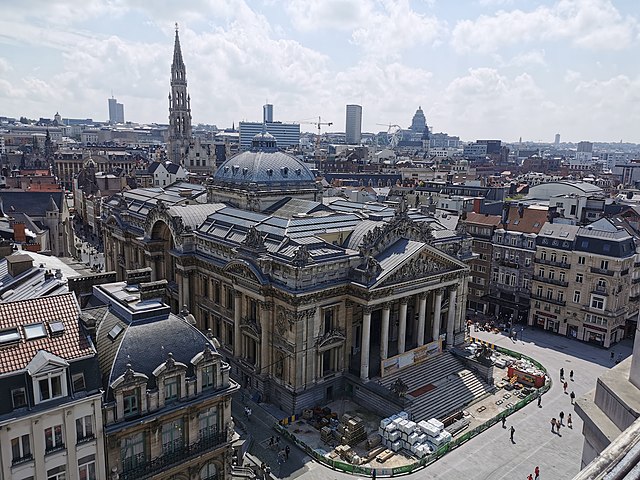
1. Central
“Central” is the main neighborhood of Brussels. It corresponds to the city’s original historic center and contains many of Brussels’ most striking sites, such as the Stock Exchange Building and the Grand Place. Central is very well connected by train and bus lines, and it’s the city’s most popular neighborhood for nightlife.
2. Sablon
Sablon is a neighborhood located on the southern edge of Brussels’ historic core. The neighborhood’s most notable site is the Church of Sablon, which dates to the Gothic Age. Sablon is very residential, and it contains a mix of traditional houses and modern apartment buildings.
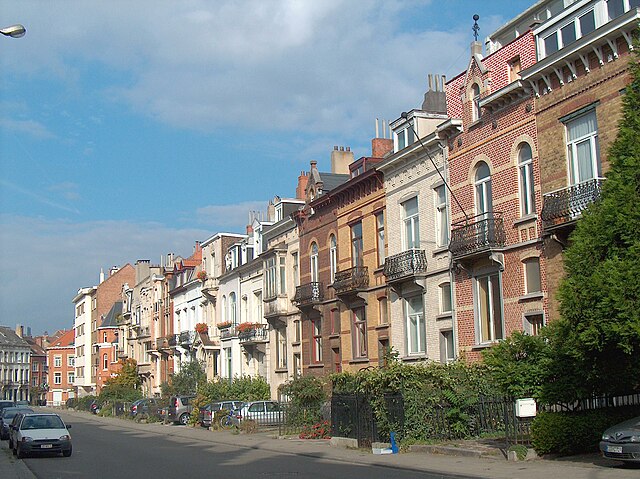
3. Saint Gilles
Saint Gilles is a large residential neighborhood located just south of the Halle Gate in central Brussels. The neighborhood contains countless row houses, many of which were designed in the Art Nouveau Style.
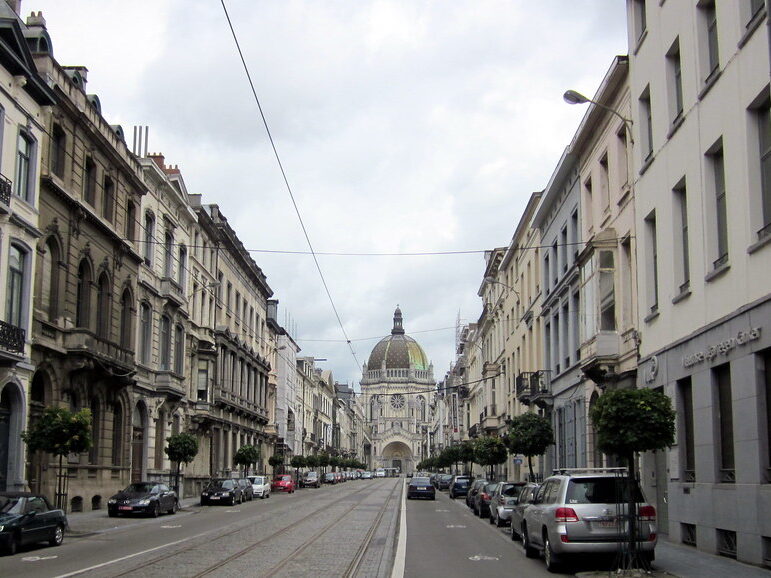
4. Schaerbeek
Schaerbeek is another expansive neighborhood, containing a blend of residential houses, parks, and commercial areas. One of its most impressive buildings is St. Mary’s Royal Church, along with the Schaarbeek Town Hall. Schaerbeek is also the home of Brussel-Noord, one of the city’s most important transportation hubs.
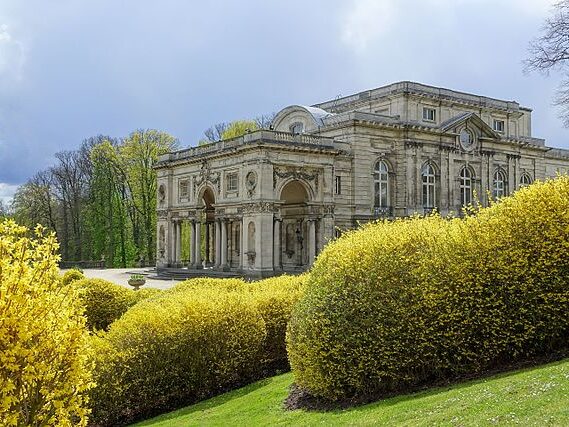
5. Laeken
Laeken is a neighborhood on the outer perimeter of Brussels. It’s known for the Royal Palace of Laeken, one of Europe’s many grand palaces. Laeken also contains the Atomium and the grounds for the 1958 Brussels World’s Fair.
6. Leopold Quarter
The Leopold Quarter is another neighborhood in Brussels that’s filled with impressive buildings. The area contains the EU Parliament and is located at the front of the Parc du Cinquantenaire. The Leopold Quarter contains many modern buildings from the 1950s & 60s.
Architecture of Brussels: In Review
Brussels is a grand European capital with a dynamic history dating back to the Middle Ages. It’s home to a vast assortment of both historic and contemporary buildings. Brussels contains many incredible works of Gothic Architecture, and one of the most beautiful squares in the entire world, the Grand Place. Although Brussels has a very metropolitan feel, it’s still easy to find grandiose squares, quaint streets, and quiet cafes. Brussels is an amazing destination for any traveler, and a great jumping-off point for other cities in Belgium, such as Antwerp, Ghent, and Bruges.
- About the Author
- Rob Carney, the founder and lead writer for Architecture of Cities has been studying the history of architecture for over 15 years.
- He is an avid traveler and photographer, and he is passionate about buildings and building history.
- Rob has a B.S. and a Master’s degree in Architecture and has worked as an architect and engineer in the Boston area for 10 years.
Like Architecture of Cities? Sign up for our mailing list to get updates on our latest articles and other information related to Architectural History.
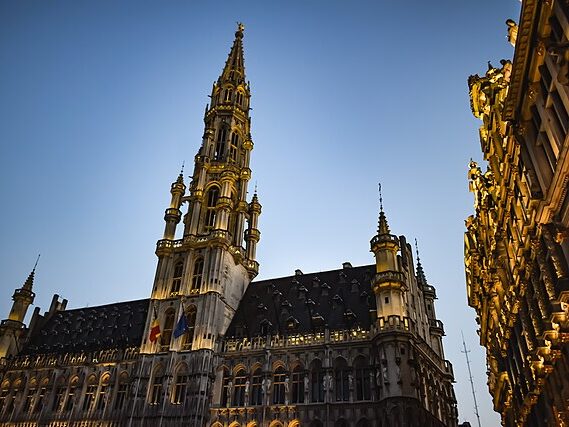
Additional View of the Grand Place