Top 35 Examples of Moorish Architecture
The word “Moor” is a catch-all term used to describe various Islamic States that once controlled parts of North Africa and the Iberian Peninsula. The Moors originated in Arabia and conquered a vast empire during the 7th & 8th centuries. They filled their cities with grand mosques, lavish palaces, and imposing fortifications. Moorish architecture is known for many distinct elements, including horseshoe arches, domes, geometric details, and Arabic Calligraphy. The article below will highlight 35 different examples of Moorish Architecture and provide an in-depth look at the history of the Moors.
Who were the Moors?
The Moors began as a series of mighty Caliphates created in the wake of the Early Islamic Conquests. After a few centuries, the Caliphates broke apart into smaller territories, each controlled by different Moorish Dynasties. All of these various states had their own unique cultures and building characteristics.
Rashidun & Umayyad Caliphates
632 – 750 CE
The Rashidun Caliphate was a powerful nation that emerged after the death of the Prophet Muhammad during the Early Muslim Conquests. The Rashiduns expanded their empire dramatically and remained in control until 661 CE. After that, a new dynasty came to power, known as the Umayyads.
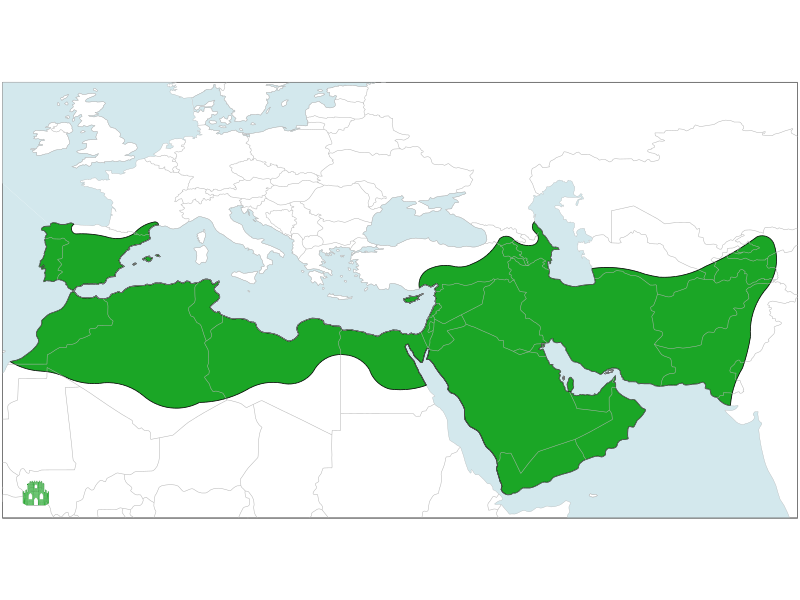
Map showing the Umayyad Caliphate at its greatest territorial extent
The Umayyads continued to expand, and would eventually control an empire stretching from the Middle East, across North Africa, and into modern-day Spain & Portugal. The Rashidun and Umayyad Caliphs constructed countless mosques and fortresses throughout their newly conquered lands.
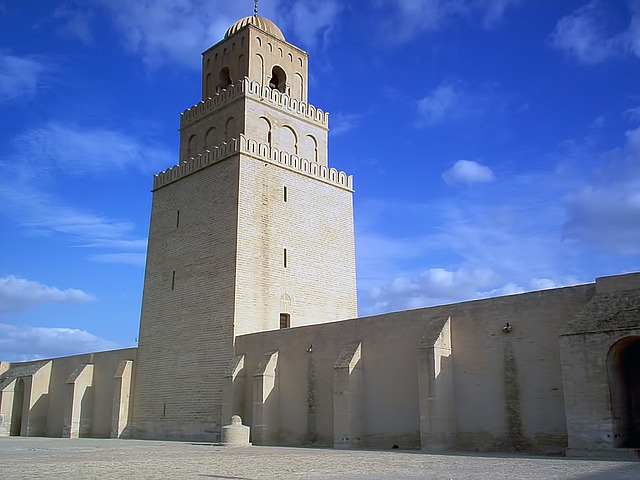
An image of the Great Mosque of Kairouan
Emirate of Cordoba
756 – 1031
The Emirate of Córdoba was an Islamic State founded by Abd al-Rahman I. Rahman was a descendant of the Umayyad Dynasty, and he fled Damascus after the overthrow of his family. He eventually came to Al-Andalus, where he founded the Emirate of Córdoba.
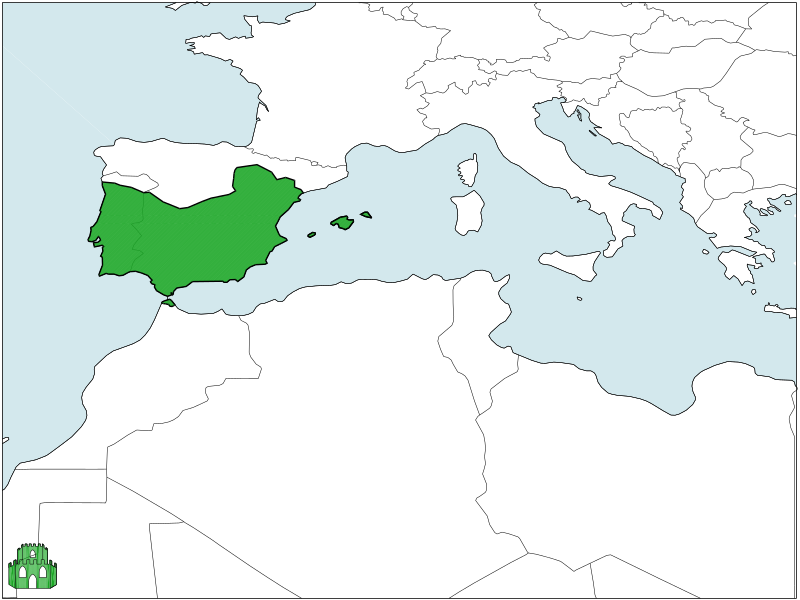
Map showing the Outline of the Emirate of Córdoba
The Emirate (and later Caliphate) of Córdoba was extremely powerful, and it was responsible for many incredible examples of Moorish Architecture in Spain. The Emirate of Córdoba also had a very advanced society with great knowledge of art, architecture, science, and mathematics. This was all at a time when the rest of Europe was deep within the Dark Ages.
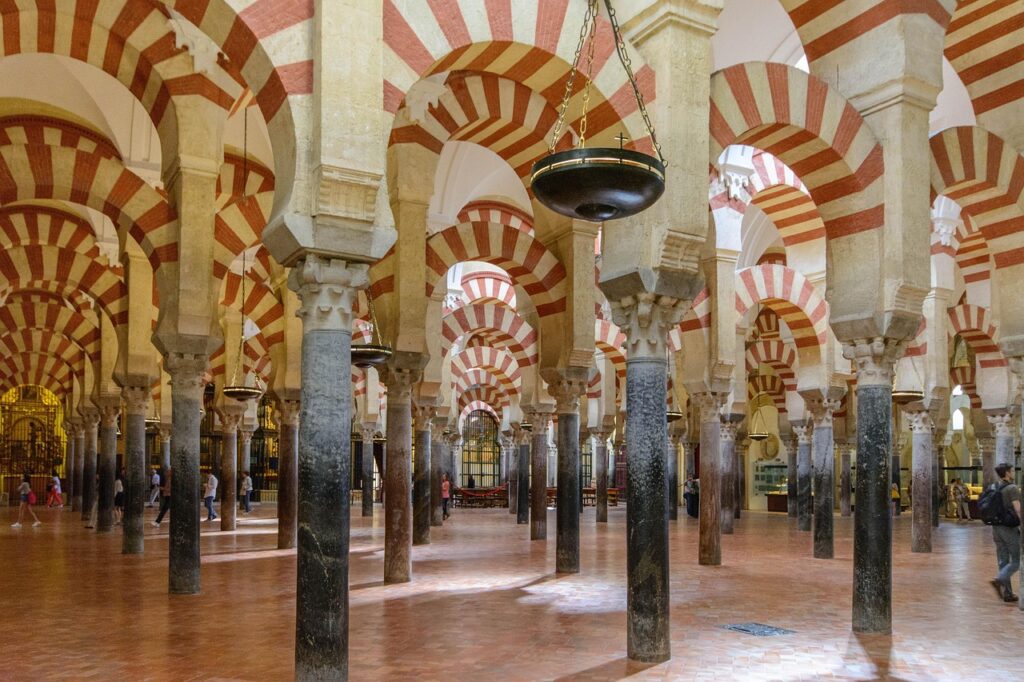
Image of the interior of the Mezquita, or the Great Mosque of Córdoba
Aghlabid Dynasty
800 – 909
The Aghlabid Dynasty was a vassal of the mighty Abbasid Caliphate, which overthrew the Umayyad Caliphate in 750 CE.

Map showing the greatest territorial extent of the Aghlabid Dynasty
The Aghlabids were given a great amount of autonomy to rule their lands as they wished. They led several successful military campaigns, taking Malta, Sicily, and parts of Southern Italy in the 9th century. The Aghlabids were also prolific builders. They constructed many impressive mosques and other monuments, and also expanded older structures built by the Umayyads.
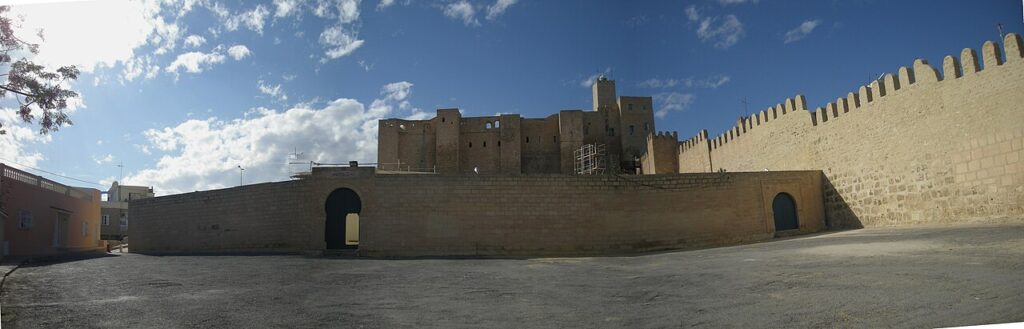
Image of the Ribat of Sousse
Almoravid Dynasty
1058 – 1147
The Almoravids were the first of several Moorish dynasties centered within the modern nation of Morocco.

Map showing the greatest territorial extent of the Almoravid Dynasty
The Almoravids rose to power in 1058, and they controlled a territory that included Morocco and parts of Algeria and Al-Andalus. They made Marrakesh their capital city and improved the fortifications of many other cities throughout the region. Eventually, the Almoravids were overthrown by another dynasty in 1147 CE.
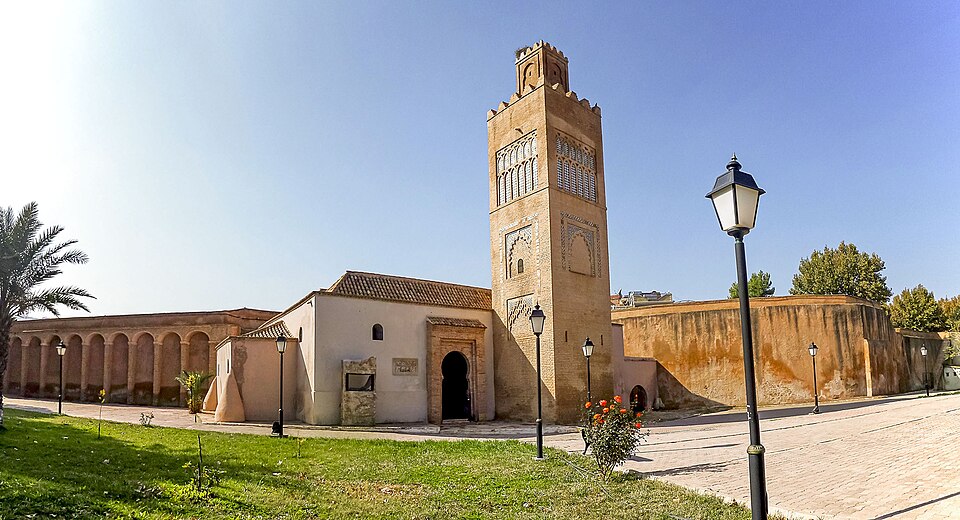
Image of the Great Mosque of Tlemcen
Almohod Caliphate
1124 – 1269
The Almohad Caliphate emerged as a small group of rebels living high in the Atlas Mountains. They quickly gained significant support and were able to overthrow the Almoravids after taking the city of Marrakesh in 1147.
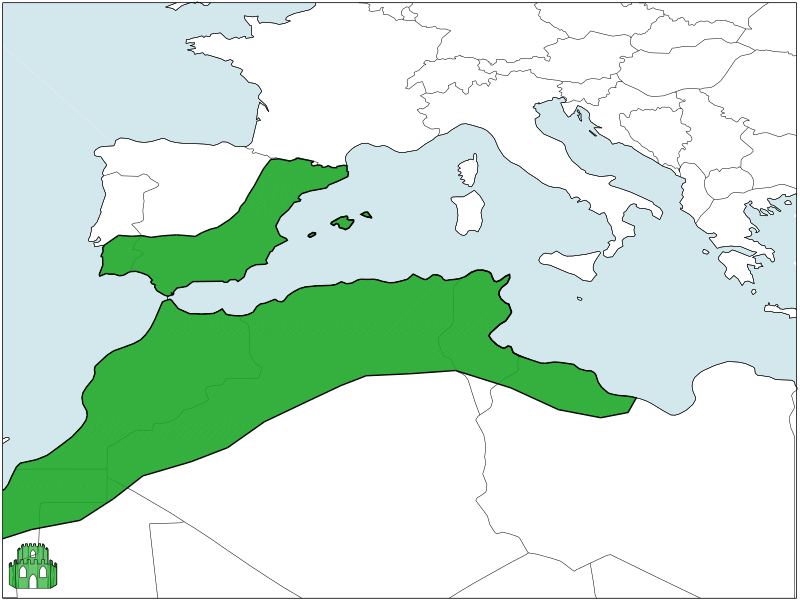
Map showing the greatest territorial extent of the Almohad Caliphate
The Almohad would eventually form their own Caliphate, and they conquered new lands deeper into the Maghreb and Al-Andalus. The Almohad constructed countless mosques throughout their empire, which can often be identified by their tall, boxy minarets. Eventually, the Almohad Caliphate broke apart into several successor states.
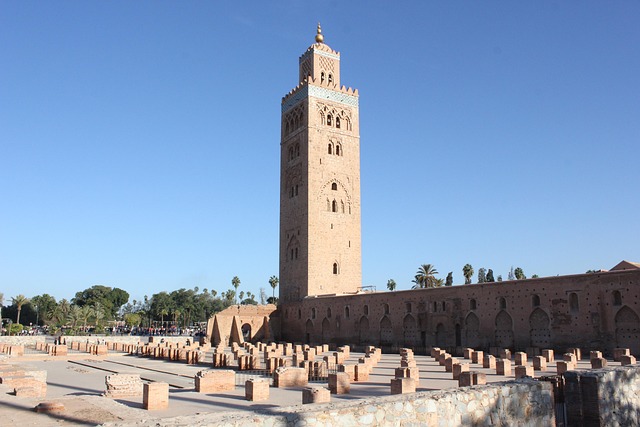
Image of the Kutubiyya Mosque in Marrakesh, Morocco
Hafsid Sultanate
1229 – 1574
The Hadsid Sultanate was a successor state that split from the Almohad Caliphate in 1229.
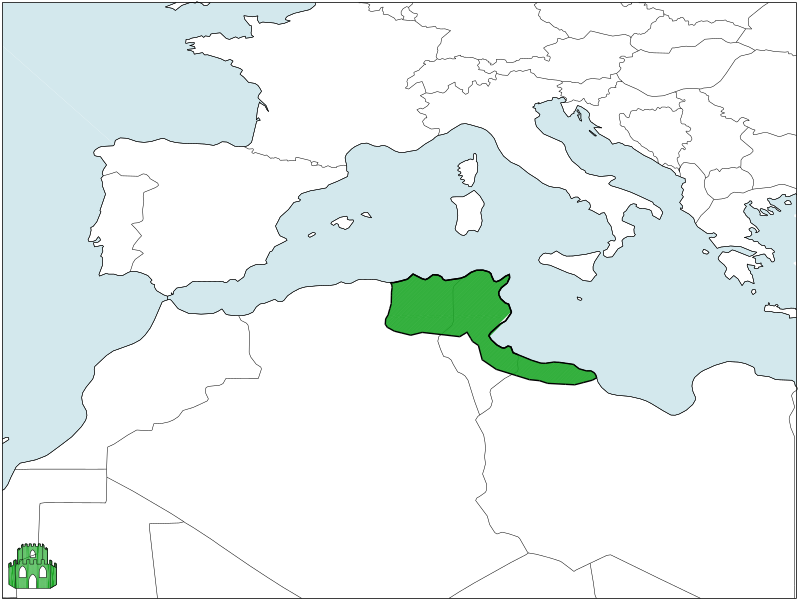
Map showing the greatest territorial extent of the Hafsid Sultanate
The Hafsids controlled a large area of North Africa that included parts of modern-day Algeria, Tunisia, and Libya. The Hafsids controlled several important cities, including Tunis, Sfax, and Sousse. They constructed many new and impressive monuments, and they also modified and maintained many of the area’s existing Moorish Architecture.
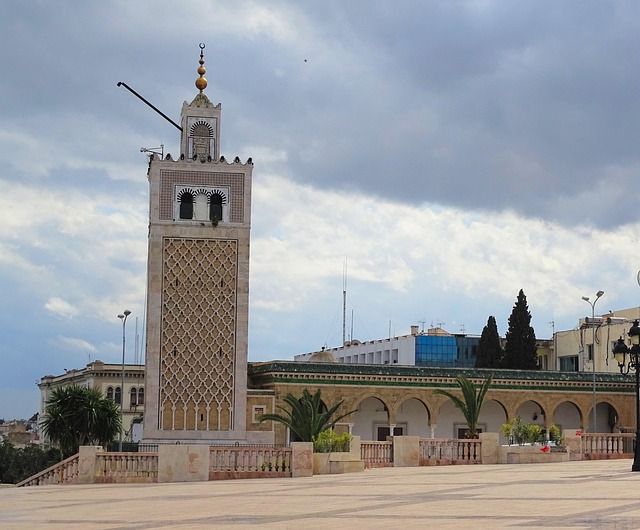
Image of the Kasbah Mosque in Tunis, Tunisia
Marinid Dynasty
1244 – 1465
The Marinids were a newer dynasty that expanded quickly and eventually overthrew the Almohad.

Map showing the greatest territorial extent of the Marinid Dynasty
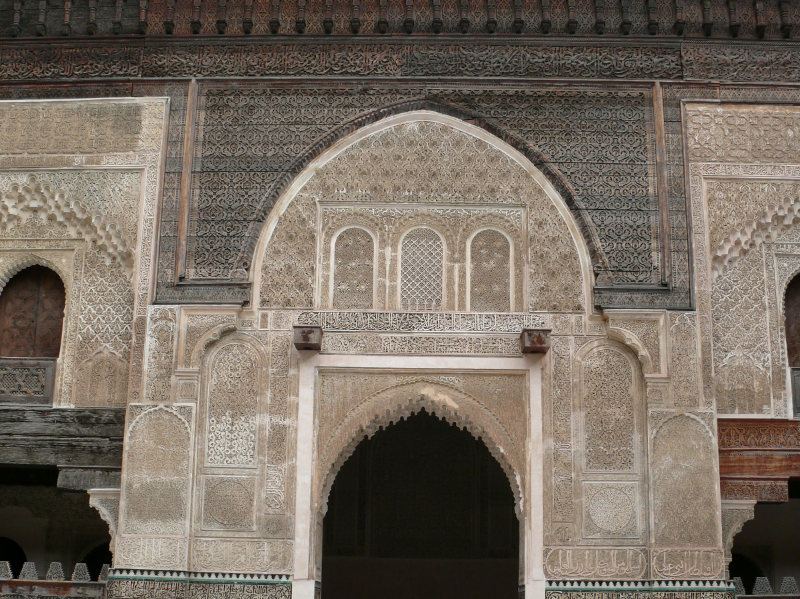
The Marinids consolidated their power over Morocco and also controlled a small part of Al-Andalus, around Gibraltar. The Marinids built a lot of fortifications to help maintain order, and they also created many cultural institutions like Mosques and Madrasas.
Emirate of Granada
1232 – 1492
The Emirate of Granada was another successor state of the Almohad Caliphate.
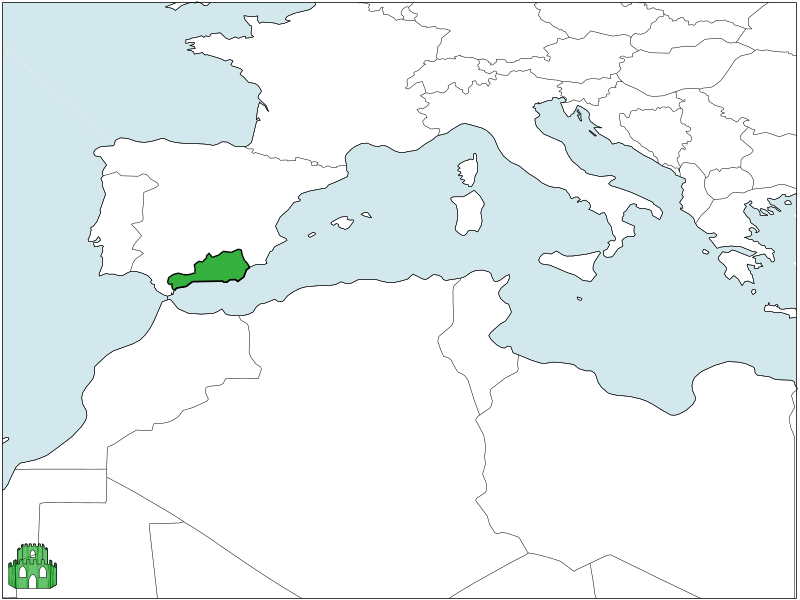
Map of the Emirate of Granada at the end of it’s Golden Age
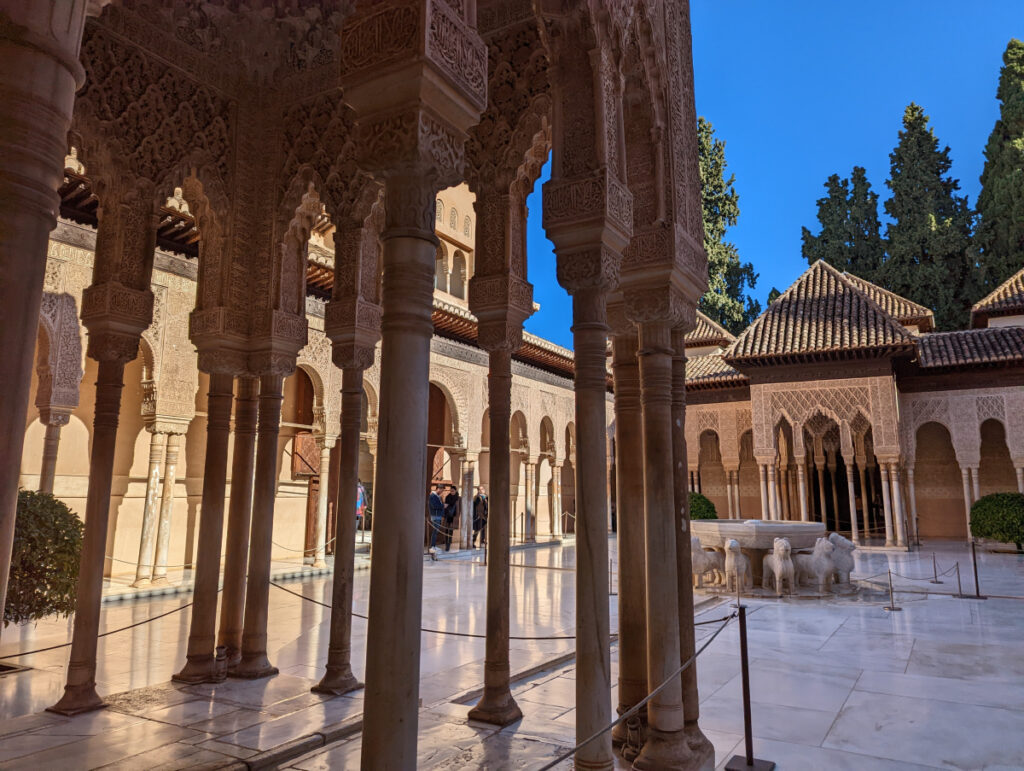
The emirate was led by the Nasrid Dynasty, and it was the final Moorish Kingdom to exist on the Iberian Peninsula. The Nasrids were able to maintain control of their capital Granada, thanks to its formidable fortress, the Alhambra. However, in 1492, the Emirate of Granada was finally defeated when the Alhambra was besieged by the Kingdom of Castile.
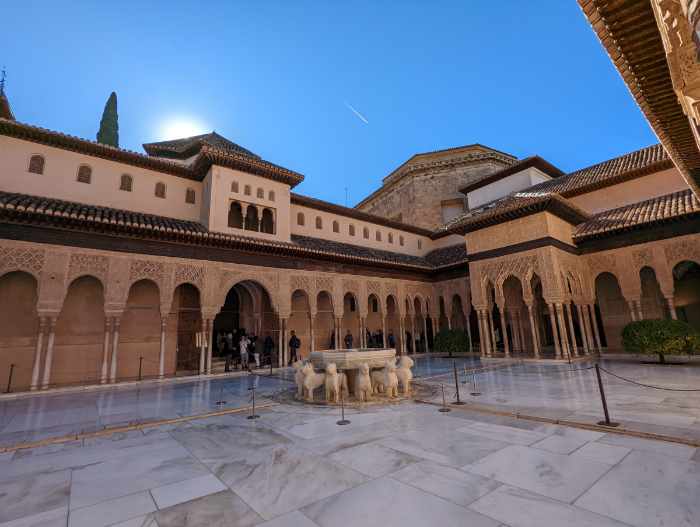
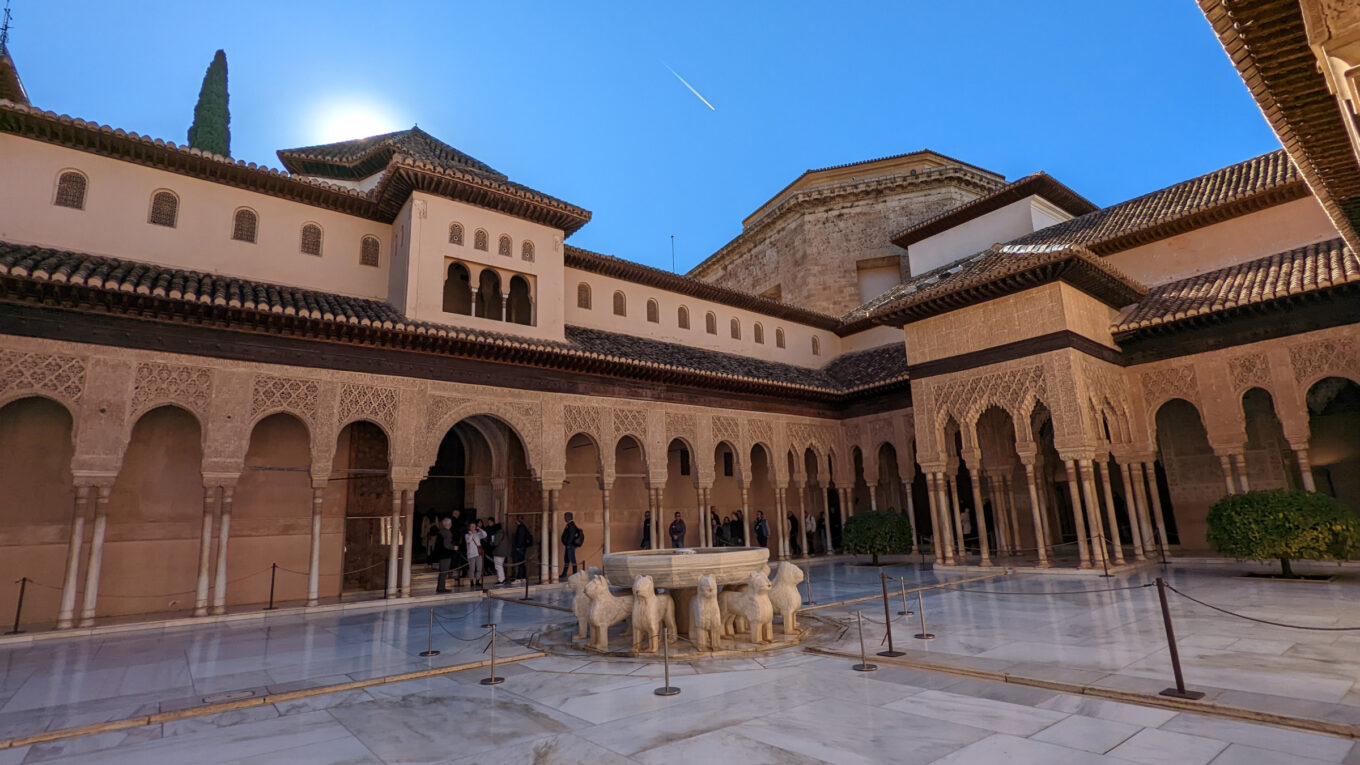
Image of the Court of the Lions within the Alhambra in Granada
Wattasid, Saadi, & Alawi Dynasties
1472 – today
After the fall of the Marinids, several different dynasties came to control the region that is now Morocco. The first were the Wattasids, who fought to protect Morocco from attacks by the Colonial Powers.
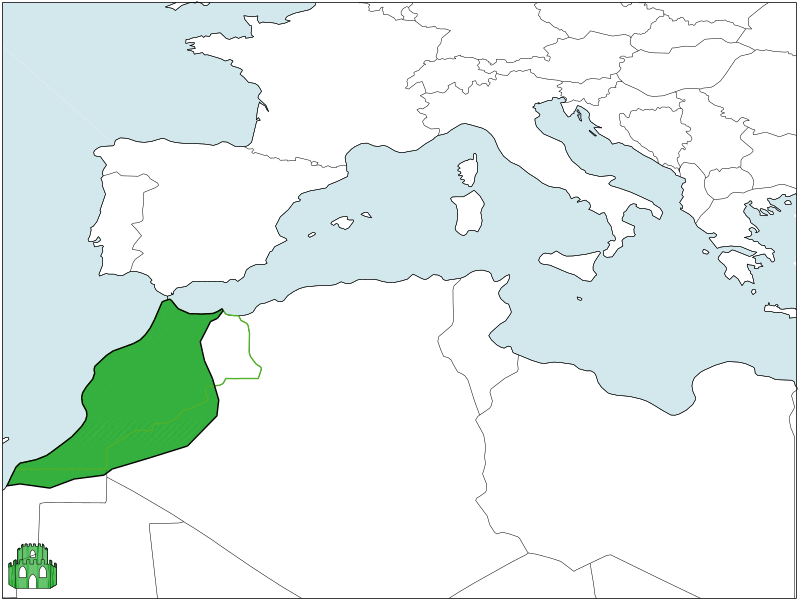
Map of the terriroies of the Saadi Dynasty, with the modern borders of Morocco.
Eventually, in the late 1500s, the Saadi Sultanate took hold of the region. The Saadis constructed several impressive works of architecture, particularly in their capital of Marrakesh. Beginning in 1631, a new regime known as the Alawi dynasty came to power. The Alawis still control Morocco today, and they are responsible for many of the nation’s grand modern buildings, like the Hassan II Mosque in Casablanca.
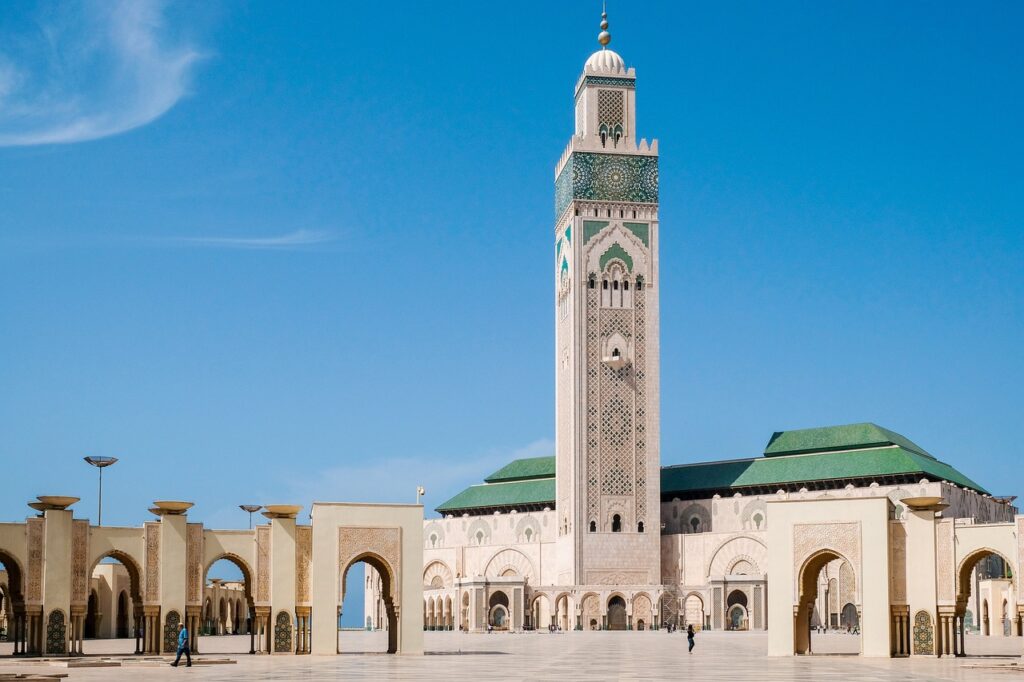
An image if the Hassan II Mosque in Casablanca
Elements of Moorish Architecture
Horshoe & Scalloped Arches
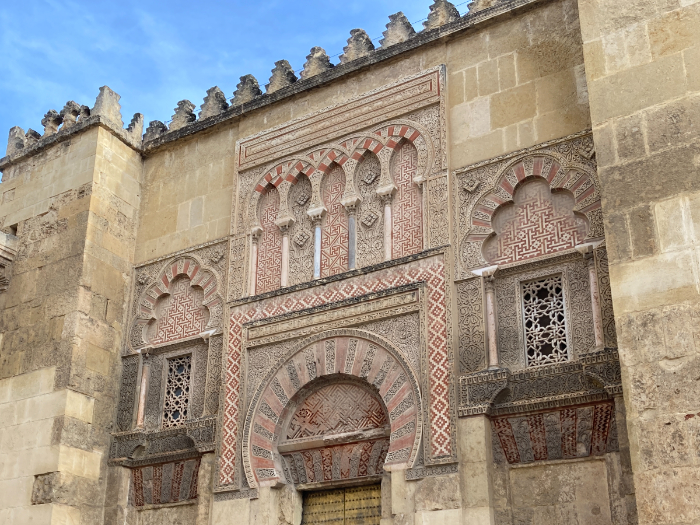
Horshoe Arches are one of the most unifying elements found in Moorish Architecture. This style of arch differs from traditional Round Roman Arches, and it has a much more elegant and artistic appearance. Many Moorish buildings also contain other types of arches, such as pointed and scalloped arches. The image above shows some horseshoe & scalloped arches decorating the facade of the Mezquita in Córdoba, Spain.
Complex Geometries
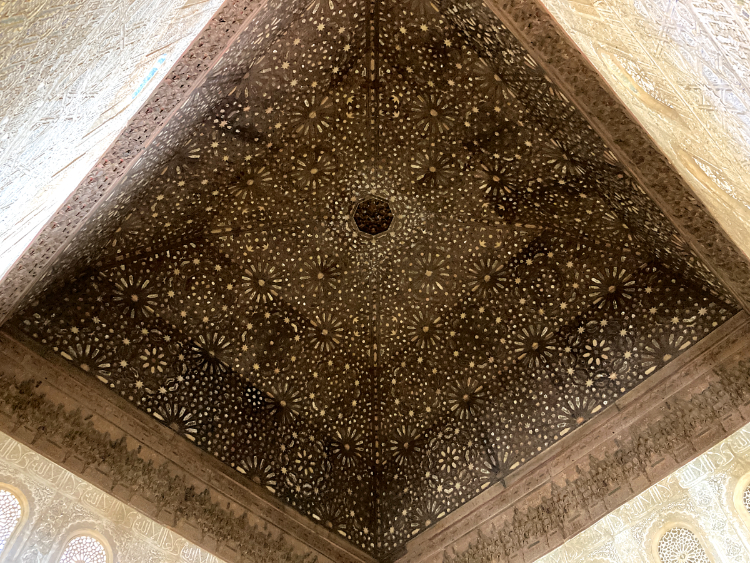
Intricate Geometries are another typical element found throughout many examples of Moorish Architecture. In Islam, it’s common practice not to depict elements from the natural world, such as plants and animals. Instead, many mosques and other Islamic buildings utilize calligraphy, geometric shapes, and intricate patterns as decorations. These intricacies are meant to inspire people and make them think about the vast complexity of the world we live in. The image above shows complex wooden carvings within the ceiling of a room in the Alhambra.
Calligraphy
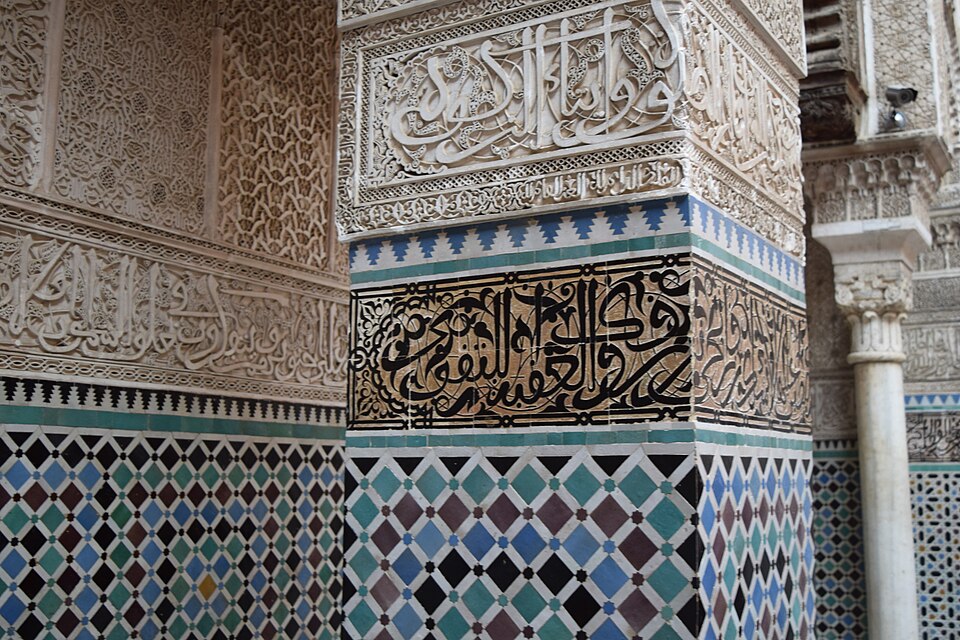
Calligraphy is another key element found throughout Moorish Architecture. Most calligraphy is written in Arabic script, and often expresses different lines from the Koran. Calligraphy is not unique to Moorish Architecture, and it’s found throughout all the architecture of the Islamic World. In the image above, you can see some calligraphy on a column within the Al-Attarine Madrasa in Fez, Morocco.
Boxy Minarets
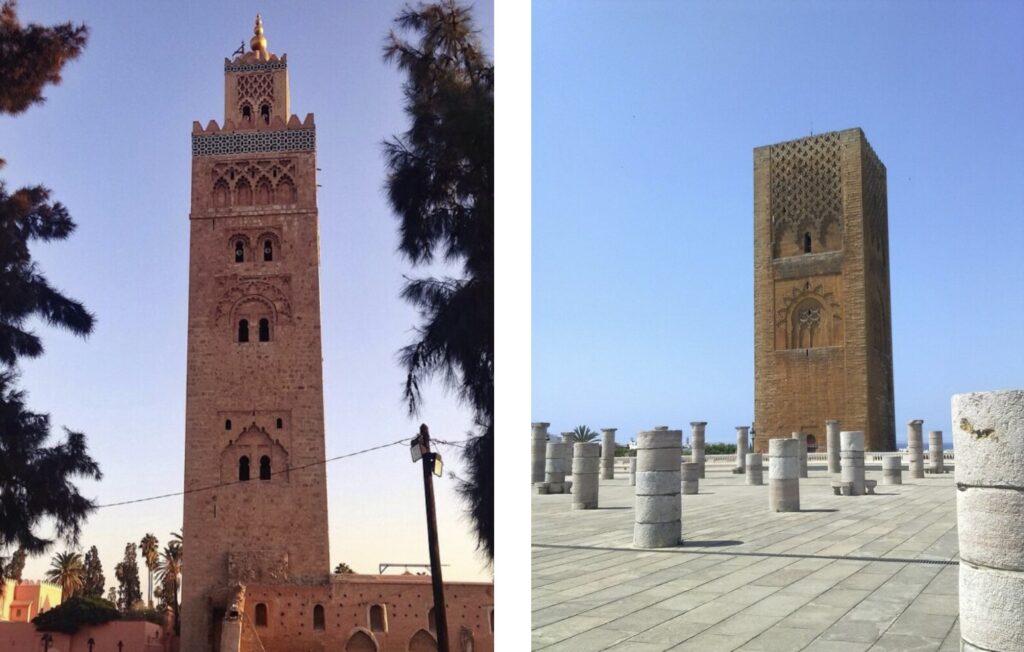
Boxy Minarets are another distinct element found throughout many examples of Moorish Architecture. Minarets are one of the key components of Mosques, and they are built in many different shapes and sizes. The Moors of North Africa and Spain typically constructed their minarets from either stone or bricks, and they often had a boxy and rectangular form. These Moorish Minarets were decorated with symmetrical windows and balconies on all sides. The left image above shows the minaret of the Kutubiyya Mosque in Marrakesh, and the right image shows the Hassan Tower, a minaret located in Rabat.
What are the greatest examples of Moorish Architecture?
There are countless examples of Moorish Architecture throughout North Africa and the Iberian Peninsula. The list below will highlight 35 examples of Moorish Architecture, and illustrate the diverse nature of Moorish design.
1. Alhambra – Granada, Andalusia, Spain
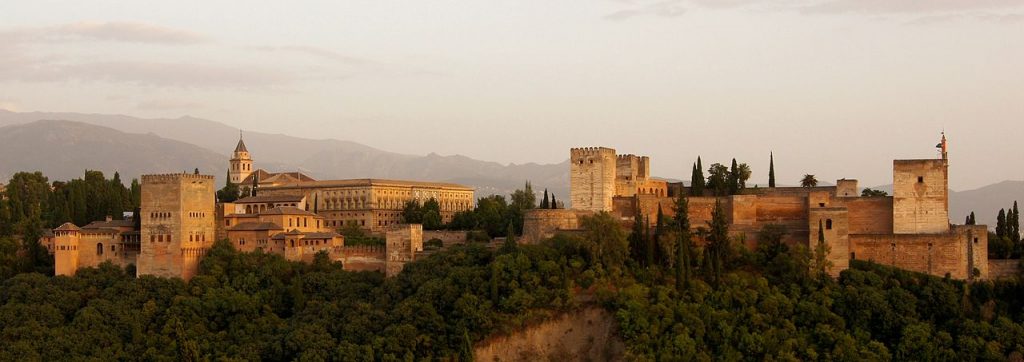
The Alhambra is one of Spain’s most popular attractions, and the world’s most impressive example of Moorish Architecture. The building began as a formidable medieval fortification commissioned by a member of the Nasrid Dynasty. The Alhambra is situated on a mountain overlooking the city of Granada, and it was designed to both protect the city and members of the Nasrid family. The Alhambra is a particularly well-positioned castle, taking full advantage of the area’s freshwater mountain springs.
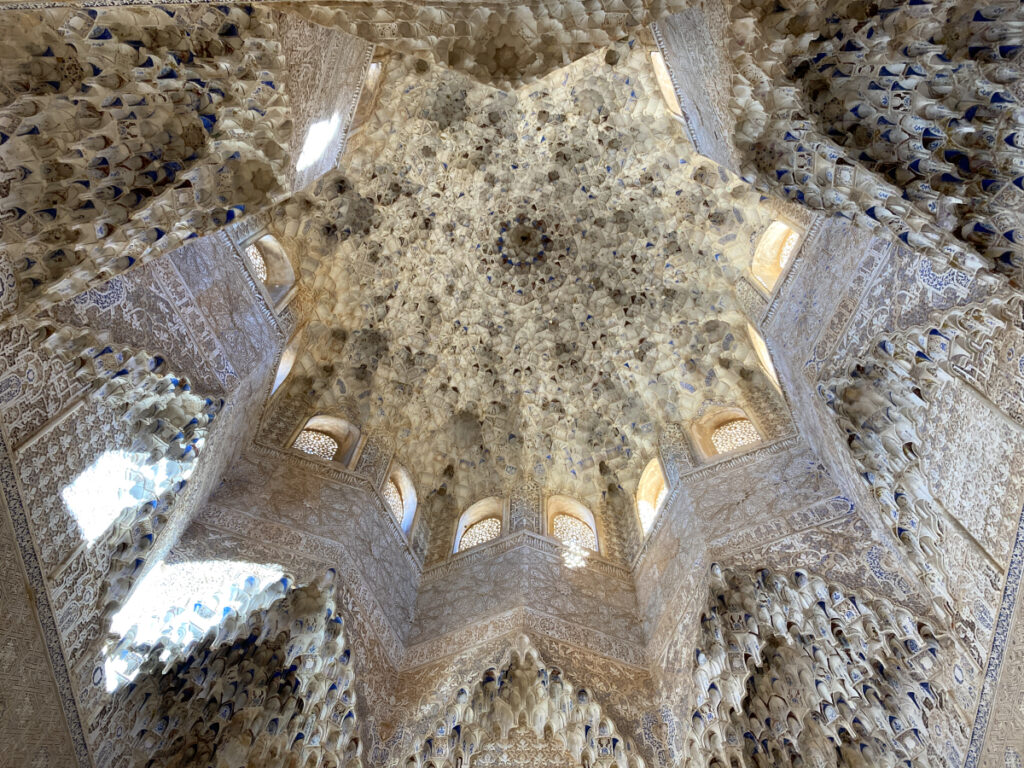
Over time, the fortress was transformed into more of a lavish palace, equipped with fountains, gardens, and comfortable living spaces. The image above shows an intricately detailed ceiling within one of the Alhambra’s towers. The ceiling is a work of art, composed of hundreds of Muqarnas radiating outward in a geometric pattern. The Nadrids ruled the Emirate of Granada from within the walls of the Alhambra up until 1492, when the building was besieged and conquered by the Kingdom of Castile.
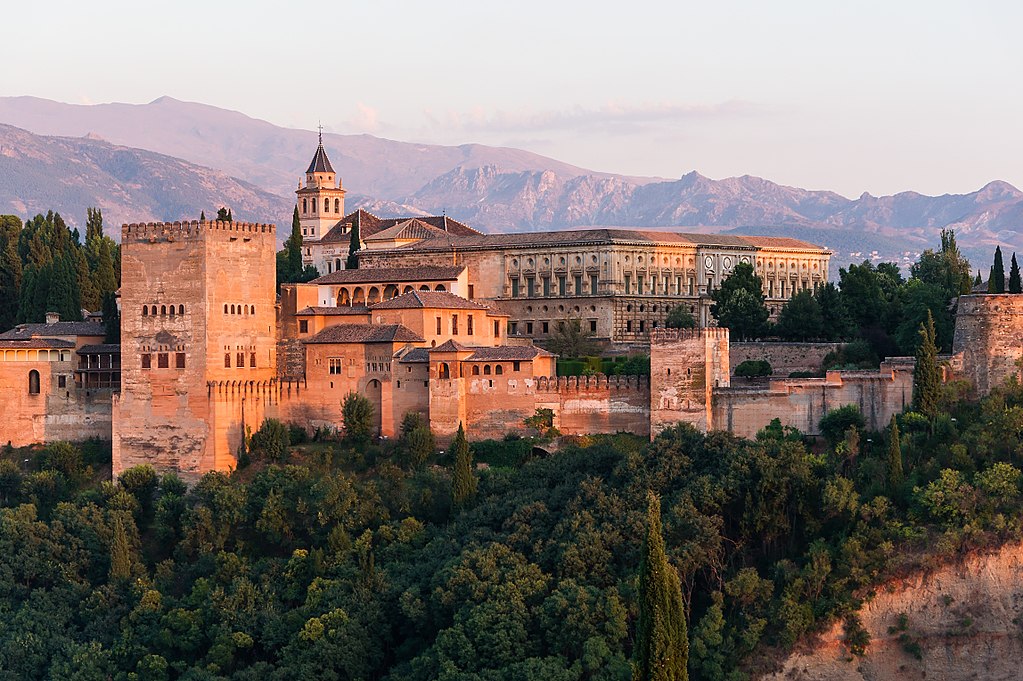
The Spanish kept the Alhambra much as it was during the Moorish Period. However, one major change occurred in 1527, when Charles V ordered the construction of a large palace in the center of the Alhambra complex. The building, now known as the Palace of Charles V, was designed in the Renaissance Style. It has a perfectly square exterior, with a circular interior courtyard. Today, the Alhambra is one of the greatest examples of Moorish Architecture in Spain, and it is protected as a UNESCO World Heritage Site.
2. Mezquita – Córdoba, Andalusia, Spain
Translating to “Mosque” in Spanish, the Mezquita is a large work of Moorish Architecture located in Córdoba, Spain. It was first constructed in the late 8th century by the Emirate of Córdoba, making it one of the oldest structures on this list. The Mosque’s prayer hall is composed of a large hypostyle hall, made from columns taken from abandoned Roman temples and basilicas. These salvaged columns were too short to achieve the desired height for the prayer hall. To fix this, the mosque’s builders concieved an innovative stacked-arch design, which increased the height of the interior space.
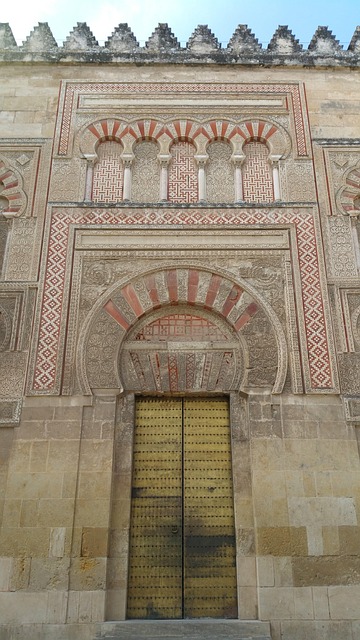
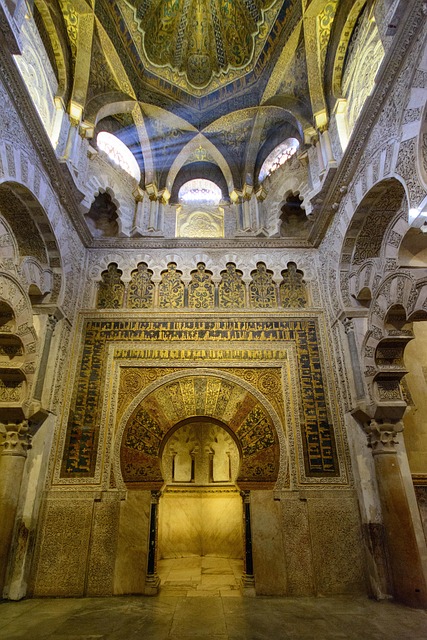
The Mezquita contains many of the typical elements found in Moorish Architecture, including horseshoe and scalloped arches, domes, calligraphy, and intricate geometric patterns. The right image above shows the mihrab of the Mezquita. This area was added to the edges of the Prayer Hall during an expansion done by Caliph Al-Hakam II. The Mihrab is a distinct feature found in most mosques, and it’s designed to point to the historic city of Mecca
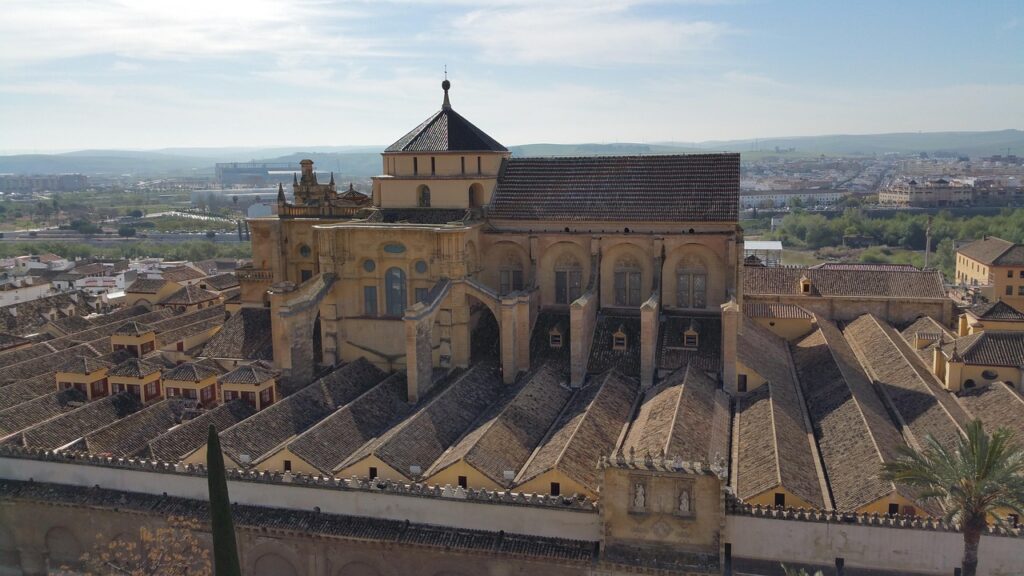
In 1236, the Castilian king Ferdinand III besieged and conquered the city of Córdoba. This was a major victory for the Spanish and an important event in the Reconquista. The Castillians chose not to tear down the Great Mosque of Córdoba, and instead constructed a large Cathedral at the very heart of its prayer hall. Construction on the cathedral began in the 13th century and lasted through the early 17th century. The design utilizes an eclectic blend of architectural styles, including Gothic, Renaissance, and Baroque.
3. The Great Mosque of Kairouan – Kairouan, Tunisia
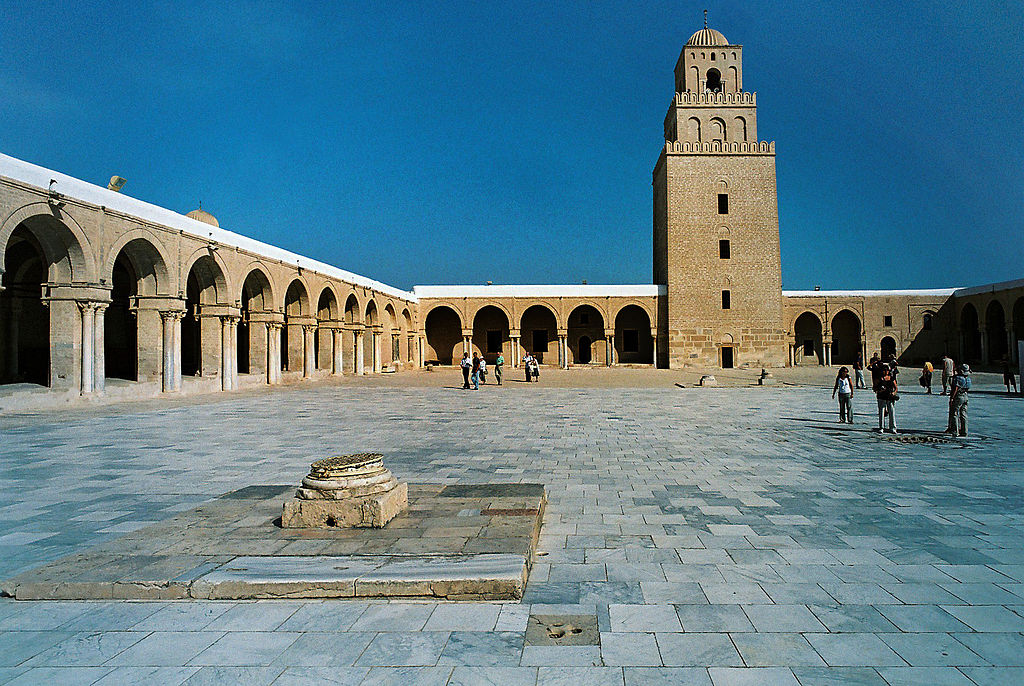
The Great Mosque of Kairouan is one of the World’s Oldest Mosques, and a great example of Moorish Architecture in North Africa. The mosque originally dates to 670 CE, and it was expanded and renovated several times throughout history. The first phase of the building was completed by the Umayyad Caliphate shortly after they conquered the region. The building was also expanded under the Aghlabid dynasty in the 9th century.
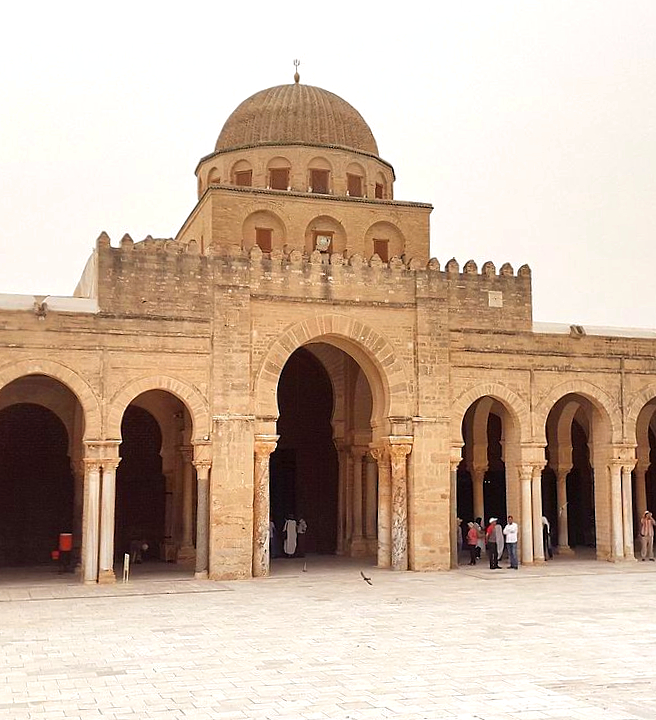
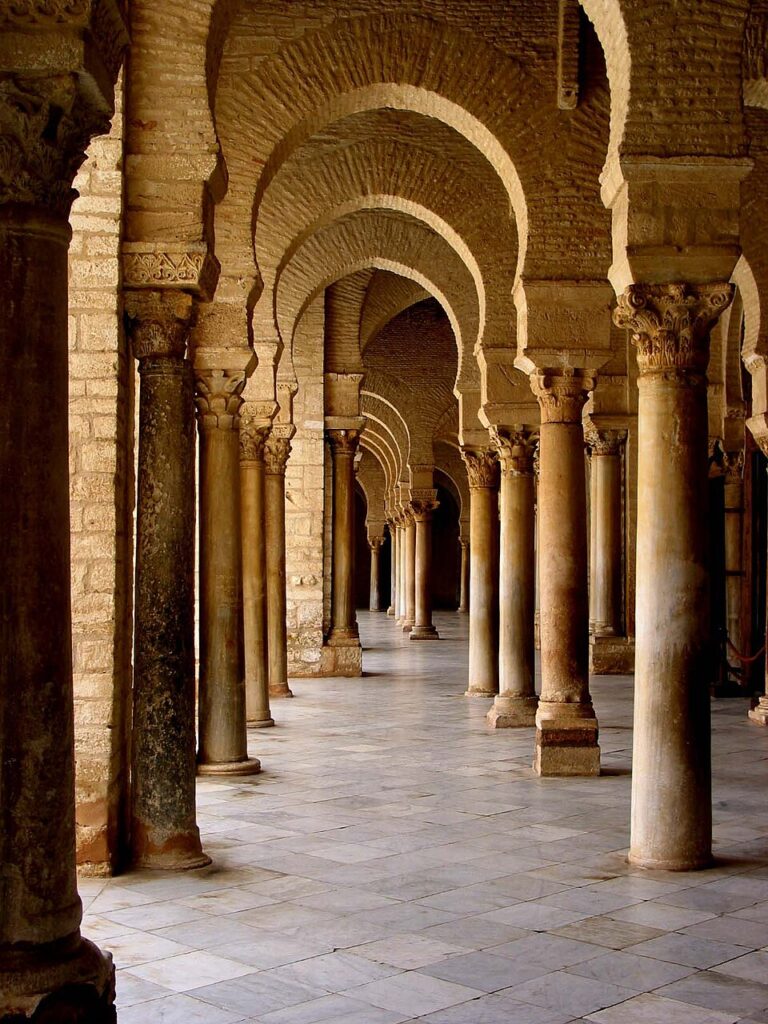
The Great Mosque of Kairouan contains many typical elements from Moorish Architecture. It has a tall and boxy minaret, numerous horseshoe arches, and a large dome above the entrance to the prayer hall. The mosque is also famous for its incredible courtyard, which is lined with a vast assortment of marble columns. These are mostly Corinthian Columns that were taken from nearby Roman Ruins.
4. Kutubiyya Mosque – Marrakesh, Morocco
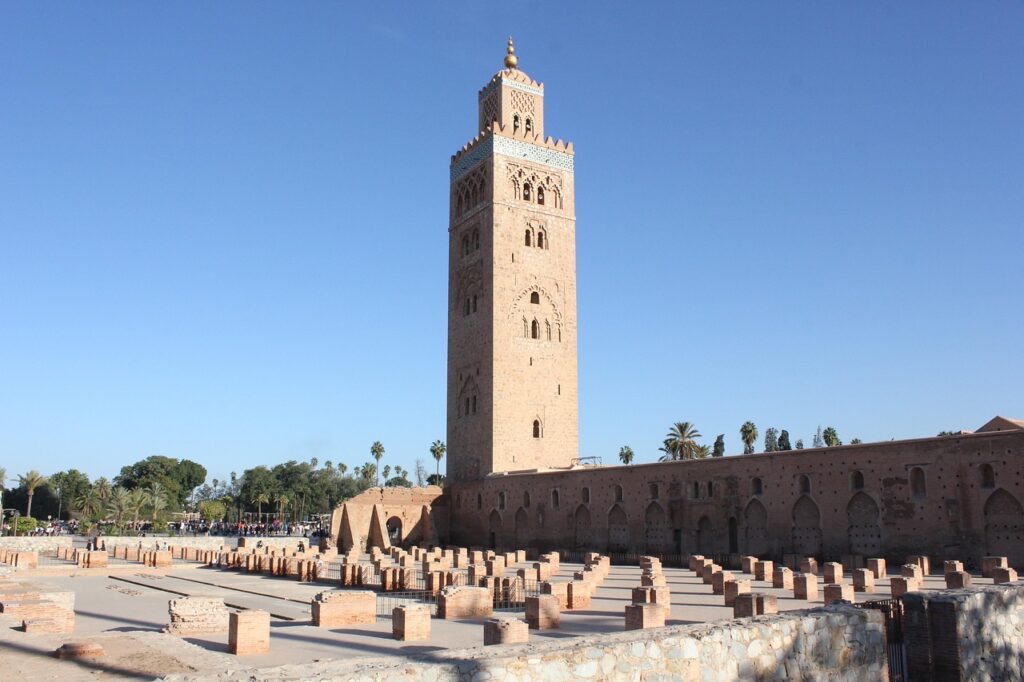
The Kutubiyya Mosque is a large religious building located next to the Medina of Marrakesh. The building was originally constructed in the late 12th century by the Almohad Caliphate. The mosque was constructed in two separate attempts. The earlier building now lies in ruin, and its foundations can be seen in the foreground of the image above. Both versions of the Kutubiyya Mosque took shape during the reign of the Caliph, Abd al-Mu’min.
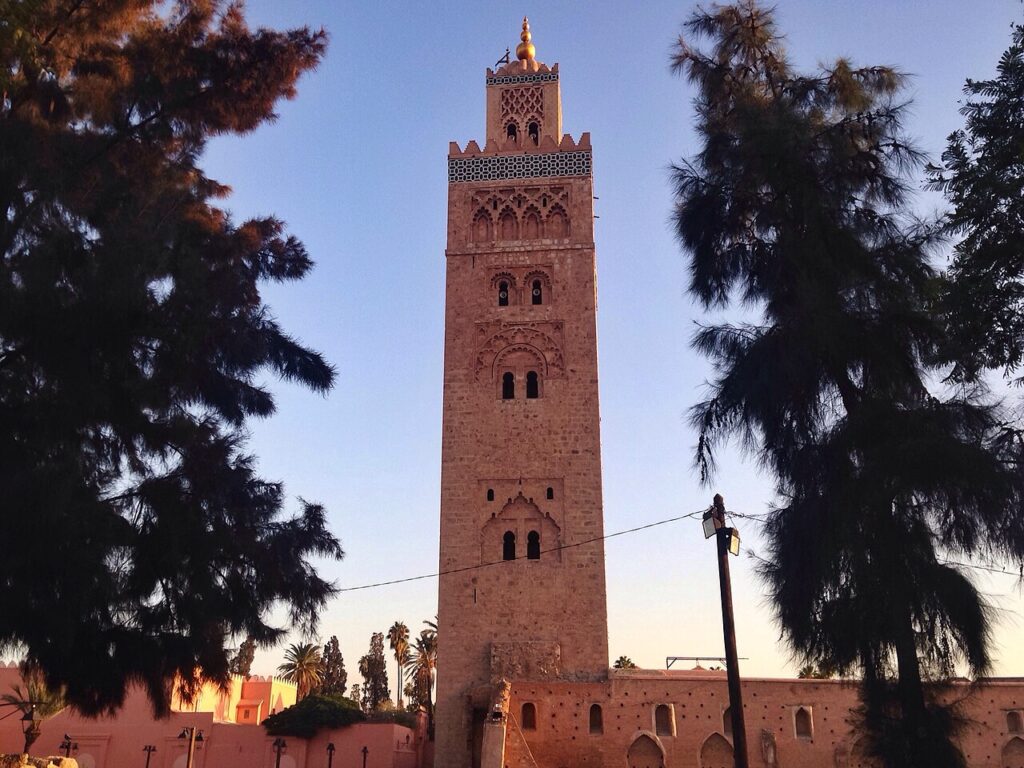
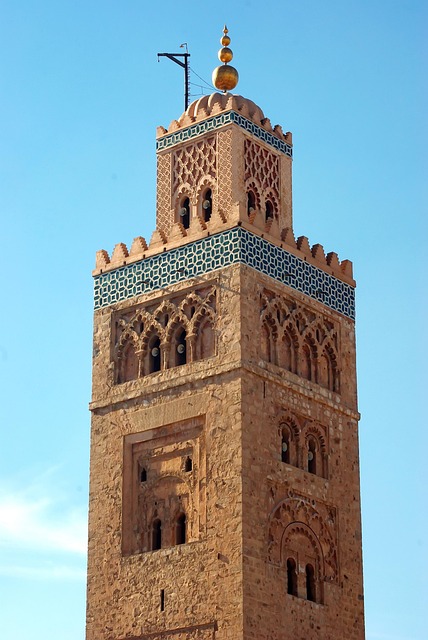
The most striking feature of the Kutubiyya Mosque is its minaret. It resembles dozens of other minarets dating to the Almohad Period, which can be found throughout cities like Marrakesh, Rabat, and Seville. The Minaret contains a variety of details, including scalloped arches and glazed tiles. The overall form of the building matches most other Mosques from this time period – with a central courtyard adjacent to a large enclosed prayer hall.
5. Great Mosque of Tlemcen – Tlemcen, Algeria
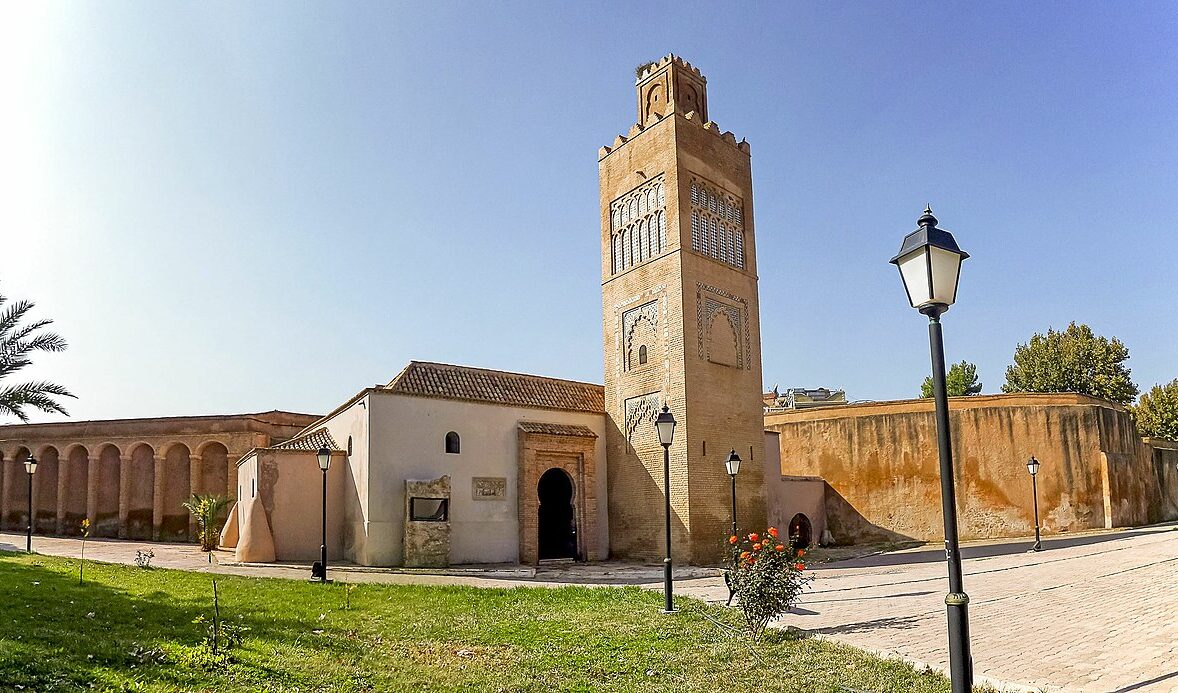
The Great Mosque of Tlemcen is another large mosque in North Africa, dating to the Moorish Period. The mosque was constructed in the 11th century by the Almoravid Dynasty. It was then expanded and modified several times in the centuries that followed. In the image above, you can see the mosque’s minaret, which is built in a style similar to many others on this list. The Great Mosque of Tlemcen also contains many other Moorish design elements, like a blend of horseshoe and scalloped Arches.
6. Bou Inania Madrasa – Fez, Morocco
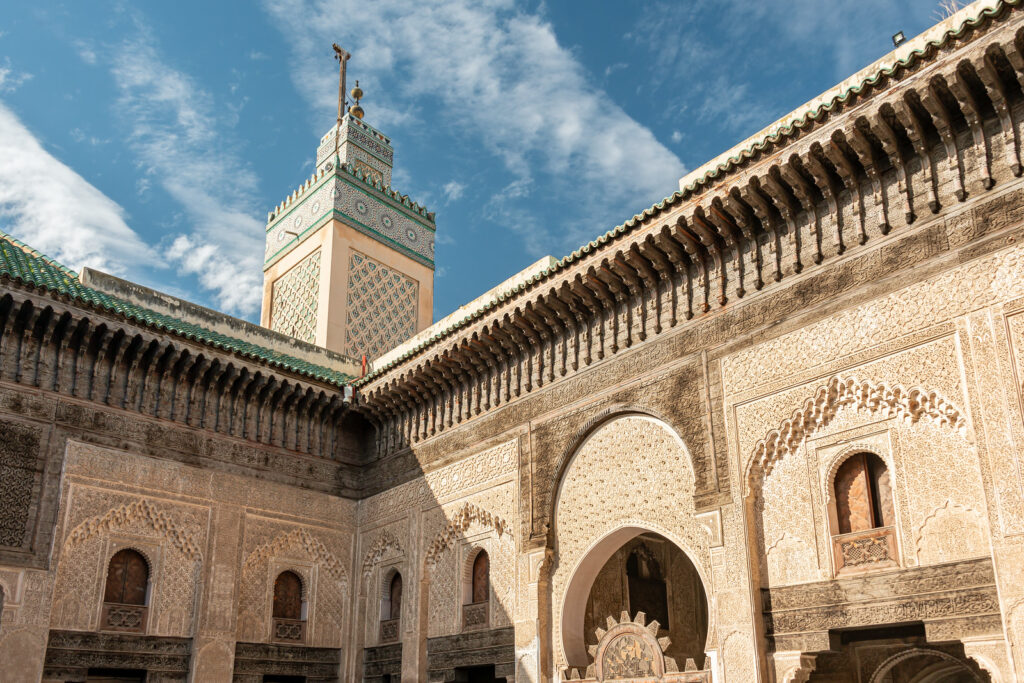
The Marinids were a powerful Moorish Dynasty that ruled a large portion of North Africa from the 13th to the 15th centuries. The Marinids made Fez their capital, and they built fortifications and grandiose architecture throughout the city. One of the greatest examples of this is the Bou Inania Madrasa, which was completed in 1355. The Madrasa also functioned as a mosque, and therefore contains many typical mosque elements, like a Minaret and a courtyard.
7. Bab Mansur – Meknes, Morocco
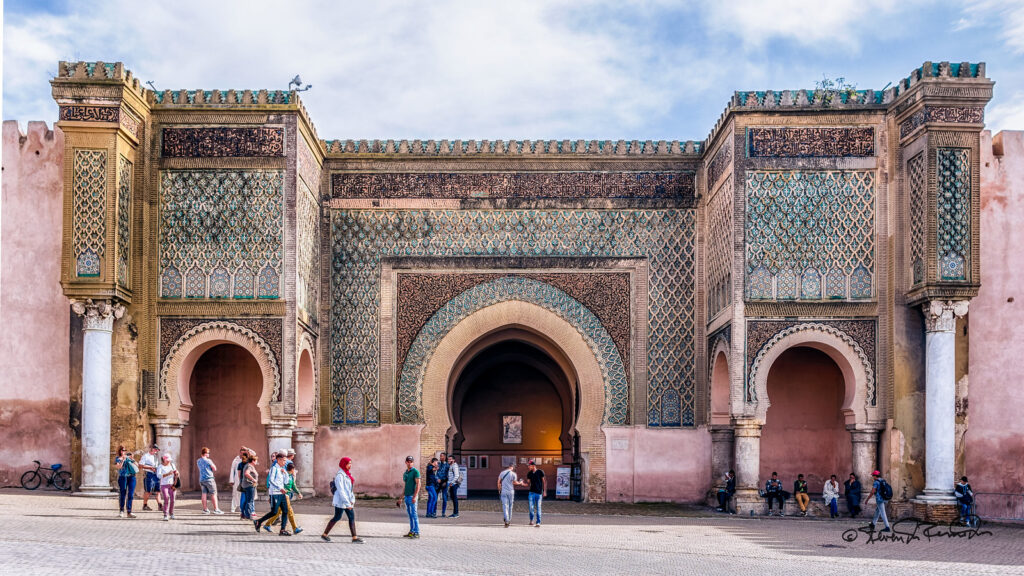
The Bab Mansur is an intricately decorated gate within the city walls of Meknes. The Moors constructed formidable fortifications around many of their cities, and many of these walls, towers, and gatehouses can still be seen today. The Bab Mansur leads to the Kasbah of Meknes, which served as the city’s citadel during the Middle Ages. The Bab Mansur contains several distinct Moorish design elements, including Horseshoe Arches and intricate geometrical tiles.
8. Ruins of Chellah – Rabat, Morocco
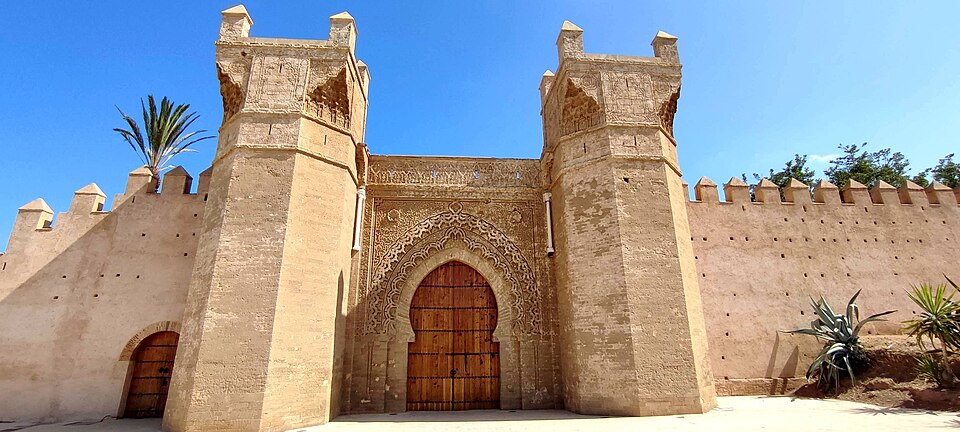
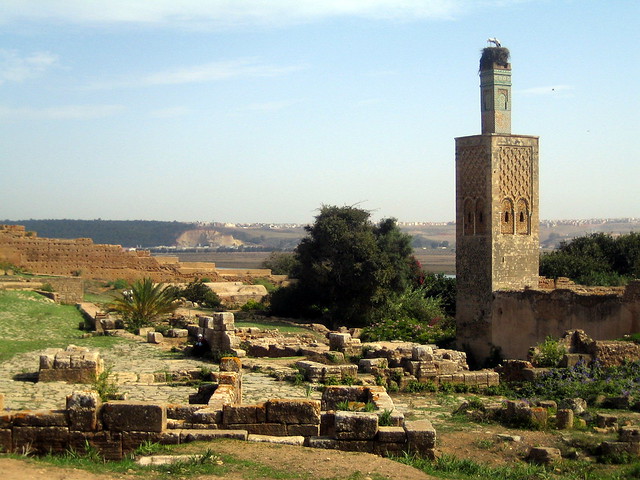
Chellah is a fortified Citadel within the Moroccan city of Rabat. Evidence of human activity at the site dates all the way back to the Phoenician Period, and the Romans also had a small outpost here. The Marinid Dynasty completely changed the site during the 14th & 15th centuries. They created a large Necropolis within Chellah and added several imposing walls and towers. The left image above shows one of Chella’s main gates, which has intricate stone carvings similar to those found in other works of Moorish Architecture.
9. Great Mosque of Ez-Zitouna – Tunis, Tunisia
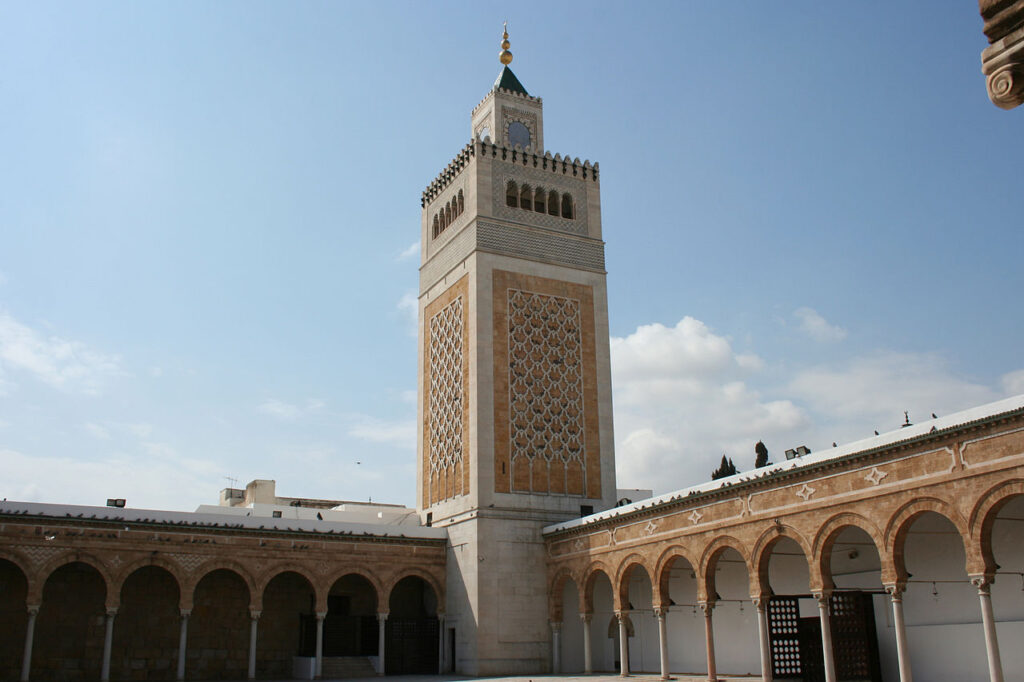
The Great Mosque of Ez-Zitouna is one of the largest and most important religious buildings in Tunis, the modern-day capital of Tunisia. Tunis has been a vital port for thousands of years, and it’s situated around what was once the ancient city of Carthage. The Great Mosque of Ez-Zitouna has a history similar to that of the Great Mosque of Kairouan. It was founded by the Umayyads shortly after they conquered the region, and then expanded and modified by the Aghlabids and the Hafsids.
10. The Bab Agnaou – Marrakesh, Morocco
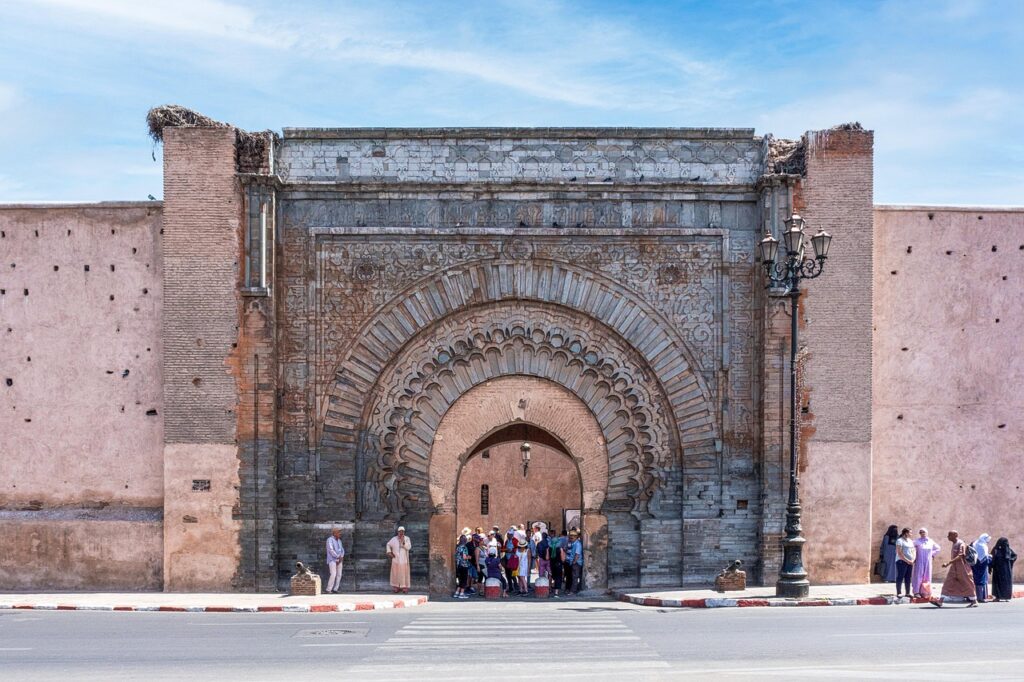
Similar to the Bab Mansur, the Bab Agnaou is an impressive gatehouse within the medieval walls of Marrakesh. The gate leads to the city’s main Kasbah complex, which also houses a mosque, a palace, and several royal tombs. The Bab Agnao was constructed by the Almohad Caliphate during the late 12th century. It contains many elaborate details similar to those found in other works of Moorish Architecture, and it’s one of the most well-known sites within modern Marrakesh.
11. Great Mosque of Sousse – Sousse, Tunisia
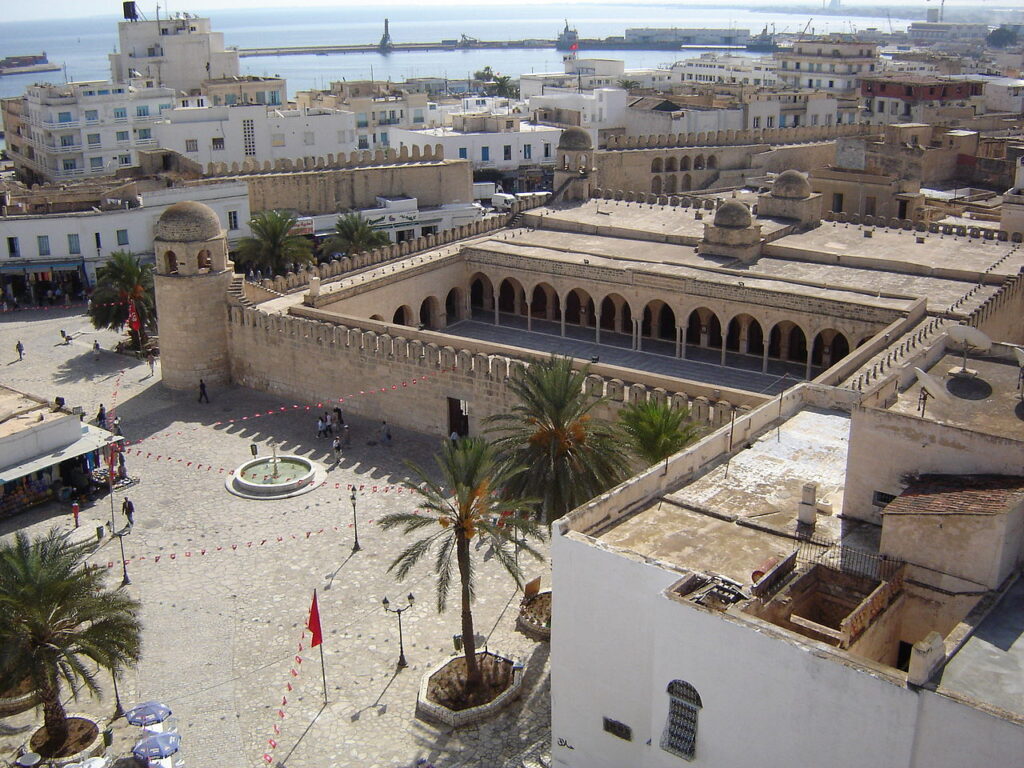
Sousse is a coastal town in Tunisia that is home to many incredible Moorish monuments. One of the greatest of these is the Great Mosque of Sousse, which is located in the heart of the city’s Medina. The mosque was constructed by the Aghlabid Dynasty in the 9th century. The building contains many Moorish features such as domes and horseshoe arches. Like many other structures in this part of North Africa, the Great Mosque of Sousse utilizes Corinthian Columns that were taken from former Roman temples & basilicas.
12. Medina Azahara – Córdoba, Andalusia, Spain

Córdoba was one of the grandest and most populous cities in Europe from the 8th to 11th centuries, at a time when most of the continent was struggling through the Dark Ages. The city was home to many impressive Moorish structures, including a large palace, built on the edges of the city center. The palace was known as the Medina Azahara, and it was constructed during Córdoba’s Golden Age. However, the palace was abandoned in the late 1100s during the first Taifa Period of Al-Andalus.
13. Walls of Essaouira – Essaouira, Morocco
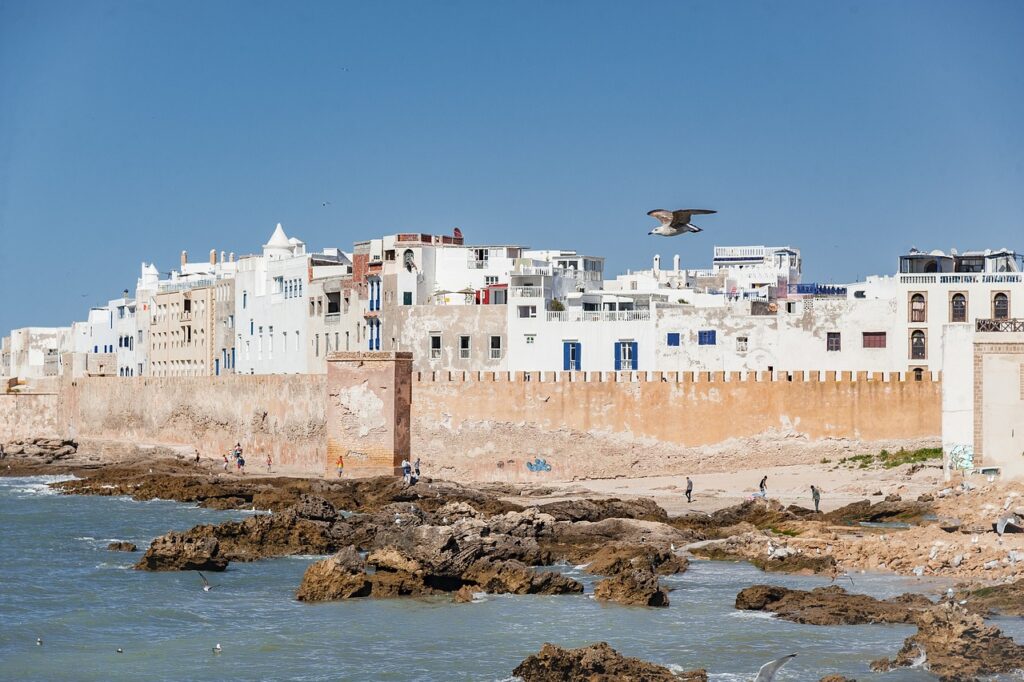
Essaouira is a city on the Atlantic Coast of Morocco. It was founded by a member of the Alawi Dynasty in the late 1700s. The Moroccan Kings wanted to take advantage of trade with the Europeans. They founded Essaouira to utilize its well-sheltered deepwater harbor. Essaouira was built with an immense fortification network, designed by French Engineers. The Walls of Essaouira are one of the later works of Moorish Architecture on this list, and they illustrate how the culture of the Moors evolved in the 18th century. Today, the Walls and Medina of Essaouira are protected as a UNESCO World Heritage Site.
14. The Ribat of Sousse – Sousse, Tunisia
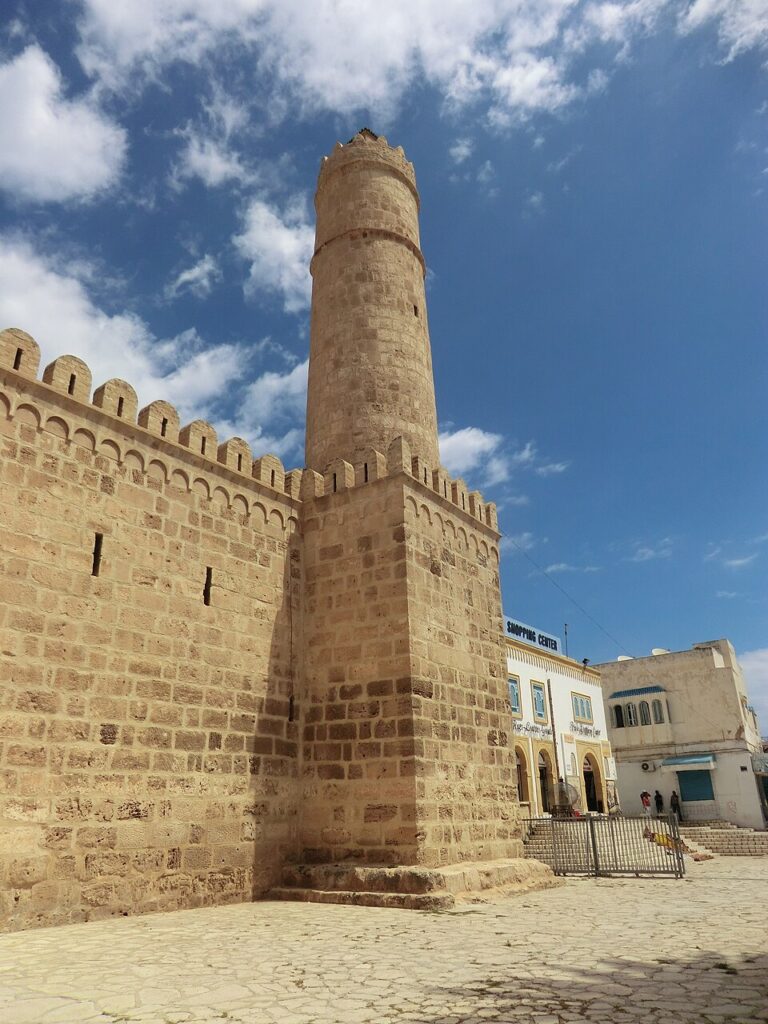
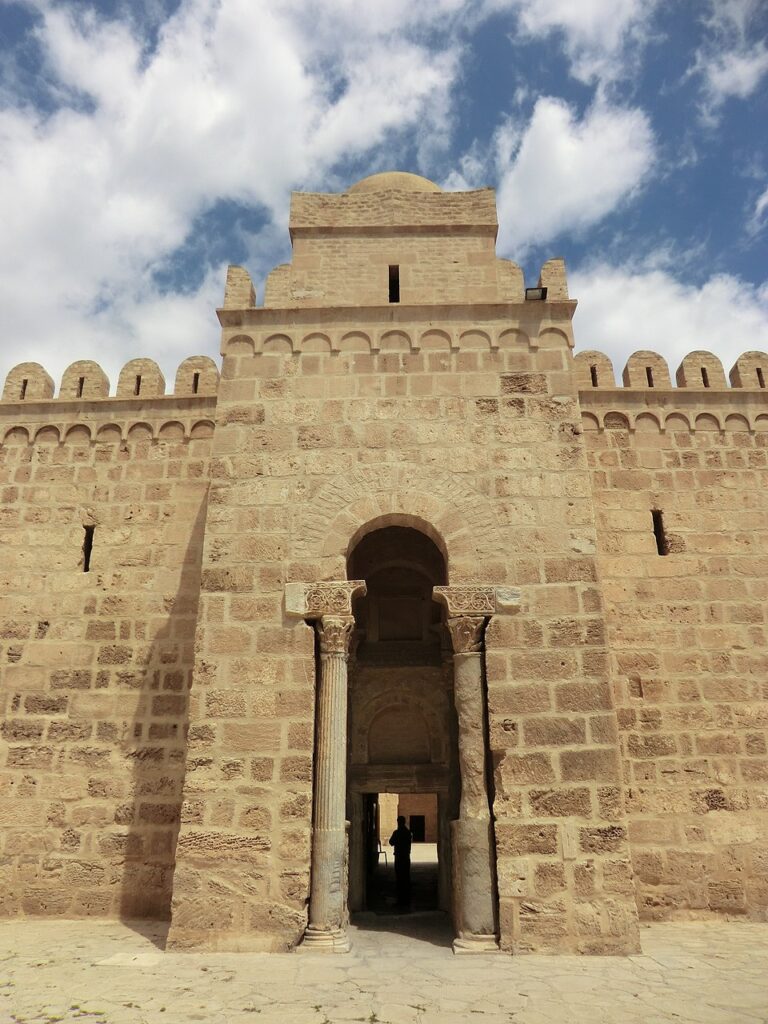
The Ribat of Sousse is an imposing fortress with a foundation dating back to the 9th century. Most of the construction was done by the Aghlabid dynasty, who ruled Sousse as a vassal of the Abbasid Caliphate. The building is made from local stone and has several layers of walls with towers at strategic points. The Ribat of Sousse also contains several marble columns that were repurposed from Roman ruins, most likely from the nearby city of Hadrumetum.
15. Giralda – Seville, Andalusia, Spain
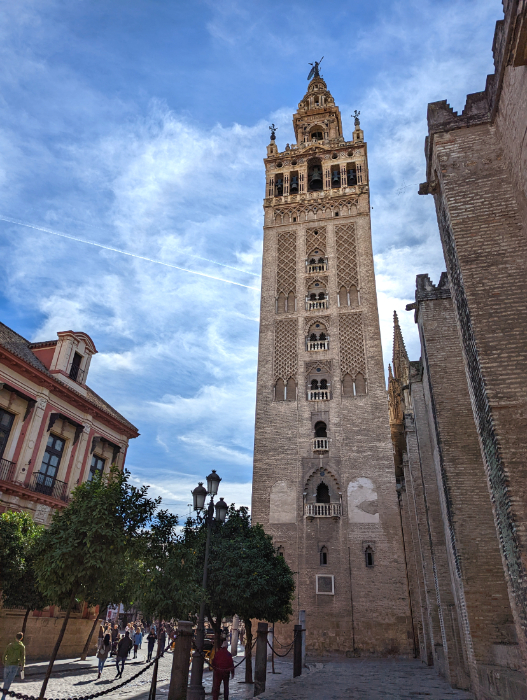
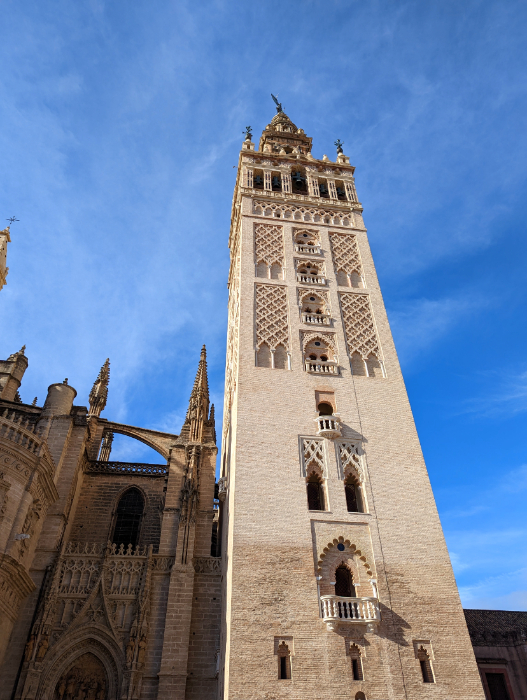
The Giralda is one of many impressive works of Moorish Architecture in Spain. It was built by the Almohad Caliphate in the 12th century, as part of the Great Mosque of Seville. The mosque was one of the largest and grandest in all of Al-Andalus. When the Spanish conquered Seville, most of the mosque was torn down and replaced by a cathedral. However, the Giralda was spared and repurposed as a bell tower. Eventually, in the 16th century, the top of the Giralda was expanded and redesigned in the Renaissance Style.
16. Hassan Tower – Rabat, Morocco
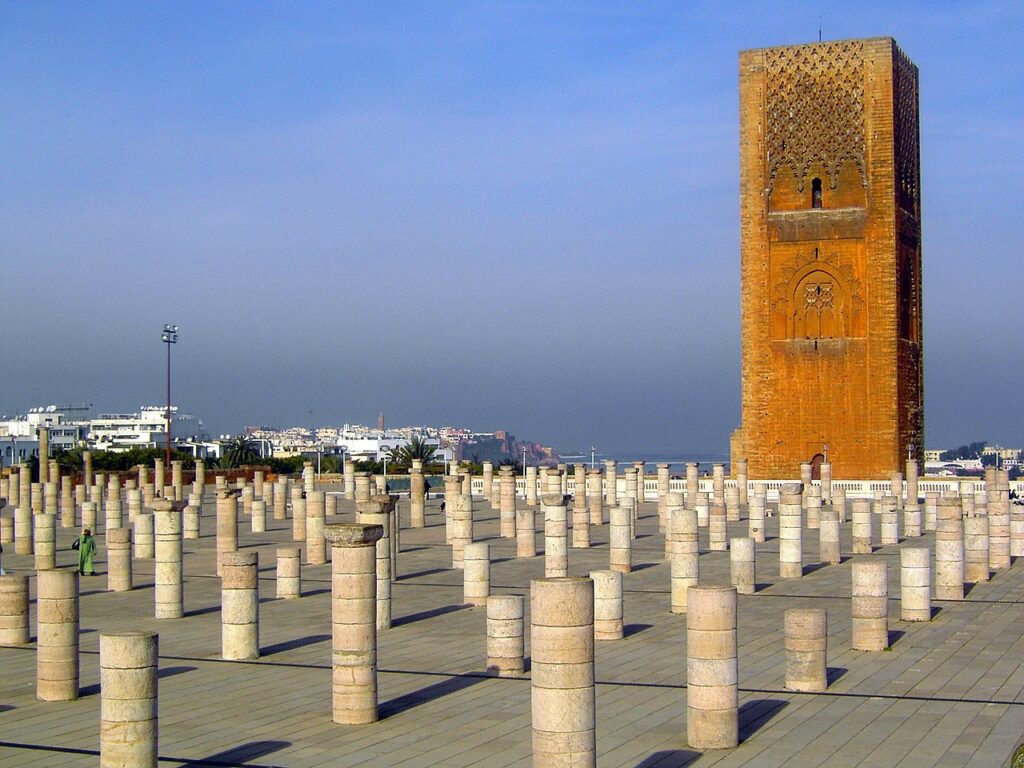
The Hassan Tower is a Moorish-style minaret that was constructed as part of a massive mosque in Rabat, Morocco. The entire complex was commissioned by Yaqub al-Mansur, one of the greatest rulers of the Almohad Caliphate. Unfortunately, work on the mosque stalled after the death of al-Mansur, and it was never completed. The image above shows the neatly aligned bases of partially constructed columns.
17. University of al-Qarawiyyin – Fez, Morocco
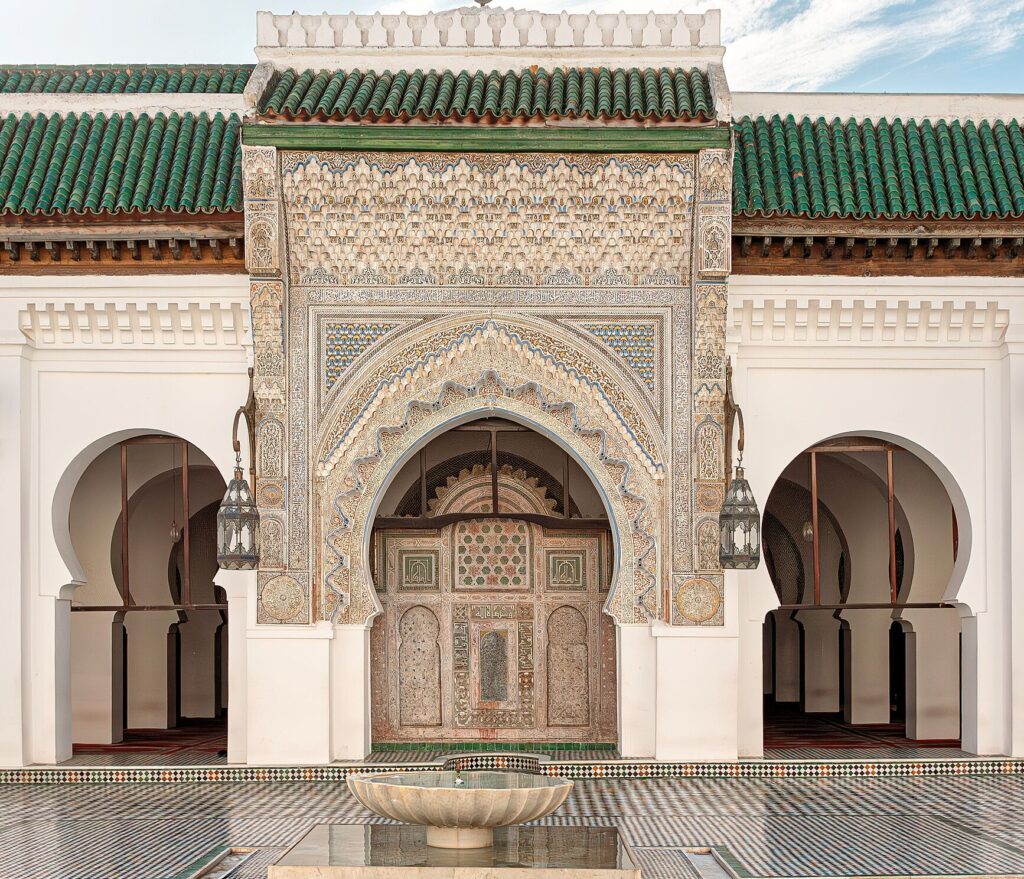
The University of al-Qarawiyyin is a notable school located in Fez. The university is housed within a former Mosque dating back to the 9th century. The building was expanded and modified over time and contains a variety of different courtyards and prayer halls. The entire complex illustrates just about every element within Moorish Architecture. There are horseshoe and scalloped arches, geometric tiles, calligraphy, muqarnas, and lots of intricate details.
18. Castle of Gormaz – Gormaz, Spain

The castle of Gormaz is one of dozens of Moorish Castles in the Iberian Peninsula. It’s located in the Spanish region of Castile and León, about two hours north of Madrid. The castle was originally constructed in the mid-8th century, with another major expansion taking place in 965. The Castle of Gormaz was constructed by the Emirate of Córdoba to help secure their Northern Border, and it was one of the largest and most formidable fortresses of the age.
19. Kasbah Mosque – Marrakesh, Morocco
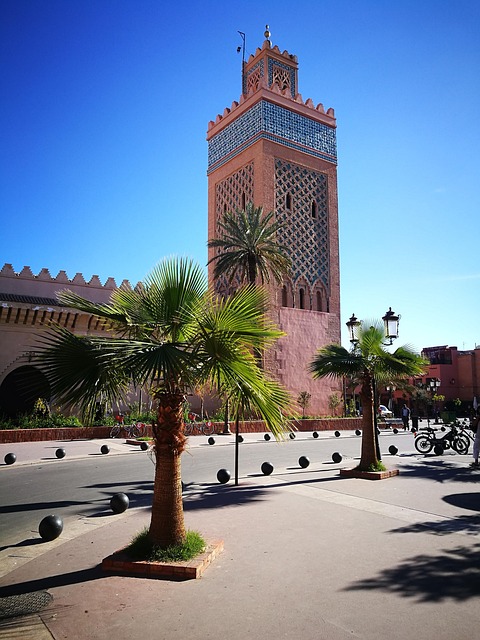
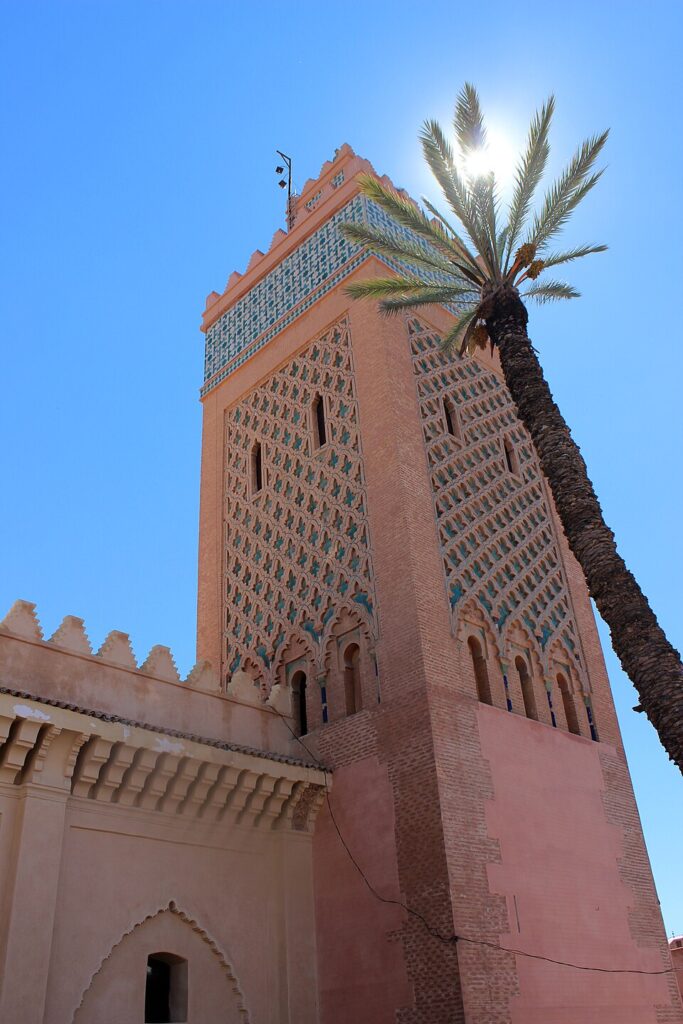
The Kasbah Mosque is a large religious building that was constructed by the Almohad Caliphate in the late 12th century. It was commissioned by Yaqub al-Mansur, who reigned during the Almohad Golden Age. The Kasbah Mosque gets its name from its proximity to the Kasbah of Marrakesh. The building contains a typical Almohad-Style Minaret, which is boxy and decorated with intricate stonework.
20. Kasbah of the Udayas – Rabat, Morocco
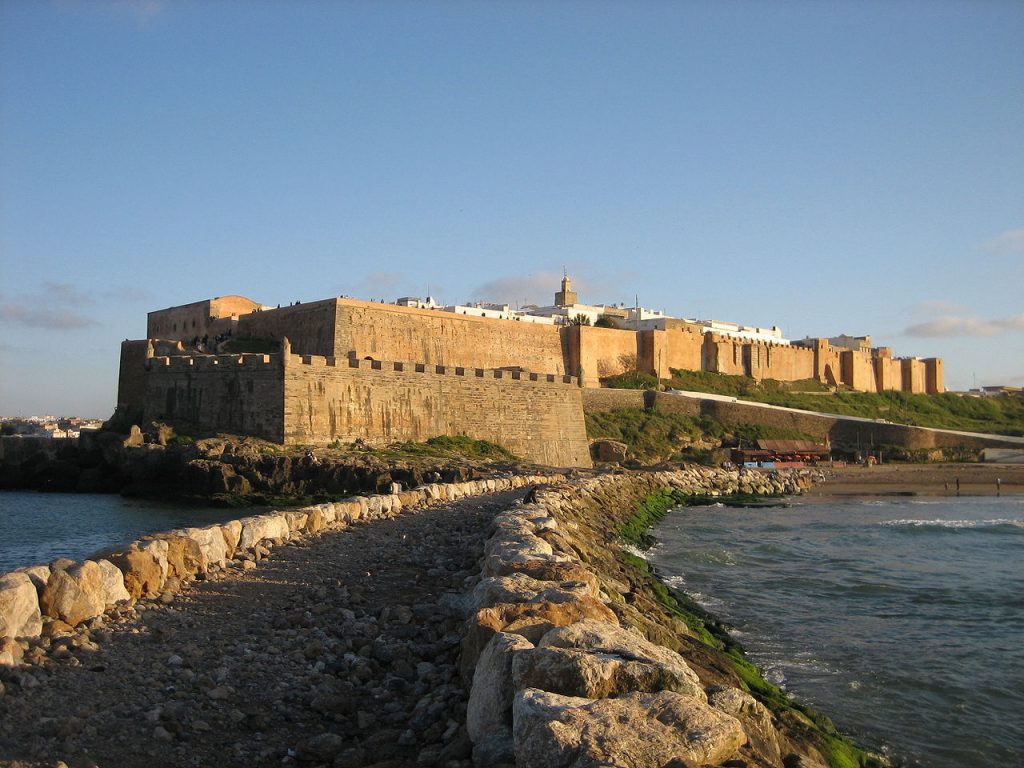
The Kasbah of the Udayas encircles a large portion of the city of Rabat, Morocco. The entire complex was listed as a UNESCO World Heritage Site in 2012. The Kasbah was constructed over time by several Moorish Dynasties, including the Umayyad, the Almoravid, and the Almohad. The Kasbah consists of a large network of coastal walls, in addition to a mosque and several decorative gates.
21. Aït Benhaddou Walls & Kasbah – Aït Benhaddou, Morocco
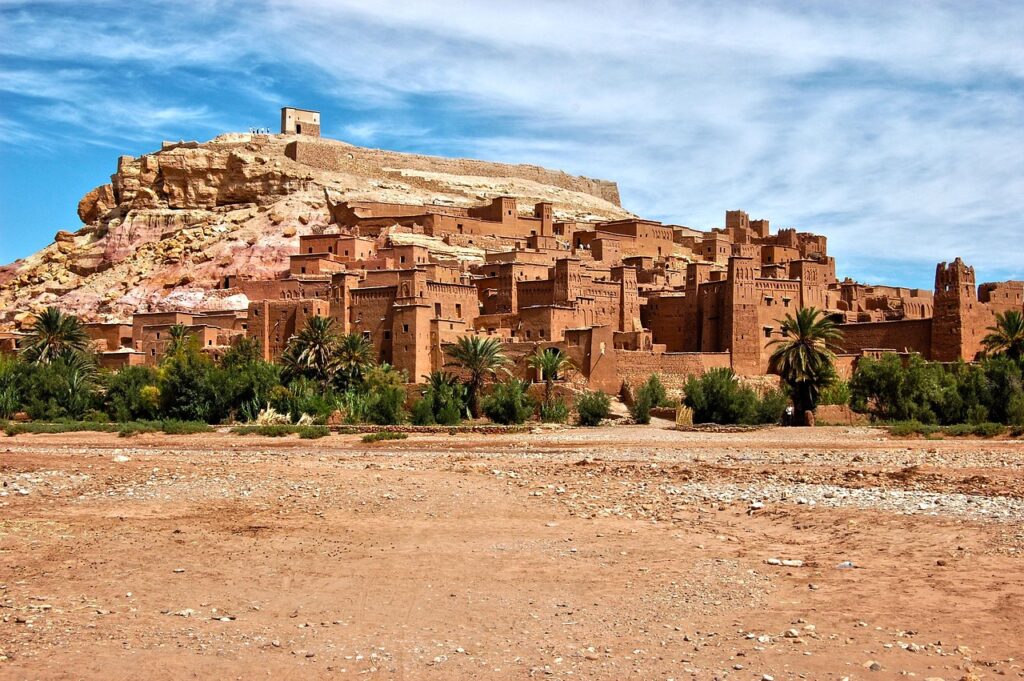
Aït Benhaddou is a small fortified city located along a riverbank within Morocco’s rugged mountainous interior. The site is remarkably well-preserved, and most of its earthen structures are constantly being restored and repaired. Aït Benhaddou was located along a major trade route that connected the Sahara Desert with other Moroccan cities. The site originally dates to the Almoravid period in the 11th century, and it has been continuously inhabited for more than 900 years. Like many other historic works of Moorish Architecture, Aït Benhaddou is listed as a UNESCO World Heritage Site.
22. Kasbah Mosque – Tunis, Tunisia
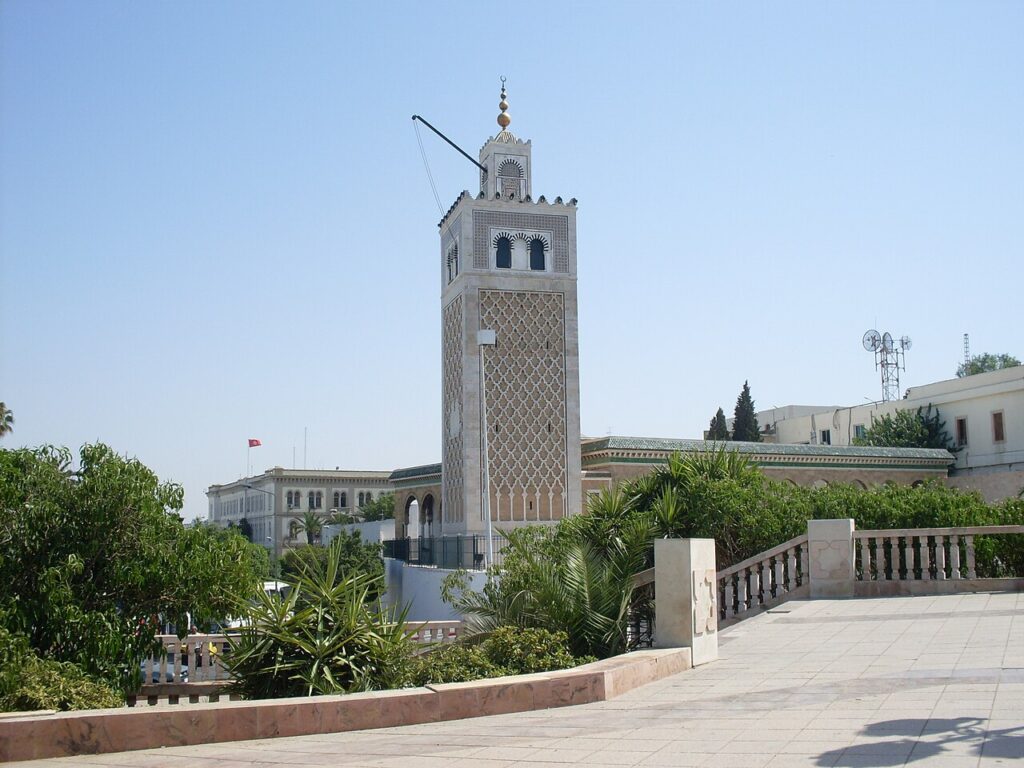
The Kasbah Mosque of Tunis is one of the greatest buildings constructed by the Hafsid Sultanate. It was built in the mid-1200s on the edges of the city’s defensive citadel, or Kasbah. The mosque’s most notable feature is its towering minaret, which was designed with typical Moorish details. The rest of the building follows the same format as most Moorish Mosques, with a rectangular courtyard adjacent to a hypostyle prayer hall.
23. Aljaferia – Zaragoza, Spain

The Aljaferia of Zaragoza is one of the most impressive examples of Moorish architecture in Spain. It was designed both as a defensive fortress and a lavish royal palace. The Aljafería was originally built in the 11th century, but much of what we see now is from later restorations. Today, the Aljaferia is one of the most visited sites in Zaragoza, alongside the city’s famous Gothic and Baroque churches.
24. Kasbah of Agourai – Agourai, Morocco
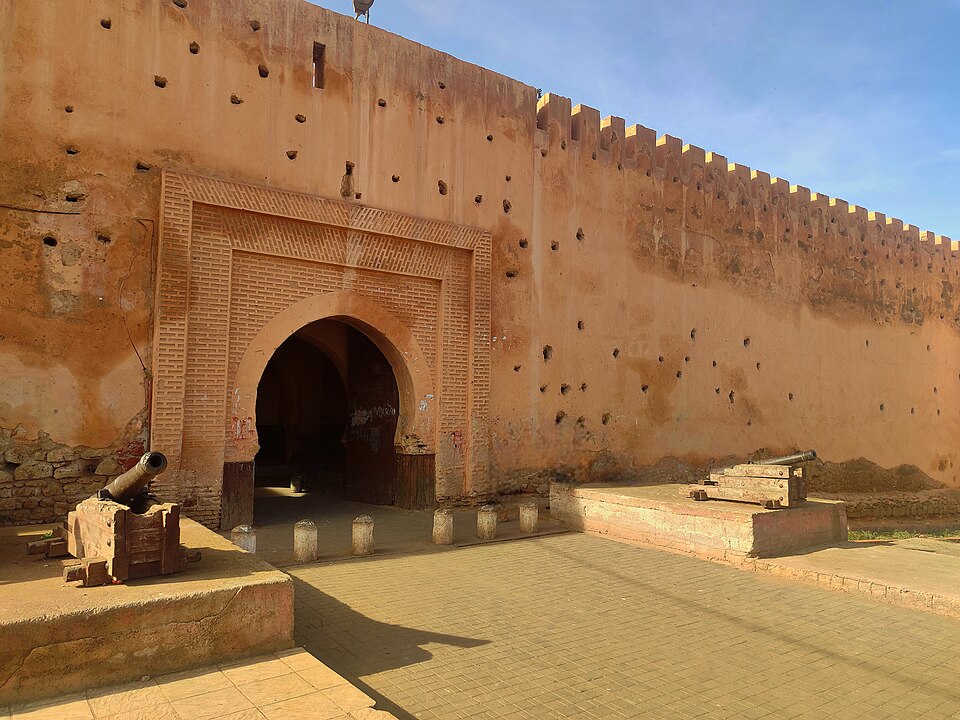
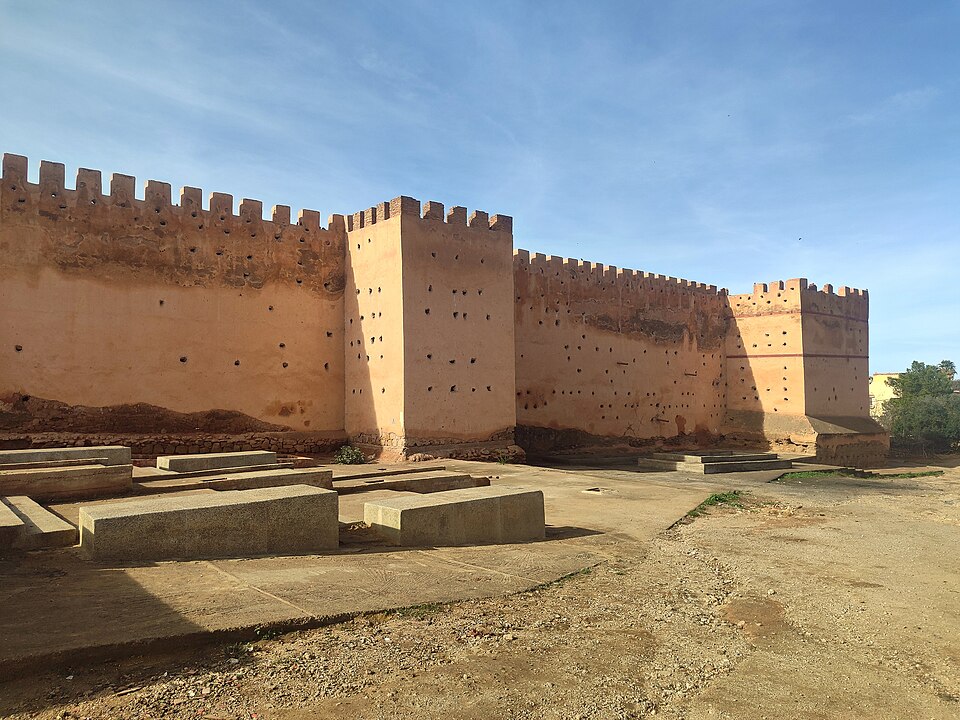
The Kasbah of Agourai is a large fortified outpost located in the mountains south of Meknes. The walls were constructed by the Alawi Dynasty, who have been in control of Morocco since the 17th century. The Kasbah of Agourai is a great example of late Moorish Defensive Architecture. It helped protect the trade routes connecting Morocco with the Sahara Desert to the south.
25. Saadian Tombs – Marrakesh, Morocco
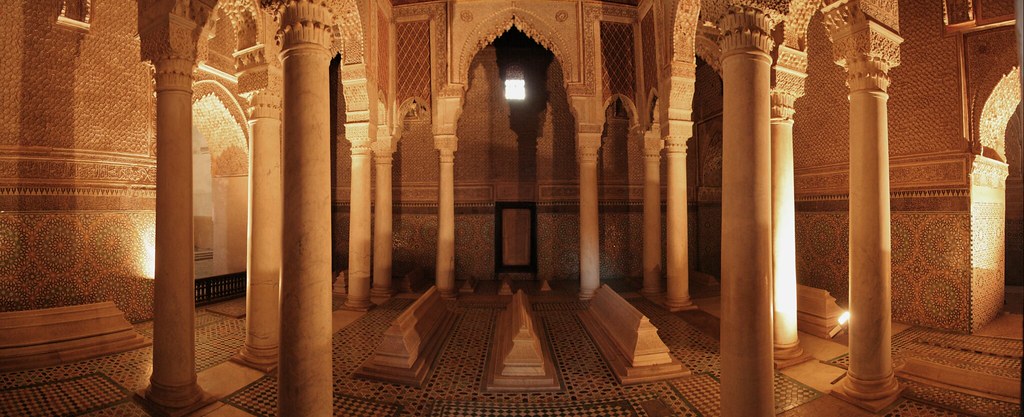
The Saadian Tombs are a series of Royal Burial chambers located within the city of Marrakesh. They were constructed during the period of the Saadi Sultanate, and they all contain typical elements found in Moorish Architecture. All of the tombs were constructed during the late 16th & early 17th century, and are considered masterpieces of the late-Moorish period.
26. Kasbah of Chefchaouen – Chefchaouen, Morocco
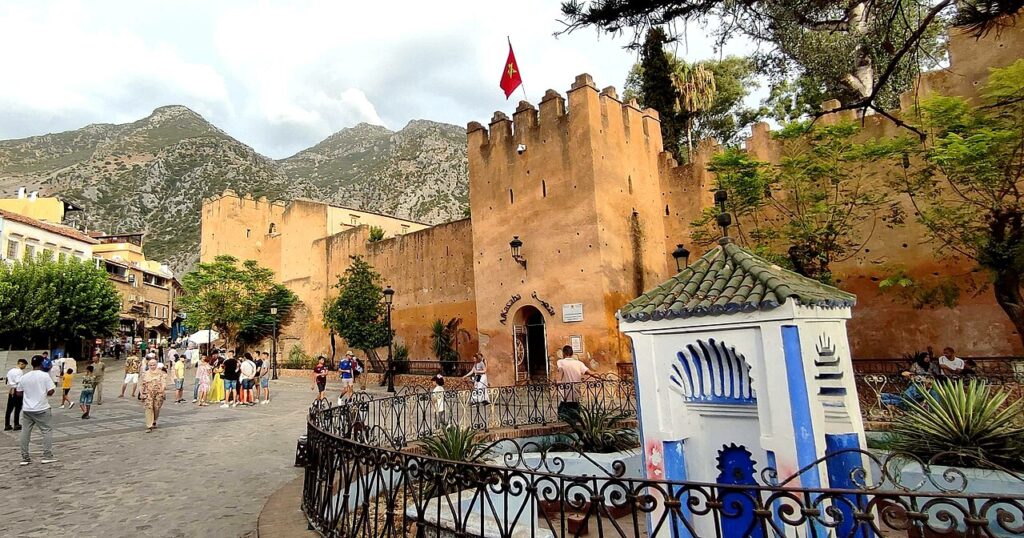
The Kasbah of Chefchaouen is a formidable citadel protecting the city of Chefchaouen, Morocco. The fortress was constructed in the late 15th century to help protect the northern edges of Moroccan territory. By this time, all of North Africa was under constant threat from various European Colonial Powers, including the Spanish, French, and Portuguese. Today, the city of Chefchaouen is a popular tourist spot, known for its well-preserved stone buildings painted with deep shades of blue.
Like Architecture of Cities? Sign up for our mailing list to get updates on our latest articles and other information related to Architectural History.
27. Bab Elgharbie – Oujda, Morocco
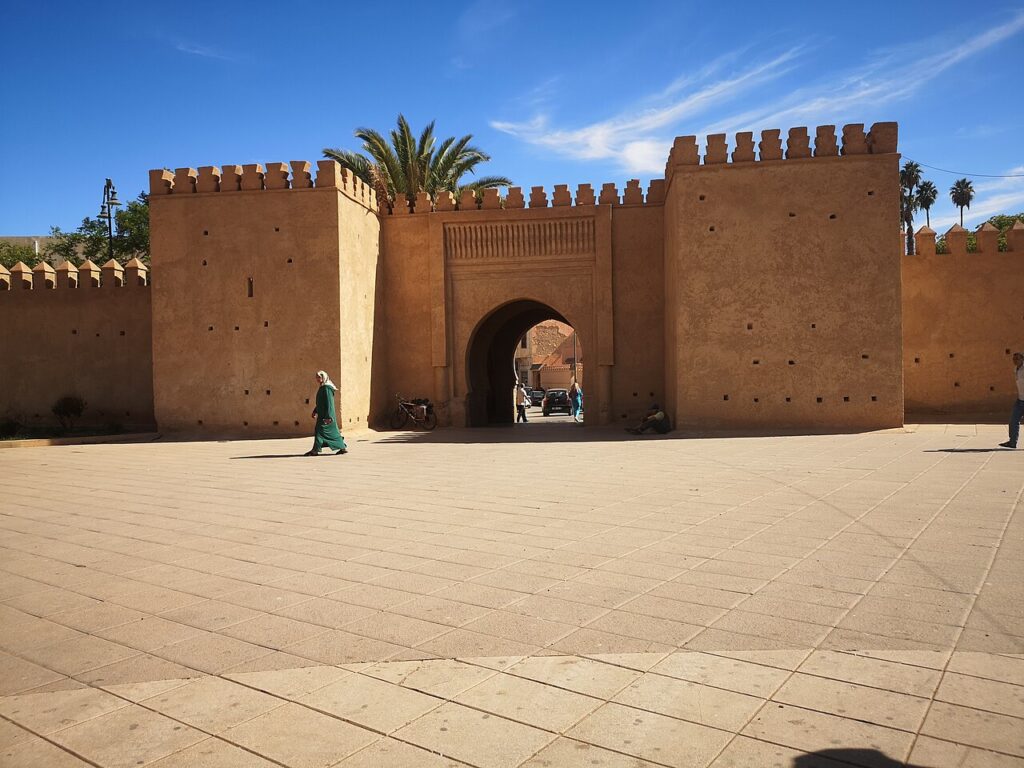
The Bab Elgharbie is another fortified gatehouse constructed by the Moors. The gate stands on the western edges of the fortified walls of Oujda. Oujda is a major city in Eastern Morocco. It was an important outpost for both the Almohad and Marinid Dynasties. Oujda was located on the road that connected Morocco with several Algerian cities, like Oran and Algiers.
28. Al Attarine Madrasa – Fez, Morocco
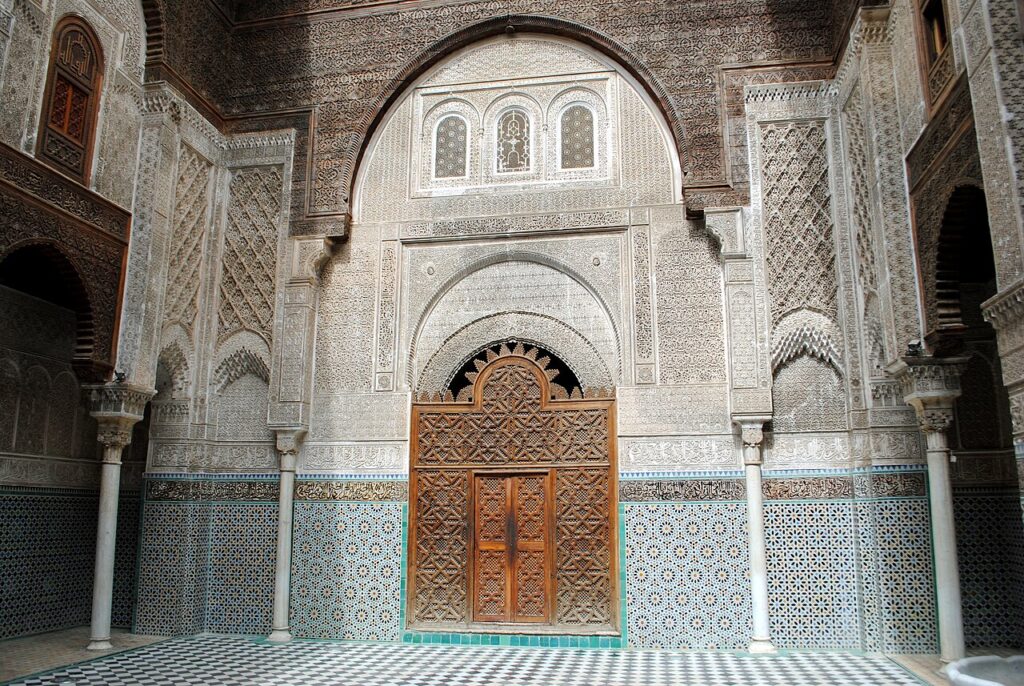
The Al Attarine Madrasa is an iconic work of Moorish Architecture, located in the city of Fez. It was constructed in the mid-1300s by the Marinids. The design is incredibly complex, and the image above gives a glimpse of some of the building’s exquisite detailing. “Madrasa” is an Arabic Word that describes an institution of learning, and the Al Attarine is one of the most important Madrasas in all of Morocco.
29. Moorish Castle of Sintra – Sintra, Portugal
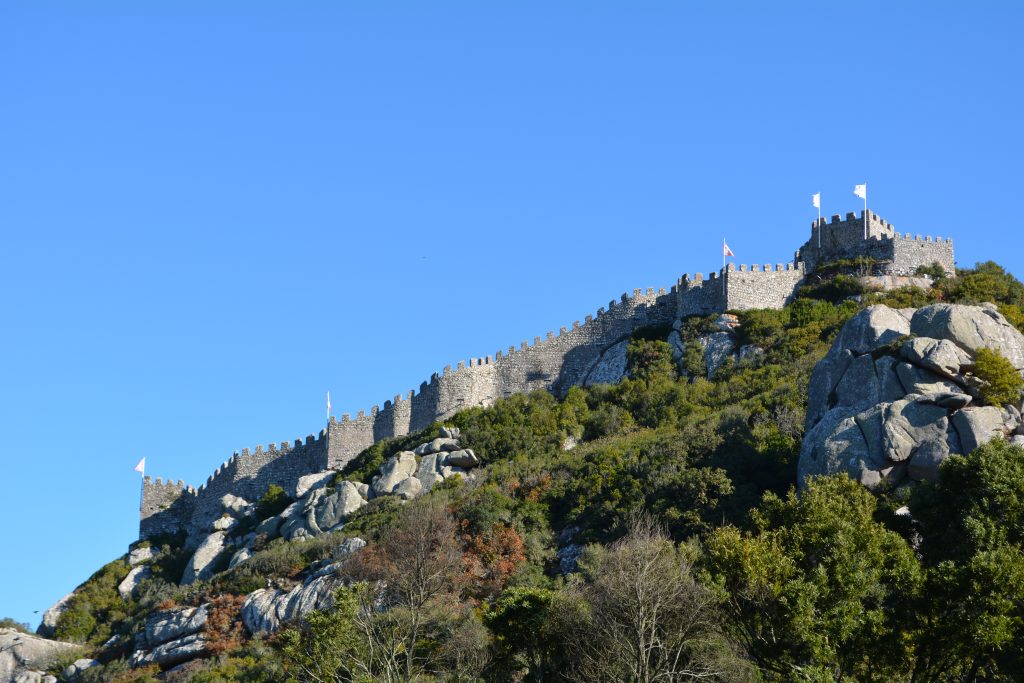
The Moorish Castle of Sintra is one of several impressive examples of Moorish Architecture within modern-day Portugal. The castle was originally constructed in the early 700s by the Umayyad Caliphate shortly after their invasion of the Iberian Peninsula. The fortress eventually came under Portuguese control after the Siege of Lisbon in the 12th century. Today, along with several other buildings such as Pena Palace, the Moorish Castle of Sintra is listed as a UNESCO World Heritage Site.
30. Citadel of Ouarzazate – Ouarzazate, Morocco

Located not far from Aït Benhaddou, the Citadel of Ouarzazate is another fortification dating to the late Moorish period. Ouarzazate is a small city located on the fringes of the Atlas Mountains. It sits along a major trade route connecting Morocco and the Sahara Desert. The Citadel of Ouarzazate is remarkably well preserved, and it’s one of the region’s major tourist attractions. The citadel is so well preserved that it’s been used in several Hollywood films and TV shows.
31. Moorish Churches of Palermo – Palermo, Sicily, Italy
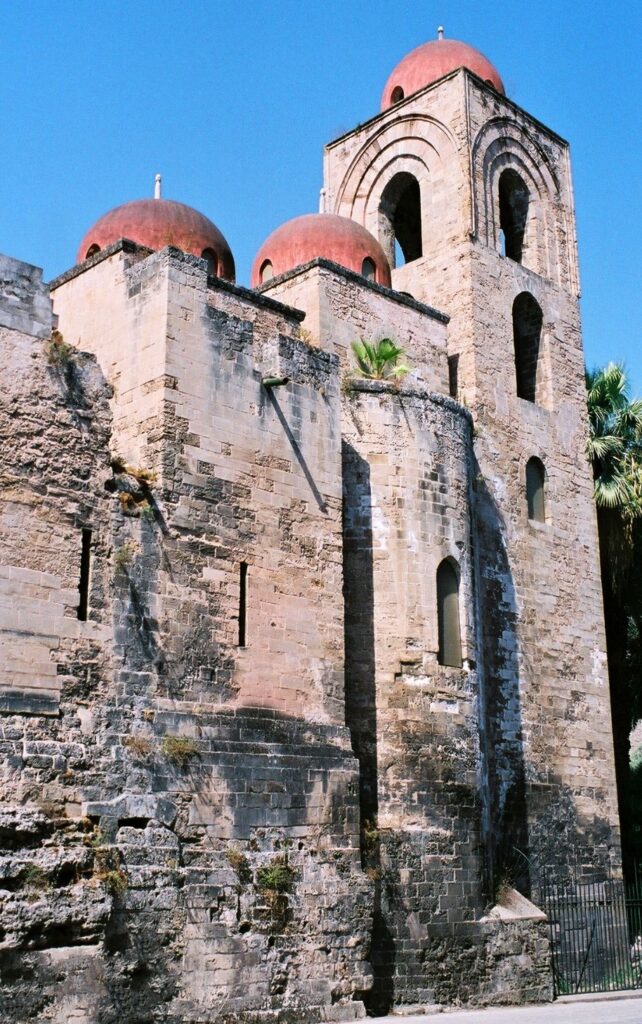
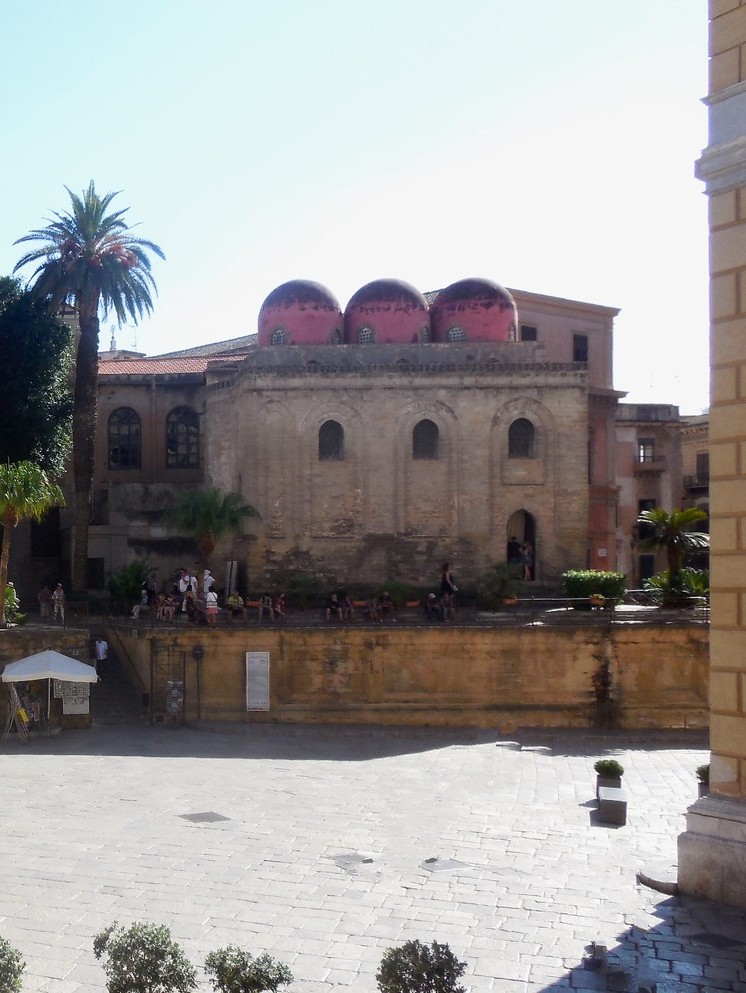
The Moors also controlled the Island of Sicily for a lengthy period of time. There are several remnants of Moorish buildings throughout Sicily, most notably in the city of Palermo. The left image above shows the Church of St John of the Hermits, which has a foundation dating back to the Byzantine period. The church was expanded by the Moors, and then by the Normans, who captured Sicily in the 11th century. The right image above shows the Church of San Cataldo, which also features a blend of elements from the Moorish and Norman periods.
32. Great Mosque of Tinmal – Tinmel, Morocco
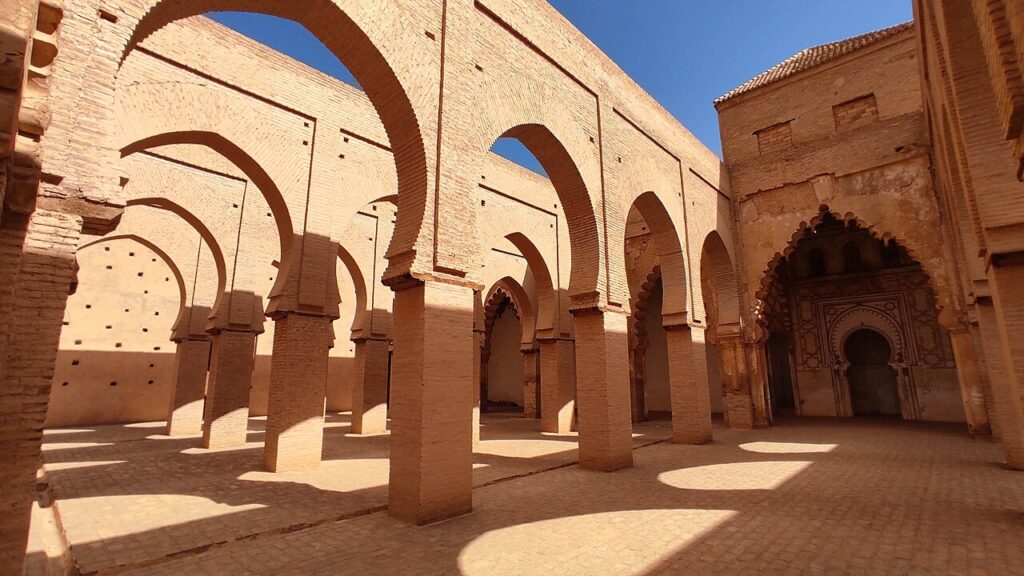
The Great Mosque of Tinmal is a large work of Moorish Architecture, located in the mountains of Morocco. It was constructed in the 12th century by the Almohad Caliphate. The structure now lies in ruin, but many of its original arches still stand. The Great Mosque of Tinmal contains many distinct Moorish elements, including Scalloped and Horseshoe arches, muqarnas, and other intricate geometries.
33. Calahorra Tower – Córdoba, Andalusia, Spain
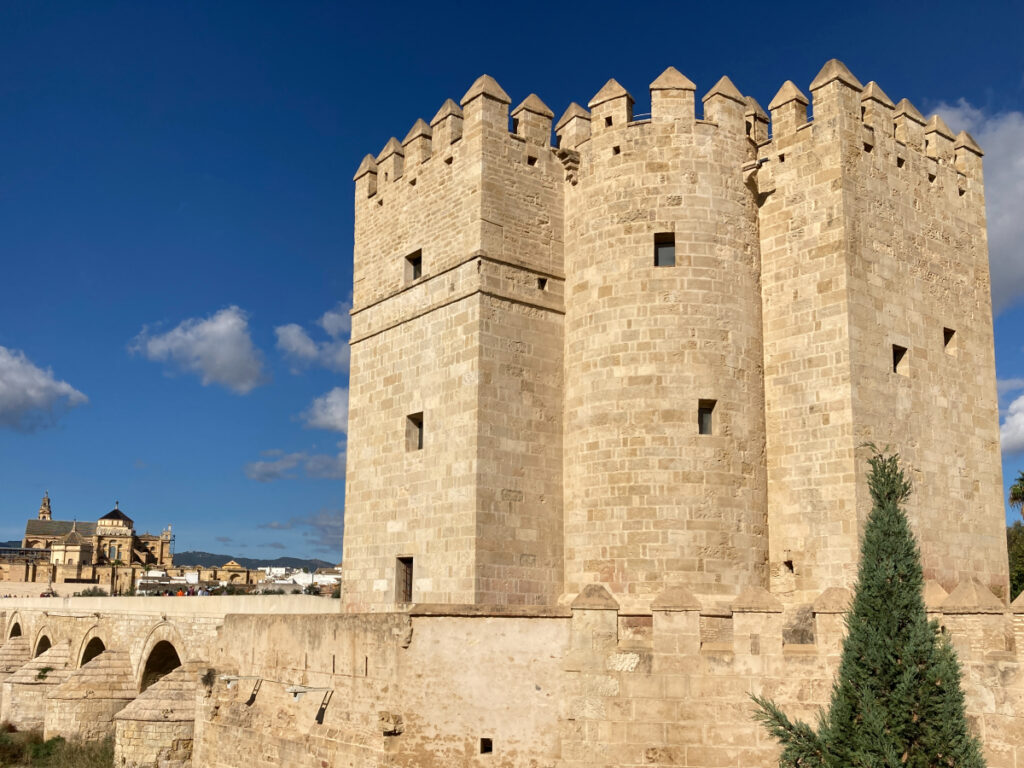
Córdoba was a major city in the ancient world, and it was one of the largest cities in the Roman province of Hispania. The Romans filled Córdoba with many monuments, including temples, mausoleums, and a large stone bridge. During the Middle Ages, the Moors transformed many of the city’s older Roman monuments. They expanded the old Roman Bridge of Córdoba and added several fortified elements, including the Calahorra Tower, which blends seamlessly with its Roman foundations.
34. North Gate – Meknes, Morocco
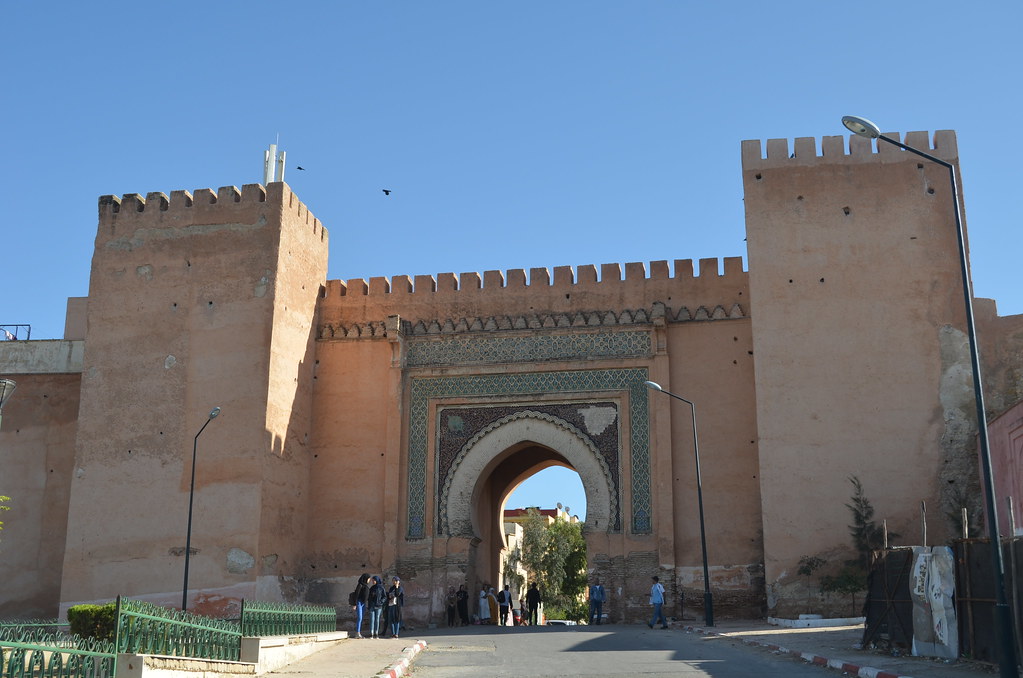
The North Gate is the second most impressive gate within the city of Meknes, closely following the Bab Mansur. The gate contains a large horseshoe archway that grants access to a northerly road toward Tangier. The gate is part of a much larger ring of defensive walls that encloses the Medina of Meknes. The Moors constructed similar medieval-style walls throughout their lands, which helped protect their cities for centuries.
35. Torre del Oro – Seville, Andalusia, Spain


The Torre del Oro, or Tower of Gold, is a 12-sided fortified structure that was once part of Seville’s city walls. The tower was constructed in the 13th century overlooking the banks of the Guadalquivir River. Over the centuries, the building has served many different purposes, including as a fortress, armory, and prison. Today, it houses a small maritime museum focused on Seville’s harbor.
What Happened to the Moors?
Eventually, the Moors of Al-Andalus were pushed out of the Iberian Peninsula after a movement known as the Reconquista. Al-Andalus was later incorporated into the modern nations of Spain and Portugal.
In North Africa, many Moorish Dynasties, including the Wattasids and the Saadis, continued to live on for centuries. Cities like Tunis, Algiers, Rabat, and Marrakesh remained Moorish Strongholds up until the Colonial Era. The Moorish regions of North Africa eventually transformed into the nations of Morocco, Algeria, Tunisia, and Libya.
Moorish Revival & Mudejar Architecture
The Moors also had a strong influence on several subsequent architectural styles.
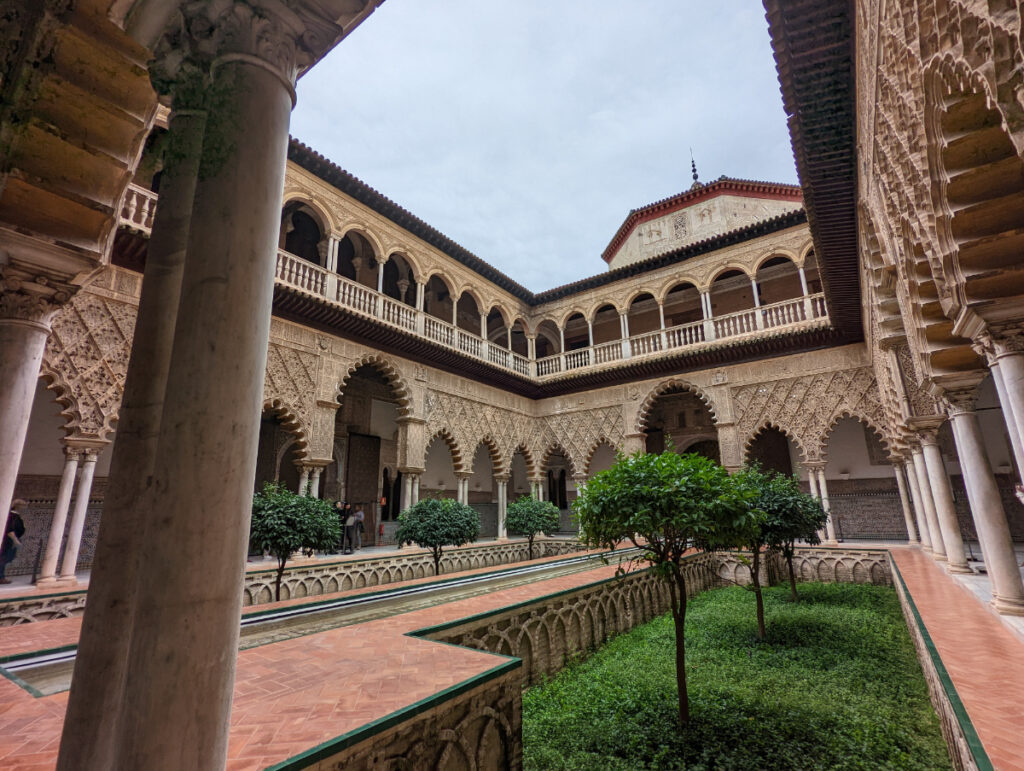
After the Moors were pushed out of Spain, many architects began to embrace a Moorish-inspired building form known as Mudejar Architecture. There are countless impressive Mudejar buildings located throughout Spain, including the Royal Alcazar of Seville and the churches of Teruel.
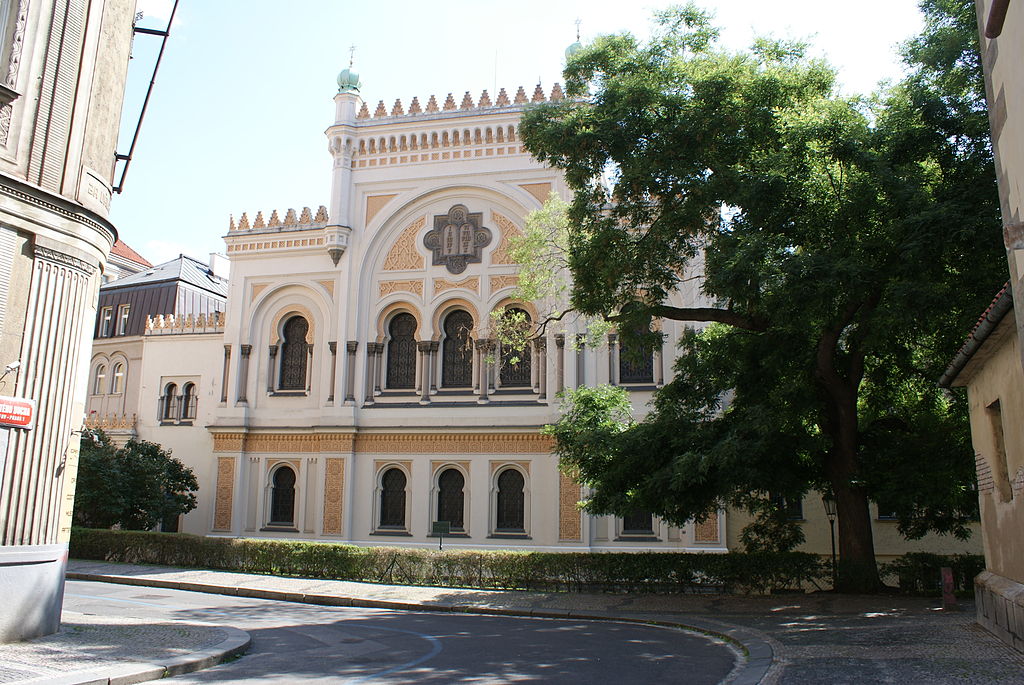
Moorish Architecture was also influential during the Revival Movement of the 19th century. Moorish Revival Architecture was popular in Europe and North America, and it was often used in Synagogues and other religious buildings. The image below shows the Spanish Synagogue in Prague, Czech Republic. It was completed in 1868 and utilizes many Moorish design elements, like Horseshoe Arches.
Legacy of Moorish Architecture
The Moors once controlled a vast territory, stretching from North Africa to the Iberian Peninsula. Today, there are countless amazing examples of Moorish Architecture located throughout the nations of Spain, Portugal, Tunisia, Algeria, and Morocco. Moorish Architecture has left a lasting legacy throughout these places, and it has influenced many contemporary designs. The buildings of the Moors continue to amaze and inspire to this day, and structures like the Alhambra and the Mezquita of Córdoba are among the world’s most visited attractions.

- About the Author
- Rob Carney, the founder and lead writer for Architecture of Cities has been studying the history of architecture for over 15 years.
- He is an avid traveler and photographer, and he is passionate about buildings and building history.
- Rob has a B.S. and a Master’s degree in Architecture and has worked as an architect and engineer in the Boston area for 10 years.
Like Architecture of Cities? Sign up for our mailing list to get updates on our latest articles and other information related to Architectural History.
Related Posts:
- Top 30 Examples of Ottoman Architecture

- Top 30 Examples of Revival Architecture
- The Top 6 Examples of Second Empire Architecture
- Top 20 Examples of Art Nouveau Architecture
- Top 20 Examples of Art Deco Architecture
- Top 25 Examples of Beaux Arts Architecture
- Top 20 Examples of Baroque Revival Architecture
- Top 25 Examples of Renaissance Revival Architecture