The World’s Greatest Opera Houses
Before the days of television and the internet, art forms like opera and theater were society’s main sources of entertainment. Opera reached its peak in popularity in the 19th century, at which point cities across the globe were constructing massive and elaborate opera houses. These buildings continue to be important cultural institutions in the modern age, and many still hold frequent performances. The list below will highlight 25 of the World’s Greatest Opera Houses, including early examples like the Opera Garnier in Paris, and more modern structures, like the Sydney Opera House.
The Design of an Opera House
Most opera houses were designed using the same formula. Guests entered through a reception hall – a space where they could congregate and converse with one another.
After this reception hall, attendees would move to the auditorium – a large open space, that was often decorated with draperies, intricate gold trim, and other Baroque details. The auditoriums of all opera houses are designed with acoustics in mind and have radial seating facing a central stage.
Especially during the Golden Age of Opera, attendees would dress in their finest clothes and jewelry, ready to show off their wealth.
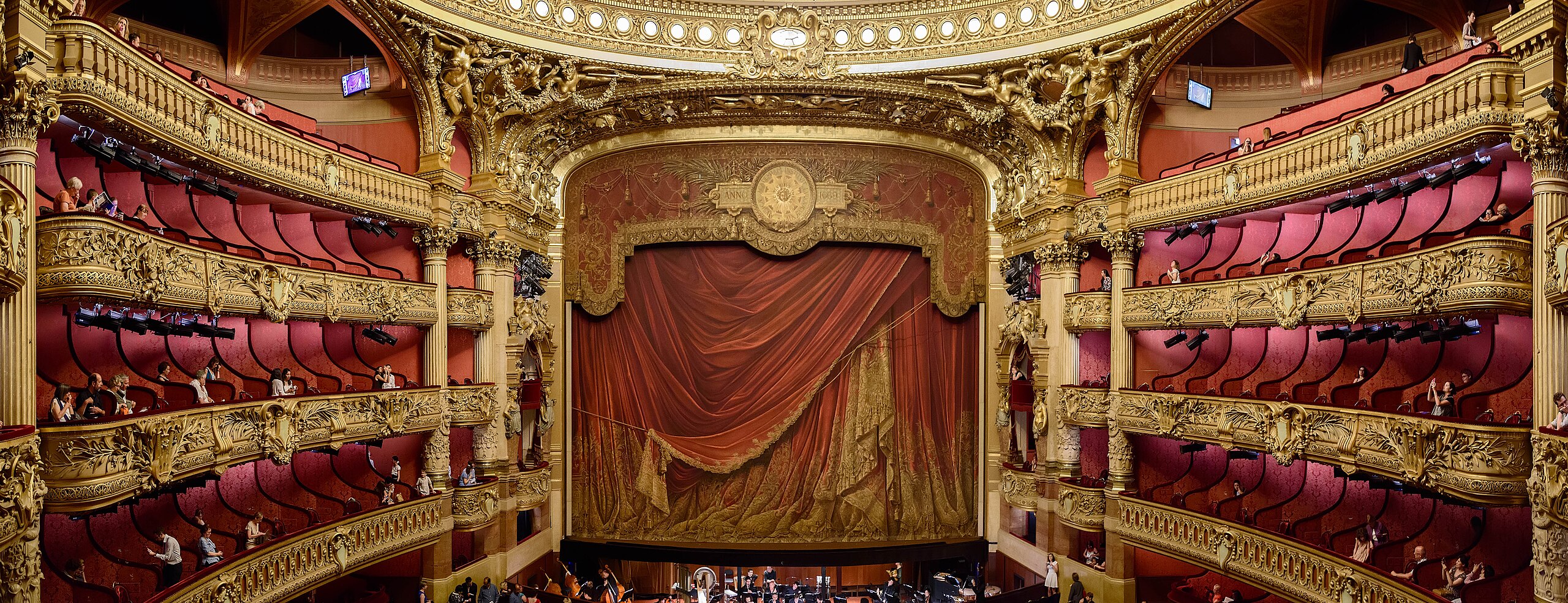
When were Opera Houses Built?
Opera Houses were mostly constructed during the Golden Age of Opera, during the mid to late 19th century. However, opera and theater are still popular in the modern age. Today, the world has many contemporary opera houses, including the Sydney Opera House (1973) and the Oslo Opera House (2007)
Characteristics of Opera Houses
Although Opera Houses vary drastically, many of them share similar design elements and building features.
Baroque Interiors
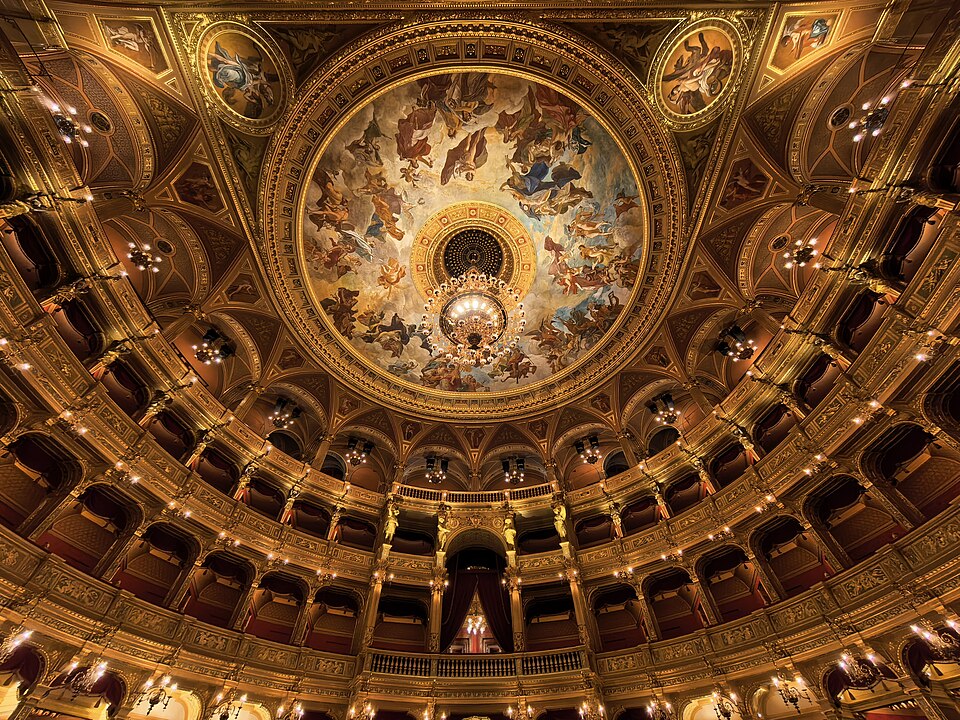
Baroque Interiors can be found in many different opera houses. This is particularly evident in auditoriums, which often have Baroque details like gold trim, intricate decorations, and velvet draperies. The image above shows the interior of the Budapest Opera House. The space has a massive Baroque Fresco, and it’s decorated with lively sculptures and gold details.
Revivalist Exteriors
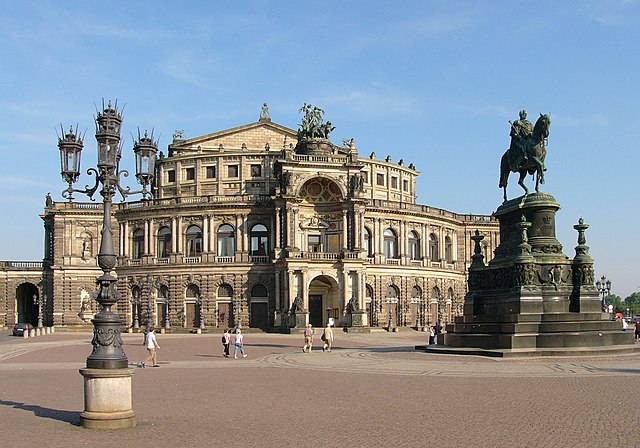
Many Opera Houses were constructed during the Revival Age of the 19th century. As such, many of them have Revivalist exteriors designed in the NeoRenaissance, NeoBaroque, and NeoClassical styles. The image above shows the Semperoper in Dresden, Germany. This opera house is designed using an eclectic blend of Renaissance & Baroque elements.
Monumentalism
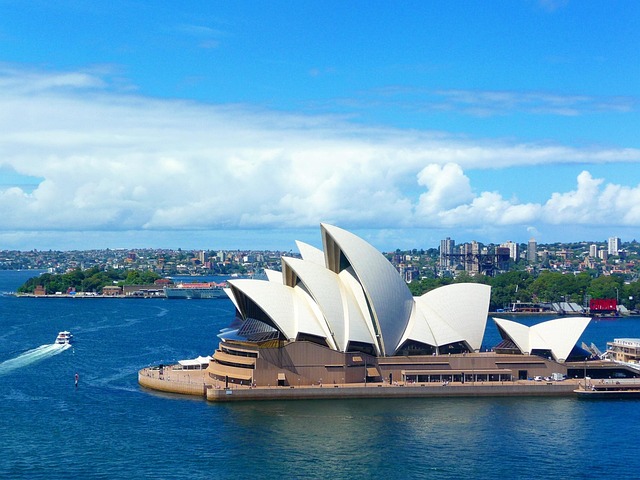
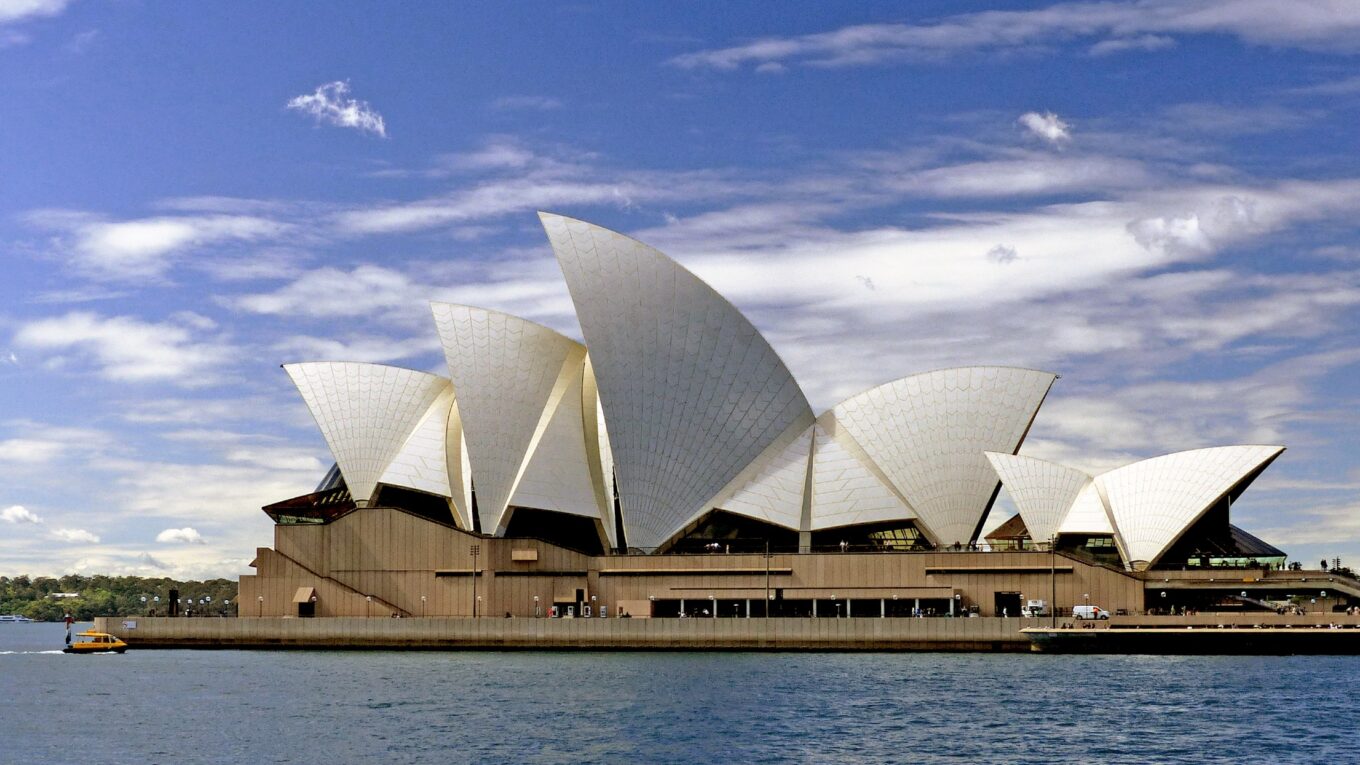
Opera Houses are inherently large buildings. They are built to hold hundreds of people, and the auditoriums also need extremely high ceilings for acoustical performance. Many modern opera houses utilize Monumentalism in an effort to create these large spaces. In this image, you can see the Sydney Opera House, which is designed with massive monumental curving forms that were inspired by the sails of ships.
What Are the World’s Greatest Opera Houses?
The list below will highlight some of the world’s largest and most well-known Opera Houses and provide an in-depth look at what makes these structures so iconic.
1. Opéra Garnier – Paris, France
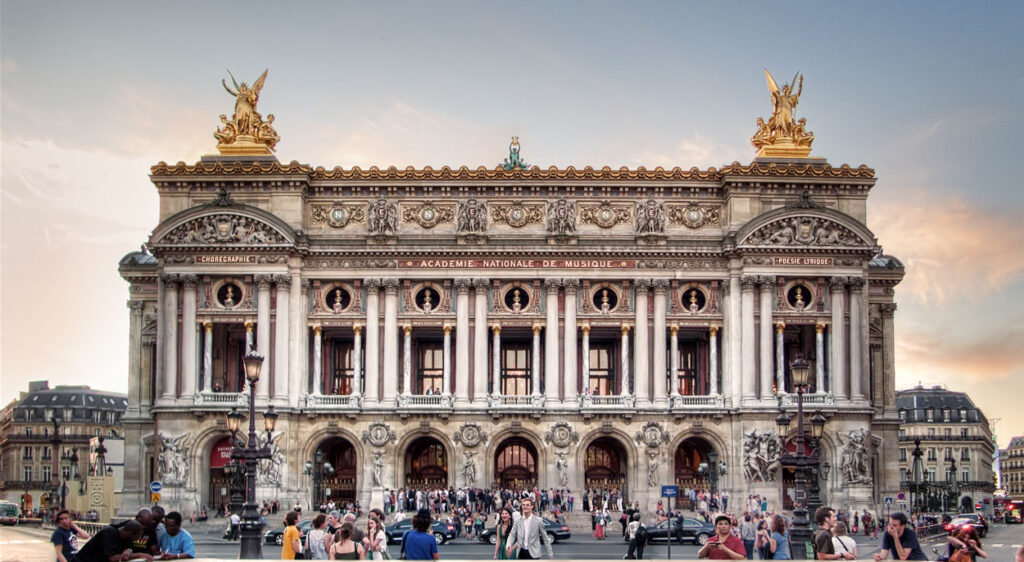
The Opéra Garnier is one of the world’s most well-known opera houses. It’s located in the 9th arrondissement of Paris, and it overlooks a large square known as Place de l’Opéra. The Opéra Garnier was completed in 1875, during the Golden Age of Opera. Its exterior was designed in the Beaux Arts Style, and its interior contains many Baroque elements.
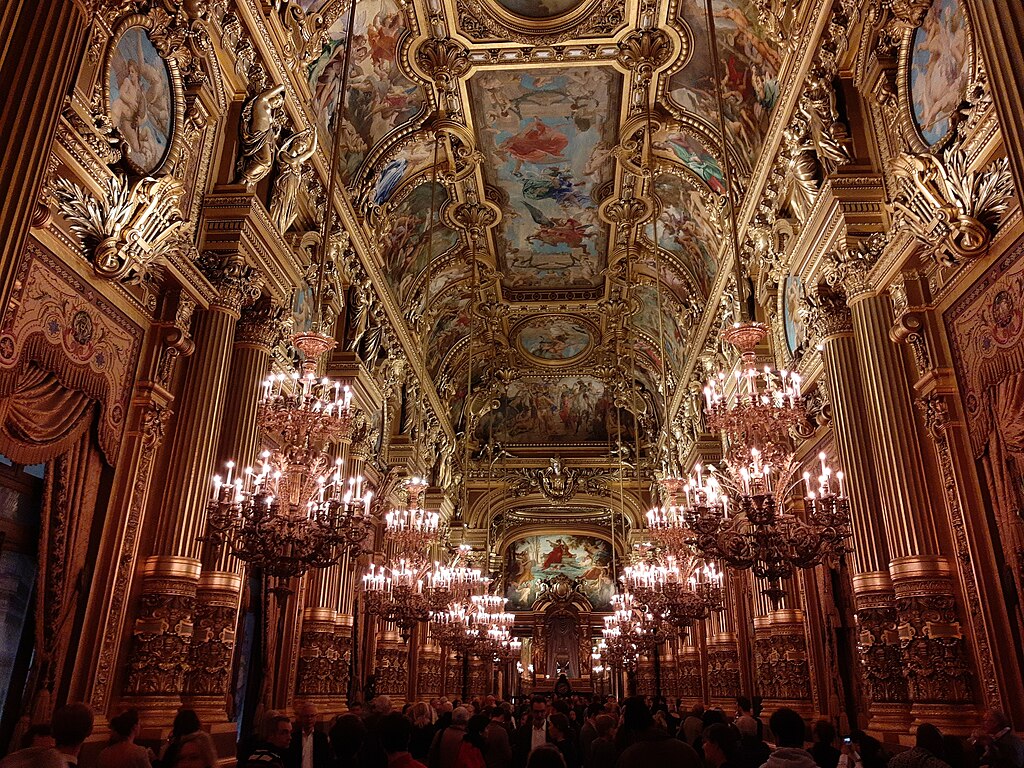
The Opéra Garnier follows the same template as many other Opera Houses from this period. In the image above, you can see one of the reception halls that connects with the main concert hall. These rooms were where the 19th-century Bourgeoisie of Paris would congregate before events. The Opéra Garnier was built with the finest details and materials, and it was one of the largest and most opulent opera houses of the 19th century.
2. Vienna State Opera – Vienna, Austria
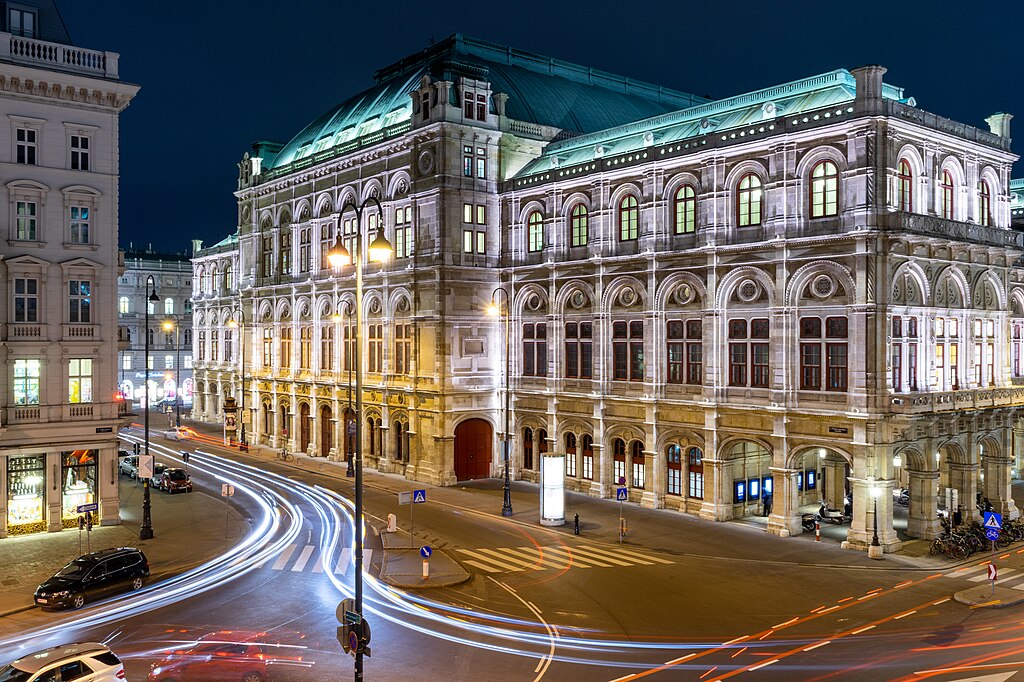
Vienna is the capital of Austria, and a city known for its vibrant culture and art scene. Vienna was once surrounded by a huge network of defensive walls, which were torn down in the mid-19th century. In their place, the city developed a large ring of parks, public buildings, and wide boulevards known as the Ringstrasse. The Vienna State Opera House was one of the first buildings constructed along the Ringstrasse, and it was completed in 1869.
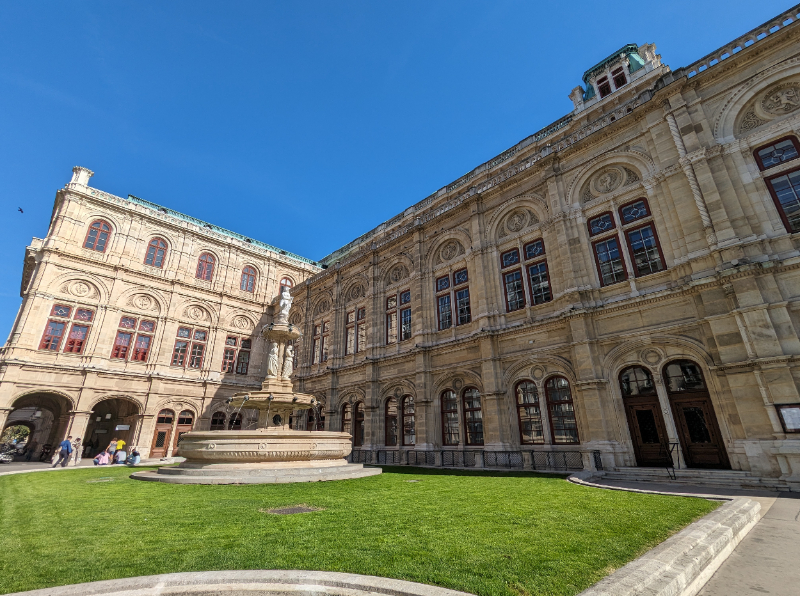
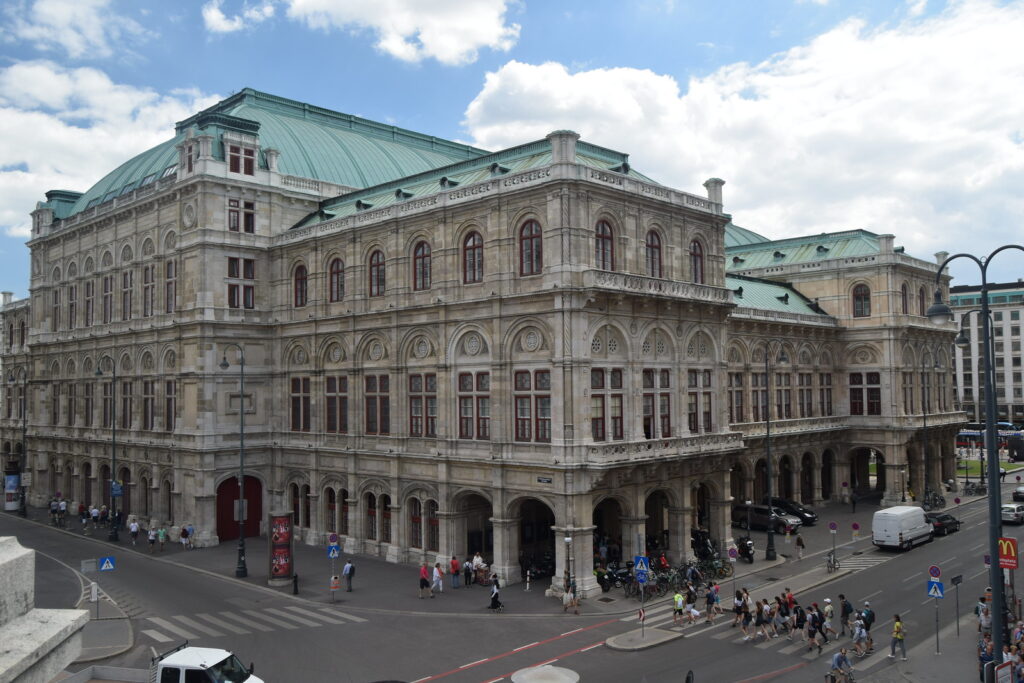
The Vienna State Opera House was designed in the Renaissance Revival Style. Its exterior illustrates all of the major ideas within the Renaissance Movement, including symmetry, balance, proportion, repetition, and hierarchy. This Revivalist exterior blends seamlessly with the other large buildings located along the Ringstrasse. Today, the Vienna State Opera House is one of the most visited attractions within the city, and it holds frequent opera, theater, and ballet performances.
3. Sydney Opera House – Sydney, Australia
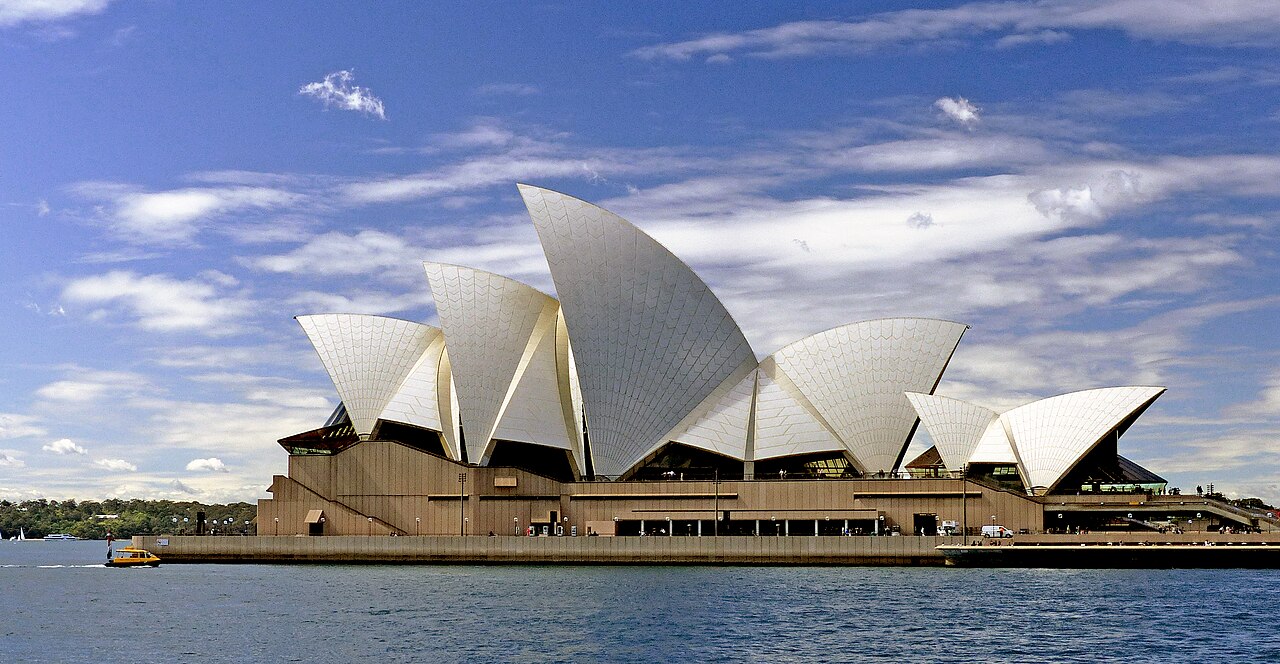
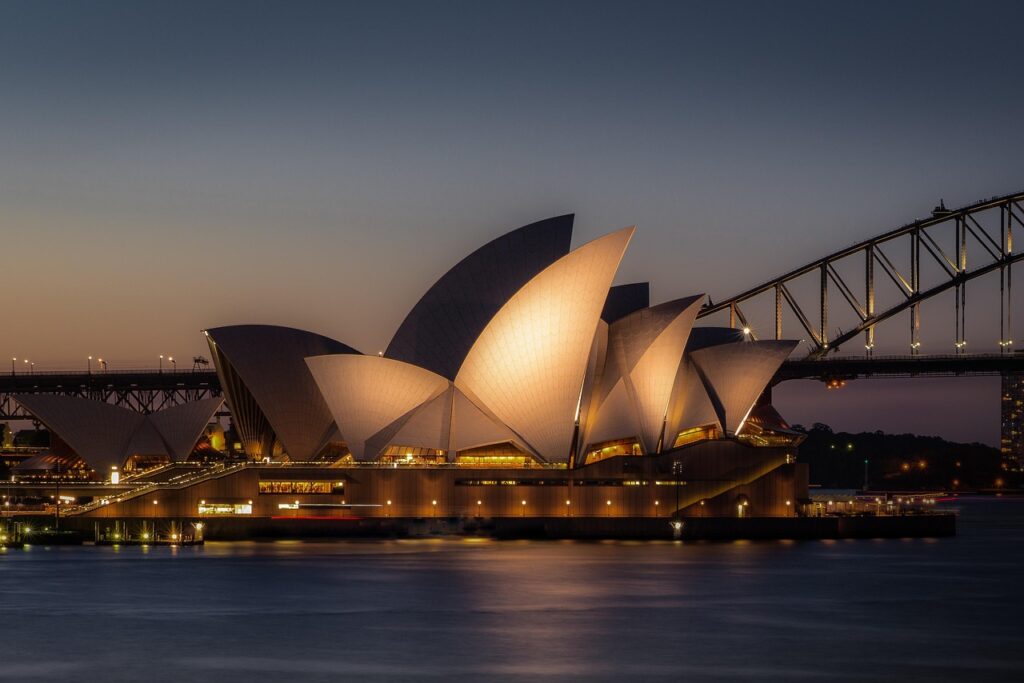
The Sydney Opera House is one of the world’s most recognizable buildings and a symbol of Sydney. The building is relatively new when compared to many other opera houses in this list. It was completed in 1973 and designed by a Danish architect named Jørn Utzon. Utzon won a design contest for the building with his concept inspired by the sails of ships passing through Sydney Harbor.
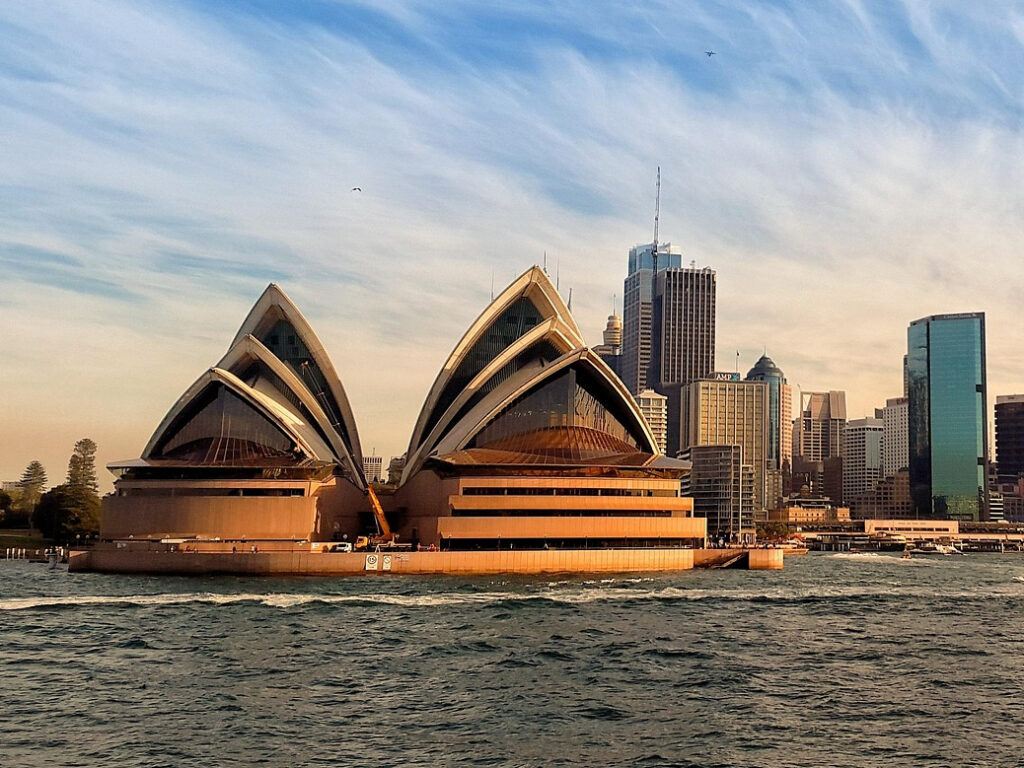
The design of the Sydney Opera House is both practical and beautiful. The concave concert halls have excellent acoustics, making them ideal for musical and theatrical performances. Despite being more modern than the Opera Houses of the 19th Century, the Sydney Opera House still contains some of the same characteristics. For instance, guests first enter into a series of large reception halls, which then lead to the main auditoriums.
4. Semperoper – Dresden, Saxony, Germany
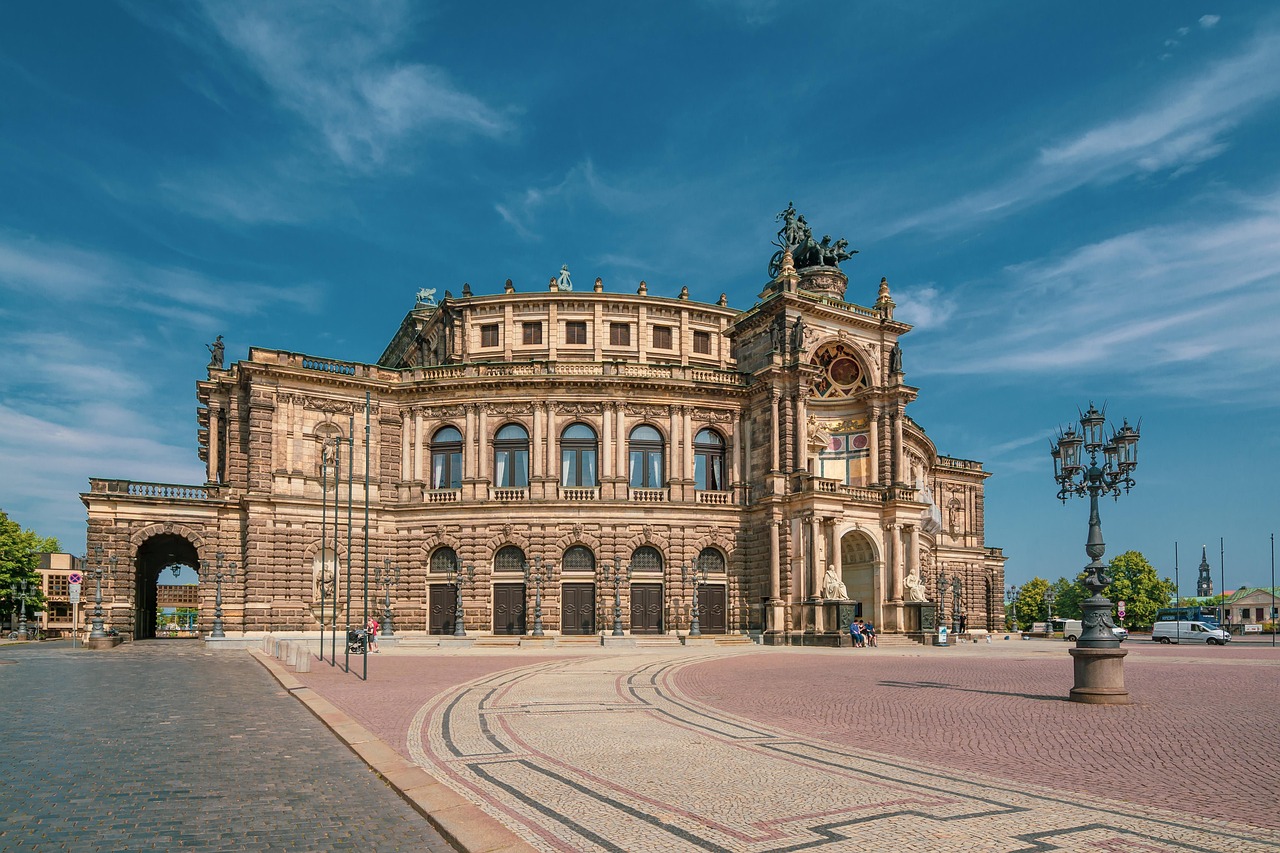
The Semperoper is an impressive Opera House located in Dresden, Germany. The building was designed in a very eclectic style, borrowing elements from both Renaissance Revival & Baroque Revival Architecture. These two styles are seamlessly blended to create one cohesive building. The Semperoper was completed in 1878, but it was later rebuilt after being destroyed in the Allied Bombing of Dresden in WWII.
5. Teatro Massimo – Palermo, Sicily, Italy
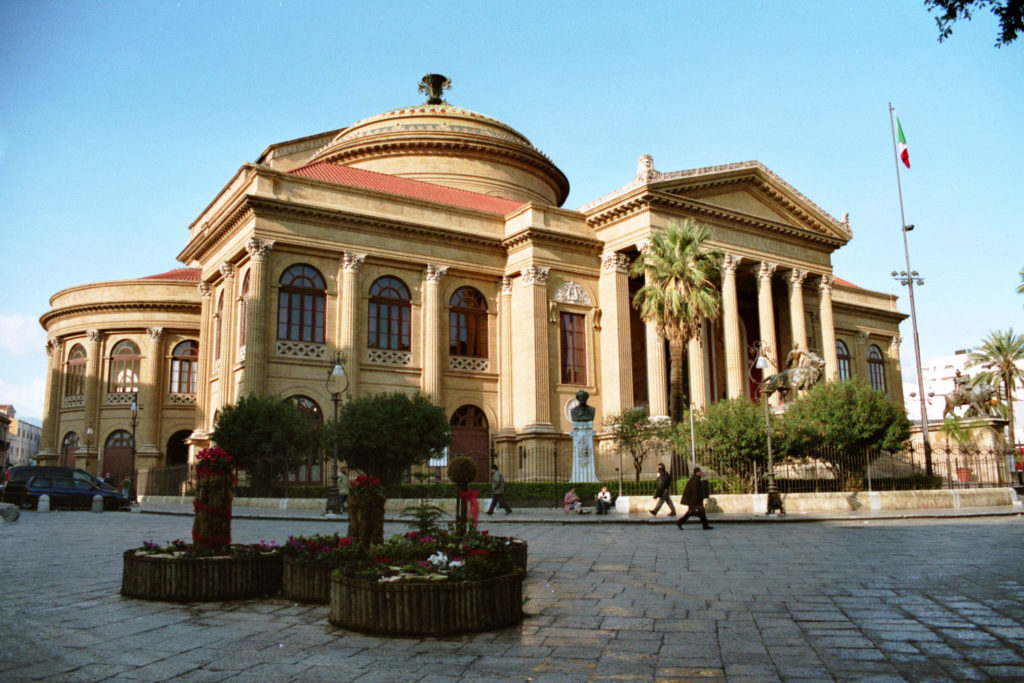
The Teatro Massimo is a huge Opera House located in the heart of the Sicilian city of Palermo. The building was completed in 1897, when opera performances were at their peak in popularity. The Teatro Massimo was designed in the Neoclassical Style, and it contains many Neoclassical elements like domes, round arches, pediments, and Corinthian columns. The venue was designed to hold nearly 1,400 people, making it one of the largest opera houses of the 19th century.
6. Mariinsky Theatre – St. Petersburg, Russia
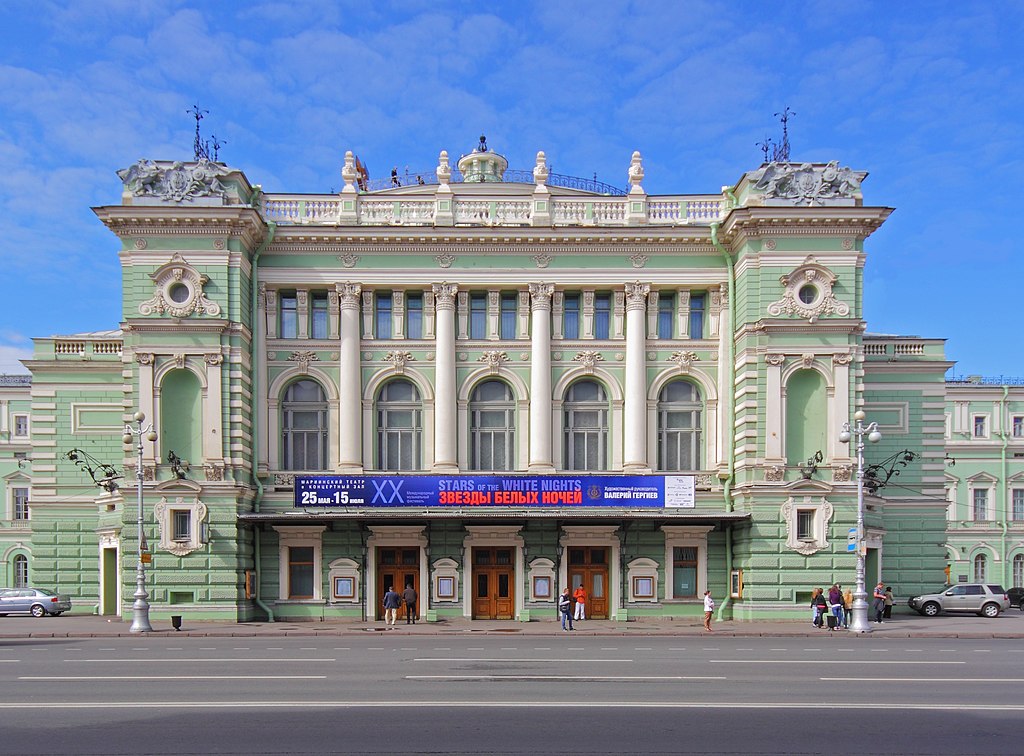
Mariinsky Theatre is a renowned opera house located in the center of St. Petersburg, Russia. The theater opened in 1860, at a time when St. Petersburg was the capital of the Russian Empire. It was designed in the Baroque Revival Style, borrowing many elements from other Baroque buildings in the city. The theater has hosted many of Russia’s greatest composers, such as Pyotr Ilyich Tchaikovsky.
7. The Hungarian State Opera House – Budapest, Hungary
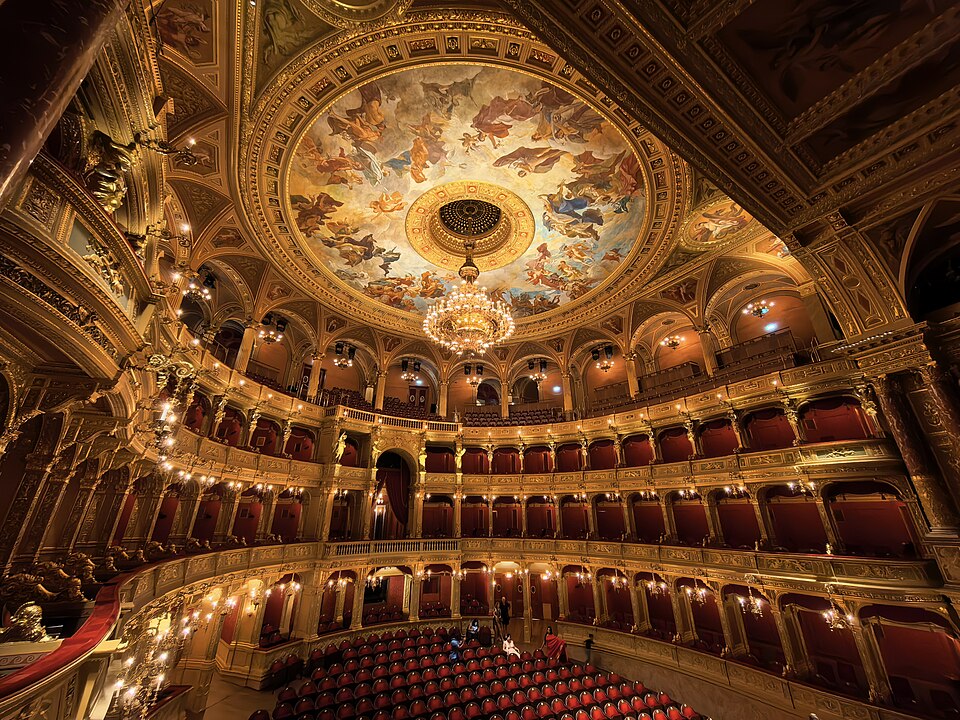
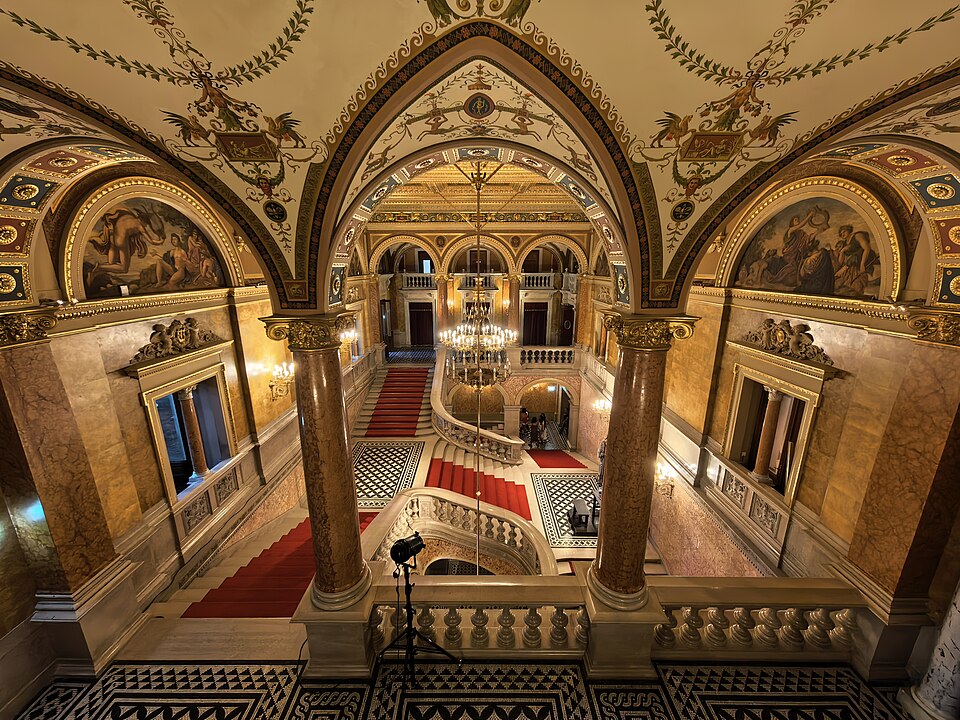
The Hungarian State Opera House is a large performing arts venue located in central Budapest. It was constructed shortly before the city hosted a World’s Fair, known as the Hungarian Millennium Exhibition. The event took place in 1896, and dozens of incredible Revivalist structures were constructed in preparation for it. The Hungarian State Opera House was designed in the Renaissance Revival Style, and it’s located along the infamous Andrássy Avenue.
8. Oslo Opera House – Oslo, Norway
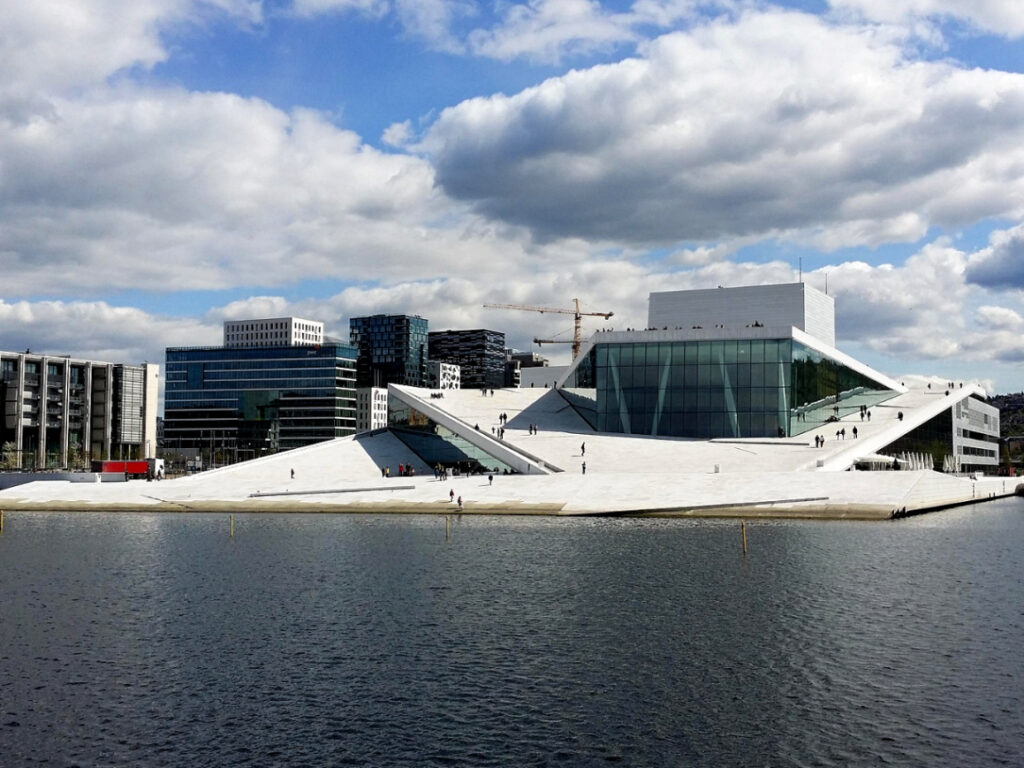
Oslo is the capital of Norway and a city filled with both historic and contemporary architecture. One of the city’s most popular attractions is the Oslo Opera House, which was completed in 2007. The building’s design shows great use of Monumentalism in Architecture. It has a massive sloping ramp that gradually enters the waters of Oslo’s harbor. This ramp is an extremely popular hangout spot, and it slopes upward to one of the greatest viewpoints within all of Oslo.
9. Staatstheater – Stuttgart, Germany
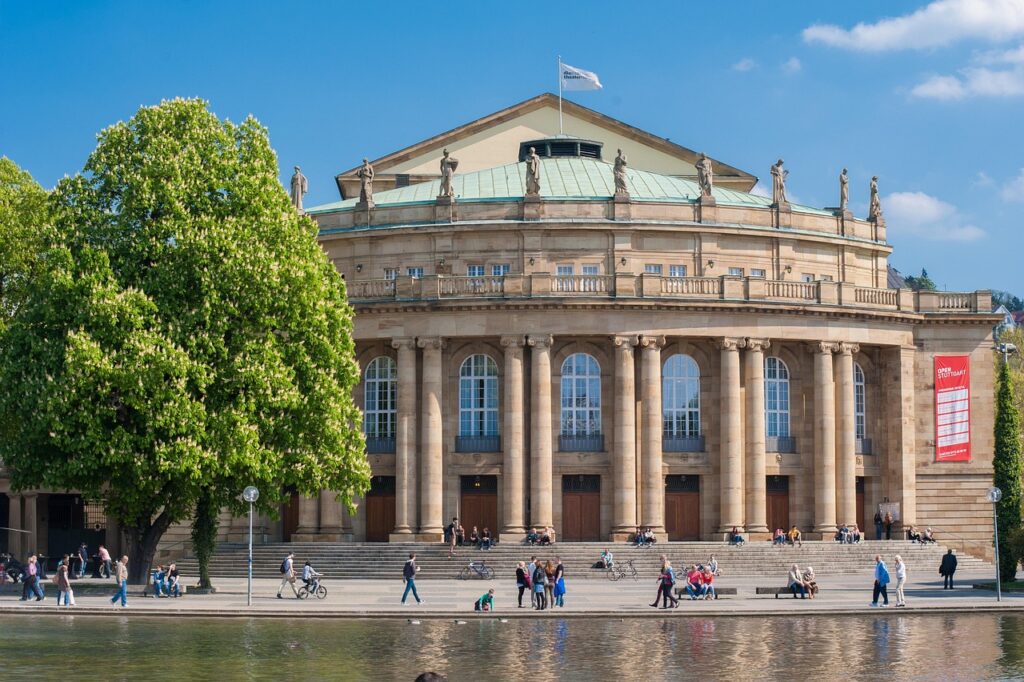
The Staatstheater is another impressive opera house that was completed in 1912. It survived the bombs of WWII, and today it’s one of Stuttgart’s most cherished historic buildings. The Staatstheater was designed by an architect from Munich in the Neoclassical Style. It has many typical Neoclassical characteristics, including a bold & simple form, classical columns & statues, and a lack of color.
10. La Monnaie – Brussels, Belgium
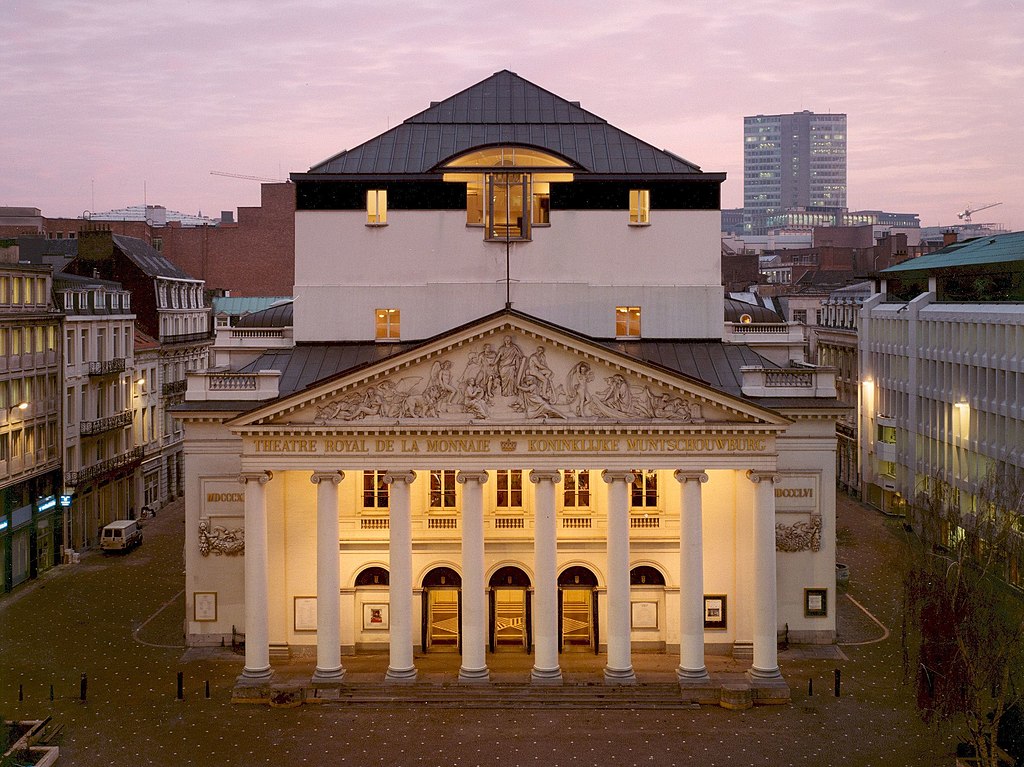
La Monnaie is a large performing arts venue located in Brussels, Belgium. The building is designed in the Neoclassical Style, with a large classical pediment supported by eight Ionic Columns. La Monnaie was constructed in the mid-19th century, shortly after Brussels became the capital of the Independent Kingdom of Belgium. Today, Brussels is a bustling capital city and home to the Parliament of the European Union.
11. Teatro Colón – Buenos Aires, Argentina
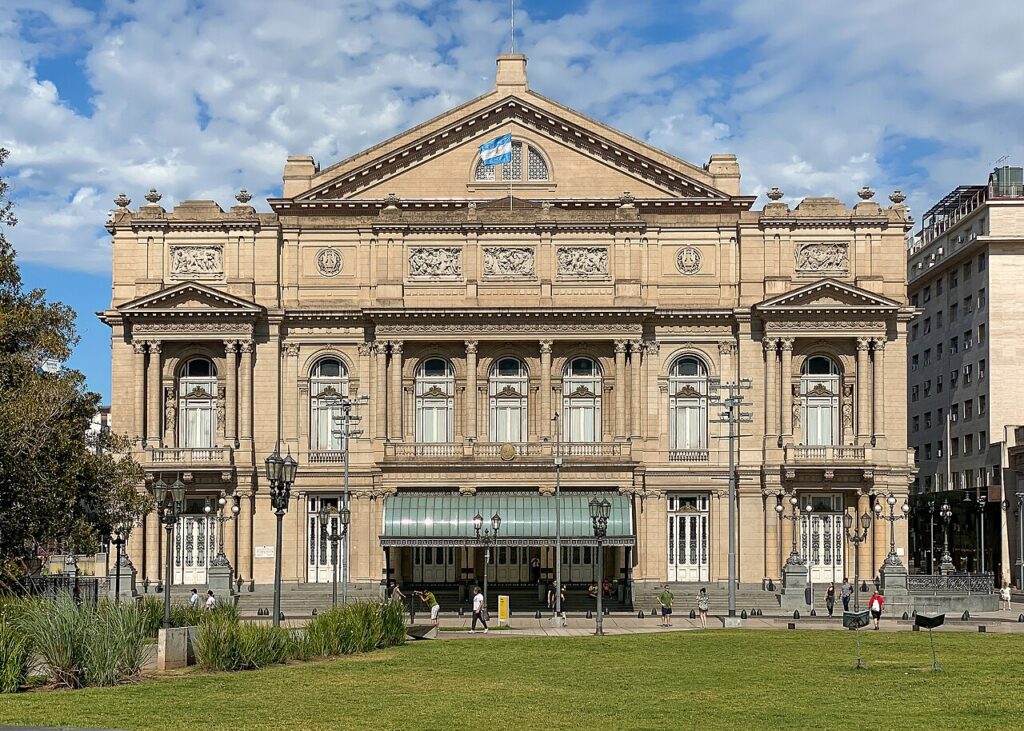
There are several impressive Opera Houses located throughout South America, especially in Brazil and Argentina. The Teatro de Colón is a great example of this. It was completed in 1908 and is among the continent’s greatest performing arts venues. The Teatro de Colón was designed using an eclectic blend of architectural styles. Its exterior uses many characteristics from the Renaissance Style, while its Baroque interior is much more intricate and lavish.
12. Alte Oper – Frankfurt, Germany
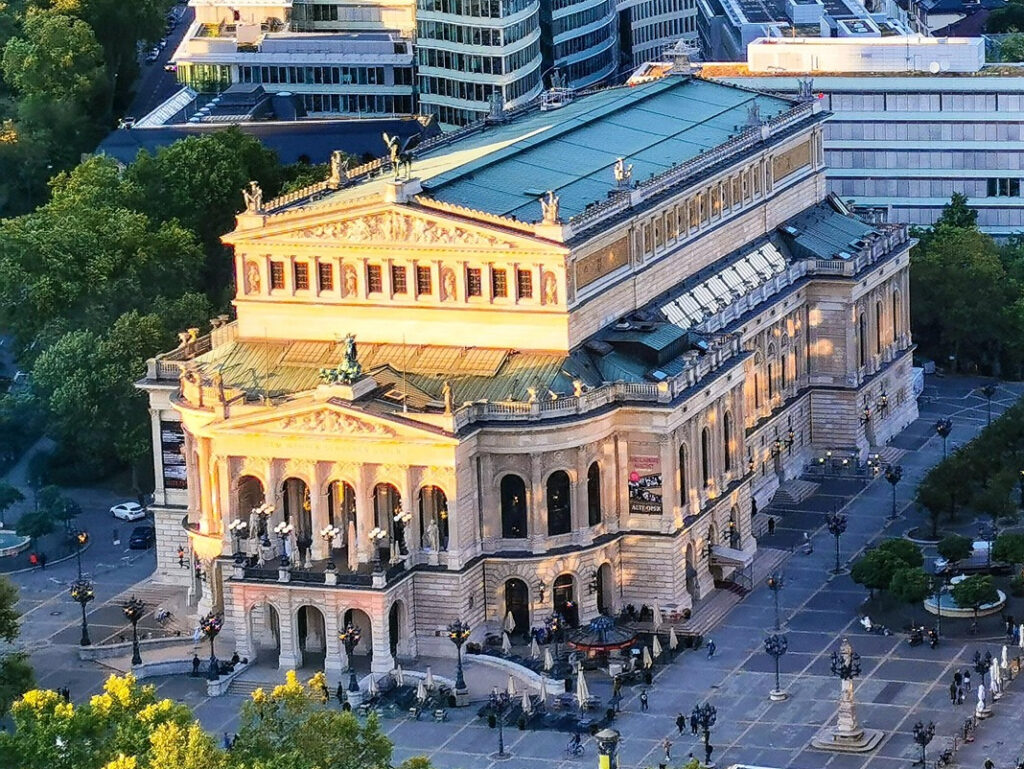
The Alte Oper is a large opera house in Frankfurt that originally opened in 1880. Like so much of the city of Frankfurt, the Alte Oper was completely destroyed in WWII. The structure was subsequently rebuilt during the 1970s. The Alte Oper was designed with an impressive Revivalist exterior. Today, these same NeoRenaissance facades overlook a large urban plaza filled with trees, fountains, and benches.
13. Lviv Theatre of Opera and Ballet – Lviv, Ukraine
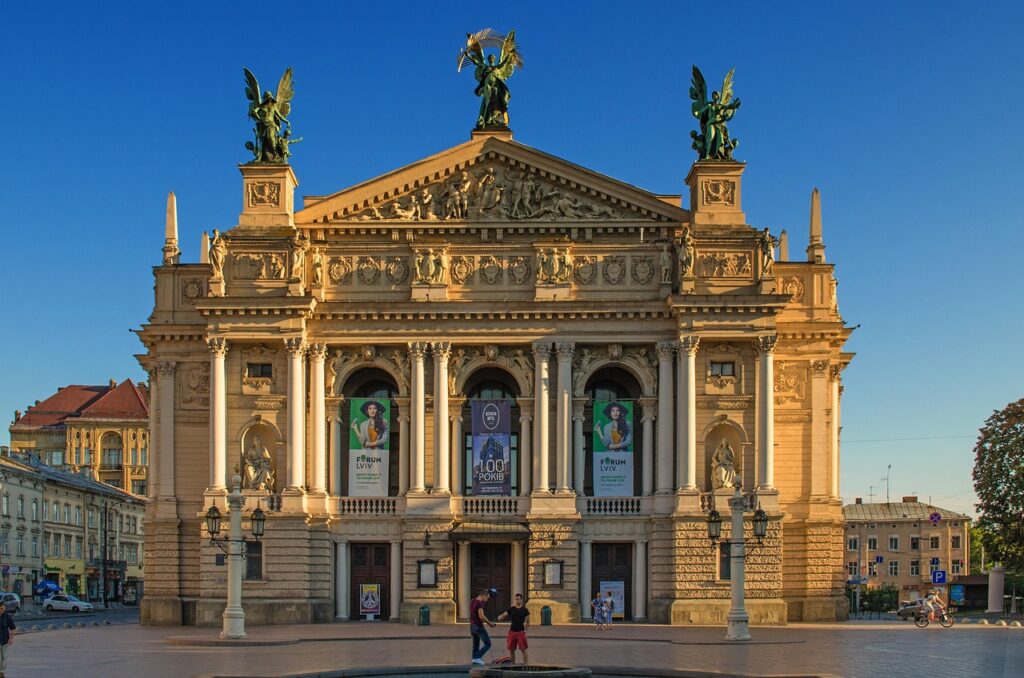
Lviv is an amazing city filled with lots of historic buildings. It’s a UNESCO World Heritage Site filled with many palaces and churches dating to the Renaissance and Baroque Periods. Lviv also contains an imposing opera house that was completed in 1900. The Lviv Theatre of Opera and Ballet was designed using an eclectic blend of NeoRenaissance and NeoBaroque elements, helping it blend in nicely with the city’s other monuments.
14. Hanoi Opera House – Hanoi, Vietnam
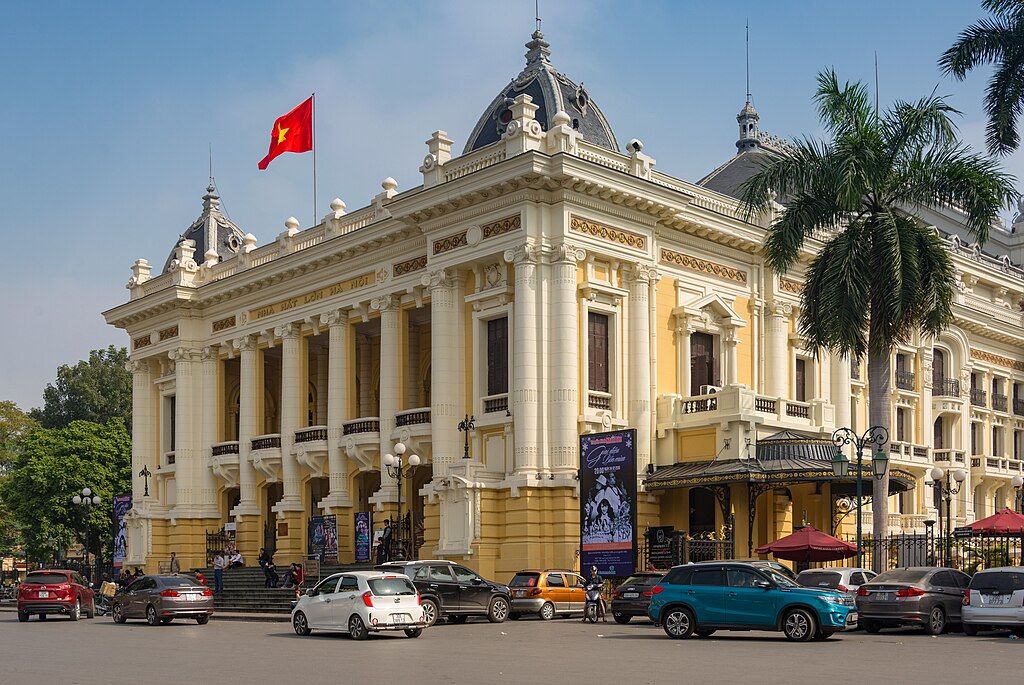
The Hanoi Opera House is a relic from the Colonial Period in Vietnam. It was constructed by the French, who established a colony in the region in 1858. The Hanoi Opera House was completed in the early 1900s and was designed using a blend of Neoclassical and Baroque Revival details. The building looks similar to many others found throughout French cities like Paris, Bordeaux, and Marseille.
Like Architecture of Cities? Sign up for our mailing list to get updates on our latest articles and other information related to Architectural History.
15. Bavarian National Theatre – Munich, Bavaria, Germany
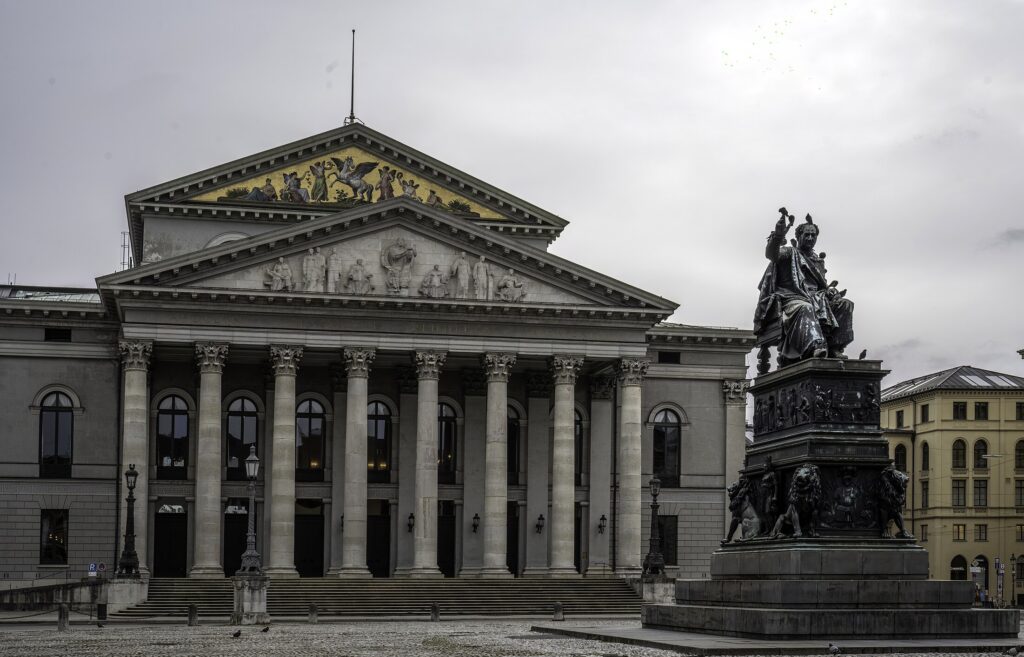
The Bavarian National Theater is a renowned venue located adjacent to the Residenz Palace in central Munich. The structure was originally built in 1818, but it was damaged and rebuilt at several points throughout history. The current theater was constructed in the modern age during the great post-war rebuilding of Munich. Today, the venue hosts frequent events for the Bavarian State Opera, Orchestra, and Ballet.
16. Municipal Theater of São Paulo – São Paulo, Brazil
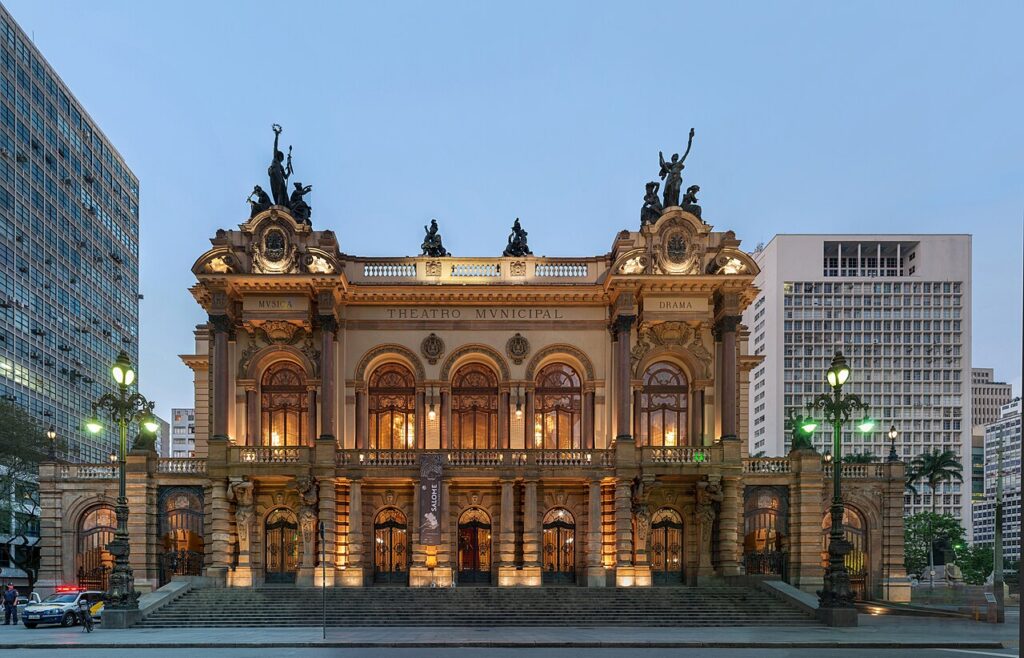
The Municipal Theater of São Paolo is an impressive building that was completed in 1911. It was designed in an eclectic style, combining elements from Renaissance Revival Architecture with many Beaux Arts characteristics. The building’s interior also has a slight influence from the Art Nouveau Style. The Municipal Theater is located in a prominent area within São Paolo, overlooking the Praça Ramos de Azevedo.
17. Yerevan Opera Theatre – Yerevan, Armenia
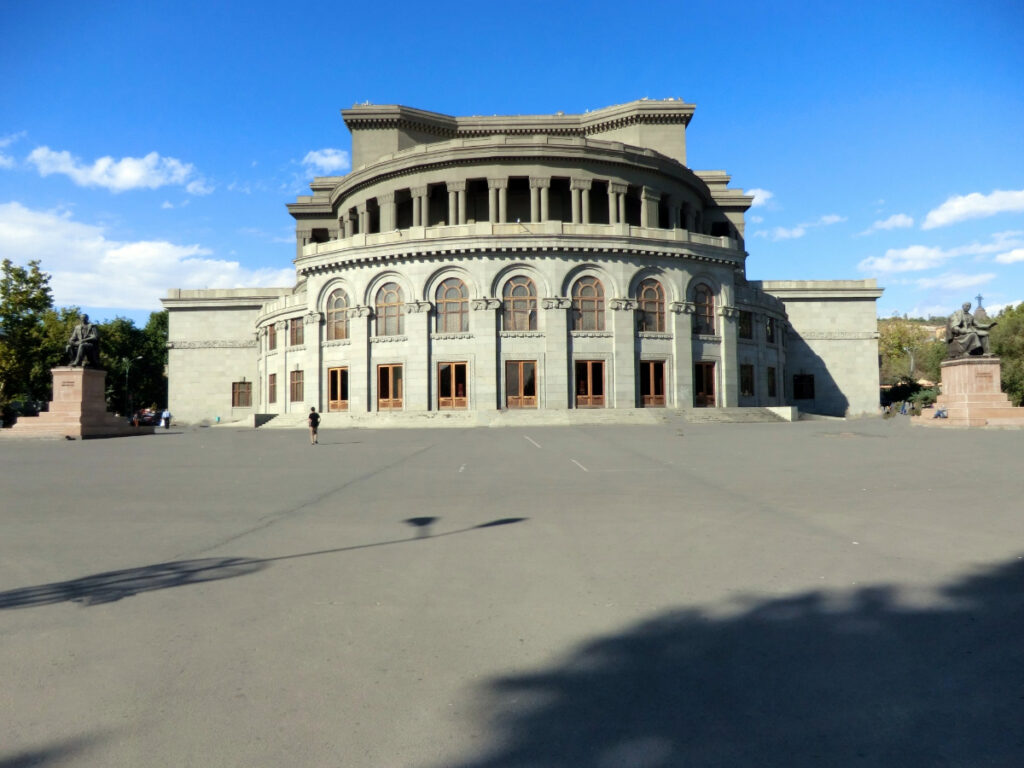
Yerevan is one of the world’s oldest cities, and it has been the capital of Armenia since 1918. It’s an important population center within the Caucasus, and the heart of Armenian culture. The Yerevan Opera Theatre opened its doors in 1933 and was specifically constructed to host performances in the Armenian Language. The building was designed in the Neoclassical Style, with similar characteristics to other structures in Yerevan.
18. Bolshoi Theater – Moscow, Russia
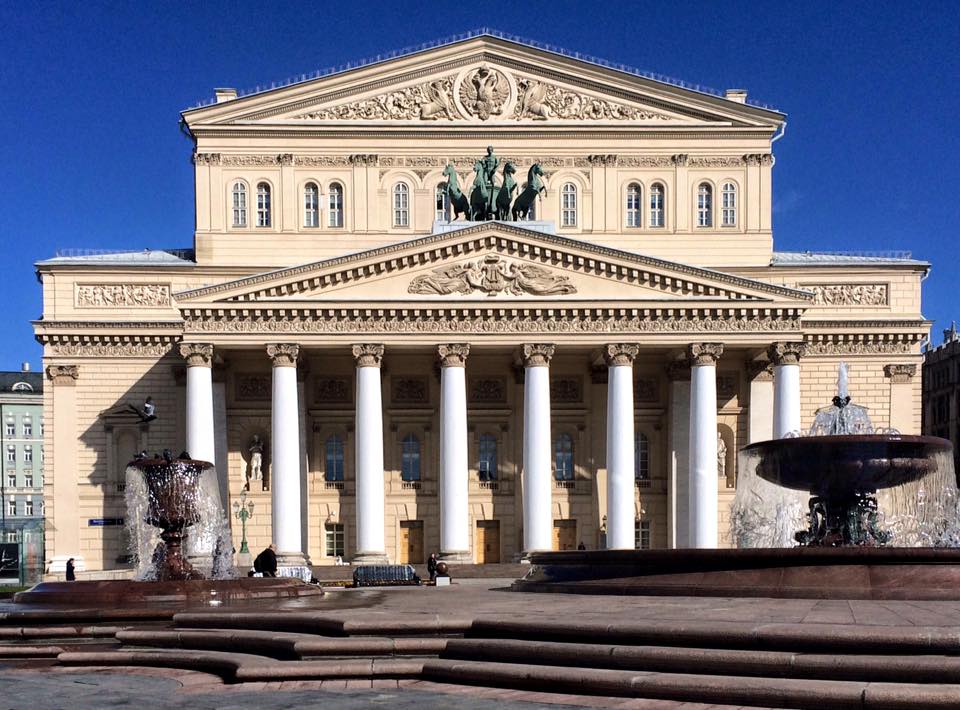
The Bolshoi Theater is an early 19th-century Opera House that was designed in the Neoclassical Style. The building has a perfectly symmetrical front facade that bears all of the elements of a Classical Greek Temple. A row of eight columns supports a large stone pediment that is decorated with cornices and friezes. Like many other Opera Houses in Europe, the interior of the Bolshoi Theater also contains Baroque details, like intricate, lively sculptures and gold trim.
19. Metropolitan Opera House – New York City, New York, USA
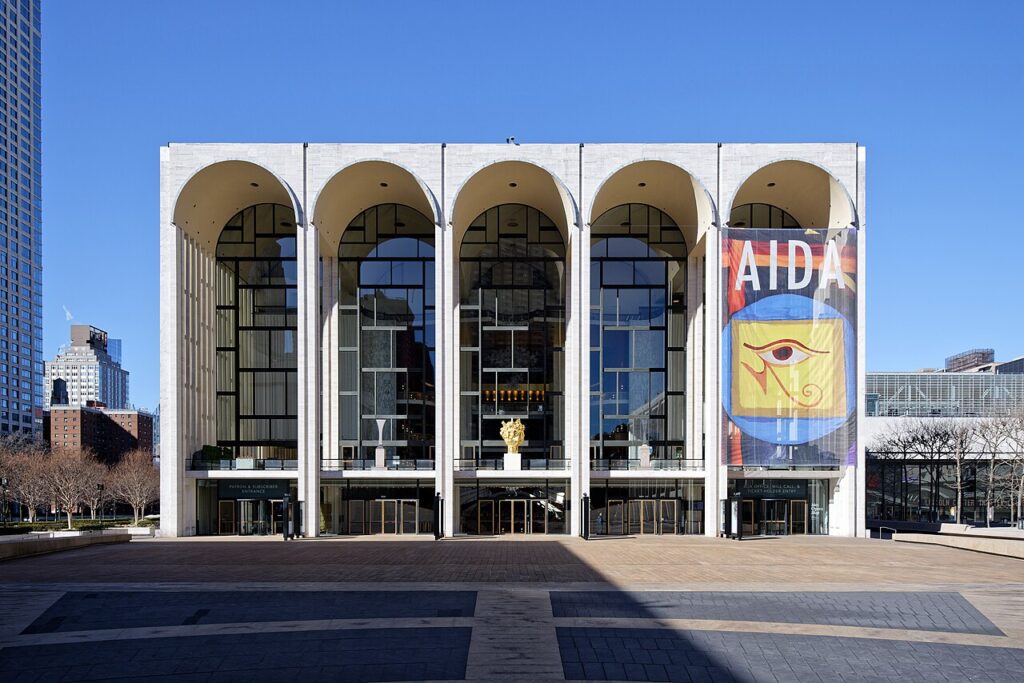
Although not as prolific as they are in Europe, many American cities also contain large opera houses. The Metropolitan Opera House in New York City is perhaps the most well-known example of this. The building is located on Manhattan’s Upper West Side, in an area known as Lincoln Center. It was completed in 1966 and designed in a popular mid-century style known as Modernism. By seating capacity, it is the largest opera house in the world.
20. Zurich Opera House – Zurich, Switzerland
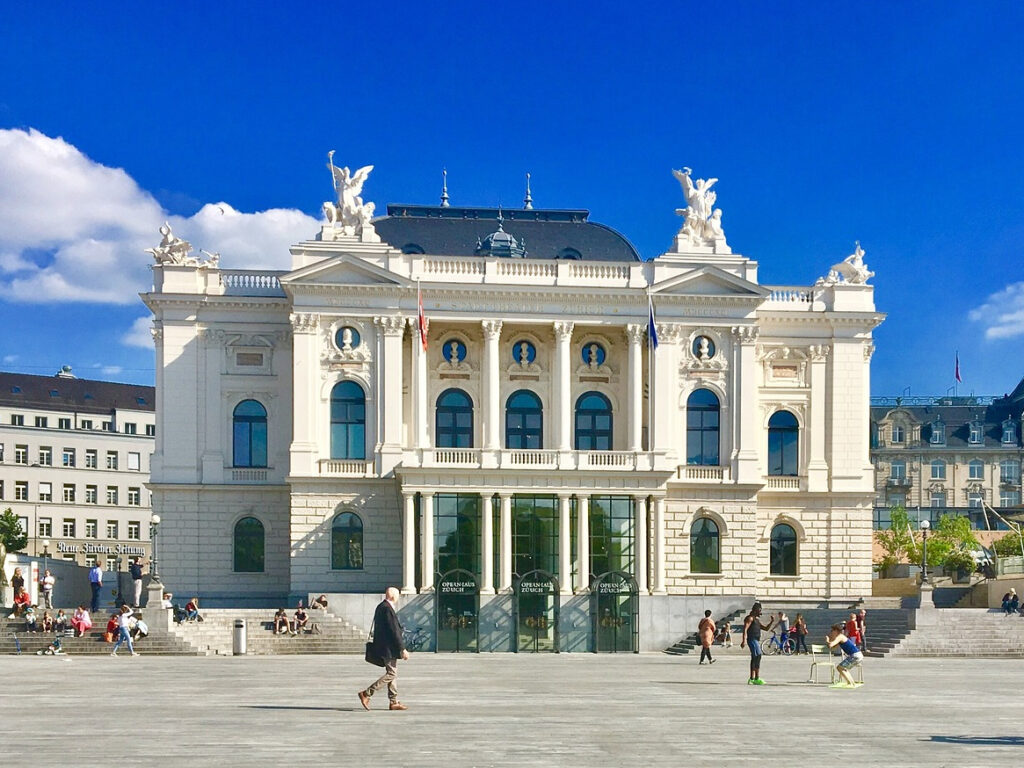
The Zurich Opera House is a performing arts venue located in the largest city in Switzerland, Zurich. The building was constructed in the 1890s on a site located right next to Lake Zurich. It was designed in the Baroque Revival Style, and it overlooks a large square known as the Sechseläutenplatz. Today, the building still hosts frequent live events, including plays, operas, and ballets.
21. Croatian National Theater – Zagreb, Croatia
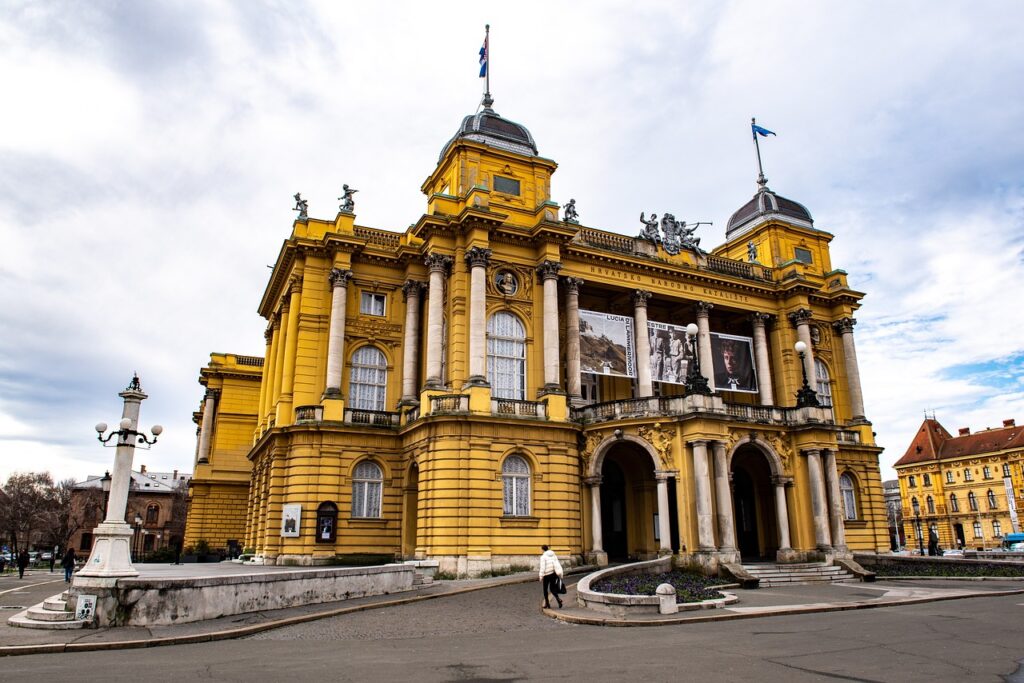
The Croatian National Theater is a large performing arts venue located in central Zagreb. The current building was completed in 1895 and designed in the Neoclassical Style. It’s located in a large open square just outside of Zagreb’s medieval core. The Croatian National Theater of Zagreb is actually part of a group of seven Croatian National Theaters, which can be found in other cities like Split and Rijeka.
22. Saigon Opera House – Ho Chi Minh City, Vietnam
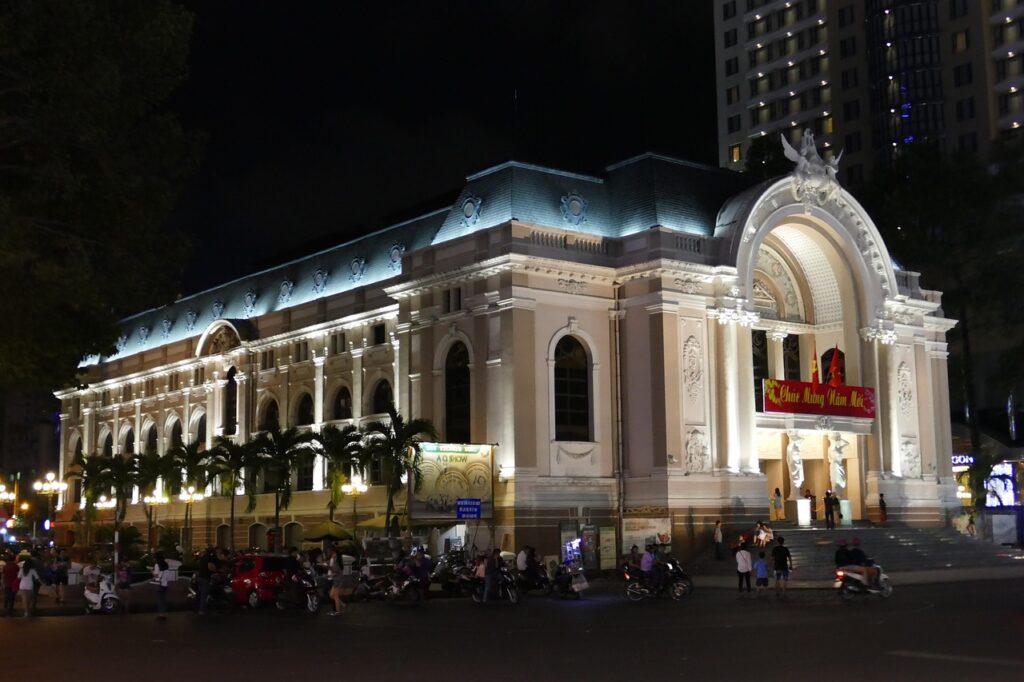
Similar to the Hanoi Opera House, the Saigon Opera House is another imposing building constructed within France’s East Asian Colonies. The Saigon Opera House was completed in 1900 and designed in the Beaux Arts Style. At this point in history, many French Architects followed the teachings of the École des Beaux-Arts in Paris. Today, the Saigon Opera House still holds live events, and it’s one of many incredible buildings within Ho Chi Minh City.
23. Slovak National Theater – Bratislava, Slovakia
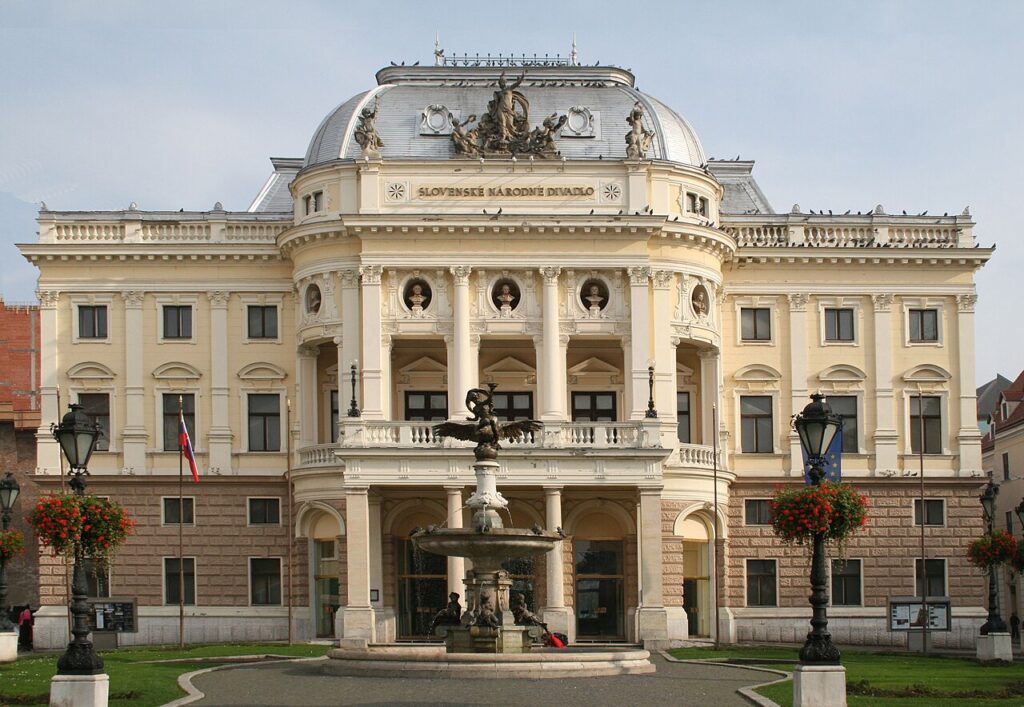
The Slovak National Theater is one of the largest and most important buildings in Bratislava. It was designed in the Baroque Revival Style and contains all of the opulence and grandeur that the Baroque Age was known for. The Slovak National Theater was completed in 1920, at a time when Bratislava was part of the newly formed entity of Czechoslovakia.
24. Copenhagen Opera House – Copenhagen, Denmark
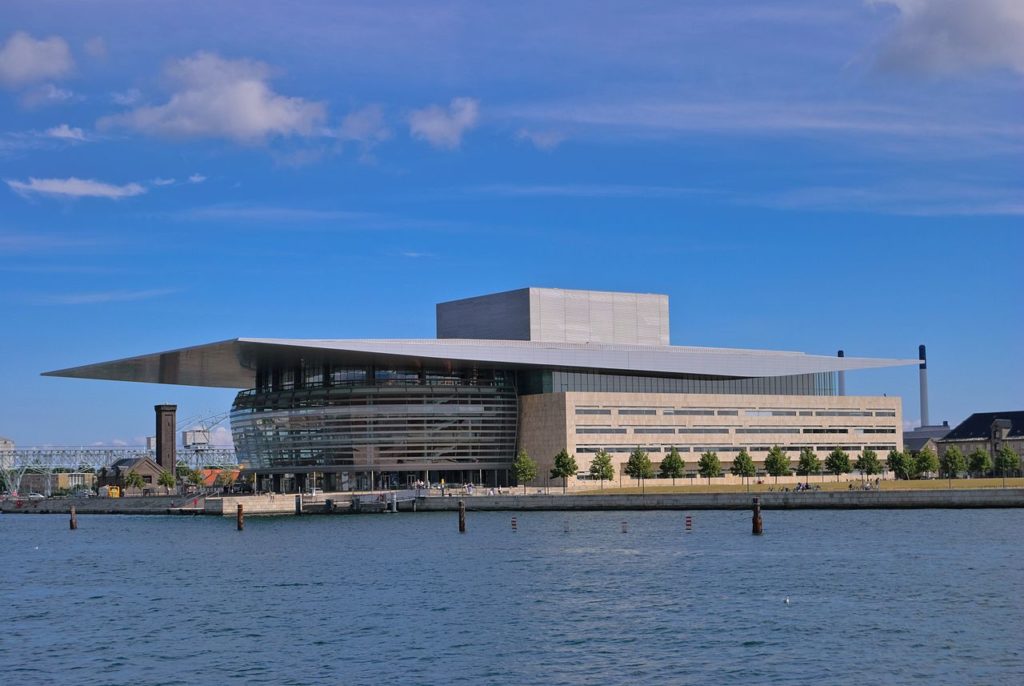
The Copenhagen Opera House was completed in 2004, making it one of the newer buildings on this list. It was constructed overlooking Copenhagen’s harbor. The building has a large form with several monumental components, like its round atrium and large geometric canopy. The Copenhagen Opera House utilizes many modern-day materials like glass, aluminum, and a stone veneer.
25. Opéra de Marseille – Marseille, France
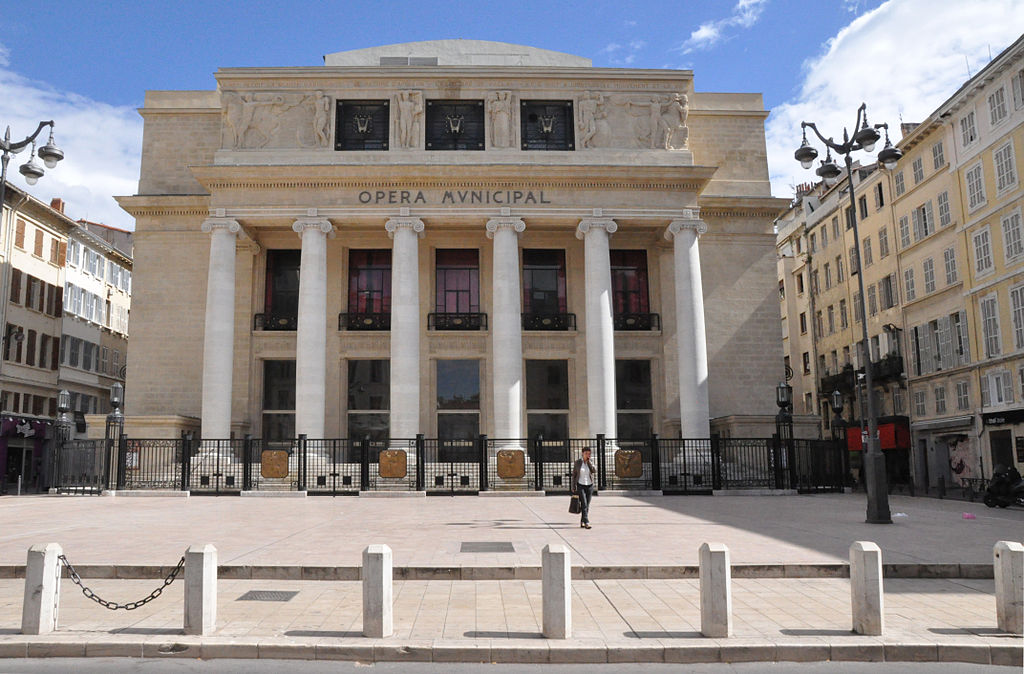
The Opéra de Marseille is an opera house located in France’s second-largest city. It was built in the 1920s and designed in the Art Deco Style. Art Deco was extremely popular during the early 1900s, particularly in the skyscrapers of the United States. The style is known for straight lines, vertical emphasis, and simplified sculptures. Today, the Opéra de Marseille is one of the city’s most well-known buildings, along with several works of Byzantine Revival Architecture.
Opera Houses & The Modern Age
Today, the world contains hundreds of Opera Houses, both new and old. Although the Golden Age of Opera is long gone, these venues are still used for frequent events, including operas, ballets, concerts, and plays. Many cities have embraced modern Opera Houses, such as Sydney, Oslo, Copenhagen, and New York – and these structures rival the older, more traditional Opera Houses found in cities like Paris, Munich, Vienna, and Palermo. All of these buildings are still being utilized today, and they will remain important cultural institutions for generations to come.

- About the Author
- Rob Carney, the founder and lead writer for Architecture of Cities has been studying the history of architecture for over 15 years.
- He is an avid traveler and photographer, and he is passionate about buildings and building history.
- Rob has a B.S. and a Master’s degree in Architecture and has worked as an architect and engineer in the Boston area for 10 years.
Like Architecture of Cities? Sign up for our mailing list to get updates on our latest articles and other information related to Architectural History.