The World’s Greatest Tombs
Since the dawn of civilization, people have been burying their dead in tombs of all shapes and sizes. Traces of this practice date back to the Stone Age, when important individuals were often buried alongside their most prized possessions. As mankind evolved, tombs and mausoleums became larger and more elaborate. And many powerful rulers commissioned grand tombs as a way to show off their immense wealth. The article below will count down 30 of the world’s greatest tombs & mausoleums and highlight the diverse nature of these architectural wonders.
What are the World’s Largest & Grandest Tombs?
30. Mausoleum of Diocletian – Split, Dalmatia, Croatia
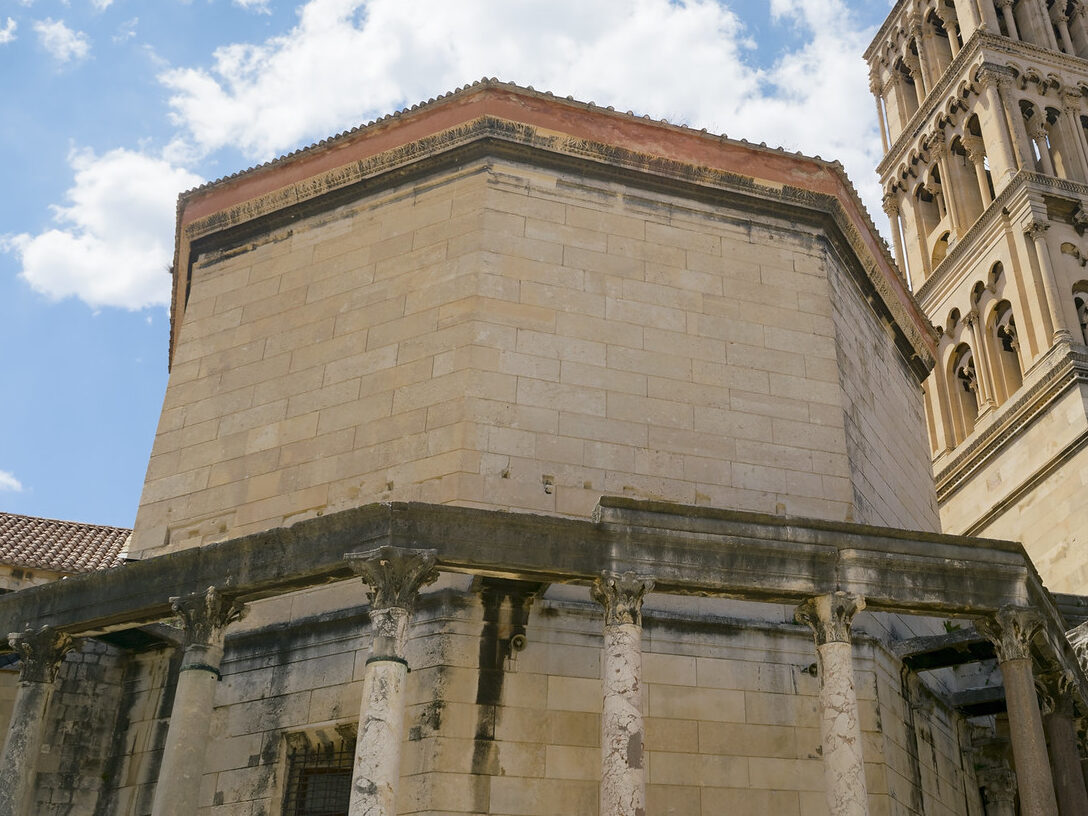
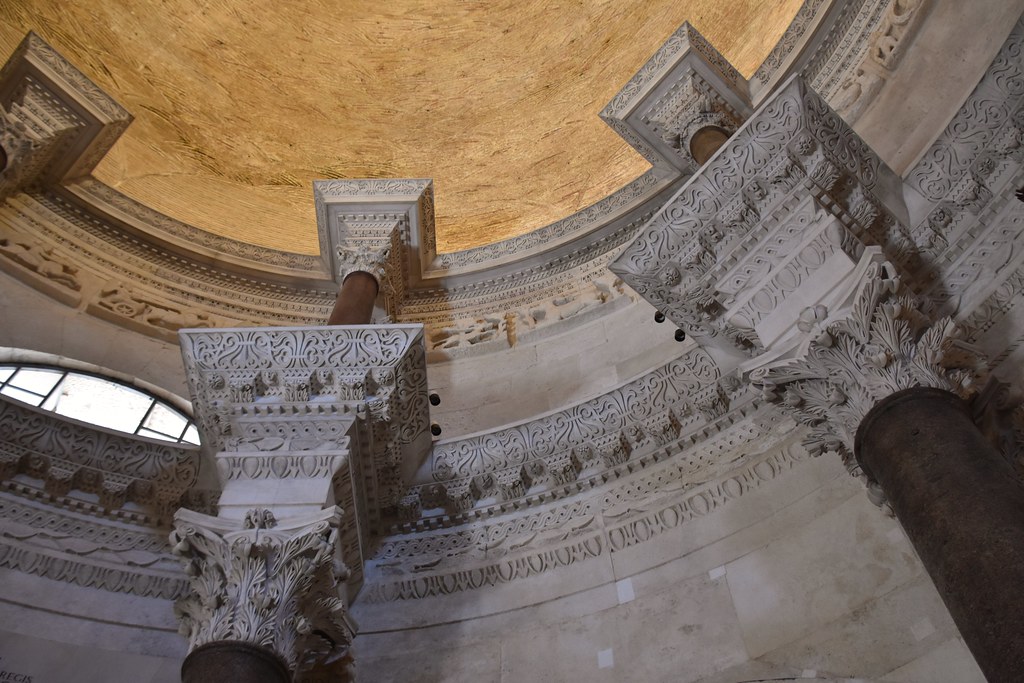
(right) Photo by Richard Mortel from flickr
The tomb of Diocletian is an Ancient Roman Mausoleum in Split, a city in modern-day Croatia. Diocletian ruled as Roman Emperor from 284 to 305 CE, and he was one of only a handful of emperors to abdicate the throne. Diocletian spent his final years living in a lavish palace on the shores of the Adriatic Sea. Upon his death, his remains were placed inside a grand Mausoleum, which can still be visited today. After the fall of the Roman Empire, the Mausoleum was repurposed into the Church of St. Domnius.
29. Tomb of Sultan Abdul Hamid – Istanbul, Turkey
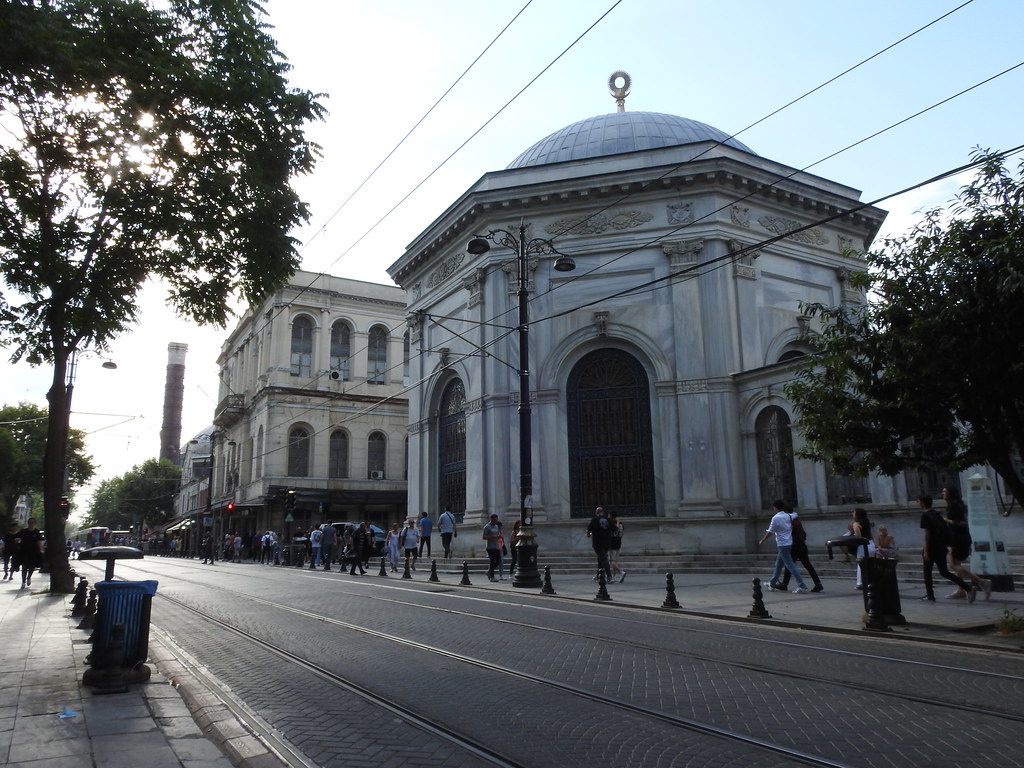
The Tomb of Sultan Abdul Hamid is a large and imposing structure located in Istanbul. It was constructed in the late 1700s as the final resting place of a Sultan of the Ottoman Empire. The tomb was designed using an eclectic blend of both Ottoman & Baroque Architecture. The mausoleum’s exterior is composed of many classical design elements like round arches and Corinthian Columns.
28. Zechariah & Hezir Tombs – Jerusalem, Israel
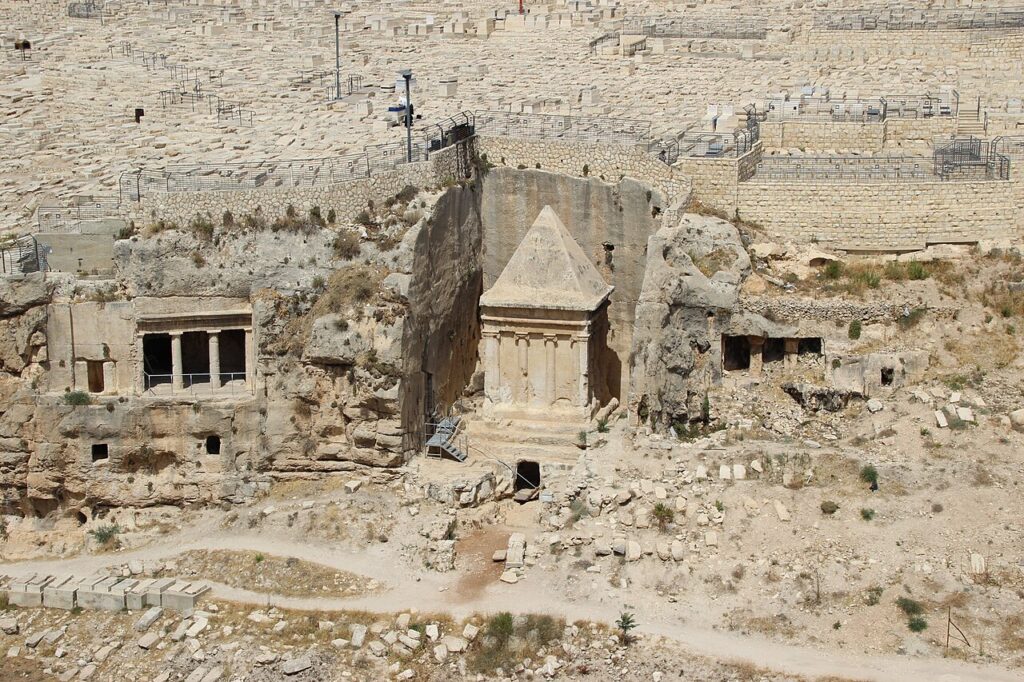
Jerusalem is home to many large and important tombs and mausoleums. The city has a rich history and is home to several necropolises dating back thousands of years. Some of Jerusalem’s most unique tombs are actually carved directly from the bedrock beneath the city. These tombs were all constructed between the 2nd century BCE and the 1st century CE and are amazing examples of Rock Cut Architecture.
27. Anıtkabir – Ankara, Turkey
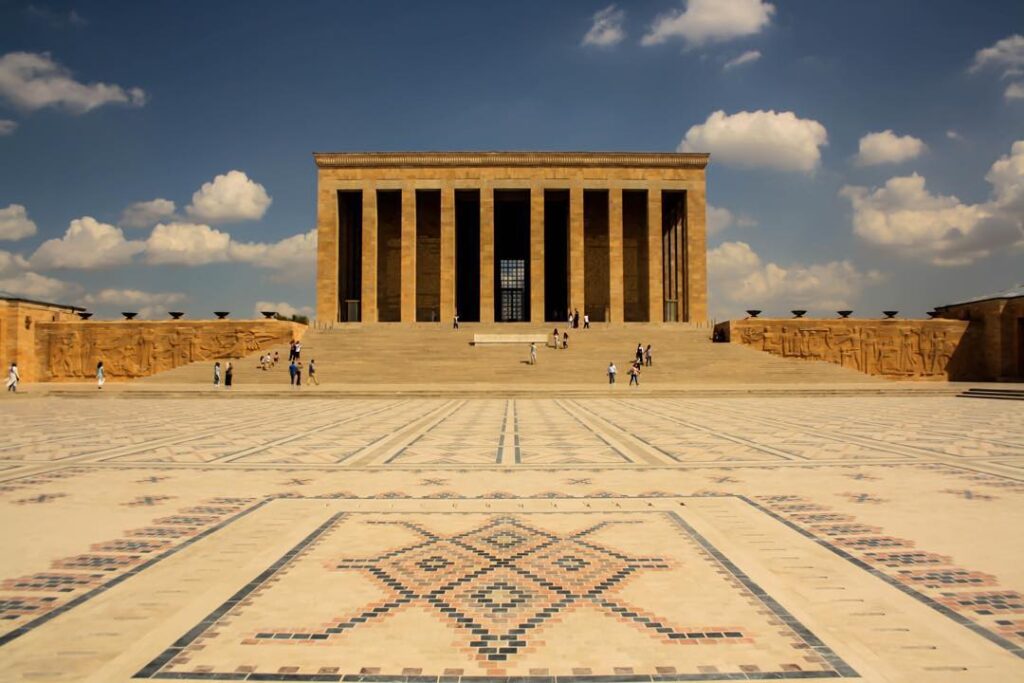
The Anıtkabir is a large mausoleum complex located in Ankara, Turkey. The site is the final resting place of the founder of modern-day Turkey, Mustafa Kemal Atatürk. Atatürk was an important general during the Turkish War of Independence, and he helped form Turkey’s post-Ottoman government. Anıtkabir was completed in 1953 as a monument to the life and legacy of Atatürk. It’s one of the most revered monuments in all of Turkey, and one of Ankara’s most popular sites.
26. Tomb of Theodoric the Great – Ravenna, Italy
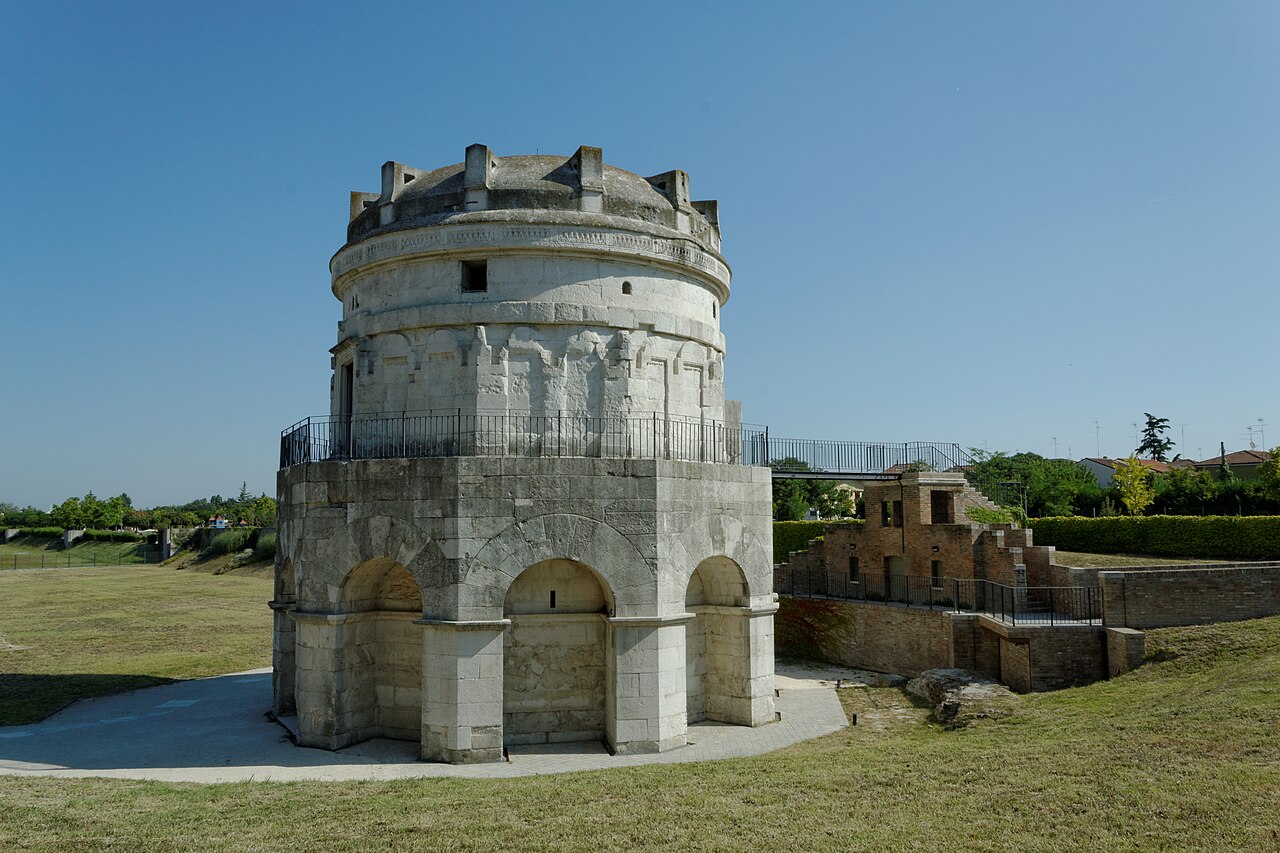
The Tomb of Theodoric the Great is one of the most well-known examples of the Architecture of the Dark Ages. The tomb was constructed by Theodoric, a Germanic warlord who took control of Italy after the Fall of the Western Roman Empire. His tomb was designed to replicate many of the Roman Mausoleums found throughout the former empire. These structures were typically cylindrical in shape, with a large dome atop a dark and secluded space. Theodoric served as King of the Ostrogoths until his death in 526 CE, upon which his remains were placed inside the structure.
25. McKinley National Memorial – Canton, Ohio, USA
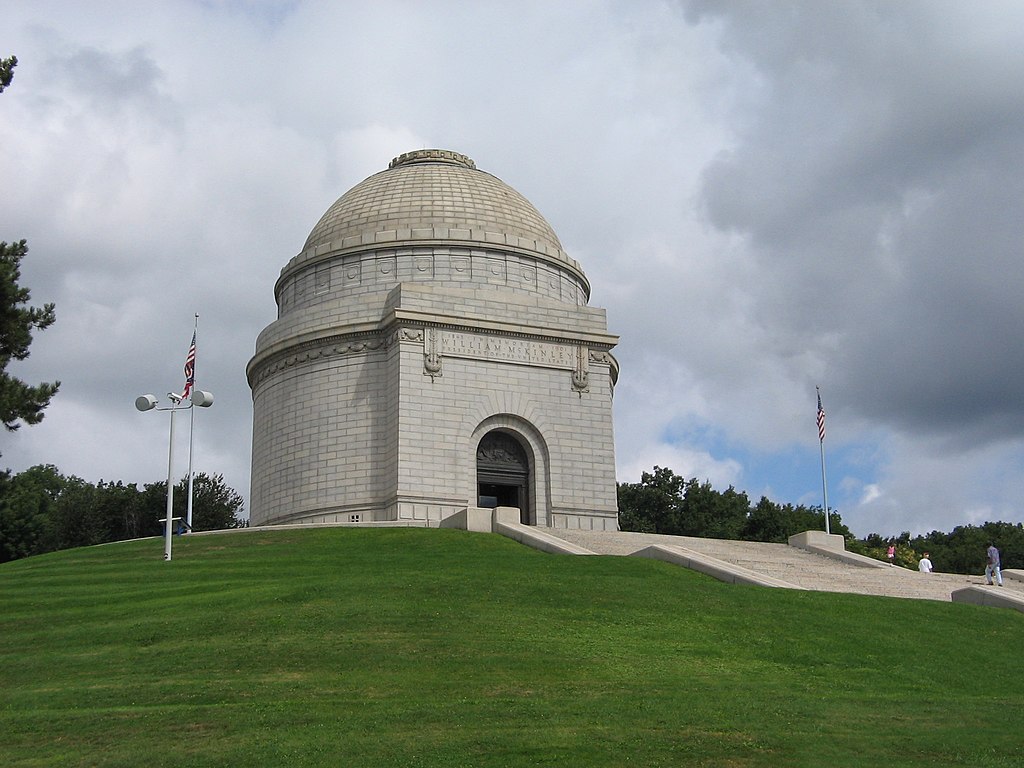
William McKinley was the 25th President of the United States, a role he served until his assassination in 1901. McKinley was a popular figure, and the nation mourned his tragic loss. Shortly after his death, the US Government decided to memorialize his legacy by constructing a large Neoclassical structure in Canton, Ohio – where McKinley had spent much of his life. The McKinley National Memorial was completed in 1907, and it houses the remains of William and his wife, Ida.
24. Shah-i-Zinda – Samarkand, Uzbekistan
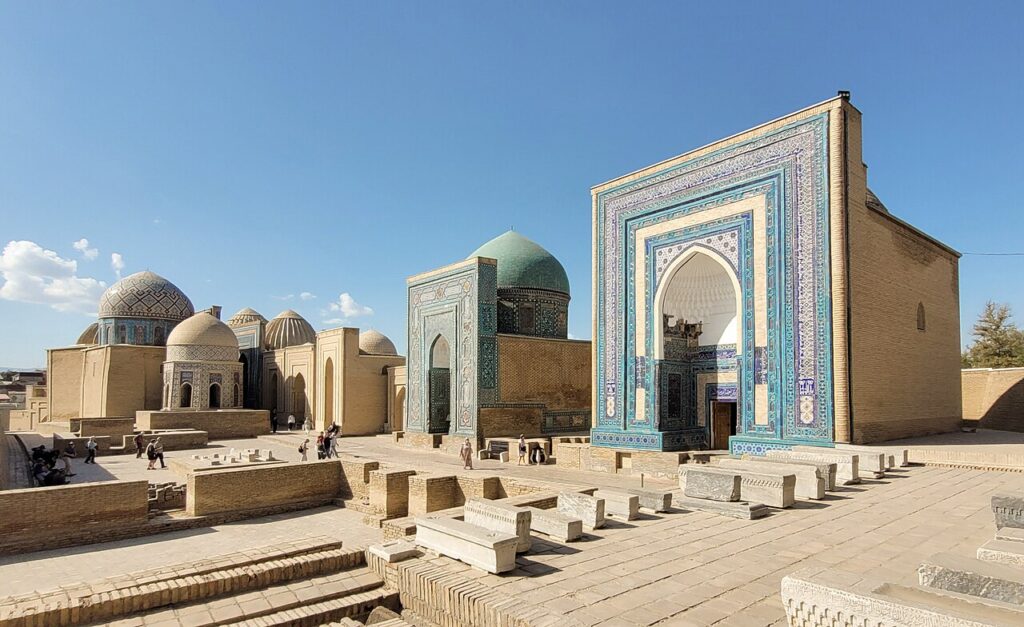
The Shah-i-Zinda is a large necropolis located in the city of Samarkand. It was constructed by the rulers of the Timurid Empire, which was founded by the great Turko-Mongolian conqueror Timur. The monuments date to the 11th & 12th centuries, and are regarded as great examples of architecture from the Timurid Renaissance. In recent years, the Shah-i-Zinda has been restored with new blue tiles similar to those found in the Timurid period.
23. Royal Mausoleum of Mauretania – Tipaza, Algeria
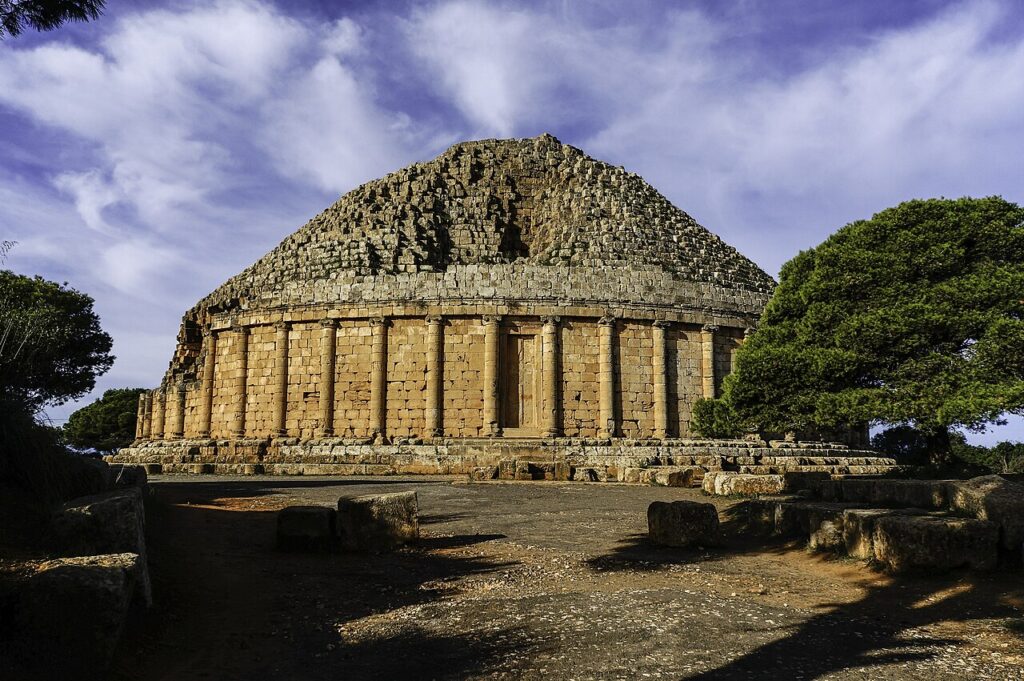
The Royal Mausoleum of Mauritania is an ancient tomb located in modern-day Algeria. The mausoleum dates to 3 BCE and contains the remains of Juba II. Juba ruled a prominent North African kingdom that was later annexed by the Roman Empire. The Royal Mausoleum of Mauritania utilizes many Classical design elements like Ionic Columns, which were introduced to the region by the Ancient Greeks.
22. Mausoleum of Mohammed V – Rabat, Morocco
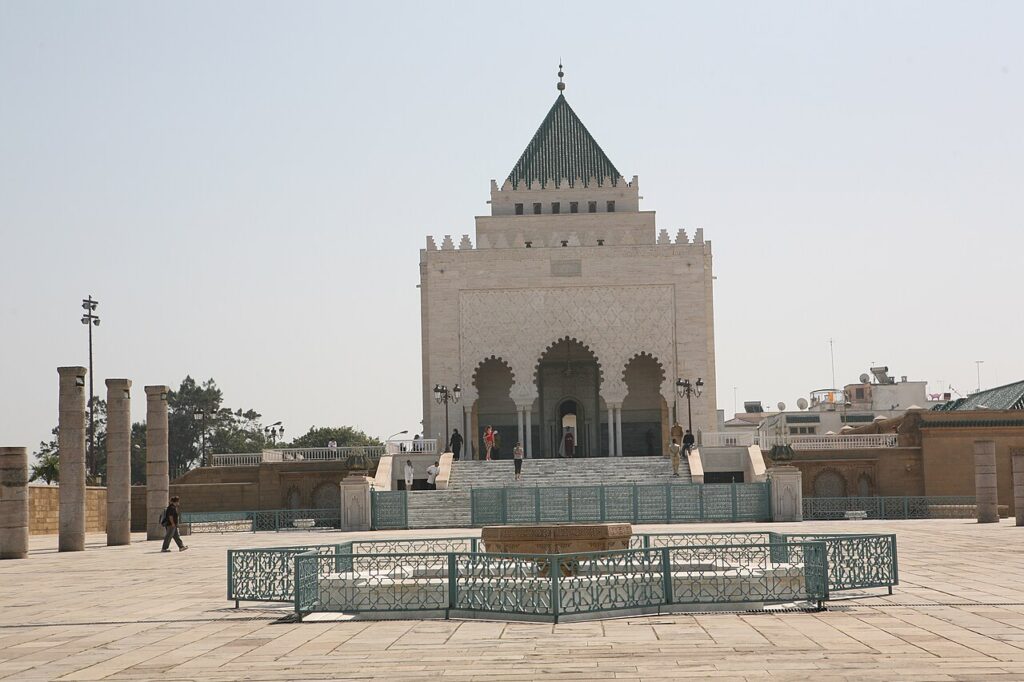
The Mausoleum of Muhammad V is a more modern work of architecture that was built in the mid-1960s. It was constructed to house the remains of Muhammad V, who ruled as King of Morocco until his death in 1961. The mausoleum is designed with many of the major elements found in Moorish Architecture. It contains a blend of Scalloped and Pointed Arches, in addition to geometric details and Arabic Calligraphy. The mausoleum is located in the ancient city of Rabat, not far from the Hassan Tower.
21. Cappella Colleoni – Bergamo, Italy
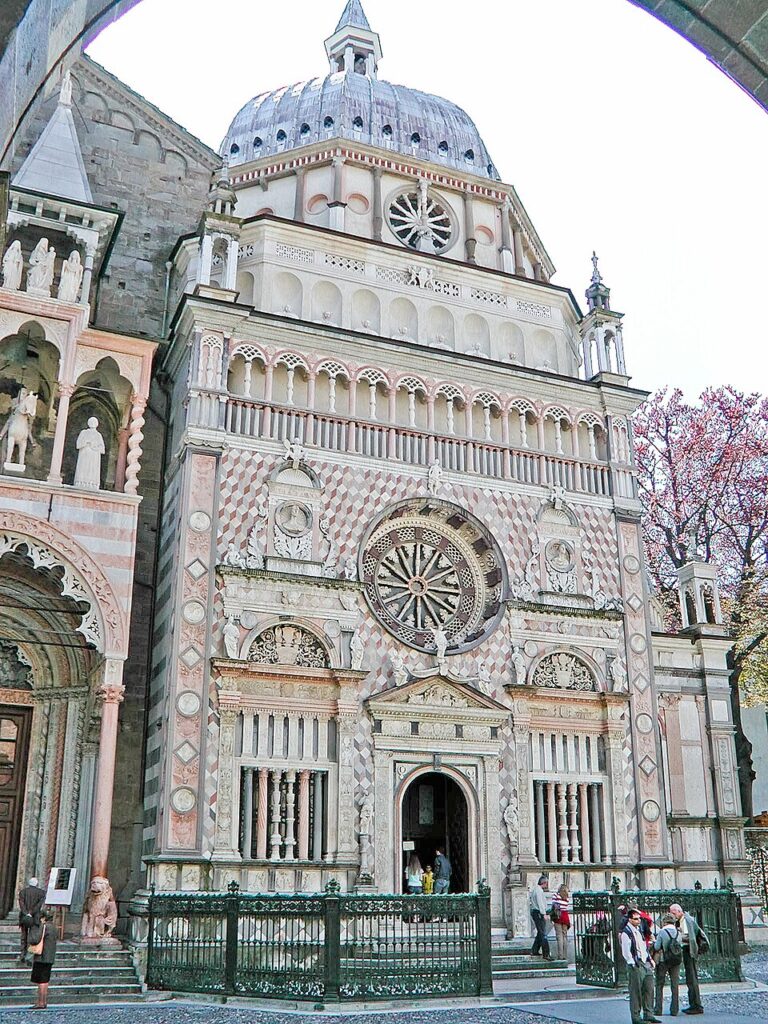
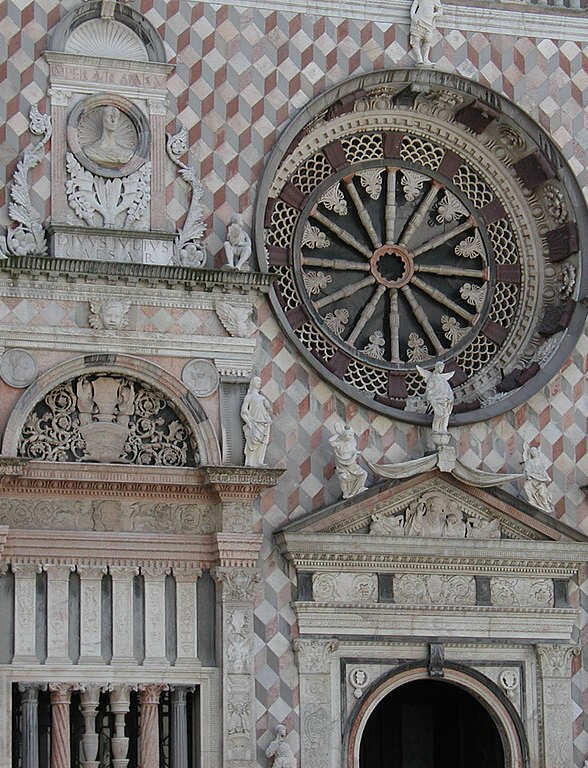
Bartolomeo Colleoni was a well-respected general who lived during the 15th century. He fought for the Doge of Venice and won many battles to help expand and protect the Venetian Republic. Upon Bartolomeo’s death, a large tomb was constructed to house his remains within the city of Bergamo. Today, the mausoleum is known as the Cappella Colleoni, and it was designed in the Renaissance Style, utilizing symmetry, hierarchy, balance, and proportion.
20. Humayun’s Tomb – New Delhi, India
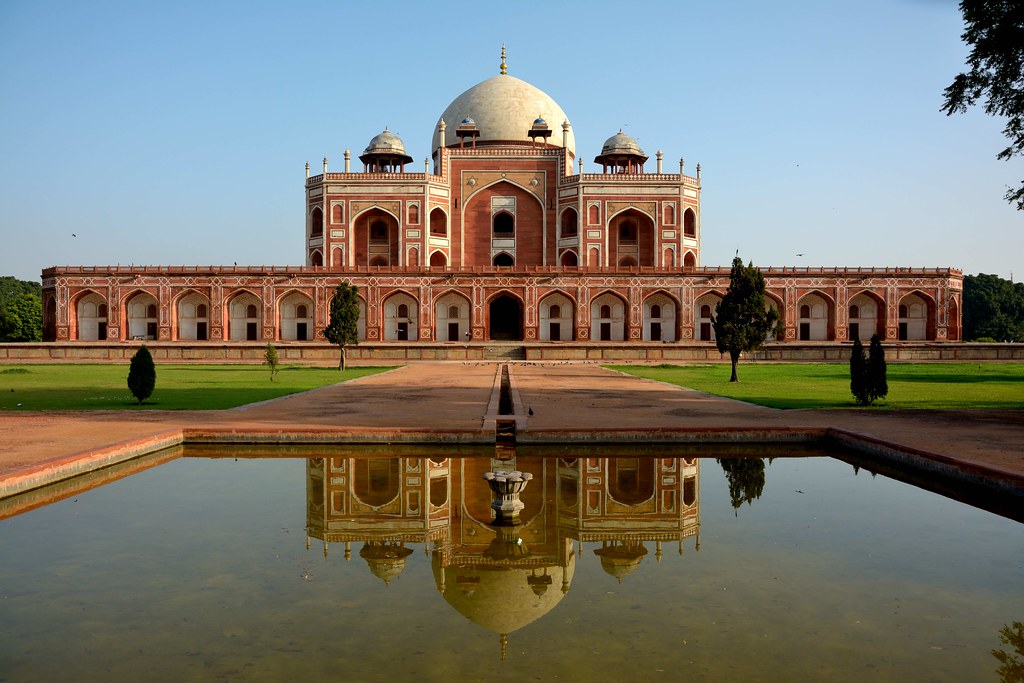
Humayun’s Tomb is a large funerary complex within the city of Delhi. It contains the remains of Humayun, who was Sultan of the Mughal Empire from 1530-1540. The tomb is made from Red Sandstone, a common material found throughout many examples of Mughal Architecture. Humayun’s Tomb contains a mausoleum in addition to an elaborate complex of gardens and fountains. Today, Humayun’s Tomb is listed as a UNESCO World Heritage Site along with several other impressive monuments located throughout Delhi.
19. Prophet’s Mosque – Medina, Saudi Arabia
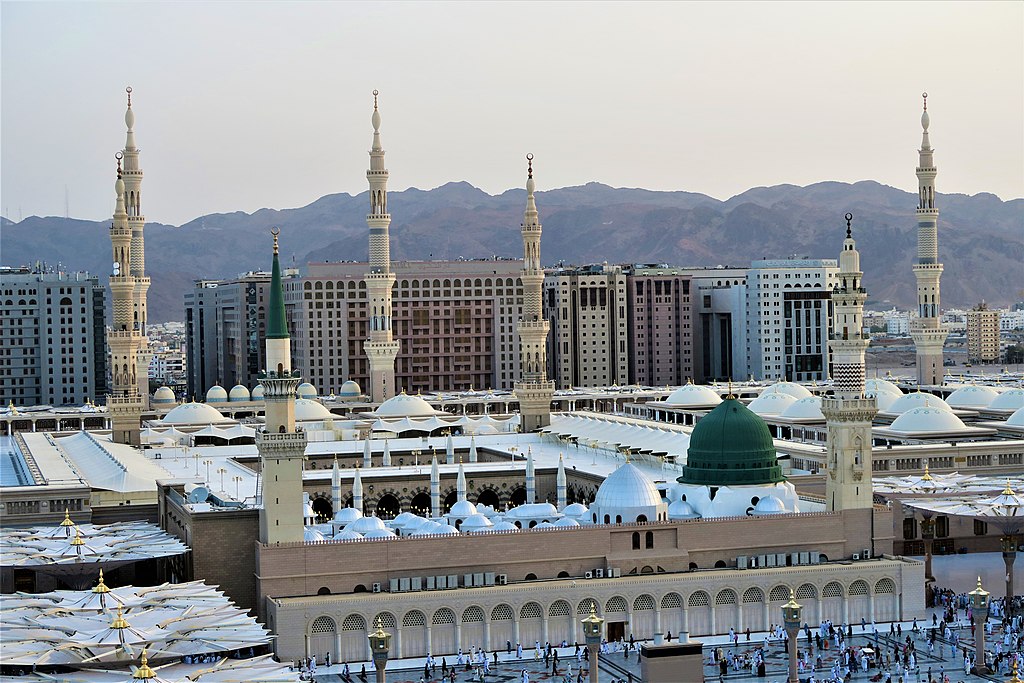
The Prophet’s Mosque is a large religious complex located in Medina, Saudi Arabia. The site is the final resting place of the Prophet Muhammad, and is regarded as one of the holiest places in the Muslim World. Construction on the Prophet’s Mosque began during the lifetime of Muhammad, but the building was continuously modified and expanded for centuries. Today, the structure contains all of the typical elements found in Islamic Architecture, including domes, minarets, pointed arches, and intricate geometric details.
18. King Tut’s Tomb – Valley of the Kings, Luxor, Egypt
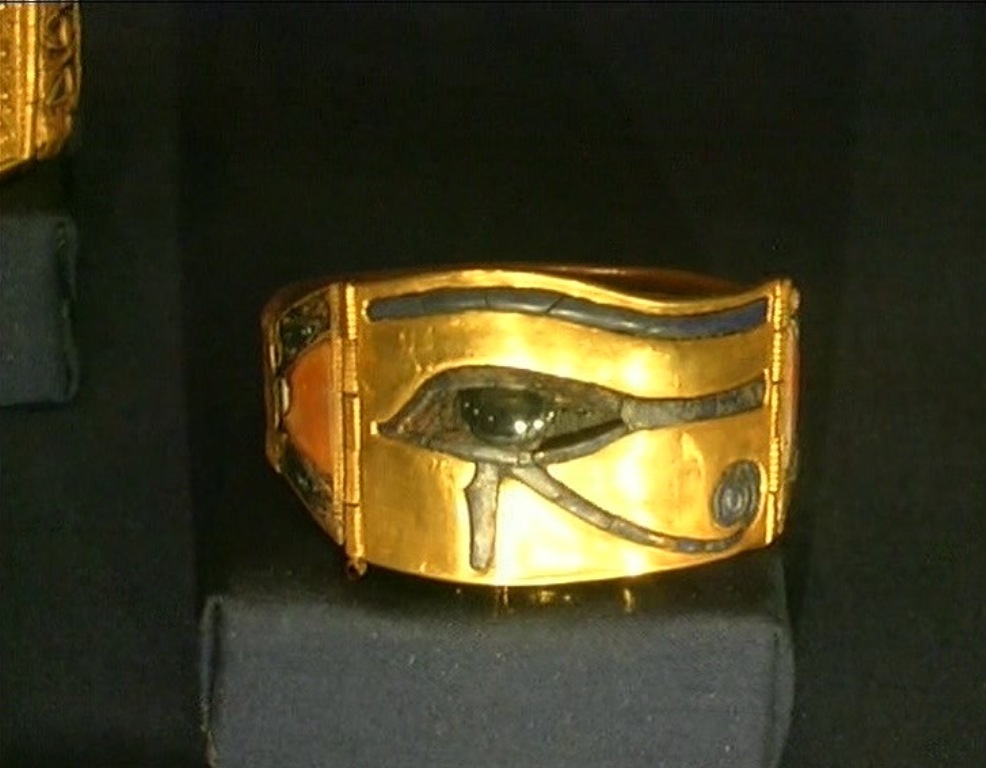
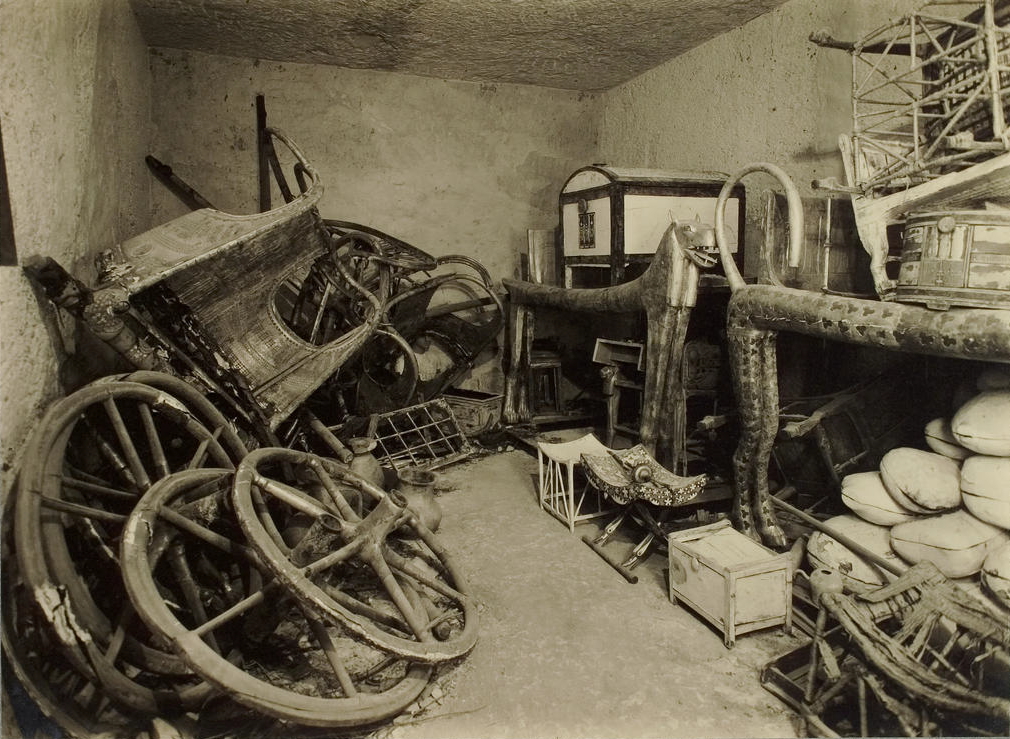
The Tomb of King Tut was discovered in 1922, and is to this day, the most well-preserved Egyptian burial ever found. King Tut was also known as Pharaoh Tutankhamun, and he ruled Egypt’s New Kingdom from 1332–1323 BCE. Although Tutankhamun’s grave is modest when compared to other ancient Egyptian burials, the relics found here have taught historians significant things about the ancient Egyptians. Today, the artifacts of King Tut’s Tomb can be found in Cairo’s Grand Egyptian Museum and at several other prestigious museums worldwide.
17. Grant’s Tomb – New York, New York, USA
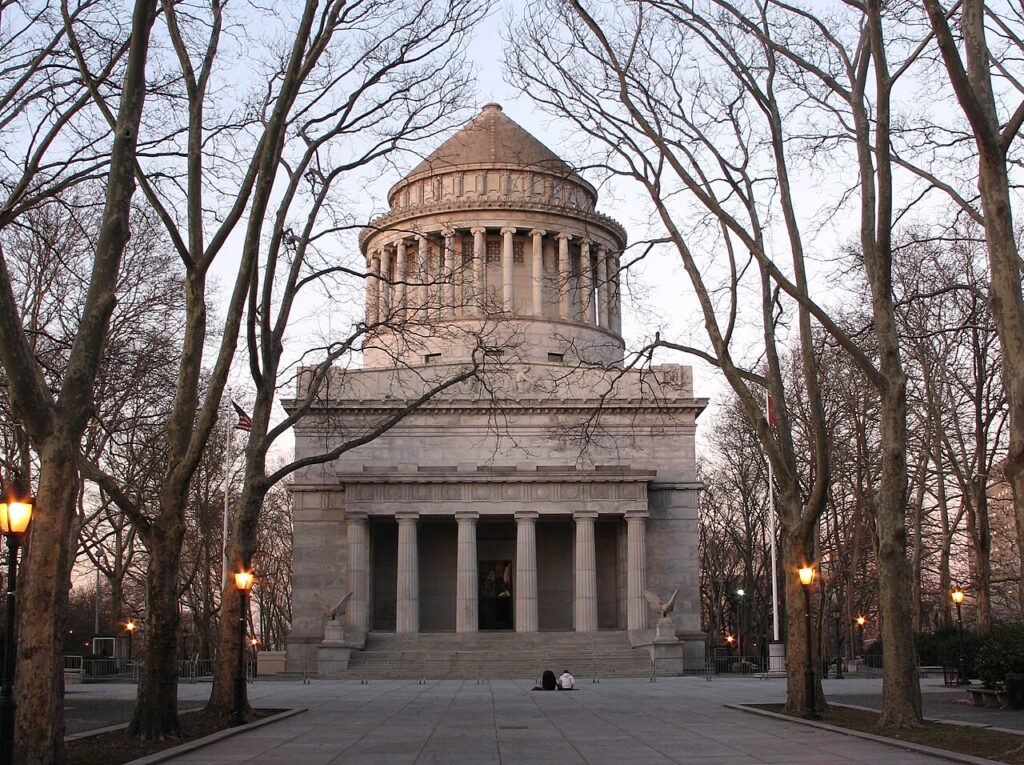
Ulysses S. Grant was a skilled general who fought for the Union during the American Civil War. Grant was a brilliant tactician, and his many victories brought him notoriety with the American people. Grant used this popularity to help him become the 18th President of the United States. Grant’s Tomb was constructed during the late 19th century and designed in the main style utilized by the US Government – Neoclassical. Grant’s Tomb sits on the Island of Manhattan in New York City, right next to the Campus of Columbia University.
16. Naqsh-e Rostam – Marvdasht, Iran
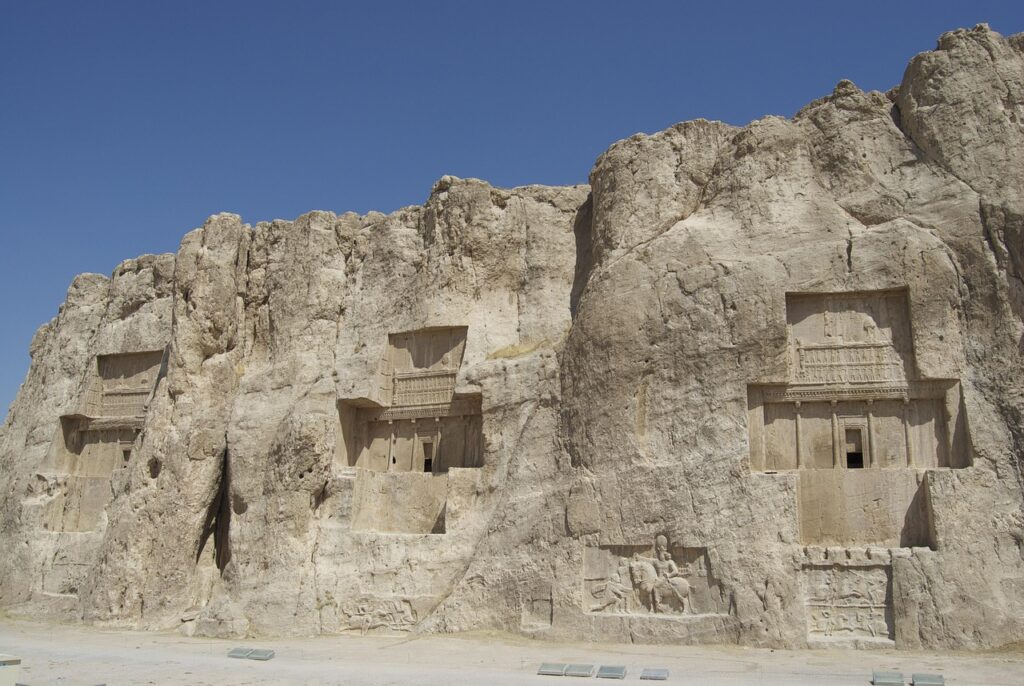
Persepolis was once the capital of the mighty Persian Empire. The city had a lengthy golden age from 500-300 BCE, during the rule of the Achaemenid Dynasty. The Achaemenids constructed a vast necropolis just outside their capital called the Naqsh-e Rostam. This necropolis contains the tombs of several Achaemenid Rulers and high-ranking officials. Many of the tombs are amazing examples of Rock Cut Architecture, carved directly from the faces of cliffs.
15. Cappella dei Principi (Medici Chapel) – Florence, Tuscany, Italy
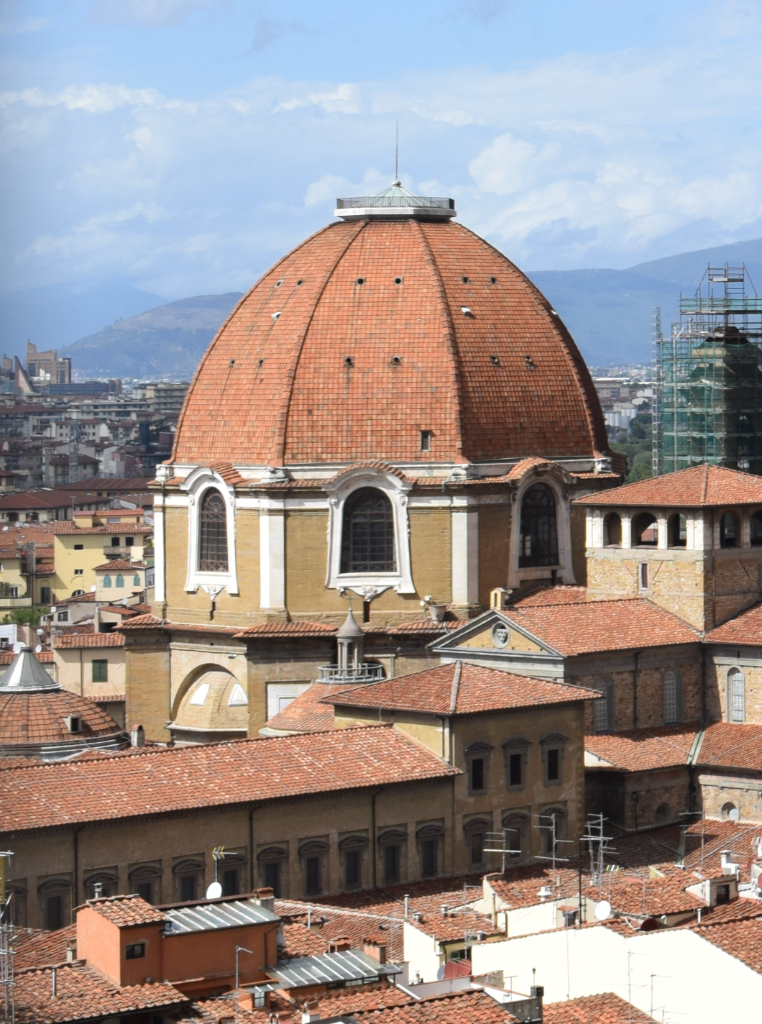
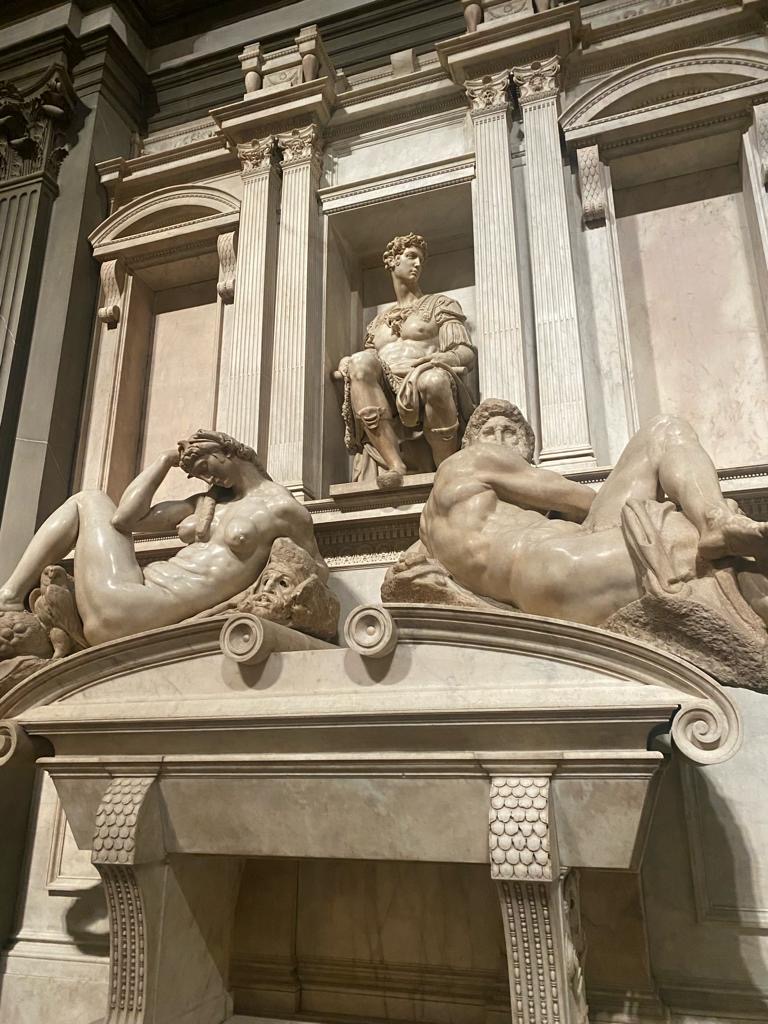
The Medicis were a powerful family based in Florence, Italy. They were successful and wealthy bankers, and they were huge patrons of art and architecture during both the Renaissance & Baroque ages. The Cappella dei Principi was financed by the Medici and constructed in the early 17th century. Several notable Medici family members are buried within the chapel, inside a large room that also contains sculptures by the renowned Renaissance artist, Michelangelo.
Like Architecture of Cities? Sign up for our mailing list to get updates on our latest articles and other information related to Architectural History.
14. Mausoleum of Hadrian – Rome, Italy
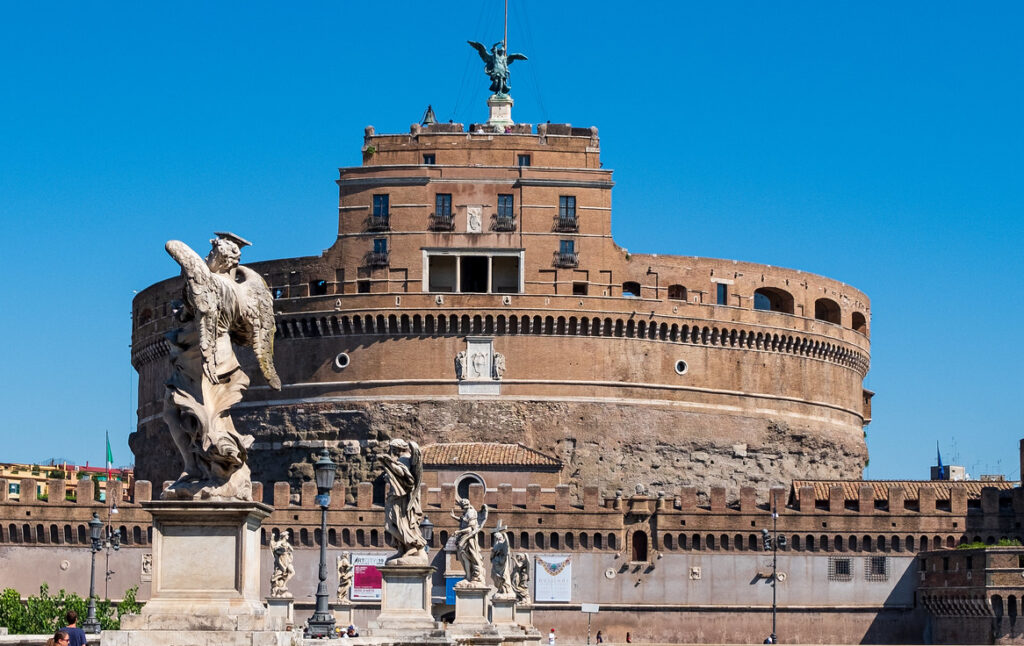
The Mausoleum of Hadrian is a large tomb that once contained the remains of Roman Emperor Hadrian. Hadrian ruled from 117 to 138 CE and was very effective at governing. He helped consolidate Rome’s borders and commissioned countless monuments throughout the empire. Hadrian’s Tomb was constructed in the typical style of a Roman Mausoleum – with a thick-walled cylindrical base below a central dome. During the Middle Ages, the Mausoleum was expanded and turned into the Castillo Sant’Angelo, a formidable fortification within Rome.
13. Mortuary Temple of Hatshepsut – Luxor, Egypt
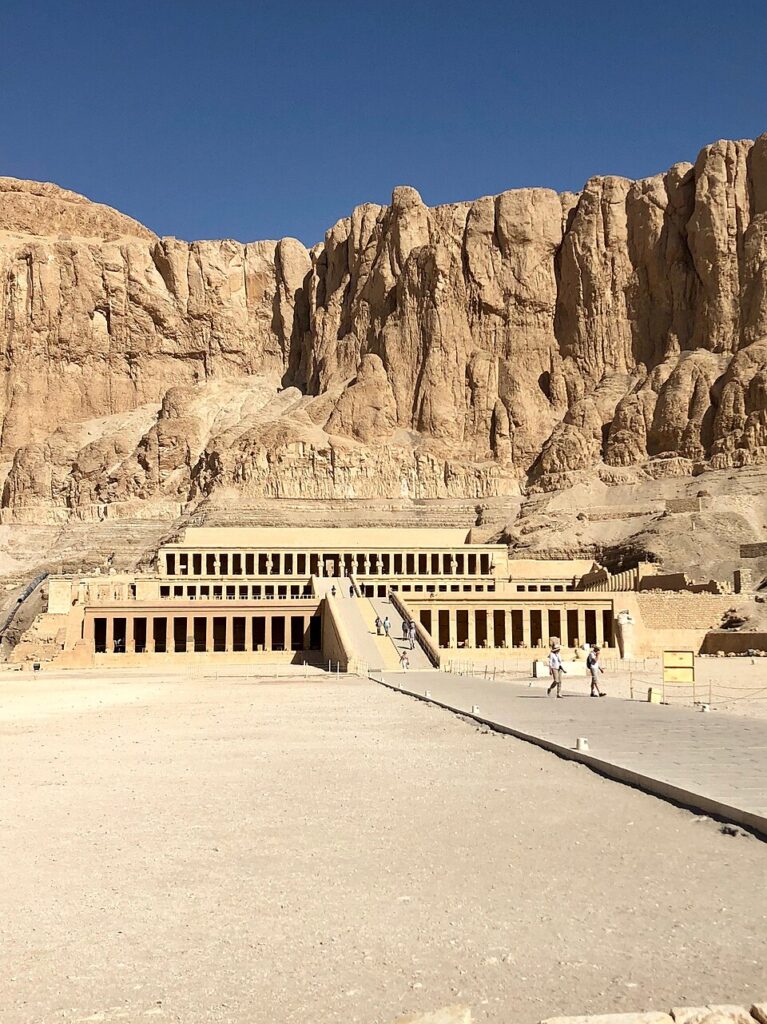
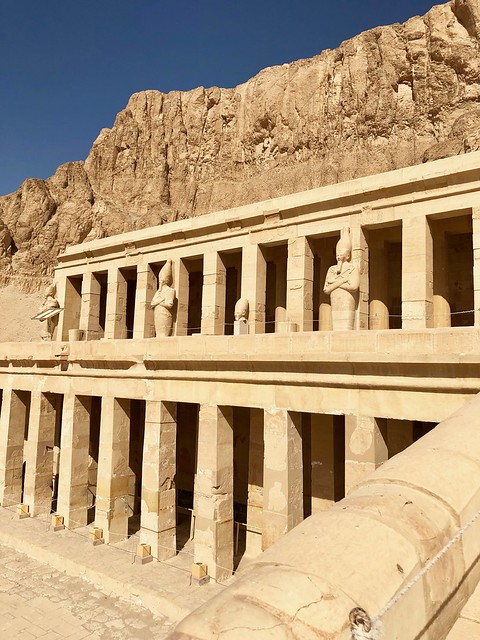
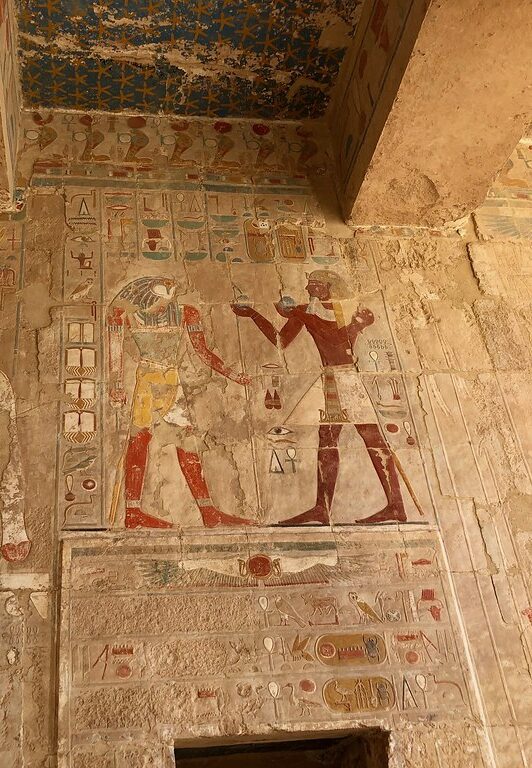
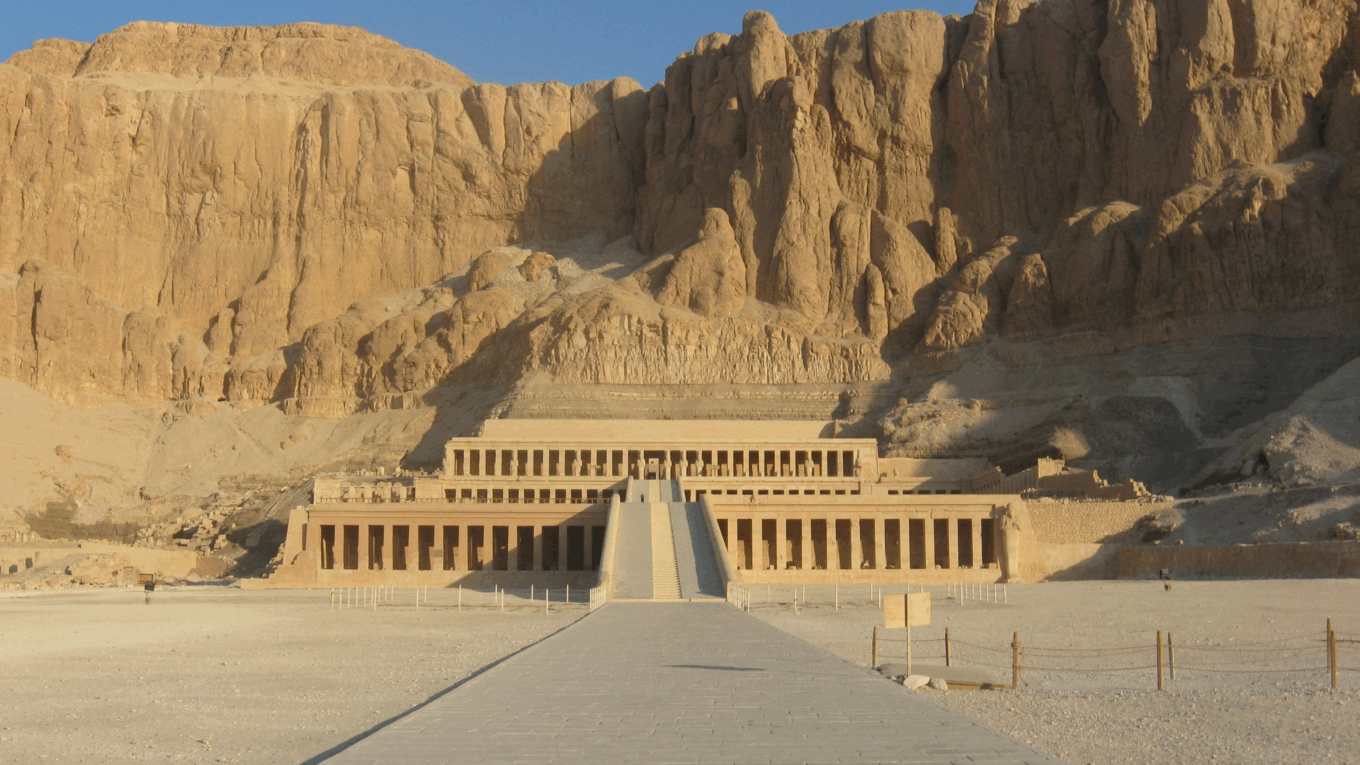
Hatshepsut was one of the first female rulers of Ancient Egypt. Her reign began in 1479 BCE, after the death of her husband, Thutmose II. Hatshepsut is regarded as a highly successful ruler, and the Mortuary Temple she commissioned is one of her greatest achievements. The building is a remarkable example of Egyptian Architecture from the New Kingdom. The temple’s perfectly straight columns and platforms drastically contrast the rugged cliffs in the surrounding area.
12. Panthéon – Paris, France
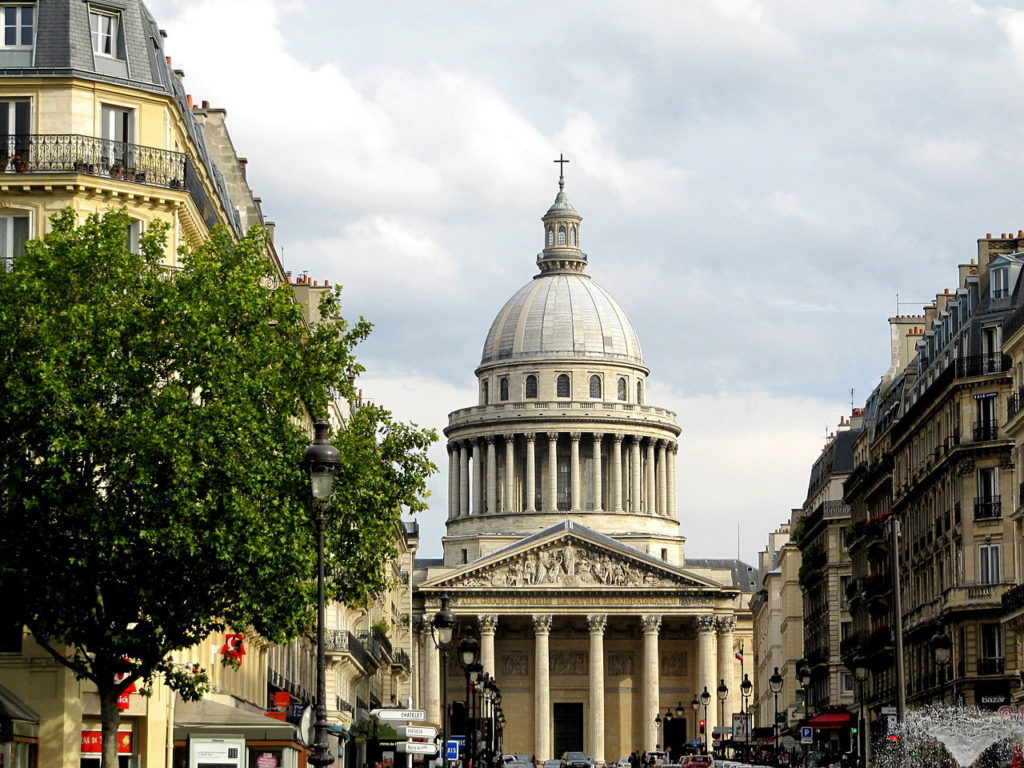
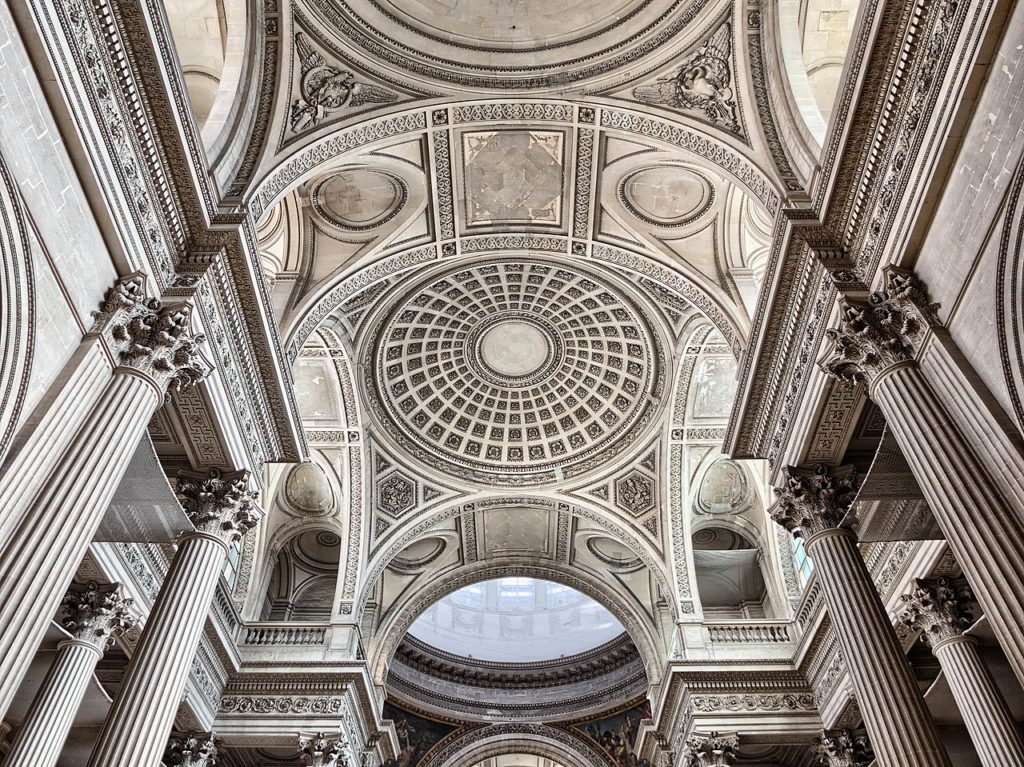
The Panthéon of Paris is a massive work of Neoclassical Architecture, located within the 5th arrondissement of Paris. It was commissioned by King Louis XV in 1758 and completed in 1790 during the reign of Louis XVI. The Panthéon’s most striking feature is its massive central dome, which can be seen throughout most of the surrounding neighborhood. The interior of the Panthéon of Paris contains many typical Neoclassical elements like ballustrades, coffered ceilings, and Corinthian Columns.
11. Imperial Tombs of the Ming Dynasty – Beijing, China
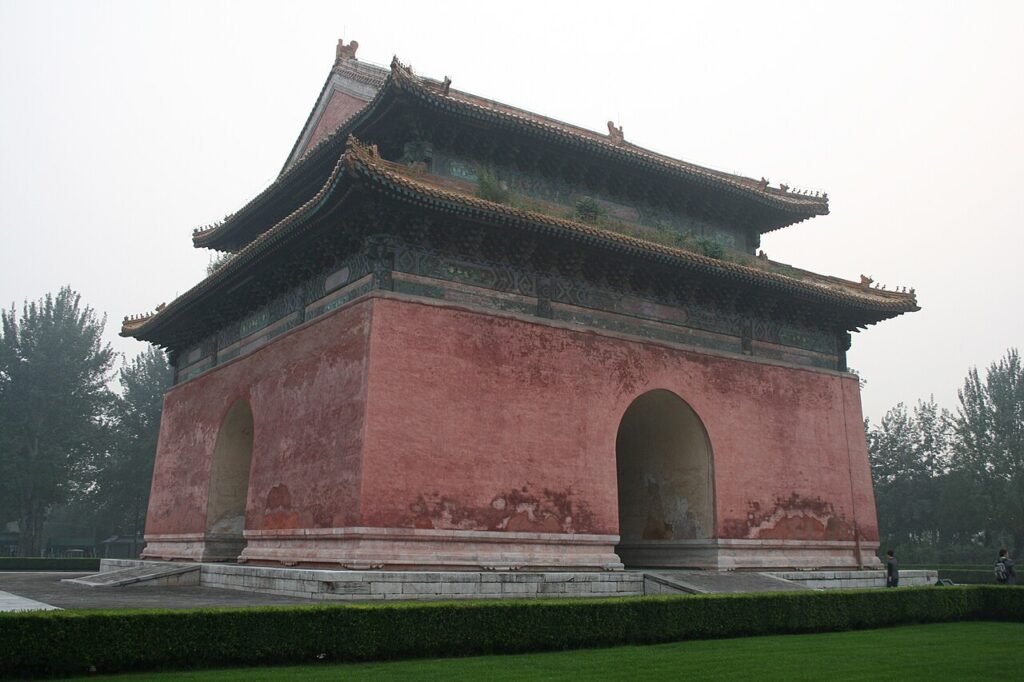
The Ming Dynasty ruled over China from 1368 until 1644. The Ming Emperors greatly expanded the Great Wall of China and constructed countless other impressive monuments. They made Beijing their capital and founded a massive royal necropolis on the outskirts of the city. Over the centuries, thirteen different Royal tombs were constructed in varying sizes and configurations. Today, the Tombs of the Ming Dynasty are some of the most visited sites in China, and they are protected as part of a UNESCO World Heritage Site.
10. Newgrange – County Meath, Ireland
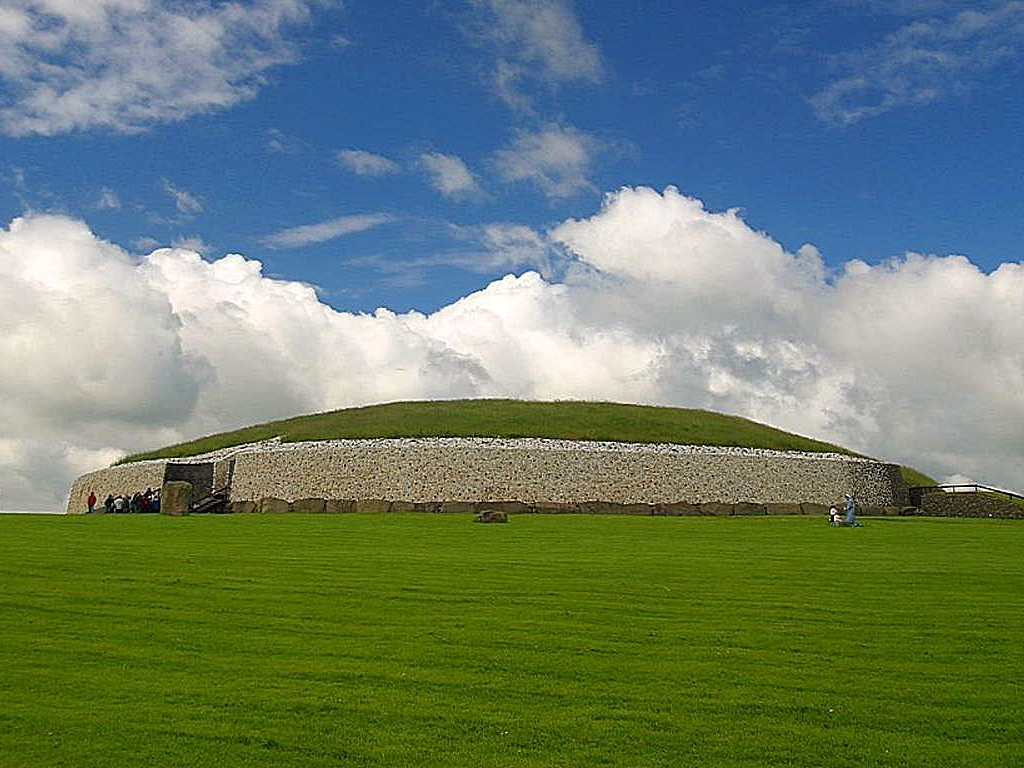
Newgrange is a unique example of Neolithic Architecture, located about an hour north of Dublin in the Irish Countryside. Excavations have uncovered a variety of human remains at the site, suggesting it was utilized as a tomb for several generations. The structure dates to 3100 BC – making it the oldest tomb on this list. Like many structures from this period, Newgrange was constructed with a strong connection to the movements of celestial bodies. Newgrange has a long, narrow passageway that aligns with the sun each year on the Winter Solstice.
9. Tombs of Huế – Huế, Vietnam
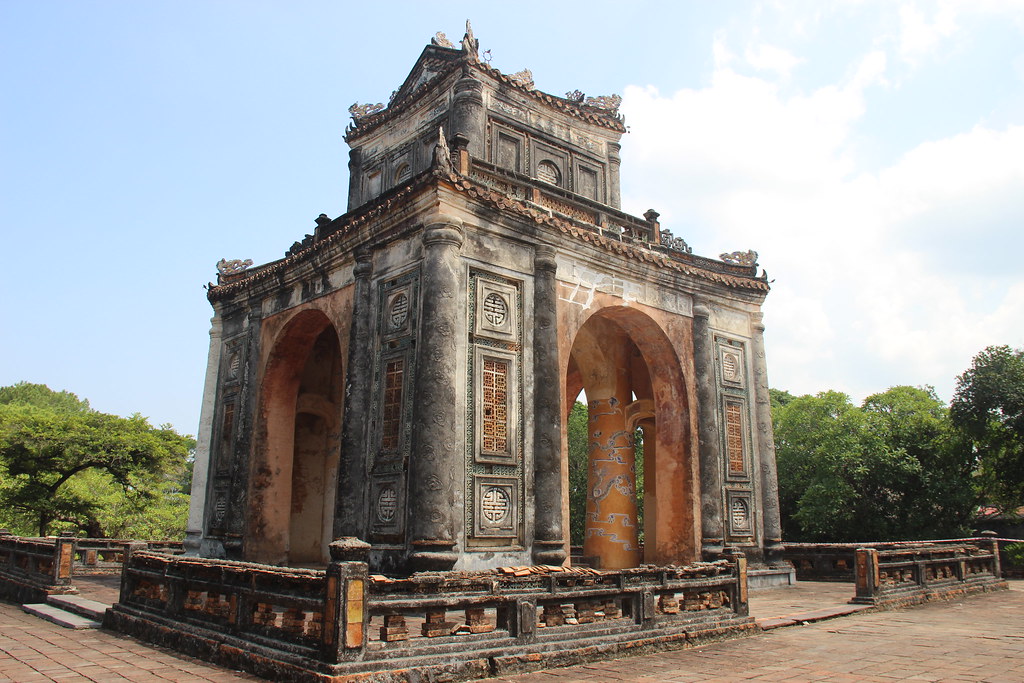
Huế is a historic city located in central Vietnam. It was once an Imperial Capital for the Nguyễn dynasty. The Nguyễns filled the city with incredible works of architecture, including fortresses, gates, palaces, and gardens. Several Nguyễn emperors also commissioned elaborate tombs throughout the city. These tombs are incredibly important to the Vietnamese people, and they are recognized as a UNESCO World Heritage Site along with other notable buildings in Huế.
8. Treasury of Atreus – Mycenae, Greece
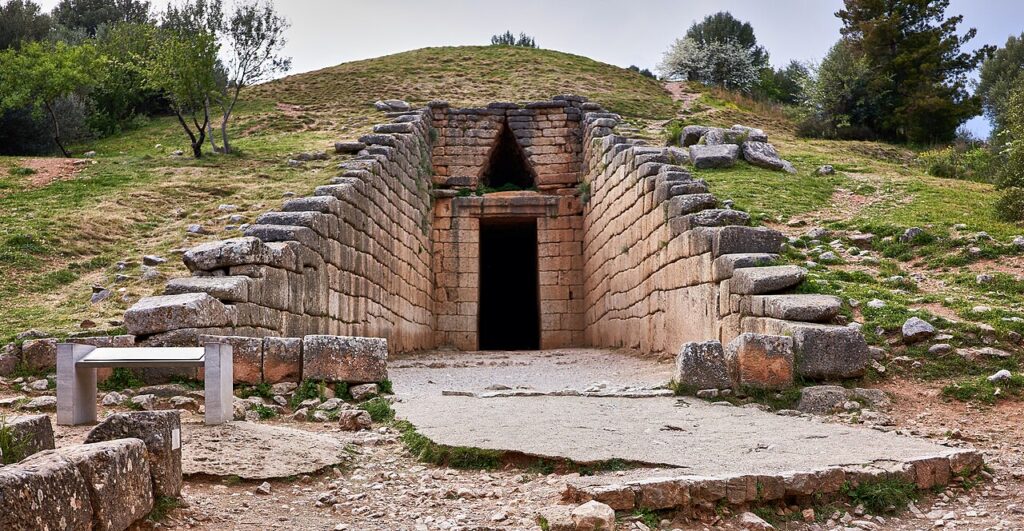
Also known as the Tomb of Agamemnon, the Treasury of Atreus is an ancient structure in mainland Greece. It’s part of a larger complex of Mycenean ruins, which are a popular day trip from nearby Athens. The Treasury of Atreus was constructed in the 13th century BCE and is believed to be the tomb of a Mycenaean king. The structure is a type of beehive tomb, with a larger conical interior dome. This dome was one of the largest and earliest domes ever constructed.
7. Les Invalides – Paris, France
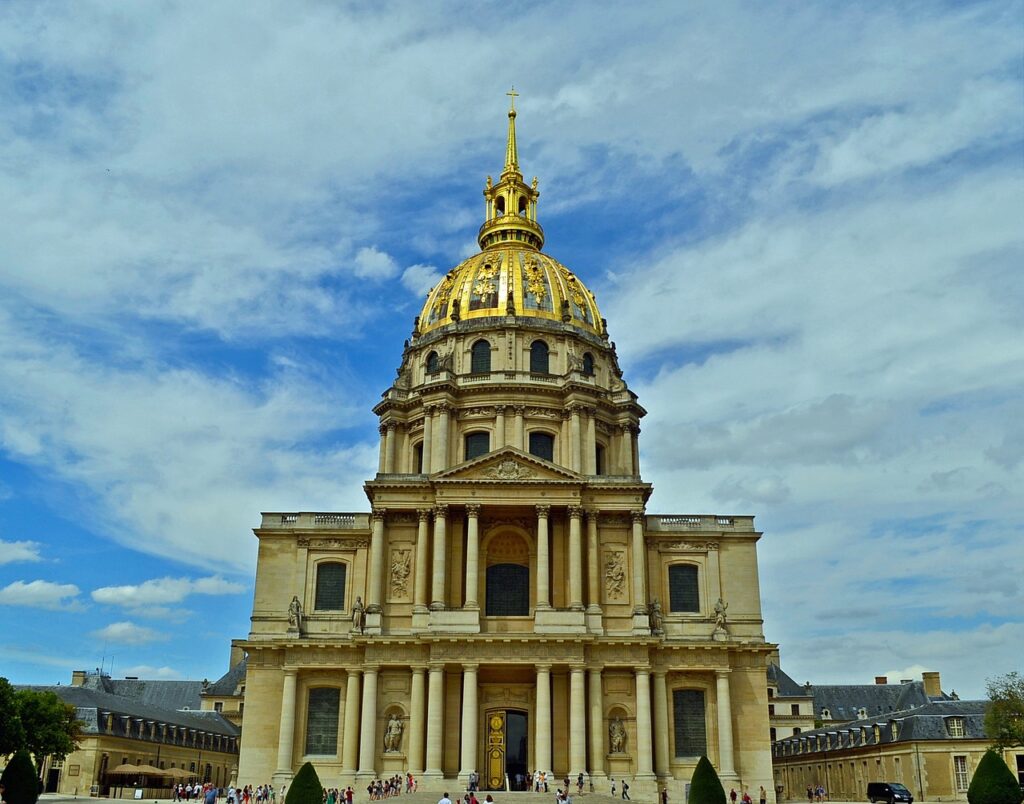
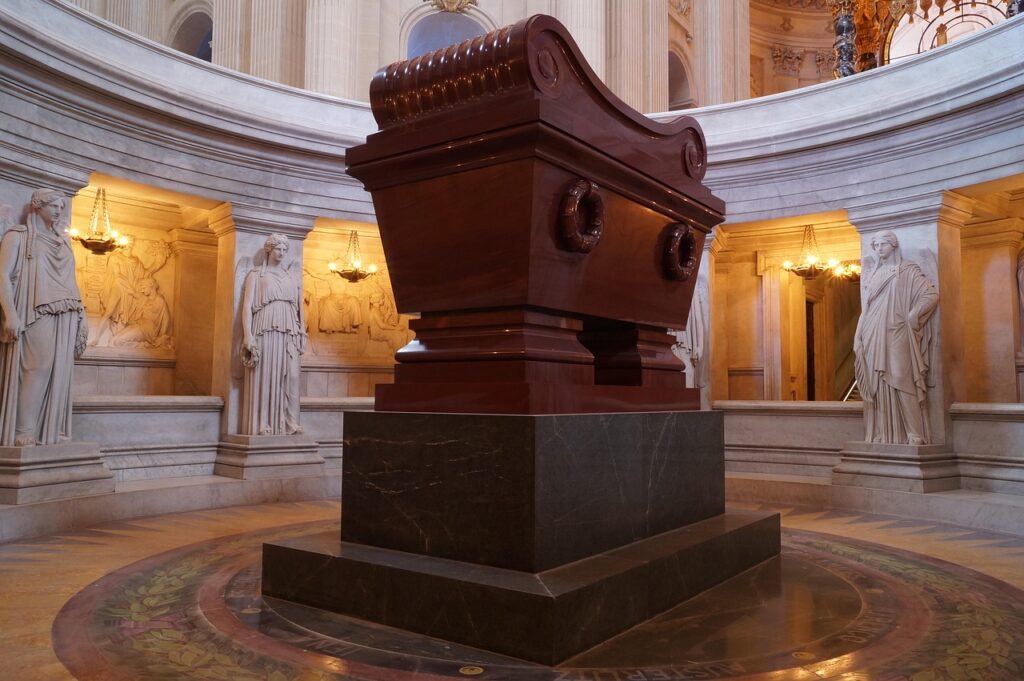
Located in the heart of Paris, Les Invalides is a large complex of buildings constructed in the late 17th century. The campus includes a grand chapel, which is outfitted with all of the intricate details and lavish materials found in Baroque Architecture. This chapel was later converted into the Mausoleum of the French Emperor, Napoleon Bonaparte. Napoleon’s coffin is located directly beneath the building’s main dome, and it’s one of the most visited attractions in modern-day Paris
6. Tomb of Jahangir – Lahore, Punjab, Pakistan
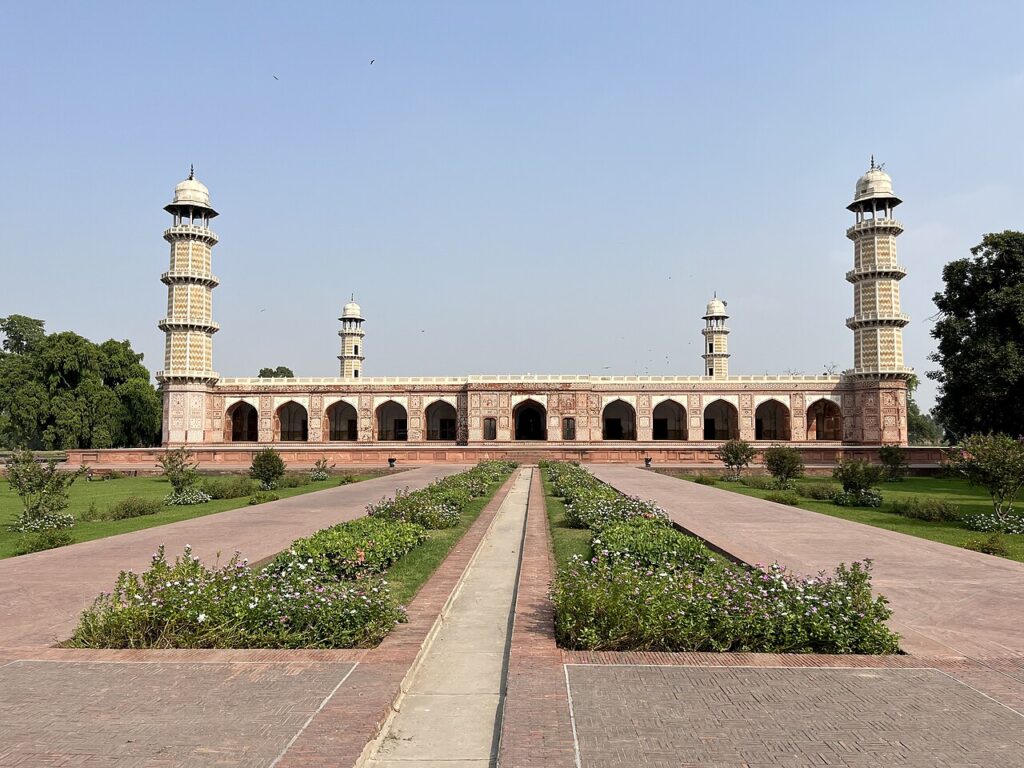
The Tomb of Jahangir is an imposing mausoleum located in the city of Lahore, Pakistan. It houses the remains of Sultan Jahangir, who ruled over the Mughal Empire during the early 17th century CE. Like many other tombs from the era, it’s composed of an ornately decorated mausoleum surrounded by lavish gardens. The building contains many typical elements from Mughal Architecture, including pointed arches, intricate details, and the use of white marble and red sandstone.
5. Petra – Petra, Jordan
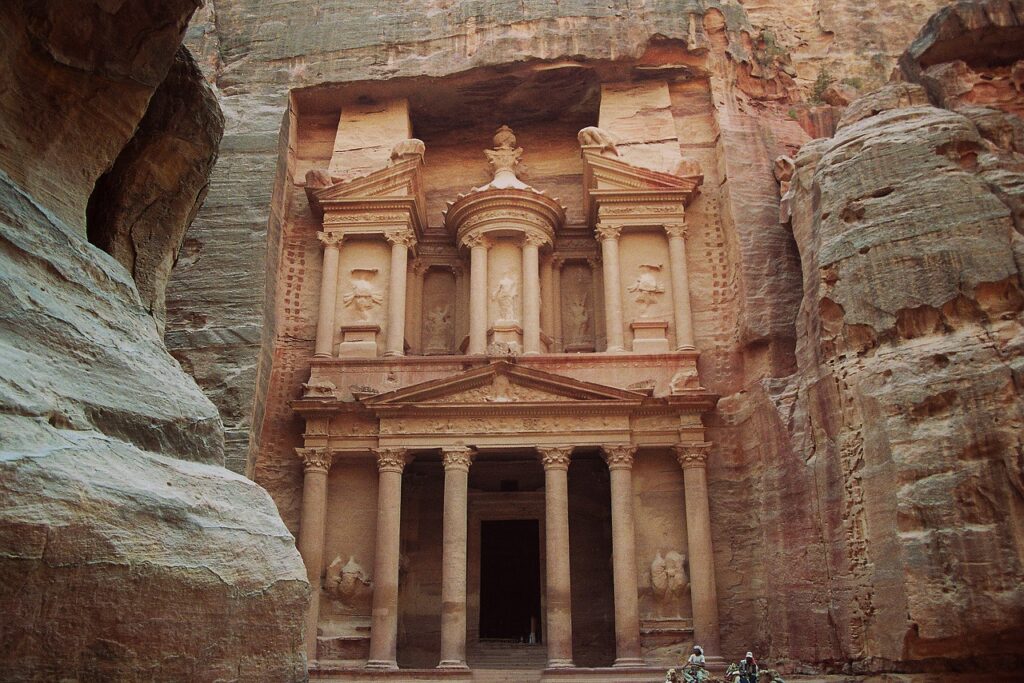
Petra is an ancient city located within modern-day Jordan. It was built by the Nabateans, who were a client state of the Roman Empire. The Nabateans were masters of Rock Cut Architecture, and they carved many of their buildings directly from the vertical cliffs within Petra. The image above shows one of Petra’s most iconic buildings, the Al-Khazneh. This structure is believed to be the tomb of a Nabatean King, and it dates to the 1st century CE. Today, the buildings within Petra are all protected as part of a UNESCO World Heritage Site.
4. The Tomb of Pakal – Palenque, Chiapas, Mexico
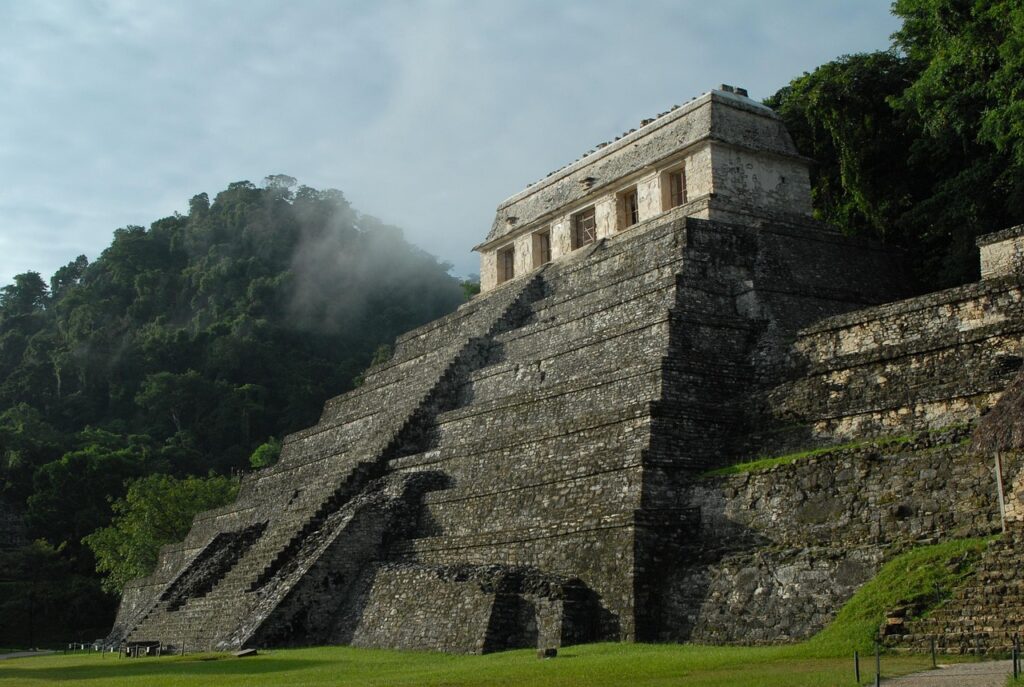
The Tomb of Pakal is located within a large Pyramid at the Palenque archeological site in southern Mexico. Palenque is a former Mayan city that contains dozens of imposing structures dating from the 2nd century BCE to the 8th century CE. The Tomb of Pakal was constructed as a monument dedicated to the ruler, Kʼinich Janaabʼ Pakal. The structure contains all of the typical elements found in Mayan Architecture, such as celestial alignment and a deep spiritual meaning.
3. Tomb of Emperor Qin – Xi’an, China
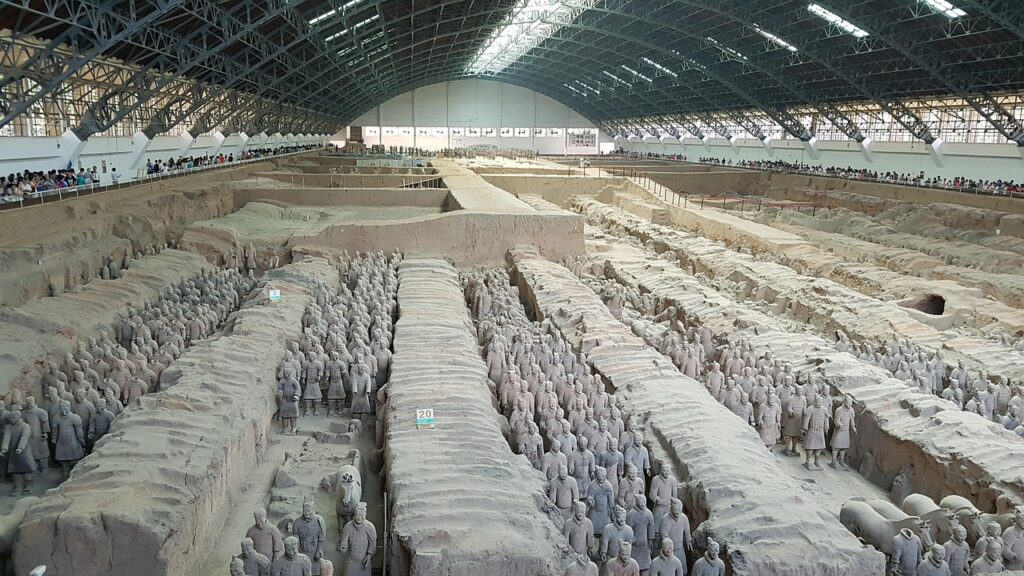
Emperor Qin Shi Huang is one of the most revered figures in all of Chinese history. He became China’s first emperor, and he founded the Qin Dynasty during the 3rd century BCE. Like most of his contemporaries, Qin Shi Huang strongly believed in an afterlife. He went to great lengths to outfit his tomb with all of the essential items he would need after death, including valuables, weapons, and everyday objects. Qin also famously commissioned himself a massive army made from Terra Cotta Soldiers.
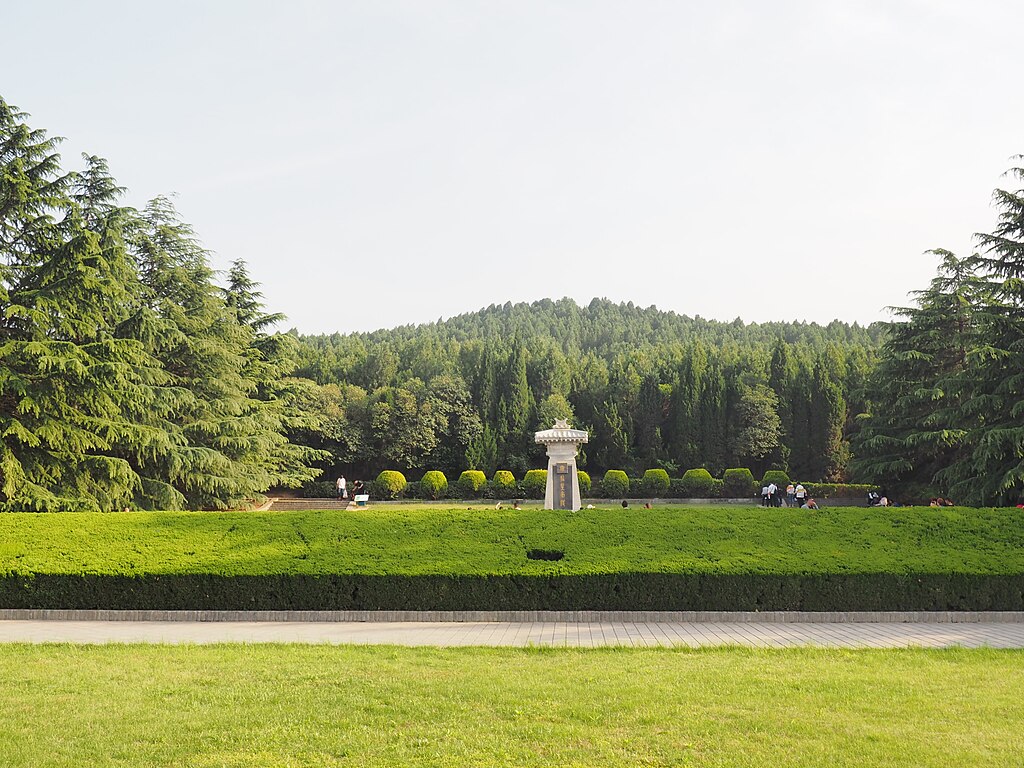
The first traces of this Terra Cotta Army were discovered by a Chinese farmer back in the 1970s. Since then, excavations have been ongoing, and thousands of figures are now on display. The site also contains a large burial mound that is believed to hold the remains of Qin Shi Huang himself. This massive tomb has yet to be unsealed, and many archeologists speculate about the treasures found within. Today, the mortuary complex of Emperor Qin is designated a UNESCO World Heritage Site.
2. Taj Mahal – Agra, India
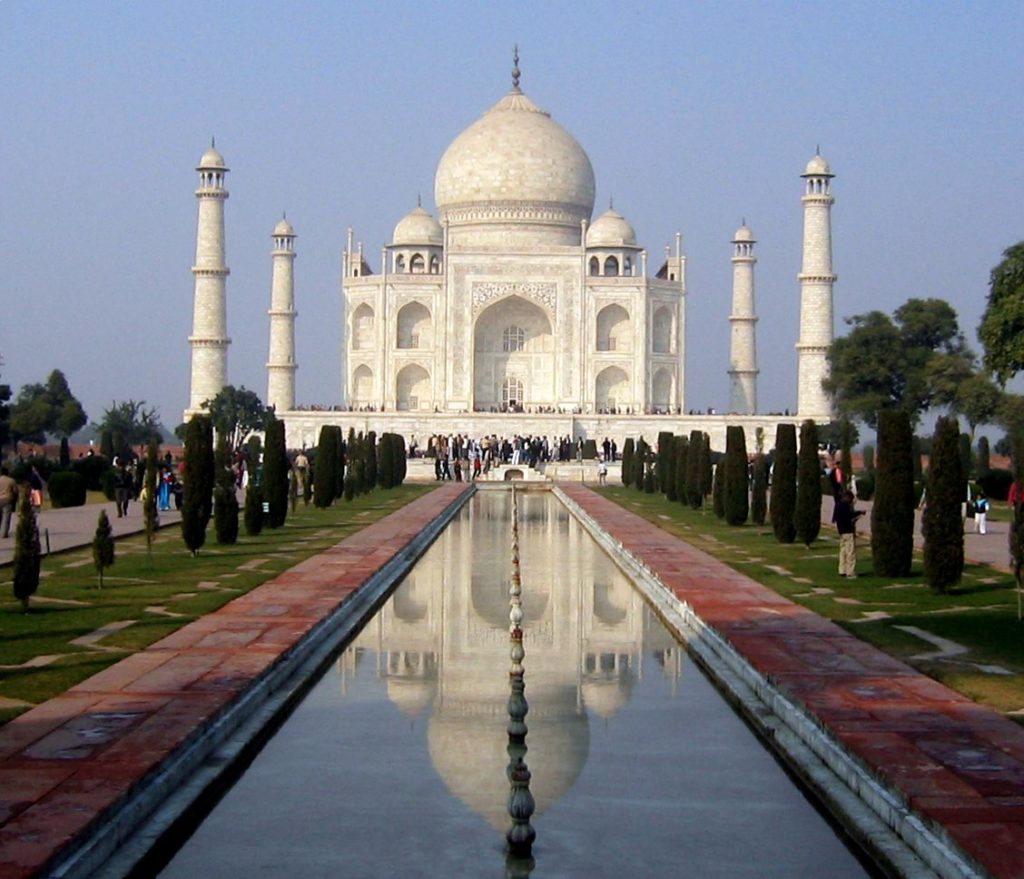
The Taj Mahal is a renowned mausoleum located in Agra, India. It was constructed by the Mughal Emperor Shah Jahan as the tomb for his beloved wife, Mumtaz Mahal. It’s one of the world’s most recognizable buildings, and the world’s greatest example of Mughal Architecture. The Taj Mahal was constructed from 1632–1653, during the Golden Age of the Mughal Empire.
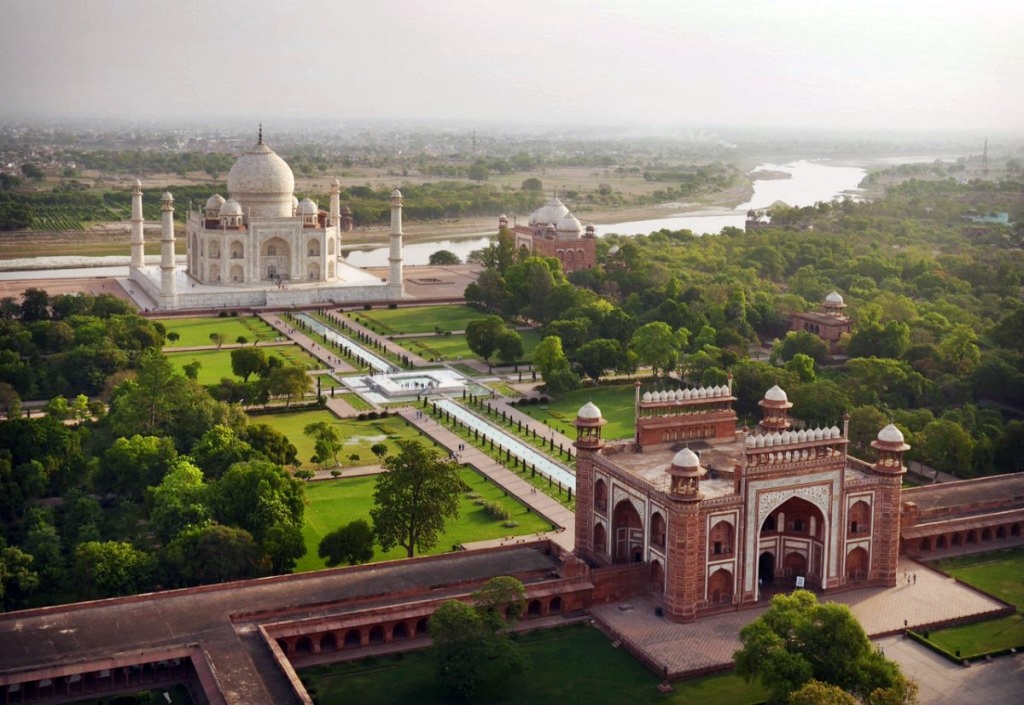
The Taj Mahal is known for its immense size and incredible opulence. The building contains a large dome made from pristine white marble. This dome stands directly over the graves of Jahan and his wife. The building is very well-maintained, and it sits at the center of a large complex of walled gardens, reflecting pools, and monumental gates. The Taj Mahal is a UNESCO-listed site, and it’s one of many notable buildings within the city of Agra, in addition to the Agra Fort and the Tomb of I’timād-ud-Daulah.
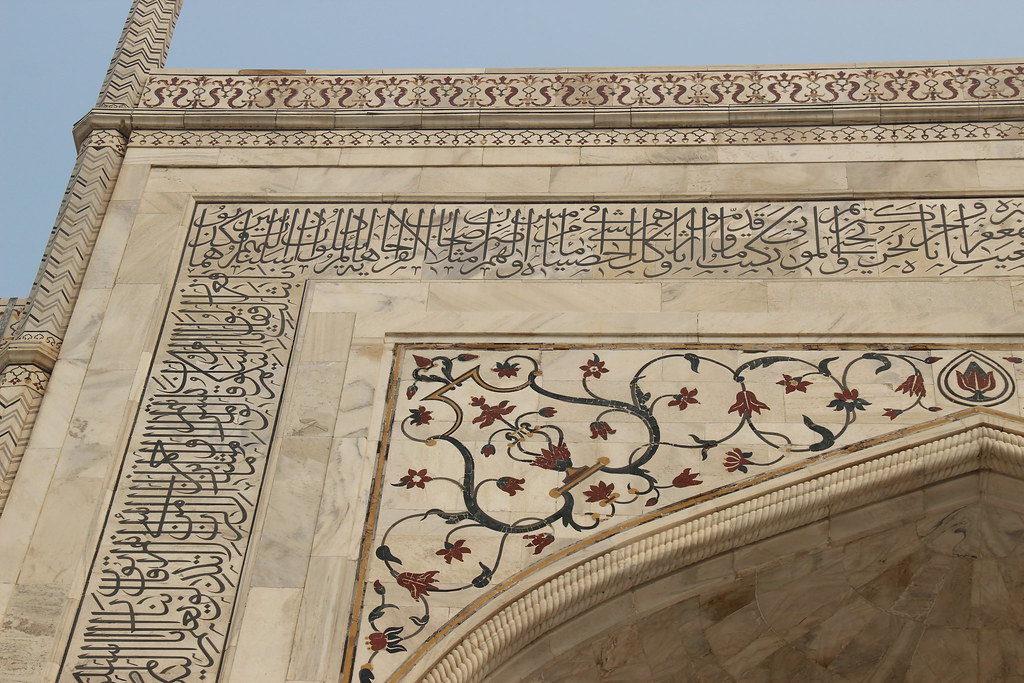
Many visitors are amazed by the opulent materials and fine craftsmanship, which make it clear that the Taj Mahal was constructed at great expense. The building also sits in a prominent location, overlooking the banks of the Yamuna River in Agra. The Taj Mahal embodies the spirit behind many of the tombs on this list. It was constructed to show off the wealth and prestige of those who built it, and it continues to inspire many people in the modern age.
1. Pyramids of Giza – Giza, Egypt
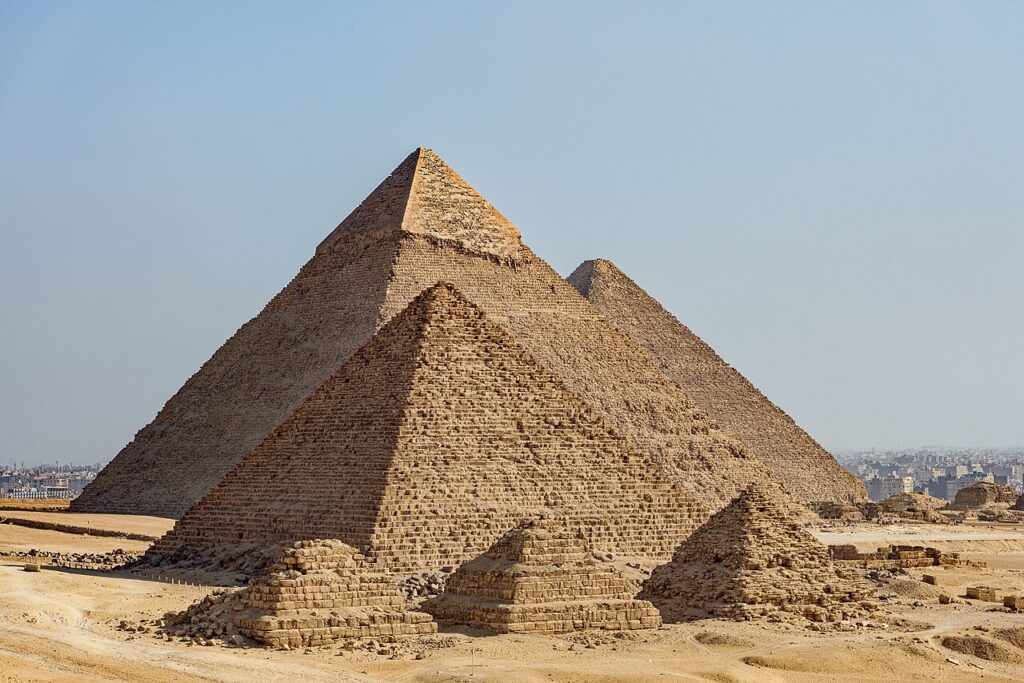
The World’s Greatest and most well-known tombs are, by far, the Great Pyramids of Giza. These structures were constructed by the Ancient Pharaohs of Egypt’s Old Kingdom. The three main Pyramids date from between 2600 & 2500 BCE, and the largest of them is the Great Pyramid of Khufu. The second largest is the Pyramid of Khafre, and the smallest is the Pyramid of Menkaure. The Giza complex also contains many other examples of Egyptian Architecture, including the Great Sphinx and dozens of other tombs and temples.
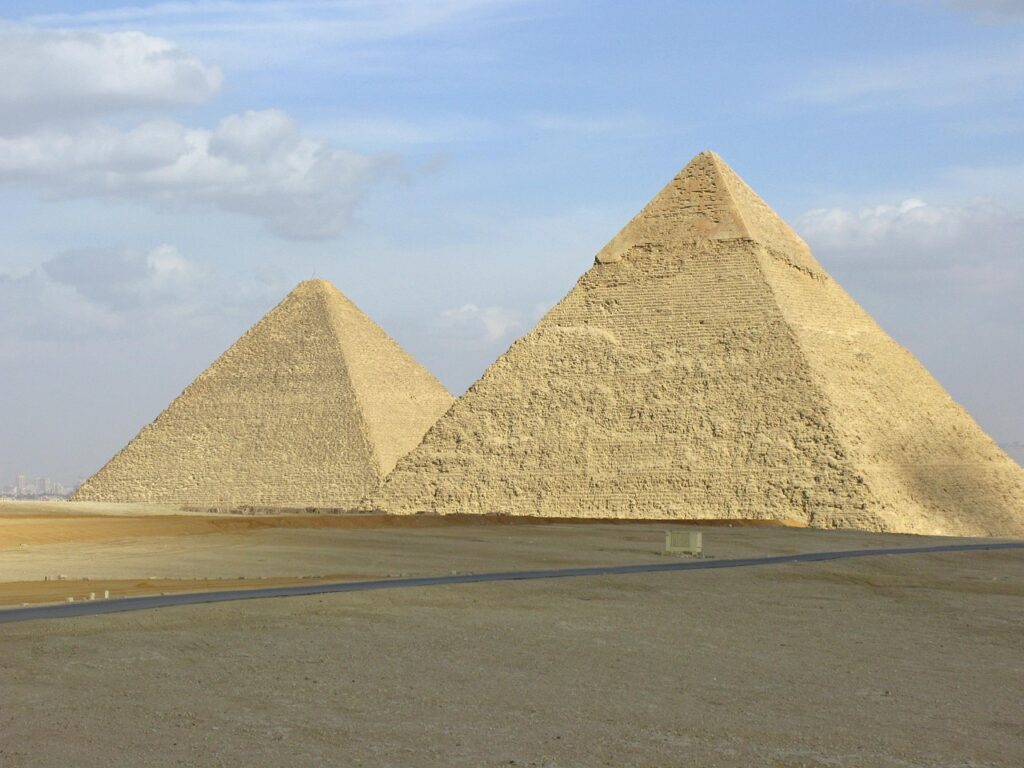
The Egyptians were major believers in an afterlife. They buried their dead with many valuable items that were thought to be essential after death. The main burial chambers inside the pyramids were designed to be completely sealed for eternity. They had massive stones blocking the passageways, and there were even outfitted false doors and fake tunnels. Despite the best efforts of the builders, all of the Great Pyramids of Giza were robbed of their treasures shortly after completion.
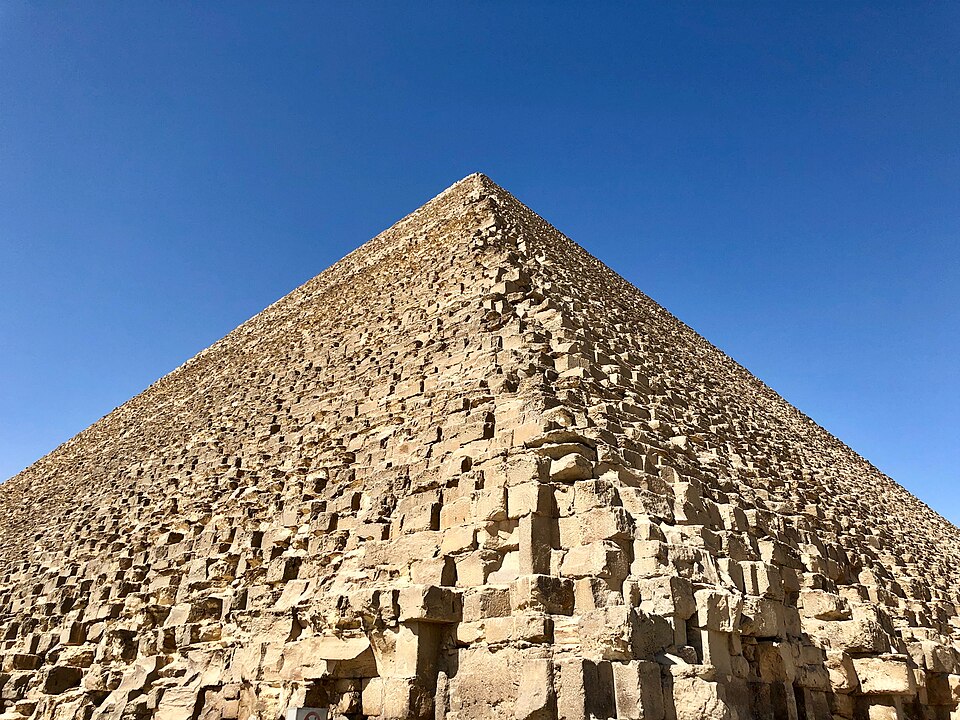
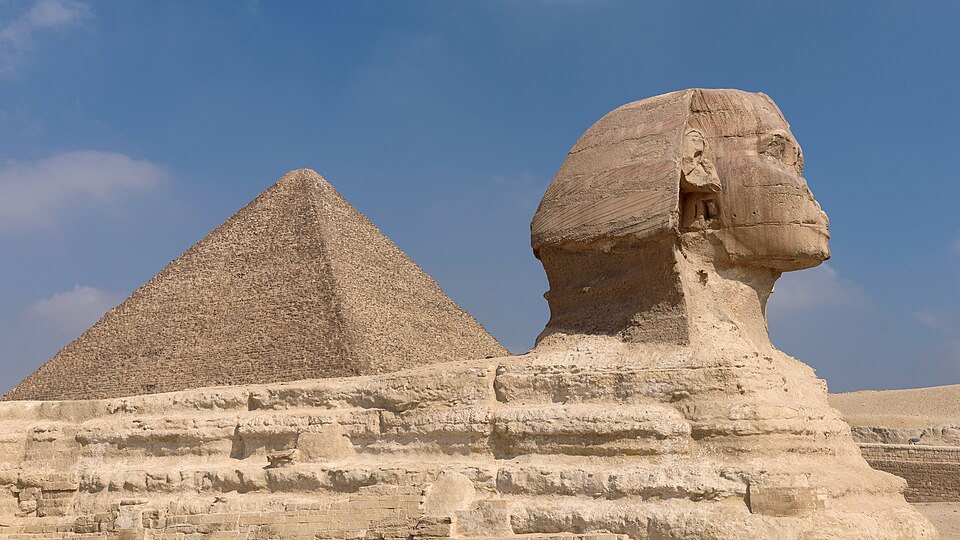
The Great Pyramids of Giza are engineering marvels, built with precisely cut blocks that were transported over a great distance. Their footprints are near-perfect squares, and their corners are aligned with the four cardinal directions. It took an army of laborers countless manhours to build the pyramids, and they are among the greatest tombs ever constructed. The Pyramids of Giza were one of the Seven Wonders of the Ancient World, and the UNESCO-listed Giza Complex still continues to amaze modern spectators to this day.
Modern Day Tombs
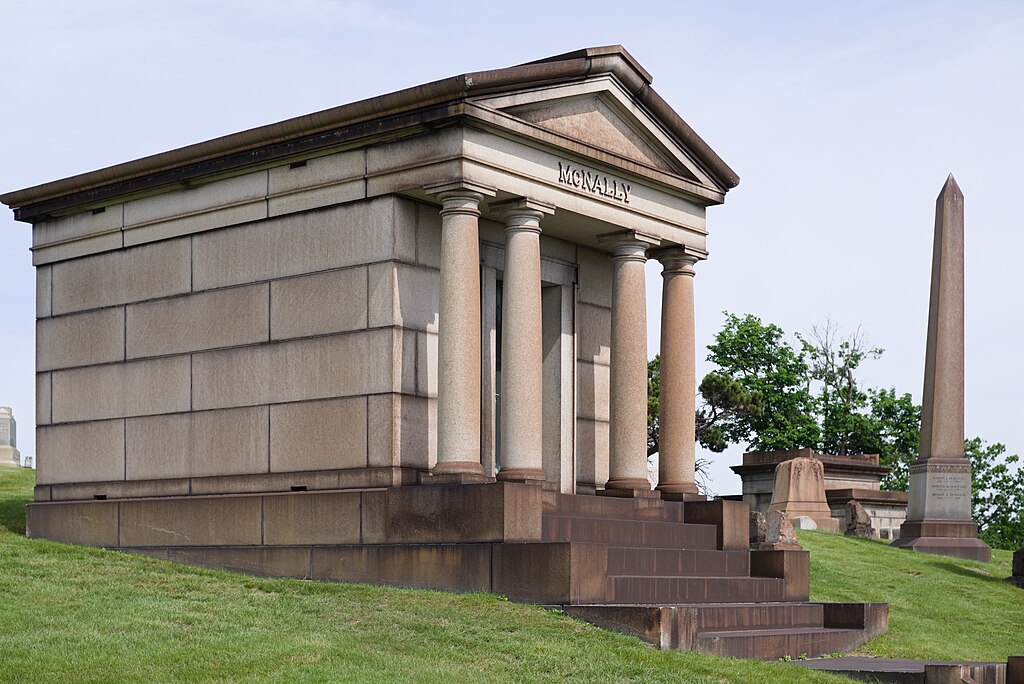
Tombs of all shapes and sizes continue to be constructed throughout the world. Many major cities contain well-known graveyards & necropolises, such as Paris, Glasgow, Rome, and New Orleans. The image above shows a large mausoleum within a cemetery in Pittsburgh, Pennsylvania, USA. In the background, you can see several other mortuary monuments, including a large Obelisk
The World’s Greatest Tombs
Since the dawn of civilization, mankind has built large and magnificent tombs and mausoleums. These structures were designed to memorialize the deceased, and they illustrated an individual’s wealth, prestige, and power. Several of the World’s Greatest Tombs are among today’s most recognizable buildings, and these structures continue to amaze and inspire. Tombs like the ones listed above are also extremely influential, and they have been replicated countless times throughout the world.

- About the Author
- Rob Carney, the founder and lead writer for Architecture of Cities has been studying the history of architecture for over 15 years.
- He is an avid traveler and photographer, and he is passionate about buildings and building history.
- Rob has a B.S. and a Master’s degree in Architecture and has worked as an architect and engineer in the Boston area for 10 years.
Like Architecture of Cities? Sign up for our mailing list to get updates on our latest articles and other information related to Architectural History.
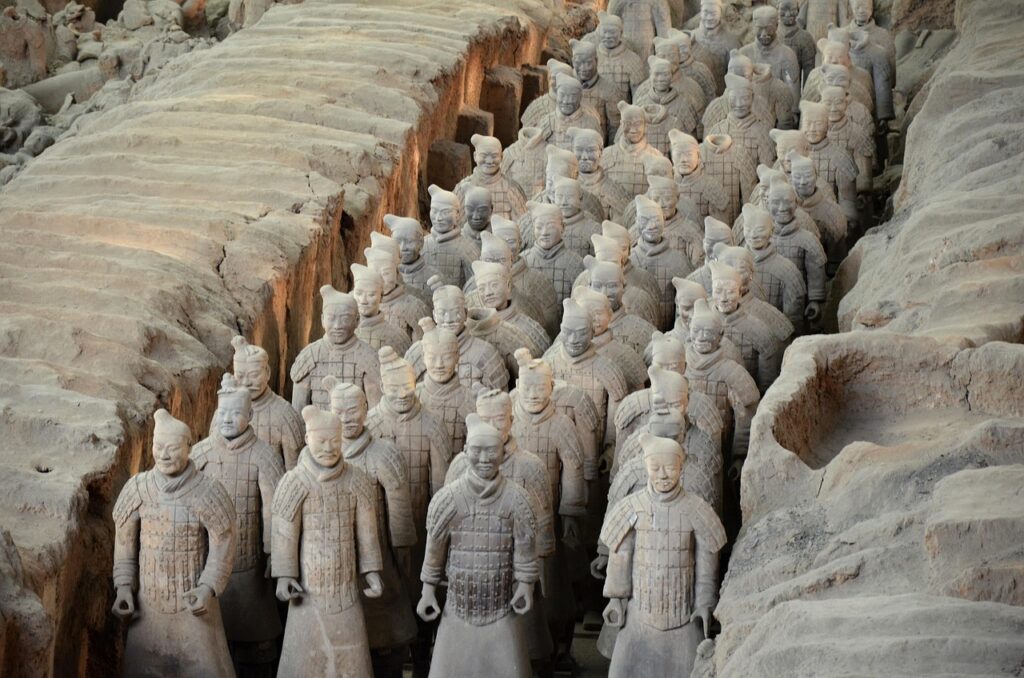
Additional View of the Terra Cotta Army found at the Tomb of Emperor Qin